All Roads Led Here
In my previous posts, I discussed the history and research of the human subjective experience of insight and mystical experience. Within the Soto Zen tradition, such experiences of insight are regarded as experiences among other experiences. They are not, in themselves, given particularly great importance, yet neither is their significance on a practitioner’s spiritual path diminished. They belong to the meditation practice, even if they are not necessarily an essential component or ultimate goal in themselves.
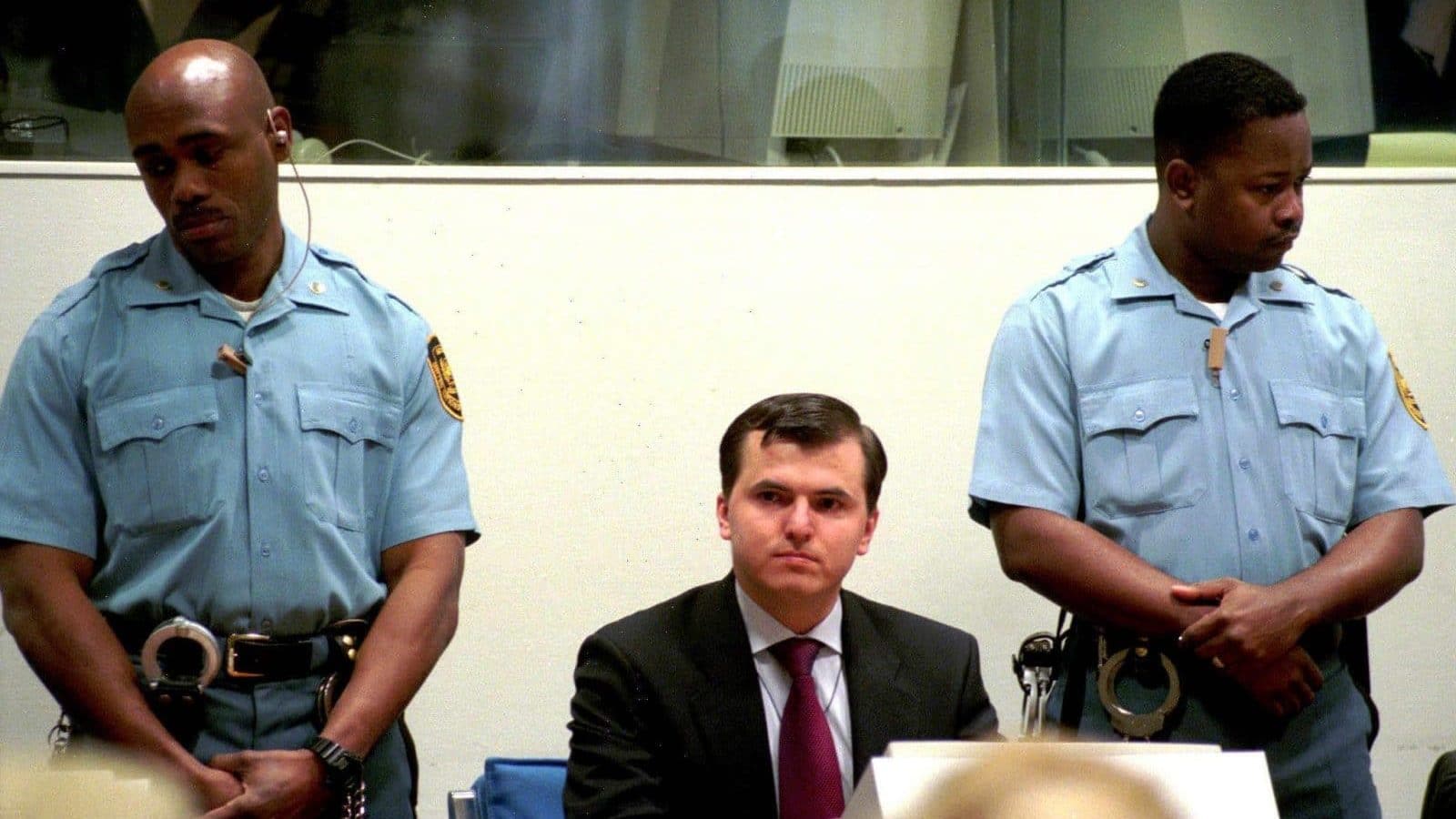
Figure 1. Esad Landzo listens to his guilty verdict at the Hague Tribunal in November 1998.
Meditation practice has been a major part of my life for some time now. I received my first brief introduction to Zen-style seated meditation zazen in the form of only a few sentences of instruction, and I sat there quietly for about half an hour, gazing at the wall in front of me. I sat with my back straight and looked along the bridge of my nose towards the wall ahead. After a while, I noticed how my mind was governed by countless different needs, cravings, and desires. At the same time, I realised that none of those desires was actually necessary for my life. This was an immensely relieving observation.
Bearing Witness to Suffering
There are many different forms of meditation. At the centre of my own practice has been shikantaza (”just sitting”), a form of seated meditation originating in the teachings of Dogen, in which the mind is not anchored to anything, such as the breath, sounds, or other sensory stimuli. Bernie Glassman describes this practice using the term Bearing Witness. According to him, the essence of shikantaza is that the practitioner becomes an active participant who feels, listens to, and observes everything honestly as it is. The practitioner does not turn away from pain, sorrow, injustice, or joy. They becomes one with all of it.
Dogen says that zazen is a ”dharma gate of great ease and joy”. It truly should not be that difficult, and why should it be? What could be easier than sitting quietly, remaining still, and enjoying the present moment?
Over the years, I have organised numerous retreats, training programmes, and events in Finland aimed at understanding social inequality and violence through direct personal experience. I have also served as a volunteer at a retreat organised by Zen Peacemakers International at the former concentration camp of Auschwitz-Birkenau.
My work as a contact person for the Zen Peacemakers here in Finland has felt meaningful. We have functioned as a support group for activists from different fields and for people whose work is connected to social wellbeing. Participants in our activities have included healthcare and social service professionals, climate activists, researchers, and artists from various disciplines. I have had the opportunity to discuss with fascinating people how the simple act of sitting quietly and remaining still might serve as valuable support in their lives and work.
I have also spoken about the Way of Council method of dialogue to workplace mediators, teachers, and others. The method is an excellent tool for managing social stress within communities.
Esad Landzo
Through this work, I have also come to know people whom I would otherwise never have encountered. One such person is the Bosnian-born resident of Helsinki, Esad Landzo. I first learned about him through the documentary film The Unforgiven (2017), directed by Danish filmmaker Lars Petersen, which I watched in the spring of 2018. During the Bosnian War of the 1990s, Landzo had served as a guard at the Celebici camp and had participated in the violent torture and murder of prisoners.
Like many others who fought on different front lines during the Bosnian War, Landzo believed that he had done nothing wrong. He belonged to the Bosnian Muslim population, the Bosniaks, who fought against the country’s Serb population. Landzo explains that Bosniaks often justified their own crimes by arguing that the Serbs had committed far greater atrocities. They saw themselves as the true victims throughout the entire war.
After the war ended, however, Landzo was arrested and sentenced to fifteen years’ imprisonment by the International Criminal Tribunal for the former Yugoslavia in The Hague. He served his sentence in Finland. While in The Hague, he became acquainted with the family of his American lawyer, whom he describes as the first truly sensible people he had encountered in his life. Through them, he learned English language and gradually began to understand the consequences of his own actions. Once he finally grasped the full extent of what he had done, he sought professional help.
During his imprisonment, Landzo decided that one day he would ask forgiveness from his victims. Petersen’s film tells the story of this desire. The documentary follows his journey back to Bosnia, where he meets former prisoners at the ruins of the camp. They describe to him the events in which he had participated. Landzo offers no excuses or justifications for his actions. He simply hopes that his victims can understand that he is deeply sorry for what happened.
The Human Capacity for Both Good and Evil
Landzo and I are almost the same age. We have similar hopes and dreams. Both of us wish to be meaningful and valued members of our communities. We hope to be encouraging and loving spouses, parents, and friends. Landzo is a former war criminal who murdered at least three people. His ability to speak openly about his own history and about the circumstances and factors that led to his actions during the war illustrates how any one of us might have acted similarly under certain conditions. Landzo was a disappointed young man who had dreamed of becoming an artist. He explains:
”I loved art, painting, and everything connected with it. I was supposed to attend art school, but that would have meant moving to Sarajevo. My father promised that I could go if I achieved good grades in my final school certificate. I did my best. I did what he expected of me. I did not realise that he simply could not afford to keep his promise.”
Eventually, everything that Landzo had hoped for was destroyed. He began abusing alcohol and spending time with the wrong people. He no longer believed in himself, and he was willing to do almost anything to gain the respect of others. Then the war broke out. He was prepared to do whatever was necessary to become part of it and whatever was required to please his commanders.
Esad Landzo has participated in retreats that we have organised focusing on the prison camps of the Finnish Civil War of 1918. War — and the traumas it creates — damage everyone involved. Once the dust settles, we place ourselves on the side of the victims and assign blame to the perpetrators. We often forget that everyone suffers in war.
Landzo speaks about the sense of power he experienced while holding a weapon in his hands. He felt like a god deciding who would live and who would die. This feeling breaks something inside every person who finds themselves in such a position. And there is no turning back. Something remains broken forever.
Conclusion
Meditation has taught me that human experience cannot be neatly divided into opposing categories of good and evil, insight and ignorance, victim and perpetrator. The same practice that encourages us to sit quietly and observe our own minds also invites us to look honestly at the suffering of others and at the conditions that shape human behaviour. The story of Esad Landzo is not a story of justification. It is a story of responsibility, remorse, and the unsettling recognition that under different circumstances many of us might have followed similar paths. If meditation teaches anything of lasting value, it may be the importance of bearing witness, and experiencing the nonduality and seeing ourselves as others and others as ourselves, and to the realities we would often prefer not to see.
References
Glassman, B. (1998). Bearing witness: A Zen master’s lessons in making peace. Bell Tower.
Petersen, L. F. (Director). (2017). The unforgiven [Documentary film].