Tekijä: senseimikko
-
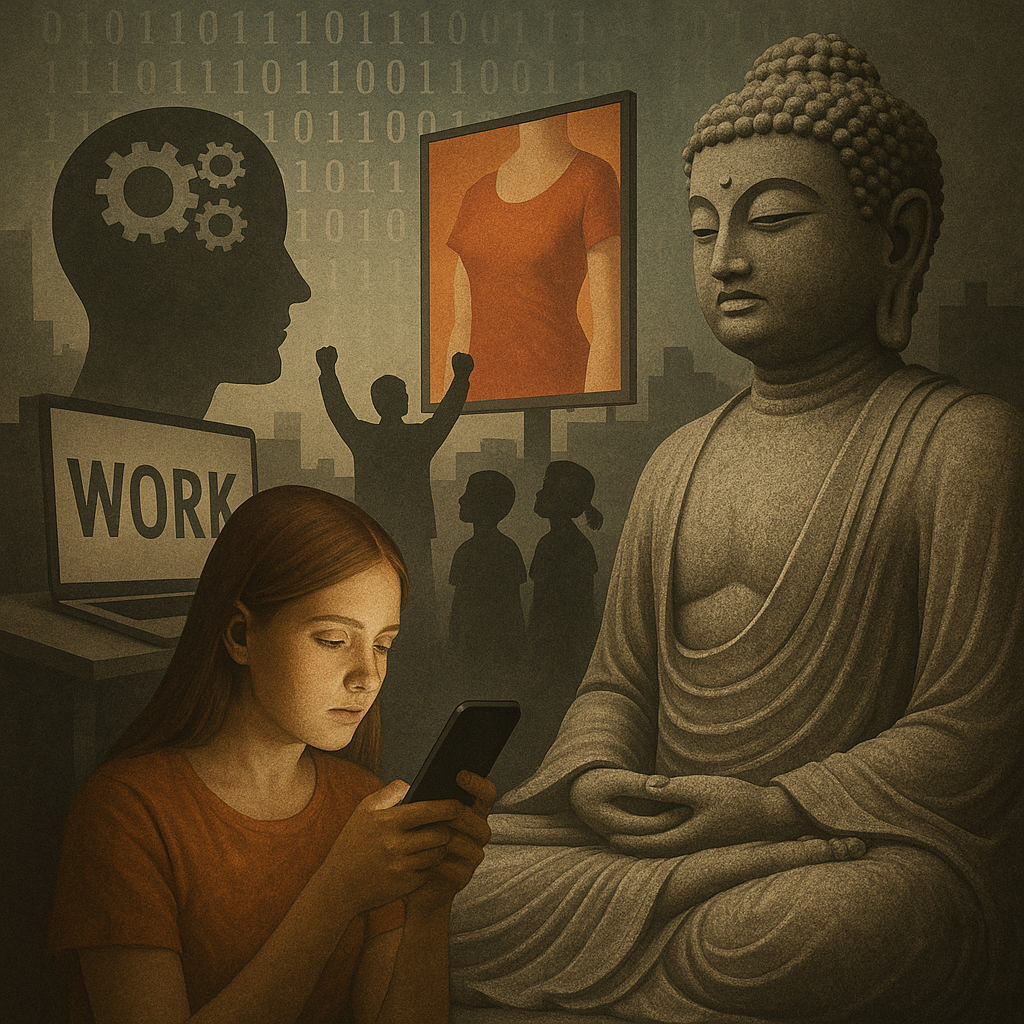
Zen and the Art of Dissatisfaction – Part 14
The post examines the paradox of technological advancement leading to increased dissatisfaction, highlighting how artificial intelligence and corporate practices manipulate human desires. It critiques surveillance capitalism, ”bullshit jobs,” and advertising’s role in fostering social disconnection, ultimately arguing for a reassessment of capitalism’s impact on human well-being and ecological sustainability.
-

Zen and the Art of Dissatisfaction – Part 13
This post examines the intricate history of financial systems, revealing the cyclical nature of debt and its role in social inequality. From medieval state borrowing to modern economic practices, the evolution of money illustrates how our current financial landscape perpetuates obligation and dissatisfaction, raising moral questions about wealth distribution and societal well-being.
-

Zen and the Art of Dissatisfaction – Part 11.
This essay explores the complex origins of money, examining its role as a trust-based system shaped by debt and inequality. It delves into historical perspectives from figures like Graeber, Rousseau, and Hobbes, revealing how monetary systems have evolved amidst exploitation and ecological harm, urging a reevaluation of our values for a sustainable future.
-

Zen and the Art of Dissatisfaction – PART 10.
The post discusses the profound impact of money and debt on individual lives and the environment. It critiques the illusion of endless economic growth, emphasizing the importance of re-evaluating our relationship with capitalism. Thinkers like Joanna Macy advocate for active hope and deep ecology, promoting a collective responsibility to foster a sustainable future.
-

Zen and the Art of Dissatisfaction – PART 9.
The article explores human dissatisfaction, rooted in Buddhist philosophy. It discusses the nature of suffering, the illusion of self, and methods to engage with dissatisfaction. Emphasizing awareness and acceptance rather than material solutions, it suggests that understanding impermanence may lead to liberation from suffering, ultimately challenging our perceptions of identity and existence.
-

Zen and the Art of Dissatisfaction – PART 8.
The text discusses the “self illusion,” a concept explored by philosopher David Loy, suggesting that dissatisfaction in life arises from our belief in an incomplete inner self. This notion is addressed through perspectives from psychology, Buddhism, and neuroscience, revealing that this psychological reality perpetuates our unhappiness and reinforces a fixed self that causes chronic discontent.
-

Zen and the Art of Dissatisfaction – Part 7.
Bruce Hood, an experimental psychologist, explores the concept of self and inner dialogue, arguing it is a psychological illusion shaped by cognitive processes. Consciousness includes awareness, attention, and reflective thinking. Voices in our minds guide, deceive, or shape our identities, raising questions about the reality of the self amid various mental challenges.
-

Zen and the Art of Dissatisfaction – Part 6.
Dutch historian Rutger Bregman, in his work ”Humankind: A Hopeful History,” argues that human nature is fundamentally good, challenging common narratives suggesting otherwise. His findings, supported by examples from WWII and hunter-gatherer societies, illustrate how cooperation and kindness prevail, raising questions about modern societal violence and governance despite inherent human kindness.
-

Zen and the Art of Dissatisfaction – Part 5.
The text explores the complex relationship between money, happiness, and cultural satisfaction. Through ethnographic experiences with the San people and insights from Helena Norberg-Hodge on Ladakh, it reveals that while wealth can provide freedom and opportunities, true contentment remains elusive, as both rich and poor face existential dissatisfaction shaped by societal changes.