Psychedelics and Healing
Throughout human history, altered states of consciousness have played a central role in religious life, healing practices, and spiritual exploration. Long before the rise of modern science, many indigenous cultures developed sophisticated methods for entering such states in order to treat illness, seek guidance, and strengthen communal bonds. Today, modern research into psychedelics is once again exploring these altered states, not only to better understand human consciousness but also to develop new therapeutic approaches for psychological suffering. This article examines the historical continuum between indigenous trance practices and modern psychedelic research.
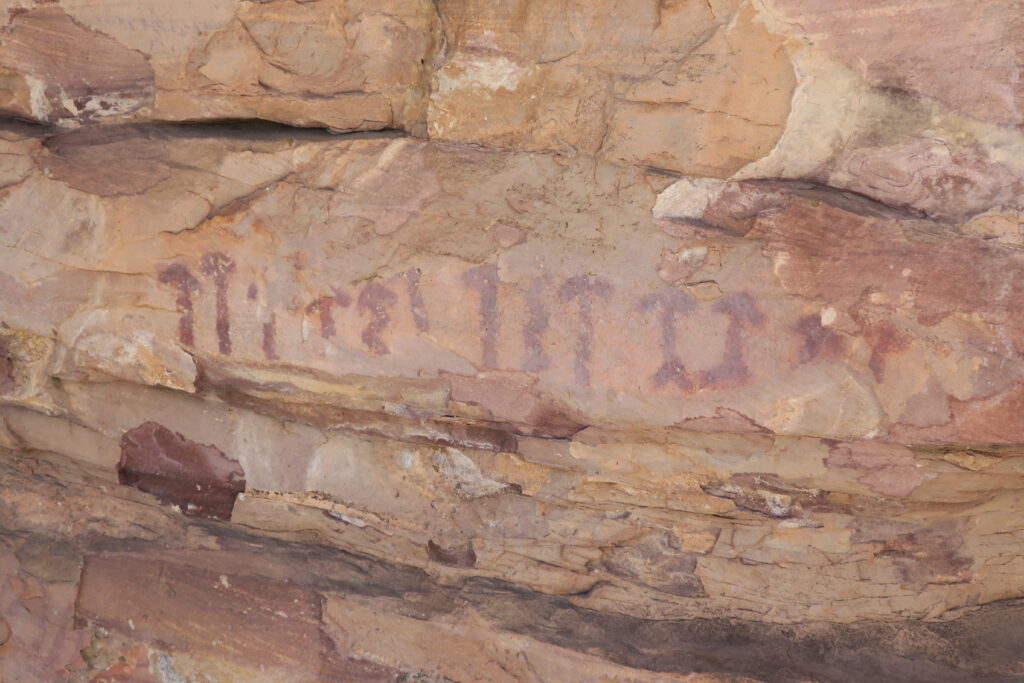
Photo: Rock painting of Selva Pascuala, near Villar del Humo, with fungiform representations

In numerous indigenous cultures, the core of religious activity revolves around methods through which the practitioner enters an altered state of consciousness. In my previous posts, I discussed the trance dances of the indigenous San people of the Kalahari Desert. During these rituals, prolonged and monotonous dancing and singing, combined with breathing techniques that induce hyperventilation, can gradually lead the practitioner into a deep trance state. A novice shaman is always awakened before fully entering trance, because although trance itself can be reached relatively easily, the San emphasise that one should never enter such a state without preparation. Only an experienced shaman can descend into a deep trance, because it is only through long experience that the practitioner learns what should be done in that state. According to the San, the role of the healer is fundamentally to heal and assist others. Trance is therefore not regarded as an extreme experience pursued merely for its own sake, nor for the sake of shaman theirself. Rather, it is understood as a realm from which answers and knowledge may be sought in order to heal other people. Similar ideas appear in many other shamanistic cultures around the world, even if the specific techniques used to enter altered states may differ.
Psychedelics in Traditional Rituals
Many indigenous cultures have also used psychedelic substances in their ceremonies. With the aid of these substances, the practitioner can hardly avoid entering an altered state of consciousness. Psychedelic compounds occur naturally in certain fungi, plants, and even animals. These substances affect the central nervous system by altering sensory perception and the way reality itself is experienced. Traditionally, psychedelics have been used on every continent and in numerous cultural contexts. Their use was almost always regulated by established cultural practices and ritual frameworks that determined when and how such substances could be used.
According to psychiatrist Rick Strassman (2001), the use of naturally occurring psychedelic substances to induce altered states of consciousness reaches far back into the earliest prehistory of humankind. Archaeological evidence from India, for instance, suggests that psychedelic mushrooms and cannabis were already being used approximately 7,000 years ago. On the continents of the Americas, psychedelic mushrooms as well as certain cacti, tree barks, and vines were also used for similar ritual purposes equally thousands of years ago. In all of these cases, the use of these substances was governed by cultural traditions and ritual practices that framed their meaning and function.
Modern psychedelic research in the West began in 1938, when Swiss chemist Albert Hofmann (1906-2008), working for the pharmaceutical company Sandoz, was attempting to find a medical application for ergoline compounds. Ergoline compounds occur naturally in ergot fungi, which can be found on grains such as rye, wheat, and barley. Hofmann succeeded in isolating lysergic acid diethylamide, better known as LSD or LSD-25. Initially, no practical medical use for the compound was discovered. However, Hofmann returned to the substance in 1943 and accidentally discovered its powerful psychological effects. A small amount of the compound entered his body through contact with his skin, after which he experienced a several-hour-long journey characterised by vivid hallucinations and sensations resembling near-death experiences.
Early Scientific Distribution and Clinical Experiments
Nevertheless, no clear medical application was identified for this substance at the time. As a result, the pharmaceutical company Sandoz distributed LSD to interested researchers around the world from the late 1940s until the early 1970s. This period came to an end when the use and research of LSD and other substances classified as narcotics were prohibited globally. Despite this interruption, the early study of psychedelics represented an important step forward for modern Western medicine in understanding human psychology and exploring possible treatments for various psychological disorders.
Sandoz had hoped that LSD might offer researchers new insights into the treatment of psychotic patients. The company speculated that it might help scientists understand what their patients were experiencing subjectively. According to historian of psychedelic research Michael Pollan (2021), one of the researchers who received LSD from Sandoz was the English psychiatrist Humphry Osmond. In the aftermath of World War II, Osmond and his colleague John Smythies became interested in the effects of the psychedelic compound mescaline on the chemical processes of the human brain. Osmond sought to determine whether mescaline might help researchers understand psychiatric conditions such as schizophrenia. His research into the biochemical processes underlying mental illness later contributed to developments that made modern psychiatric medications possible. Osmond and Abram Hoffer began administering LSD to dozens of test subjects, as well as to themselves, in the early 1950s in Weyburn, Canada.
They were among the first researchers to treat alcoholism using LSD, and their results appeared promising. Their hypothesis was based on the observation that alcoholics sometimes experience terrifying episodes of delirium tremens, which can frighten them into giving up drinking. Osmond and Hoffer speculated that LSD might produce a similar psychological shock, because the drug was initially believed to simulate a form of temporary insanity. To their surprise, however, a single dose of LSD proved to be an effective therapeutic intervention, though not in the way the researchers had anticipated. Patients did not report experiences resembling delirium tremens. On the contrary, many described the experience as profoundly positive. Numerous participants reported feelings of mystical oneness with the entire world. Instead of experiencing madness, they often reported seeing themselves clearly and objectively, gaining profound insights into philosophy and religion, and developing increased sensitivity toward the emotions of others.
In addition to LSD, in 1957 Albert Hofmann isolated and synthesised the psychedelic compound psilocybin from the mushroom species Psilocybe mexicana, which was also distributed by Sandoz.
The End and Revival
The political turmoil of the late 1960s in the United States, combined with widespread misuse of drugs, ultimately led to the criminalisation of all narcotic substances. This development effectively brought medical psychedelic research to an end. After 1970, clinical research involving psychedelics became virtually impossible due to their illegal status. The first clinical psychedelic study conducted after 1970 was carried out in 1990 by Rick Strassman and his colleagues (Strassman et al., 1994). Their research focused on N,N-Dimethyltryptamine (DMT), a compound considerably more potent than LSD. Unlike LSD, the human body does not develop the same kind of tolerance to DMT. With LSD, the psychological effects tend to diminish with repeated use, whereas DMT does not produce tolerance in the same manner. Strassman’s research programme, which began in 1990, helped launch a new era of psychedelic studies that has now continued for more than three decades. So far, the results have been highly encouraging.
In addition to DMT, contemporary studies are investigating substances such as psilocybin. Large international medical research institutes and universities-including the University of Helsinki-are studying its potential in treating patients suffering from long-term depression. Psychedelics have also shown promise as tools for alleviating anxiety in patients with severe illnesses such as cancer. Individuals experiencing existential or spiritual crises have found relief through psychedelic-assisted psychotherapy. This therapeutic approach combines the pharmacological effects of psychedelics with structured talk therapy. Evidence suggests that it may be particularly effective in reducing emotional and spiritual suffering among terminally ill patients.
Many patients report transcending their inner anxiety and experiencing liberation from what they describe as the tyrannical dominance of the ego. They often express deep gratitude for the life they have lived, and especially for the limited time that still remains. This sense of acceptance has frequently helped them confront panic experiences involving profound fear, pain, existential anxiety, despair, and isolation. These patients often describe feeling bound to something so overwhelming that letting go initially seemed entirely unnatural and impossible.
Psychedelic research inevitably involves serious ethical considerations related to human mental health. Participants must be carefully screened before entering studies, and the external conditions of the experiments must be designed with great care. The power and influence of psychedelic substances should never be underestimated. Among many indigenous peoples, these substances are used within ritual ceremonies as tools that support therapeutic processes. Presenting these experiments and describing the effects of such treatments is therefore essential for the purposes of this blog series.
Personally, I have not encountered another field of research that addresses the treatment of human inner dissatisfaction in such a concrete manner. Psychedelic research has also developed methods for evaluating the subjective experiences of participants, allowing researchers to analyse these deeply personal experiences in a systematic way. I will continue discussing this topic in the next instalment of this blog series.
Conclusion
From the trance rituals of indigenous healers to modern neuroscience laboratories, humanity has repeatedly sought ways to explore altered states of consciousness in the search for healing and understanding. Psychedelic research, once halted by political and social upheaval, is now re-emerging as a promising field within psychiatry and psychology. By combining careful scientific methodology with insights drawn from traditional cultures, contemporary researchers may be rediscovering tools capable of addressing some of the deepest forms of human psychological suffering.
References
Pollan, M. (2021). This Is Your Mind on Plants. Penguin Press.
Strassman, R. (2001). DMT: The Spirit Molecule. Park Street Press.
Strassman, R., Qualls, C. R., Uhlenhuth, E. H., & Kellner, R. (1994). Dose-response study of N,N-dimethyltryptamine in humans. Archives of General Psychiatry, 51(2), 85-97.
Vastaa