Altered States of Consciousness in Indigenous Cultures
Altered states of consciousness have played an important role in many human cultures throughout history. While modern societies often associate such experiences with psychoactive substances, numerous Indigenous traditions achieve similar states through meditation, movement, rhythm, and collective ritual practices. Anthropological research has documented how these altered states can serve social, psychological and spiritual functions within communities. This post explores trance dances among the San people of the Kalahari Desert, and compares them with shamanic practices involving Ayahuasca in the Amazon rainforest. Both traditions illustrate how ritualised experiences of altered consciousness can strengthen community cohesion, resolve tensions and support psychological healing.
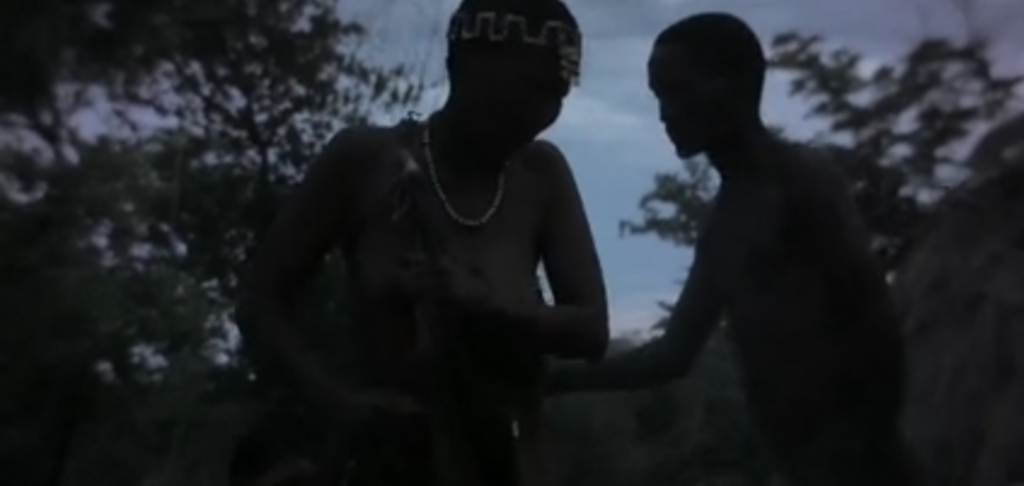
The American psychologist and Indigenous cultures specialist Richard Katz (1982), who currently works in Canada, observes that the San peoples of the Kalahari do not use consciousness-altering substances such as plants or fungi to enter altered states of consciousness. Instead, they enter trance (!kia) through singing, clapping, intense concentration, vocalisation, prolonged rhythmic movement, and deliberately induced hyperventilation. The dance begins gently, but the volume and tempo of the music gradually increase. Anthropological evidence (e.g. Megan Biesele 1993; Richard Katz 1982; Lorna Marshall 1999; Elizabeth Marshall Thomas 2006) shows that during the 1950s–1970s these dances could continue from sunset well into the following day, and they might be organised several times each week. Dances occurred more frequently when friends visited from another camp, when a large animal had been successfully hunted, or when the group camped near abundant water. When camp members were scattered, dances occurred less often.
Trance Dance Among the San of the Kalahari
The dance is organised when hunters in the camp have killed a large animal. It is not held in order to celebrate the animal’s death or the acquisition of high-quality food for the community. Instead, the dance serves to relieve the social tensions associated with the distribution of meat. The San believe that it is the poisoned arrow that kills the animal rather than the hunter alone. This is why the person whose arrow killed the animal is responsible for distributing the meat, not the hunter. This belief encourages all men to produce good arrows, even if they are less skilled hunters or physically unable to participate in long hunting expeditions. The distribution of meat always presents a potential source of social tension. Without the dance, old grievances might intensify. The purpose of the trance dance is therefore to cleanse not only these tensions but also any other latent conflicts within the community.
The history of trance dance ceremonies among the San of the Kalahari is difficult to study because the San have never produced any written records. The earliest documentation of their ceremonial behaviour dates from the nineteenth century. The German linguist Wilhelm Heinrich Immanuel Bleek and his sister Lucy Lloyd collected an extensive body of historical and cultural material from hunter-gatherers of the central plateau of southern Africa who are now extinct or have been absorbed into other groups. These people were known as the /Xam. Their beliefs and ritual practices closely resemble those documented among the San of the Kalahari.
The South African archaeologist David Lewis-Williams (2002) has explored connections between the trance experiences of southern African hunter-gatherers and ancient rock art. Since the 1970s he has become one of the most influential experts on rock art, and it is difficult for anyone to write about ancient rock paintings without referring to his ideas. His popular book Mind in the Cave (2002) eventually brought his work to the attention of a wider audience.
Lewis-Williams also became familiar with the lives of the San of the Kalahari in the 1970s together with the American anthropologist Megan Biesele (Lewis-Williams & Biesele 1978). One of the greatest strengths of Lewis-Williams’s work lies in the sheer volume of his material, his evident literary talent, and his ability to identify connections that others have overlooked for one reason or another. In addition to ancient cave painters, Lewis-Williams has written popular science works on the achievements of Neolithic cultures (Lewis-Williams & Pearce 2011) and on the influence of altered states of consciousness on different concepts of gods (Lewis-Williams 2011).
Lewis-Williams (2002) reminds us that San trance dances can be frightening even for shamans. At times shamans cannot control the internal boiling sensation generated by the dance and collapse to the ground in a cataleptic state, trembling or convulsing as the entire body stiffens. Bleek’s collections include a story describing how a shaman of earlier times fell to the ground shaking, while lion hair began to grow from his back. This transformation into a lion or another animal forms a central element of the San spiritual experience.
Just as entering trance may be terrifying for San shamans, similar fears appear in the ceremonial practices of shamanic cultures in the Amazon rainforest. The anthropologist Jeremy Narby (1999) studied the culture of the Ashaninka people living in Quirishari in the Pichis Valley of Peru in 1985. Narby was fascinated by the idea that shamans obtained knowledge about the medicinal and other properties of forest plants after consuming the powerful psychedelic drink ayahuasca. Ayahuasca contains the naturally occurring psychedelic compound N,N-dimethyltryptamine (DMT).
Ayahuasca and Collective Healing in the Amazon
Indigenous peoples of the Amazon use ayahuasca as a therapeutic tool. It is consumed as part of a communal long lasting ceremony guided by a shaman. After the ceremony each participant processes their psychedelic experience with the shaman’s guidance. This often involves confronting fears, traumas and anxieties. These traditions uses these ceremonies to address complex psychological questions, and they guide members of the community to repair tensions within the self, but also in the group.
Many people, including Western anthropologists, have drunk ayahuasca and reported experiencing psychedelic cosmic creation narratives as well as visions of terrifying giant serpents and dragons. Ayahuasca and the retreats organised around it have become something of a cultural trend and an extreme initiation rite for spiritually curious Western hipsters. Retreats are also organised here in Finland, even though ayahuasca is classified as an illegal narcotic in the West. In the United States, so-called ayahuasca churches are legally permitted to prepare and use ayahuasca for ceremonial purposes within their congregations.
Peruvian shamans use ayahuasca as a therapeutic instrument, and ceremonies are used to address psychological challenges and strengthen cohesion within the group. Improving group cohesion and emphasising both individual and communal healing are also central elements behind the ceremonies of the San of the Kalahari. Megan Biesele (1993) writes that through the dance people became a unit acting together for mutual benefit in a situation where words would only have divided them. The dance expressed equality and tolerance among the San. It reinforced the idea of collective effort against possible misfortune.
The San trance dance ceremony therefore functions as a channel of purification within Kalahari San communities. Through the dance the community cleanses potential social and psychological frictions, which may include tensions between members of the group or internal challenges within individuals arising from dissatisfaction, grief or anxiety. Many anthropologists agree that the ceremony forms the very core of San culture. Katz (1982) notes that organising the ceremony requires the presence and active participation of everyone.
Healing is a communal event. The entire camp actively participates in the process. Daniel Lieberman, Professor of Human Evolutionary Biology at Harvard University, and his colleagues (Lieberman et al. 2020) point out that this phenomenon is closely related to the experiences of social unity created during ceremonial running practices among Indigenous peoples of North America. Experiences of altered states of consciousness can sometimes lead to a sense of mystical unity, and oneness, which may be achieved not only in Indigenous shamanic ceremonies but also through prolonged exercise, meditation, dancing or the use of psychedelic substances.
Summary
Across cultures, ritual practices involving altered states of consciousness appear to serve profound social and psychological functions. Among the San of the Kalahari, trance dances help resolve tensions within the community and reinforce collective solidarity. In the Amazon, ayahuasca ceremonies guided by shamans offer a comparable framework for addressing trauma, fear and interpersonal conflicts. Despite the different techniques involved-rhythmic dance in one case and psychedelic plants in the other-both traditions illustrate the importance of communal healing rituals in human societies. These practices highlight the deep relationship between altered consciousness, social cohesion and cultural meaning.
References
Biesele, M. (1993). Women Like Meat: The Folklore and Foraging Ideology of the Kalahari Ju/’hoan. Bloomington: Indiana University Press.
Katz, R. (1982). Boiling Energy: Community Healing Among the Kalahari Kung. Cambridge, MA: Harvard University Press.
Lewis-Williams, D. (2002). The Mind in the Cave: Consciousness and the Origins of Art. London: Thames & Hudson.
Lewis-Williams, D., & Biesele, M. (1978). Eland hunting rituals among northern and southern San groups. Africa, 48(2), 117-134.
Lewis-Williams, D., & Pearce, D. (2011). Inside the Neolithic Mind: Consciousness, Cosmos and the Realm of the Gods. London: Thames & Hudson.
Lewis-Williams, D. (2011). Conceiving God: The Cognitive Origin and Evolution of Religion. London: Thames & Hudson.
Lieberman, D. E., et al. (2020). Endurance running and the evolution of Homo. Nature Ecology & Evolution.
Narby, J. (1999). The Cosmic Serpent: DNA and the Origins of Knowledge. New York: Jeremy P. Tarcher/Putnam.
Thomas, E. M. (2006). The Old Way: A Story of the First People. New York: Farrar, Straus and Giroux.
Vastaa