Zen and the Art of Dissatisfaction – Part 36

The Interconnected Nature of Reality

In this installment of Zen and the Art of Dissatisfaction, I explore how ancient philosophical and religious traditions illuminate the complex interplay between human perception, duality, and the experience of oneness. Drawing on insights from David Loy’s work Nonduality, Stephen Mitchell’s translations, and my own ethnographic research on the San people of the Kalahari, I will investigate the ways in which ordinary and spiritual realities intertwine and how cultural and economic structures shape our sense of dissatisfaction.

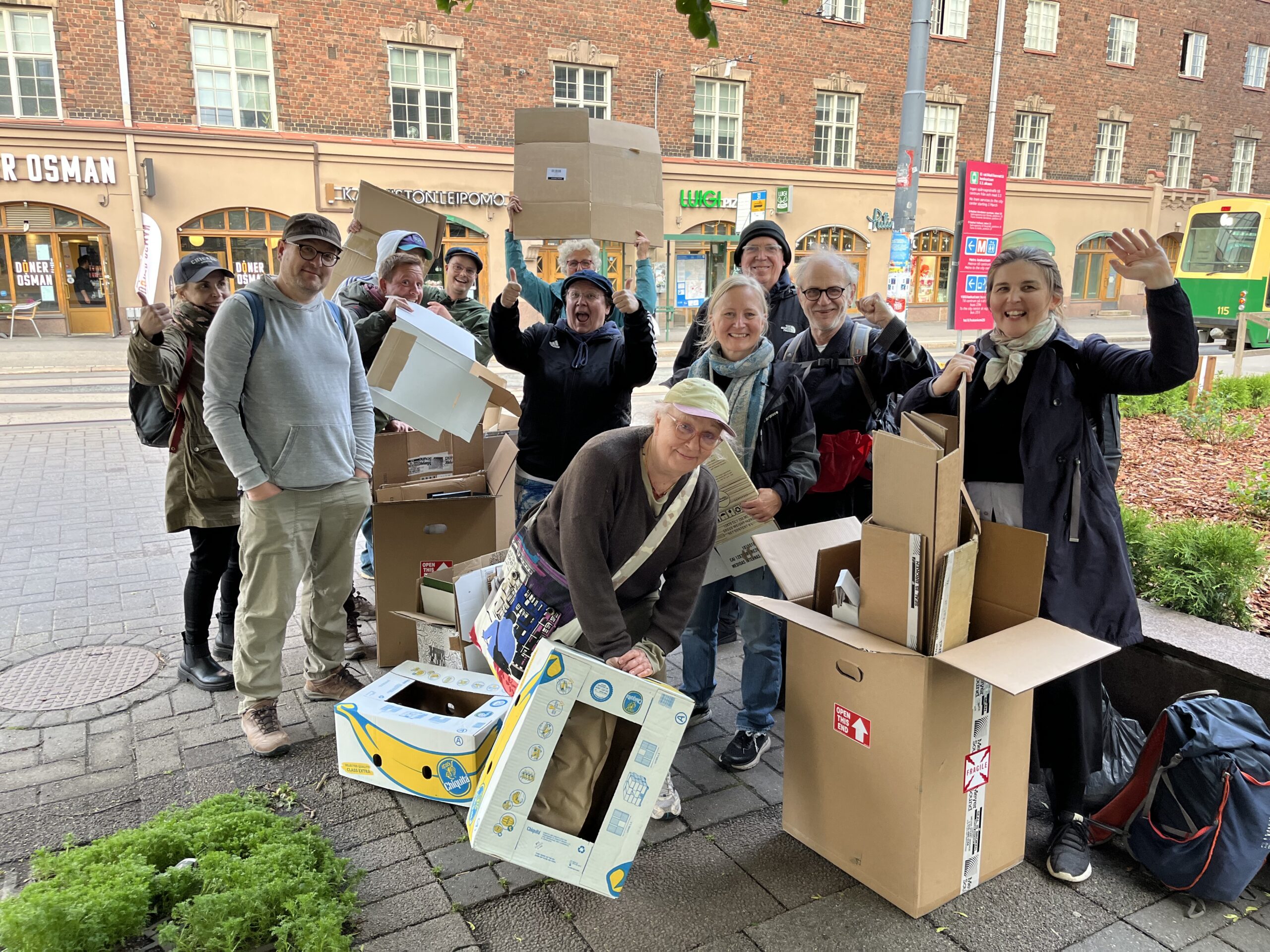
Photo by Mikko Ijäs

Philosopher David Loy observes in his book Nonduality (1988) how, in the Daodejing by the Chinese philosopher Laozi, composed approximately 2,500 years ago, the odd-numbered lines – such as 1, 3, 5, and 7 – describe an interconnected nonduality, an indefinable essence known as the Tao. This Tao is said to be the source of heaven and the world, a reality understood as spiritual unity. Experiences that reveal this Taoist nonduality emerge only when a person has no deliberate striving to attain it.

In contrast, the even-numbered lines – 2, 4, 6, and 8 – point to another perspective of the experience of this world, in which we perceive everything as a collection of separate, independent entities that nonetheless interact with one another. These two perspectives and experiences of reality form a web of interactions, ultimately constituting a single, unified whole. Loy argues that this view of the world, also referred to in Buddhism as samsara, is a dualistic world in which the experiencer and the external world are distinguished from each other. A dualistic world is characterised by distinctions and definitions between objects and concepts. It tends to categorise things into opposites – good and bad, right and wrong, evil and just, large and small, black and white, rich and poor, and so on. This perspective enables classifications, lists, and categories.

Language, Metaphor, and the Limits of Duality

Linguist and translator Stephen Mitchell notes (1991) agrees we instinctively interpret language through a dualistic lens. We take metaphors literally because language is itself a dualistic method. Linguistic systems rely on distinctions and categories, which makes it challenging to describe phenomena beyond their reach. Over time, the metaphors of original religious experience may vanish in literary traditions.

For this reason, some religious traditions emphasise the practitioner’s own trust in their personal experience over written knowledge. In such practices, experiential knowledge is transmitted from teacher to student. In esoteric religions, teachings are intended only for the initiated; nothing is revealed to outsiders, to prevent misinterpretation of metaphors.

In Zen Buddhism, the student must personally perceive the true nature of life. Even the teacher cannot grant it. The teacher can only gently guide the student toward their personal insight.

Insight and the Path of Practice

Such insight is not something that can be understood in a conventional sense. There is no book to read that mystically unlocks the gates of the mind so that we understand the astonishing world in which we live. Cognitively, we may grasp the concept, but experiencing it through personal insight is entirely different. This requires humility, dedication, faith, and effort.

The process requires that the individual examines their own understanding of self and the nature of reality. Upon the first glimpse of insight, the practitioner questions everything: mountains are no longer mountains, and waters are no longer waters. As the practice continues, the practitioner gradually realises the true nature of reality and appreciates that it has been present all along; it was simply unseen. Eventually, mountains are once again mountains, and waters are waters. This experience is often described as awakening, or even enlightenment.

This insight does not occur as a sudden, dramatic event where the practitioner is transported to another dimension. Spiritual practices aim for slow, often years- or decades-long cultivation, during which the practitioner gradually comes to a new understanding of reality, often imperceptibly. Occasionally, sudden flashes of insight occur that are difficult to articulate. Each tradition has its own means of framing these experiences so that they can be understood within a coherent context.

For instance, in Zen practice, a student may have sudden, surprising experiences, feeling as though the entire world is shifting or collapsing. The student may exclaim, “Here it is. I understand!” The teacher then reminds them: “It is wonderful that you had this experience, but this is not the end. Experiences come and go. We continue to practise understanding this reality.”

Mitchell also observes that similar insights are accessible in the original texts of Christianity. Even the Christian notion of the Kingdom of Heaven can be understood as a subtle state of being, living with ordinary joys and sorrows. After such realisation, life becomes simple and effortless, like the flight of birds across the sky or lilies growing eternally in the field – ever-present in the present moment.

Social Context, Dissatisfaction, and Economic Change

My doctoral research on the shamanistic cultures of the Kalahari led me to think that human dissatisfaction may arise from distorted perspectives. Axial age transformations between 800 BCE and 600 CE brought not only new religions but also profound economic changes. Previously, people relied on mutual aid and trust in everyday life. The introduction of money disrupted this trust. Slavery, armies, and money altered everything.

This transformation continues to affect us. Money, though in principle democratic and available to anyone, requires individuals to make extreme sacrifices of personal freedom to acquire it. Money disconnects people from social networks of trust – both in relation to others and in relation to their environment – because all resources are reduced to commodities defined by monetary value.

The San people of the Kalahari still live in an economy where everything is shared, and reliability holds meaningful social significance. Social cohesion is paramount in such societies. The trance dance practiced by the San is one method of reinforcing social cohesion. This religious practice aims to engage with the spiritual world so that spirits or ancestors can assist the community in times of hardship, such as illness. The trance dance exemplifies a form of spiritual practice intended to blur the distinctions and limitations of a dualistic world.

I do not claim that humanity has ever lived in a society where individuals constantly felt at one with the universe. Yet I believe that our contemporary market-driven worldview contains elements that disrupt this sense of unity and connection. This worldview – shaped by armies, oppression, and money, originating roughly 2,500 years ago – may prevent us from fully experiencing the beauty and interconnectedness of life. Perhaps it is the root of fundamental dissatisfaction.

Conclusion

The interplay between Taoist, Zen, and Christian insights, along with observations of human societies such as the Kalahari San, illustrates that the perception of duality is deeply ingrained in language, culture, and social structures. Spiritual practices cultivate a gradual awakening to the reality of interconnectedness, which cognitive understanding alone cannot achieve. Human dissatisfaction, whether induced by economic, social, or cultural frameworks, may ultimately reflect a misalignment between our conditioned perceptions and the underlying unity of existence. By exploring these perspectives, we gain a richer understanding of both the limitations of our worldview and the transformative potential of personal insight.


References

Loy, D. (1988). Nonduality: In Buddhism and Beyond. Wisdom Publications.

Mitchell, S. (1991). Tao Te Ching: A new English version. HarperCollins.

Zen and the Art of Dissatisfaction – Part 35

Losing Myself and My Suitcase

This post explores how the stories our minds create – stories of guilt, inadequacy, or fear – can become far heavier burdens than the events that inspire them. A lost suitcase, a moment of confusion in a foreign railway station, or a lapse in attentiveness can transform into a mental storm. Yet within these storms lies an invitation: to examine who we believe ourselves to be and to recognise our deep entanglement with everything around us. Drawing from personal experience and classical Zen teachings-from Emperor Wu of Liang to Bodhidharma and Shitou Xiqian – this post reflects on illusion of the sense of self, perception, and the inseparable connection between all beings.

At times, the stories and self-accusations created by our own minds are our worst enemies. Anyone who has ever accidentally broken or lost something, or missed an important meeting or means of transport, knows how upsetting such moments can be. Even if nothing significant was ultimately harmed or endangered, the mind may still twist the situation into something impossibly difficult.

Lost Suitcase

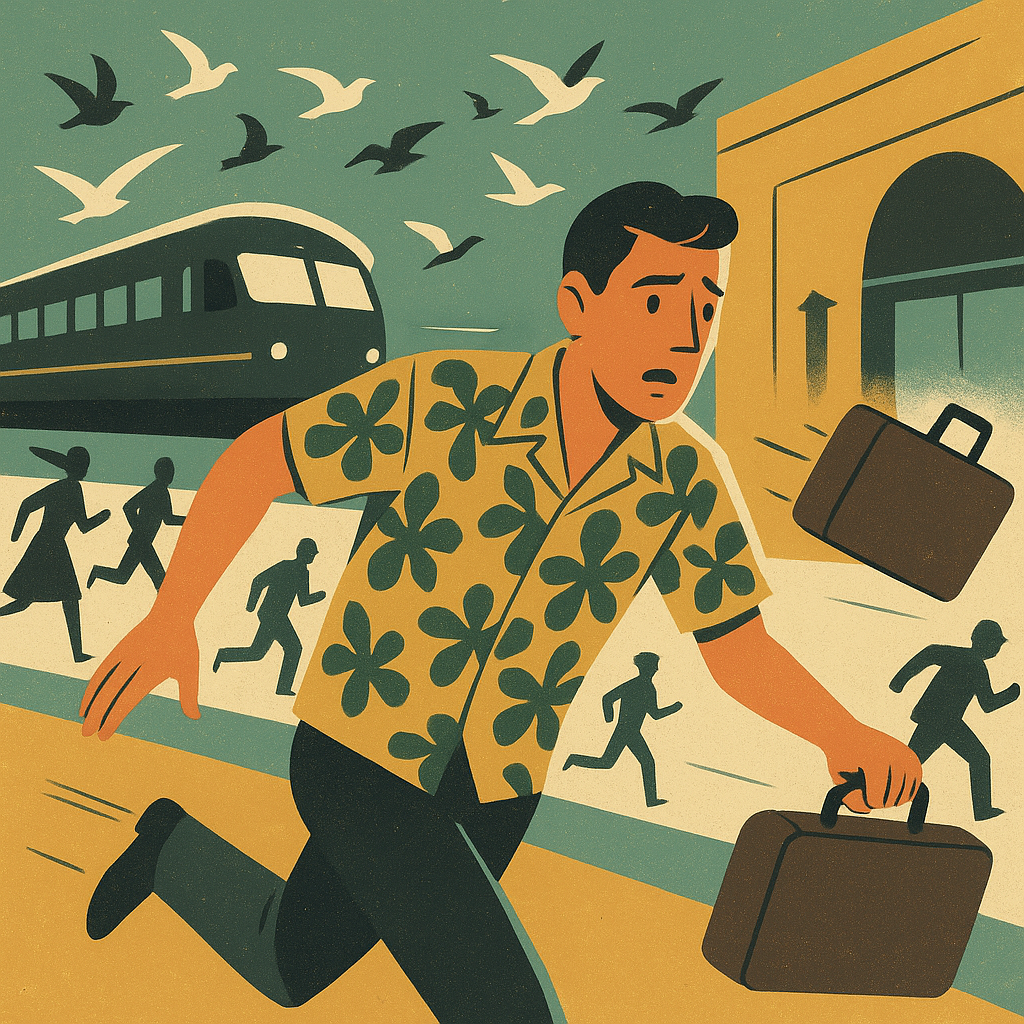
I lost my suitcase in August 2018 while travelling to a week-long silent Zen retreat in the Netherlands. My train stopped at Rotterdam station. I was heading toward a small Dutch town whose name I could not even pronounce. My phone’s internet connection wasn’t working, and I did not know where I was supposed to change trains. I saw a uniformed conductor on the platform and went outside to ask him for help. He told me that I was already running late. My train would leave in minutes, and I would have to switch platforms.

I ran to the new platform, arrived just in time to see the train that had brought me there gliding away. Another train arrived. I stepped in, found myself a seat, and realised that I had not taken my suitcase with me from the previous train. I had only a small shoulder bag and the clothes I was wearing.

My stomach dropped into a deep abyss beneath my feet. It felt as if all the blood in my body fell down with it. I tried to prevent myself from falling into that abyss, but my mind seized control. I began making a plan to retrieve my suitcase. I found the conductor; he gave me the number for the lost-and-found service. I called, but it was no use. No one could tell me where the train I had lost my suitcase on would go after its terminal station. Despite my best efforts, I never saw my suitcase again.

The Longest First Day

When I arrived at the retreat centre, my teacher burst out laughing. It was not mean at all, actually it felt nice. I knew I was safe. ”This is exactly why we practise mindfulness,” he said. His wife promised to bring me a toothbrush and toothpaste. The first day of the retreat felt endless. I noticed how my mind replayed the event again and again from different angles. I sat there in silence, watching how my mind meticulously showed me just how careless, stupid, and thoughtless I had been.

At bedtime my mind was still boiling, replaying the events and insisting on my stupidity and carelessness. Eventually I fell asleep but soon woke up again, my mind still seething with self-accusations. As the days passed, I began to see how utterly unnecessary this whole mental process was. It was merely the torrent of self-blame and fixation on loss. Though at first I had imagined that my suitcase held my entire life, I eventually realised that this was not true. Life is something entirely different.

What Is This Life We Are Living?

But what is this life of ours? Is it even possible to say? I notice that I cannot state with certainty what I mean by my self.

The Emperor Wu of Liang (c. 502-549) is said to have met the semi-mythical ancestor of Zen, the great Bodhidharma (c. 440-528), who arrived in China from somewhere along the Silk Road, presumably from India. During their short encounter, Emperor Wu questioned Bodhidharma about who this man standing before him really was. Bodhidharma replied laconically: ”I don’t know.”

What are we, what am I, truly? It feels irrelevant at first, but when I look deeper, I find it impossible to point to any one specific thing and say that this is me. If I pointed to myself and examined more closely, I would notice that it is not true. If I pointed, for instance, to my shoulder and asked whether that is me – no, it is not. It is only my shoulder, but even that is not so simple. The shoulder is merely a entaglement of various interconnected parts. It is a collection of things: skin, tendons, bone, nerve fibres, blood, and other fluids. The closer I look, the less any of these seem like ”me”. Any one of them could perhaps be replaced without that essential sense of ”I” disappearing. It is like the Ship of Thesius in this regard. Or its Chinese counterpart, the Zen Koan regarding the Cart of Keichu.

Even if my mind insists it is the same ”me” as it was meybe ten years ago, this is not the case. Our minds change, and our memories change with them. The atoms and molecules forming our bodies are replaced as we eat and drink. Food becomes part of us. Old material leaves us when we breathe out, or go to the bathroom, or brush off dry skin.

The skin surrounding the body is not me. It is merely skin. My bones are not me, for they too are merely bones. Yet if I must prove my identity to a police officer or to my computer, I instantly become a unique individual, distinct from all others in some incomprehensible way.

Interbeing: The World Within and Around Us

I sit by the window of our home and listen to the birds singing at the bird feeder. A great spotted woodpecker has given way to squabbling tits. Sound waves carry the birds’ calls to my ears. What separates me from those birds, when even the sound waves travelling through the air connect us? As I listen, the window between us ceases to exist.

The wind rustling the branches of spruces and pines takes shape in the sound it produces as it moves through them. The same play of awareness occurring in my mind is present in everything. It is in the branches of trees, in birdsong, even in the empty space binding us together. I breathe the oxygen these trees have produced. We are all interwoven together. None of us could exist without the other.

And yet, even though we are intertwined with birds, trees, and air, I can also view the same reality from another perspective, where each part becomes sharply distinct. The tit and the woodpecker take on their individual forms, and each of us has our own unique task in this moment. We are separated by our unique ways of being-yet still bound to one another.

The Chinese 8th-century Zen master Shitou Xiqian (700-790), known in Japanese as Sekito Kisen, ends his famous poem Sandokai (The Identity of Relitive and Absolute) with the words: ”Do not waste your time by night or day.” Both darkness and light are two aspects of reality intertwined and, in themselves, the same thing – two dimensions of experience. Everyday dissatisfaction and the bliss of freedom are both right here, right now.

Summary

What begins as a story about a lost suitcase unfolds into a reflection on the self, awareness, and our profound connection with all beings and things. The mind can turn trivial events into overwhelming crises, yet it also possesses the capacity to recognise their emptiness. Through personal experience, ancient Zen teachings, and the simple presence of birds and trees, we are reminded that life is both deeply individual and inseparably shared. In every moment-whether painful or peaceful-there is an invitation to see clearly and live fully.

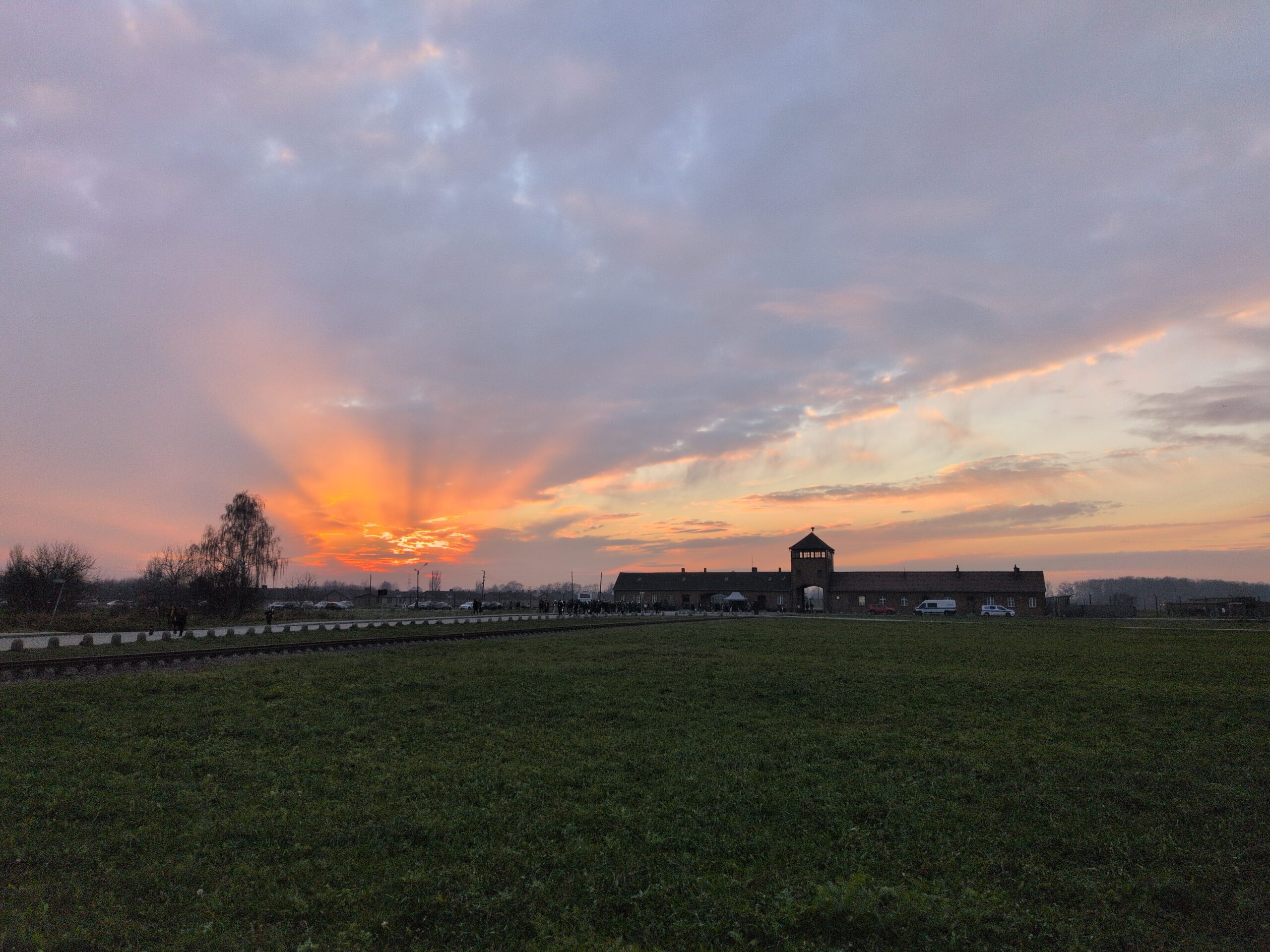
Bearing Witness at Auschwitz-Birkenau

Bearing Witness Retreat with Zen Peacemakers International 2025

Dear Friends,

This year I participated the Bearing Witness Retreat at Auschwitz-Birkenau after some years I did not. I fund raised my tuition with Mala Practise, asking donations from my friends all around the world. I am really thankful for all the people who made this retreat possible. Thank you for supporting my Mala to fund my participation.

I had just returned home as I wrote this. This marked my seventh time on this retreat. Apart from my first time in 2017, this was the first year I did not have an official staff role. However, I did serve as a co-facilitator for one of the seven Council circles during the retreat. I also co-officiated a ceremony with my dear friend, Michel Engu Dobbs Roshi from New York. Engu is one of the founding members of the Zen Peacemakers’ clown order titled Order of Disorder. On the final evening, we performed as clowns, and many others joined in the fun.

Each retreat seems to reveal its own theme, often in ways that are unexpected. This year, the theme for me seemed to be the bravery of the imprisoned. I was especially moved by the story of Witold Pilecki. In 1940, Pilecki allowed himself to be captured and sent to Auschwitz in order to infiltrate the camp. He organised a resistance movement that included hundreds of inmates, and he secretly drafted reports on the camp’s atrocities, which were smuggled out and shared with the Western Allies. After escaping from Auschwitz in 1943, Pilecki fought in the Warsaw Uprising of 1944. He was executed as a Western spy in 1948 by the Polish Communists.

The big question is: Could I do the same? Probably not, but I was deeply inspired that someone did. This year, I heard many stories of the brave efforts of the camp prisoners. They organised themselves, using the vastness of the camp to their advantage to hide people and equipment. It seems that, even in the most horrific conditions imaginable, human kindness and the will to break free were still very much alive.

This year, I was able to simply bear witness. In previous years, I have often been focused on providing space and resources for others to focus on their own retreat. This year was different. I just showed up, and that was enough. I felt truly privileged to do so. I am deeply grateful to my Mala donors, my family who supported my time away from them, and to all the staff members whose efforts made this retreat possible for all participants. I truly believe this retreat is important. It brings together a unique group of people, and it is these people who have drawn me back time and again. The willingness to bear witness in such a place reveals an openness and vulnerability that is contagious – the vulnerability of others becomes my own.

But why clowning at Auschwitz? The very first time I visited Auschwitz in 2017, the thing that kept coming to my mind was humour. I was asked to host the Talent Show on the last evening of the retreat. I hosted the event wearing my red nose, hoping to lower the bar for other performers. The clown has to let go of their sense of self in order to be funny.

This year, our visit to the children’s barracks was a particularly difficult one. Afterward, we stood next to the ruins of the place where Dr. Mengele’s child victims had been held. Roshi Fleet Maul asked us to offer a few words or a poem. An older German man recited a few lines, ending with a forceful scream of “Arschloch” (asshole) aimed at Dr. Mengele. We all stood there, somewhat confused, though the scream seemed entirely appropriate for that moment and place.
Roshi Engu, interpreted the moment well: he pulled his red nose from his pocket and embraced people, alleviating the solemnity. Someone remarked that the children would have appreciated a smile. I gathered some ice from the puddles and Engu smashed it on the road, until a guide asked us to stay on the path. Sometimes, it is necessary to stray from the path to find the humour in a situation.

There are always new, horrible details about life at Auschwitz-Birkenau to learn. When I recognise these terrible aspects of myself, I feel compelled to nurture the goodness that permeates us all. Sometimes, I wish I could close my ears and eyes to these historical facts. But I believe that bearing witness to these details is important.
Same applies to my everyday life. The constant barrage of news from war zones and climate catastrophes worldwide can numb my senses and leave me feeling helpless. At times, I just shrug my shoulders, resigned to the fact that I can’t do much, and so I do nothing. But bearing witness at Auschwitz shows that people survived even in the most horrific conditions, not by chance, but because they found the courage to collectively transform their circumstances and use their oppressors’ weaknesses against them. This is what I should do. Not to be overwhelmed, but rather bear witness and act!

Thank you for making this retreat possible. Your continuous support is very important.

Love,

Sensei Mikko 🎈


Resources:
Zen Peacemakers International: https://zenpeacemakers.org/
Bearing Witness Retreat at Auschwitz-Birkenau: https://zenpeacemakers.org/programs/auschwitz-birkenau-bearing-witness/

Zen and the Art of Dissatisfaction – Part 34

Navigating the Times of Crisis

In a rapidly changing world, where the climate crisis, technological advancements, and social inequality loom large, many may feel overwhelmed by the forces shaping our future. Yet, in the face of such challenges, simple spiritual practices can offer us ways to navigate uncertainty and find meaning. Drawing on Eastern philosophy, we are reminded that the pursuit of peace, both within ourselves and in the world, is a path we can all walk.

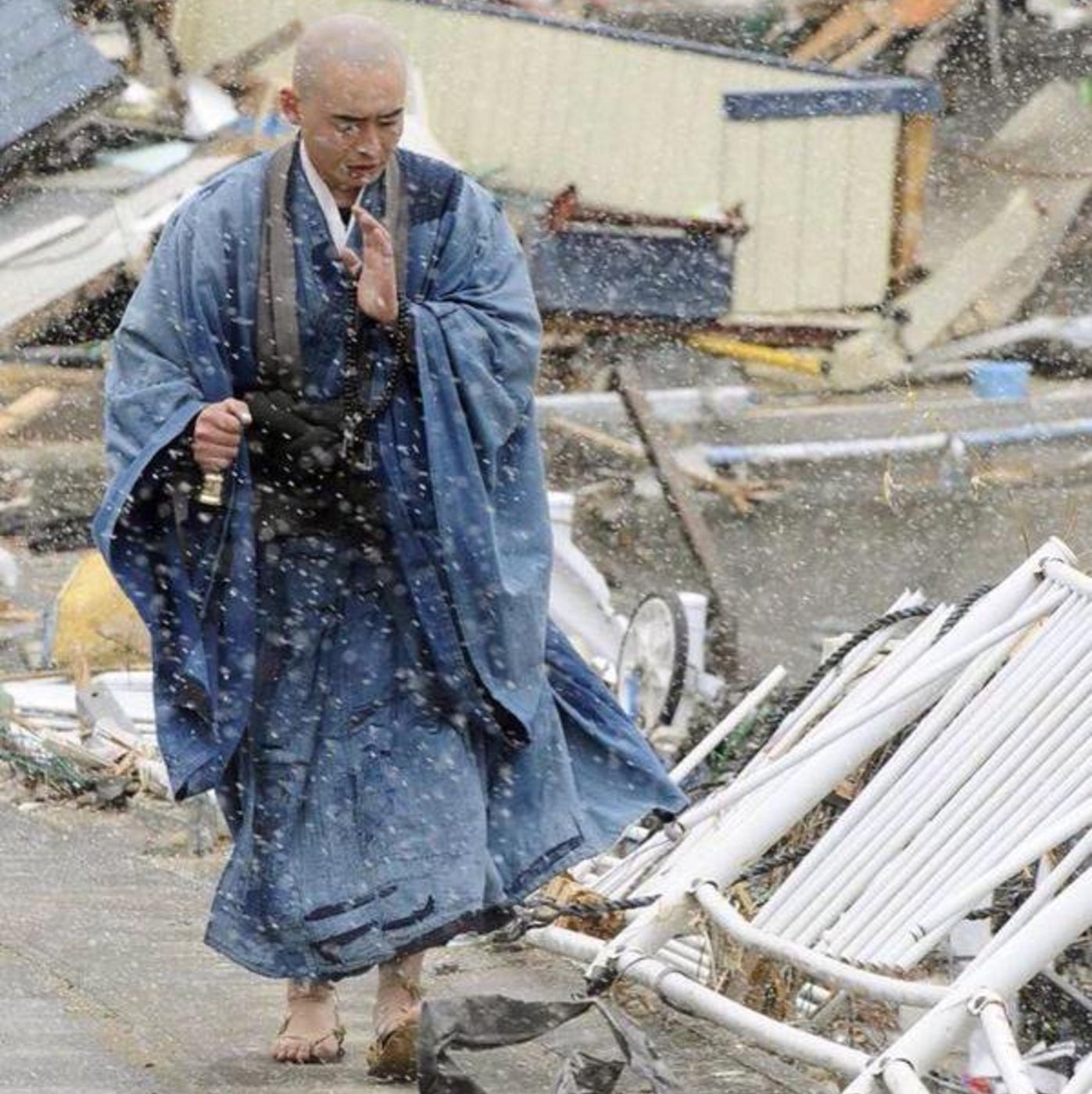
Photo: Buddhist monk Sokan Obara, 28, from Morioka, Iwate prefecture, prays for the victims in an area devastated by the earthquake and tsunami, in Ofunato, Iwate prefecture, April 7. Unknown photographer.

According to some estimates, our planet is heading towards a hothouse Earth scenario, where runaway climate change threatens the future of human civilisation (Steffen et al., 2018). This process will particularly affect the global South, countries that continue to bear the brunt of colonialism’s harmful legacy, yet have contributed the least to global warming, rising sea levels, and environmental degradation.

The Challenge of Our Time: Climate Crisis and Technology

The rise of artificial intelligence (AI) and its reliance on algorithms may also lead to large tech companies becoming the global decision-makers, shaping the economy and politics of the world. This shift could pose an existential challenge to the global South, as demand for human manual labour diminishes, further exacerbating social inequities.

But should we panic and give up hope? Is a hedonistic ”live for today” attitude the only remaining solution?

Philosopher David Loy (2019) has been exploring for decades the answers Eastern philosophies may offer to help us navigate these challenges. One such concept is the bodhisattva ideal, which originates from Sanskrit and refers to an awakened being who recognises the interconnectedness of all life. The bodhisattva understands that their well-being is intricately linked to the well-being of the world as a whole.

An embodiment of this ideal is Kanzeon (also known as Avalokiteśvara in Sanskrit and Guanyin in Chinese), a figure often depicted with a thousand arms, symbolising the countless ways in which this figure reaches out to help those in need. Another popular figure embodying the bodhisattva’s compassion is Hotei (also known as Budai in Chinese), a joyful, portly monk carrying a large bag, from which he pulls out healing remedies for the world’s suffering—whether it be a bandage for a fallen child or a new kidney for the ill.

Embracing Sorrow: The First Step Towards Action

The destruction of biodiversity and the decline of democracy are deeply sorrowful realities. Accepting this sorrow is the first step toward constructive action. As the great Joanna Macy (2021) reminded us, we are saddened by the loss of ecological diversity because we care. Our hearts break, and yet it is precisely our hearts that allow us to take action.

Acceptance of sorrow may lead us to take meaningful steps toward creating a better, fairer future. Paradoxically, to help the world, we must first let go and turn inward. The path of the peacemaker has two sides. One must care for their own well-being and strive to awaken to the oneness of life, but one should also aknowledge their own responsibility in the oneness of life and act accordingly.

The most basic spiritual practice that can help us on this path is mindfulness, which can begin with simply sitting in silence and staying aware of the open nature of our own mind. Through this practice, we can observe not just the sensations of our body, but also the nature of our mind. While suffering and dissatisfaction may not disappear, we can examine our relationship with them. Over time, our relationship with our innate dissatisfaction may change.

This process can also unveil the awareness that the nature of our mind is unknown to us. All the thoughts and emotions that arise in our mind come from someplace we cannot know – from the unknown. This insight may lead us to consider that the same interplay of consciousness occurs across all life forms. All beings have thoughts, ideas, and feelings, yet we cannot know exactly what another experiences.

American Zen teacher Bernie Glassman (1998) reminded that we need to let go of our preconceived notions and ideas and trust the Not-Knowing. The next step in the peacemaker’s path is listening or Bearing Witness. We must pause for a moment and pay attention to what is happening around us, to what others are trying to communicate. Stopping to listen to others’ perspectives may challenge our previous assumptions, attitudes, and beliefs. The third step is action – Loving Action that arises from this process of not-knowing and deep listening.

The Peacemaker’s Responsibility

A peacemaker responds to each situation in a way that is appropriate. When one realises they are interconnected with everything, one feels that they also have personal responsibility. If we are tired, we must rest. If we are hungry, we must eat. We care for our children, ensuring they are picked up from daycare, fed, and put to bed on time. We help those who fall.

Every day, we can ask ourselves: what can we do for others – since others are ourselves.

A peacemaker may also come to see that the systems in place often work for the benefit of few and to cause harm the oneness of life. They may feel compelled to influence these unjust systems, helping others realise, through their own example, that the current system damages life and its interconnectedness. The peacemaker does not demand change forcefully nor does they try to impose their will on everyone else. The peacemaker listens to all perspectives and seeks to show, through their own actions, the interconnectedness and oneness of life.

The Struggle for Change

But how do we act in a world full of injustice and suffering? We often try to force others to change their minds and behave differently. But will that lead to the outcome we desire? The peacemaker’s ideal involves helping others through not-knowing, listening, and taking loving action. Through this process, they hope to find the best solutions for the wholeness of life. The peacemaker is not just hoping for change, but becomes the change themselves.

This kind of action is exceedingly difficult. The easiest solution may be to demand change, but would that help anyone realise the harm their actions cause? Mahatma Gandhi’s concept of civil disobedience and nonviolent resistance aimed to make the opposition recognise the wrongness of their violent actions. Nonviolent resistance has brought about significant change in the world when enough people collectively stand behind a cause.

However, we do not need to start by changing everything. We do not need to be Gandhi today. First, we must learn to know ourselves. Despite knowing much about the workings of the human brain and mind, we often fail to understand our own mind. We think of ourselves as the rulers of our own mind and consciousness, but we are barely gatekeepers. Even as gatekeepers, we often wander aimlessly through our minds like Snufkin in the Moomin stories.

The first appropriate step on the peacemaker’s path may simply be to sit down and be quiet for a moment.

Conclusion

The journey of a peacemaker is not easy, nor it is straight forward. It requires us to embrace sorrow, realise our interconnectedness, and take action in small and large ways. But ultimately, it is through open awareness of the nature of our mind, and compassion that we can navigate the complexities of the diversity of the world and contribute to a more peaceful and just future for all life.

References

Glassman, Bernie (1998). Bearing Witness: A Zen Master’s Lessons in Making Peace. Bell Tower.
Loy, D. R. (2019). Ecodharma: Buddhist Teachings for the Ecological Crisis. Wisdom Publications.
Macy, J. (2021). Active Hope: How to Face the Mess We’re in without Going Crazy. New World Library.
Steffen, W., Rockström, J., Richardson, K., Lenton, T. M., Folke, C., Liverman, D., … & Schellnhuber, H. J. (2018). Trajectories of the Earth System in the Anthropocene. Proceedings of the National Academy of Sciences, 115(33), 8252-8259. https://doi.org/10.1073/pnas.1810141115

Zen and the Art of Dissatisfaction – Part 20

The Triple Crisis of Civilisation

“At the time I climbed the mountain or crossed the river, I existed, and the time should exist with me. Since I exist, the time should not pass away. […] The ‘three heads and eight arms’ pass as my ‘sometimes’; they seem to be over there, but they are now.”

Dōgen

Introduction

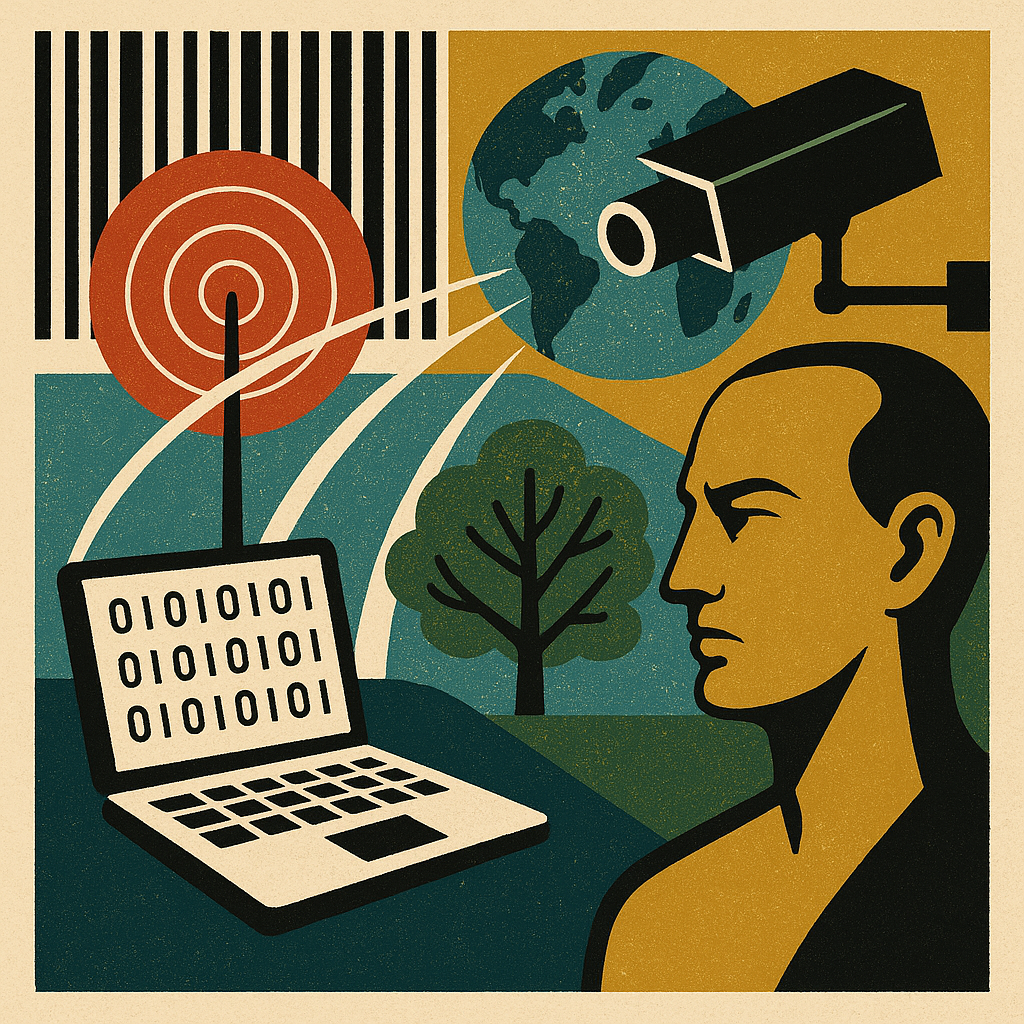
This blog post explores the intertwining of ecology, technology, politics and data collection through the lens of modern civilisation’s crises. It begins with a quote by the Japanese Zen master Dōgen, drawing attention to the temporal nature of human existence. From climate emergency to digital surveillance, from Brexit to barcodes, the post analyses how personal data has become the currency of influence and control.


Originally published in Substack: https://mikkoijas.substack.com/

The climate emergency currently faced by humanity is only one of the pressing concerns regarding the future of civilisation. A large-scale ecological crisis is an even greater problem—one that is also deeply intertwined with social injustice. A third major concern is the rapidly developing situation created by technology, which is also connected to problems related to nature and the environment.

Cracks in the System: Ecology, Injustice, and the Digital Realm

The COVID-19 pandemic  revealed new dimensions of human interaction. We are dependent on technology-enabled applications to stay connected to the world through computers and smart devices. At the same time, large tech giants are generating immense profits while all of humanity struggles with unprecedented challenges.

Brexit finally came into effect at the start of 2021. On Epiphany of that same year, angry supporters of Donald Trump stormed the United States Capitol. Both Brexit and Trump are children of the AI era. Using algorithms developed by Cambridge Analytica, the Brexit campaign and Trump’s 2016 presidential campaign were able to identify voters who were unsure of their decisions. These individuals were then targeted via social media with marketing and curated news content to influence their opinions. While the data for this manipulation was gathered online, part of the campaigning also happened offline, as campaign offices knew where undecided voters lived and how to sway them.

I have no idea how much I am being manipulated when browsing content online or spending time on social media. As I move from one website to another, cookies are collected, offering me personalised content and tailored ads. Algorithms working behind websites monitor every click and search term, and AI-based systems form their own opinion of who I am.

Surveillance and the New Marketplace

A statistical analysis algorithm in a 2013 study analysed the likes of 58,000 Facebook users. The algorithm guessed users’ sexual orientation with 88% accuracy, skin colour with 95% accuracy, and political orientation with 85% accuracy. It also guessed with 75% accuracy whether a user was a smoker (Kosinski et al., 2013).

Companies like Google and Meta Platforms—which includes Facebook, Instagram, Messenger, Threads, and WhatsApp—compete for users’ attention and time. Their clients are not individuals like me, but advertisers. These companies operate under an advertising-based revenue model. Individuals like me are the users whose attention and time are being competed for.

Facebook and other similar companies that collect data about users’ behaviour will presumably have a competitive edge in future AI markets. Data is the oil of the future. Steve Lohr, long-time technology journalist at the New York Times, wrote in 2015 that data-driven applications will transform our world and behaviour just as telescopes and microscopes changed our way of observing and measuring the universe. The main difference with data applications is that they will affect every possible field of action. Moreover, they will create entirely new fields that have not previously existed.

In computing, the word ”data” refers to various numbers, letters or images as such, without specific meaning. A data point is an individual unit of information. Generally, any single fact can be considered a data point. In a statistical or analytical context, a data point is derived from a measurement or a study. A data point is often the same as data in singular form.

From Likes to Lives: How Behaviour Becomes Prediction

Decisions and interpretations are created from data points through a variety of processes and methods, enabling individual data points to form applicable information for some purpose. This process is known as data analysis, through which the aim is to derive interesting and comprehensible high-level information and models from collected data, allowing for various useful conclusions to be drawn.

A good example of a data point is a Facebook like. A single like is not much in itself and cannot yet support major interpretations. But if enough people like the same item, even a single like begins to mean something significant. The 2016 United States presidential election brought social media data to the forefront. The British data analytics firm Cambridge Analytica gained access to the profile data of millions of Facebook users.

The data analysts hired by Cambridge Analytica could make highly reliable stereotypical conclusions based on users’ online behaviour. For example, men who liked the cosmetics brand MAC were slightly more likely to be homosexual. One of the best indicators of heterosexuality was liking the hip-hop group Wu-Tang Clan. Followers of Lady Gaga were more likely to be extroverted. Each such data point is too weak to provide a reliable prediction. But when there are tens, hundreds or thousands of data points, reliable predictions about users’ thoughts can be made. Based on 270 likes, social media knows as much about a user as their spouse does.

The collection of data is a problem. Another issue is the indifference of users. A large portion of users claim to be concerned about their privacy, while simultaneously worrying about what others think of them on social platforms that routinely violate their privacy. This contradiction is referred to as the Privacy Paradox. Many people claim to value their privacy, yet are unwilling to pay for alternatives to services like Facebook or Google’s search engine. These platforms operate under an advertising-based revenue model, generating profits by collecting user data to build detailed behavioural profiles. While they do not sell these profiles directly, they monetise them by selling highly targeted access to users through complex ad systems—often to the highest bidder in real-time auctions. This system turns user attention into a commodity, and personal data into a tool of influence.

The Privacy Paradox and the Illusion of Choice

German psychologist Gerd Gigerenzer, who has studied the use of bounded rationality and heuristics in decision-making, writes in his excellent book How to Stay Smart in a Smart World (2022) that targeted ads usually do not even reach consumers, as most people find ads annoying. For example, eBay no longer pays Google for targeted keyword advertising because they found that 99.5% of their customers came to their site outside paid links.

Gigerenzer calculates that Facebook could charge users for its service. Facebook’s ad revenue in 2022 was about €103.04 billion. The platform had approximately 2.95 billion users. So, if each user paid €2.91 per month for using Facebook, their income would match what they currently earn from ads. In fact, they would make significantly more profit because they would no longer need to hire staff to sell ad space, collect user data, or develop new analysis tools for ad targeting.

According to Gigerenzer’s study, 75% of people would prefer that Meta Platforms’ services remain free, despite privacy violations, targeted ads, and related risks. Of those surveyed, 18% would be willing to pay a maximum of €5 per month, 5% would be willing to pay €6–10, and only 2% would be willing to pay more than €10 per month.

But perhaps the question is not about money in the sense that Facebook would forgo ad targeting in exchange for a subscription fee. Perhaps data is being collected for another reason. Perhaps the primary purpose isn’t targeted advertising. Maybe it is just one step toward something more troubling.

From Barcodes to Control Codes: The Birth of Modern Data

But how did we end up here? Today, data is collected everywhere. A good everyday example of our digital world is the barcode. In 1948, Bernard Silver, a technology student in Philadelphia, overheard a local grocery store manager asking his professors whether they could develop a system that would allow purchases to be scanned automatically at checkout. Silver and his friend Norman Joseph Woodland began developing a visual code based on Morse code that could be read with a light-based scanner. Their research only became standardised as the current barcode system in the early 1970s. Barcodes have enabled a new form of logistics and more efficient distribution of products. Products have become data, whose location, packaging date, expiry date, and many other attributes can be tracked and managed by computers in large volumes.

Conclusion

We are living in a certain place in time, as Dōgen described—an existence with a past and a future. Today, that future is increasingly built on data: on clicks, likes, and digital traces left behind.

As ecological, technological, and political threats converge, it is critical that we understand the tools and structures shaping our lives. Data is no longer neutral or static—it has become currency, a lens, and a lever of power.


References

Gigerenzer, G. (2022). How to stay smart in a smart world: Why human intelligence still beats algorithms. Penguin.

Kosinski, M., Stillwell, D., & Graepel, T. (2013). Private traits and attributes are predictable from digital records of human behaviour. Proceedings of the National Academy of Sciences, 110(15), 5802–5805. https://doi.org/10.1073/pnas.1218772110

Lohr, S. (2015). Data-ism: The revolution transforming decision making, consumer behavior, and almost everything else. HarperBusiness.

Dōgen / Sōtō Zen Text Project. (2023). Treasury of the True Dharma Eye: Dōgen’s Shōbōgenzō (Vols. I–VII, Annotated trans.). Sōtōshū Shūmuchō, Administrative Headquarters of Sōtō Zen Buddhism.

Encounters Without Preconceptions

Written by Kikka Rytkönen

READ IN FINNISH 🇫🇮

I thought the whole retreat was very good and interesting. Some of the topics that looked boring on paper turned out to be surprisingly engaging. For example, when we visited a Pentecostal church, I initially thought it would be unpleasant for me. But it turned out to be more like a performance, through which I came to understand why people are involved in the movement. It was a good experience.

I also learned how important it is to enter situations without labeling, prejudging, or defining them in advance. Just go in and listen. Everything related to religion was interesting. Lutheran Christianity was the most familiar to me, and perhaps that’s why it didn’t spark quite the same interest. I left the church when I was 16.

I had been to a mosque before, but this time I gained new insight—for instance, I understood why the Tatars haven’t faced discrimination in Finland. They said: “We’ve already been a minority in Russia.” That stayed with me.

Other organizations and begging
The D-station felt cozy. Waiting out the rain together always creates a sense of connection.
VEPA was an amazing place, and the people too. I will definitely return to that place.

Begging was hard. Asking for money felt impossible. People don’t really carry cash anymore. The experience made me feel a bit… submissive, or maybe inadequate. (Please find a better word than “submissive.”)

I ended up chatting with a man around my age standing outside a Euro store. I went inside, and when I came out, he—who turned out to be the shopkeeper—came up to me with a heavy bag full of sausages and chocolate. I thanked him with a handshake. It was a touching moment.

Since then, I’ve given a few euros to people in Piritori who ask for money specifically to buy food. I wonder: is it helpful to give money to someone I suspect is a drug addict? Is it really my place to decide?

Afterthoughts
I also want to mention what happened at the sleeping place. After Maika’s singing and mantra session, others started singing too—it created a beautiful sense of togetherness.

The ceremonies were extremely important and touching for me. On the island, the number of people amplified the experience, and the part of Mikko’s dharma transmission that involved the fire was particularly powerful. Both the content and the ritual form felt somehow purifying. Hard to explain—but I felt very connected.

In the group sharings, it felt like we were family.

Sleeping together so close to others—especially on cardboard and without a pillow—was quite challenging. I tried to learn to enjoy the sounds around me, from birds to some loud noise that made me think, “okay, now the war has started.”When I woke up, I felt congested and hadn’t gotten enough sleep. A sort of regression took over—people started to seem distant, even dismissive of me. I told myself: “Just get through this.” I guess some separation anxiety was already kicking in, knowing it would all end soon.

Back at Elokolo, I fixated on the idea that I needed to eat certain colors at specific intervals, and porridge became my central focus. I probably babbled some nonsense to people there too.

All in all, walking for a day and a half and spending a night without any belongings or a phone was incredibly liberating. It felt good not to have to fuss over stuff, money, or especially a phone.

At the farewell and the restaurant, I clung to Mikko Sensei and Maija—people I knew and felt safe with. I no longer knew how to be with anyone else, even though I could see people having conversations at other tables.

A big THANK YOU for the experience!
Did we become a sangha?

Peace-love,

Kikka

Kikka with Sensei Mikko
Photo by Laura Malmivaara

Kohtaamisia ilman ennakkoluuloja

READ IN ENGLISH 🇬🇧

Kirjoittanut: Kikka Rytkönen

Koko retriitti oli mielestäni erittäin hyvä ja mielenkiintoinen. Asiat, jotka paperilla näyttivät tylsiltä, osoittautuivatkin paikan päällä todella kiinnostaviksi. Esimerkiksi kun mentiin helluntailaisten kirkkoon, ajattelin aluksi, että tämä varmaan tulee olemaan minulle vastenmielistä. Mutta se olikin oikeastaan kuin esitys, jonka kautta ymmärsin, miksi ihmiset ovat mukana tässä liikkeessä. Se oli hyvä kokemus.

Opin myös sen, kuinka tärkeää on mennä tilanteisiin leimaamatta, ajattelematta tai määrittelemättä mitään etukäteen. Pitää vain mennä mukaan ja kuunnella. Kaikki uskontoon liittyvät osuudet olivat mielenkiintoisia. Luterilainen kristillisyys on minulle tutuinta – ehkä siksi se ei herättänyt ihan samanlaista kiinnostusta. Olen eronnut kirkosta jo 16-vuotiaana.

Moskeijassa olin käynyt aiemminkin, mutta nyt sain siellä uudenlaisen oivalluksen: ymmärsin esimerkiksi, miksi tataarit eivät ole Suomessa joutuneet syrjityiksi. He sanoivat: ”Olemme olleet vähemmistö jo Venäjällä.” Tämä jäi mieleen.

Muut järjestöt ja kerjuu
D-asemalla oli kotoisa tunnelma. Sateen piteleminen yhdessä yhdistää aina. Vepa oli aivan mahtava paikka, ja ihmiset siellä. Vähän harmitti, että Suski sai niin vähän puheenvuoroa. Tähän paikkaan haluan kyllä palata.

Kerjääminen – se oli vaikeaa. Rahan pyytäminen tuntui mahdottomalta. Ihmisillä ei ole enää käteistä mukana. Siinä tilanteessa tuli vähän alistunut, jopa huono olo. (Keksikää parempi sana kuin ”alamainen”.)

Pysähdyin juttelemaan Eurokaupan edessä seisovan, suurin piirtein itseni ikäisen miehen kanssa. Menin kauppaan ja kun palasin, hän – joka olikin kauppias – tuli ulos monen kilon makkara- ja suklaapussin kanssa. Kiitin häntä kädestä pitäen. Se oli koskettava hetki.

Kerjäämisen jälkeen olen antanut Piritorilla ruokaa varten pyytäville ihmisille muutamia euroja. Mietin usein: onko hyödyllistä antaa rahaa, jos epäilen, että henkilö on esimerkiksi päihderiippuvainen? Onko se minun tehtäväni päättää?

Jälkitunnelmia
Täytyy mainita myös nukkumapaikan tapahtumista. Maikan laulatus ja mantrattelu loi upean tunnelman – ja sitten, kun muutkin alkoivat laulaa, syntyi vahva yhteisöllisyyden tunne.

Seremoniat olivat minulle äärimmäisen tärkeitä ja koskettavia. Saaressa ihmismäärä kaiutti tunnelmaa, ja se tulen ympärillä tapahtunut osuus Mikon dharmasiirrossa oli todella voimakas. Sekä sisällössä että muodossa oli jotain puhdistavaa. Syntyi vahva yhdistyneisyyden kokemus.

Ryhmäkeskusteluissa tuntui, kuin olisimme perhettä.

Nukkuminen yhdessä, tosi lähekkäin – varsinkin pahvilla ja ilman tyynyä – oli melko hankalaa. Yritin opetella nauttimaan ympäristön äänistä, välillä linnut, välillä joku valtava ääni josta ajattelin: ”no nyt se sota syttyi”. Herätessä olo oli tukkoinen, ja unta oli selvästi jäänyt liian vähän. Tuli jonkinlainen regressio – ihmiset alkoivat tuntua etäisiltä, melkein kuin ne dissaisivat minua. Ajattelin: ”tästä täytyy nyt vain selvitä”. Ehkä siinä oli jo eroamisen haikeuttakin – kohta tämä kaikki päättyy.

Elokolossa palasin siihen, että mun täytyisi syödä tiettyjä värejä tietyin välein, ja puurosta tuli yhtäkkiä elämän keskiö. Saatoin jutella jotain höpöhöpöäkin ihmisten kanssa.

Kaiken kaikkiaan se, että kuljin 1,5 päivää ja vietin yön ilman omaisuutta, ilman kännykkää, oli todella vapauttavaa. Oli hyvä olla, kun ei tarvinnut sählätä tavaroiden, rahojen tai puhelimen kanssa.

Lopputervehdyksissä ja ravintolassa selviydyin liimautumalla Sensei Mikon ja Maijan viereen – he olivat tuttuja, turvaa tuovia. En enää osannut olla kenenkään muun kanssa, vaikka näin, että joissain pöydissä käytiin keskusteluja.

Suuri KIITOS kokemuksesta!
Tuliko meistä shanga?

Peace-love!

Kikka

Kikka Rytkönen ja Sensei Mikko
Kuva: Laura Malmivaara

Zen and the Art of Dissatisfaction – Part 15

The Climate Story, The End of Holocene Stability 

Throughout human history, never before has the capital of states been as urgently needed as it is today. Canadian journalist, author, professor, and activist Naomi Klein, in her book On Fire (2020), argues that the accumulated wealth of the fossil fuel industry should be redirected as soon as possible to support the development of new, greener infrastructure. This process would also create new jobs. Similarly, Klein proposes a novel state-supported project whereby citizens help restore natural habitats to their original condition.

Originally published in Substack https://substack.com/history/post/164484451

In my public talks on climate, I often present a chart illustrating climate development in relation to the evolution of our species. The climate has warmed and cooled several times during the existence of Homo sapiens. Those who justify their privileged business-as-usual lifestyles often wrongly exploit this detail, because the rapid changes and fluctuations have always been deadly. 

From the Miocene Epoch to the Rise of Humans

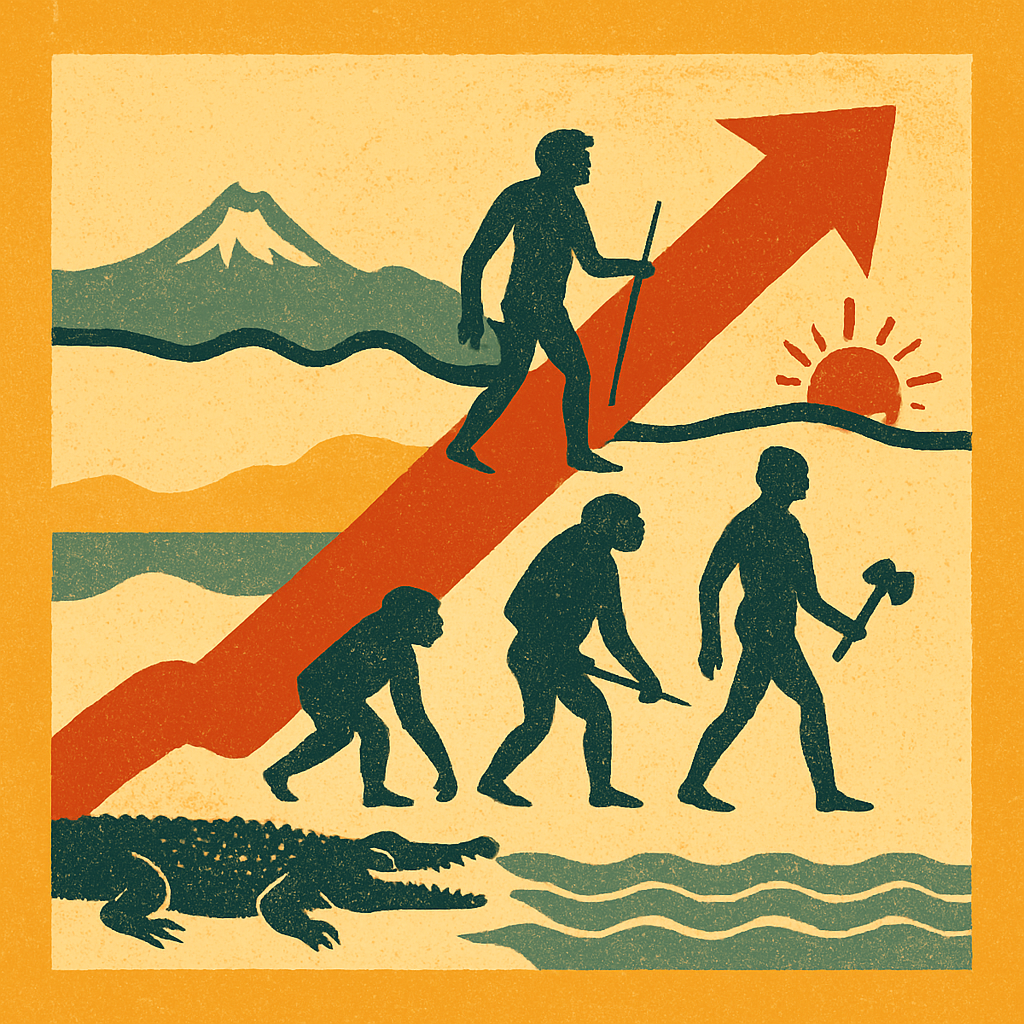
The chart begins in the Miocene epoch, shortly before the Pliocene, a geological period lasting from about 5.3 to 2.6 million years ago. Around the boundary of the Miocene and Pliocene, approximately six million years ago, the evolutionary paths of modern humans and chimpanzees diverged. During the Pliocene, the Earth’s average temperature gradually decreased. Around the middle of the Pliocene, the global temperature was roughly 2–3 degrees Celsius warmer than today, causing sea levels to be about 25 metres higher.

The temperature target of the Paris Agreement is to keep warming below +1.5 degrees Celsius. However, the countries that ratified the agreement have failed to meet this goal, and we are now headed back toward Miocene-era temperatures. Bill Gates (2021) reminds us that the last time the Earth’s average temperature was over four degrees warmer than today, crocodiles lived north of the Arctic Circle.

As the climate cooled and Africa’s rainforest areas shrank, a group of distant ancestors of modern humans adapted to life in woodlands and deserts, searching for food underground in the form of roots and tubers instead of relying on rainforest fruits. By the end of the Pliocene, the Homo erectus, or upright humans, appear in the archaeological record. Homo erectus is the most successful of all past human species, surviving in various parts of the world for nearly two million years. The oldest Homo erectus remains date back about two million years from Kenya, and the most recent ones are around 110,000 years old from the Indonesian island of Java.

Homo erectus travelled far from their African birthplace, reaching as far as Indonesia, adapting to diverse natural conditions. They likely tracked animals in various terrains, exhausting large antelopes and other prey by running them down until they could be suffocated or killed with stones. The animals were then butchered using stone tools made on site for specific purposes.

The Pleistocene and the Emergence of Modern Humans

About one million years ago, the Pliocene gave way to the Pleistocene epoch, a colder period marked by significant fluctuations in the Earth’s average temperature. The Pleistocene lasted from around one million to roughly 11,500 years ago. It is best known for the Earth’s most recent ice ages, when the Northern Hemisphere was covered by thick ice sheets.

Modern humans appear in the archaeological record from the Pleistocene in present-day Ethiopia approximately 200,000 years ago. More recent, somewhat surprising discoveries near Marrakech in Morocco suggest modern humans may have lived there as far back as 285,000 years ago. This indicates that the origin of modern humans could be more diverse than previously thought, with different groups of people of varying sizes and appearances living across Africa. While symbolic culture is not evident from this early period (285,000–100,000 years ago), it is reasonable to assume these humans were physically and behaviourally similar to us today. They had their own cultural traditions and histories and were aware political actors capable of consciously addressing challenges related to their lifestyles and societies.

Modern humans arrived in Europe about 45,000 years ago, towards the end of the last ice age. Their arrival coincided with the extinction of Neanderthals, our closest evolutionary relatives. Archaeological dates vary slightly, but Neanderthals disappeared either 4,000 or up to 20,000 years after modern humans arrived. There are multiple theories for their disappearance. In any case, modern humans interbred with Neanderthals, as evidenced by the fact that around 2% of the DNA of present-day humans outside Africa derives from Neanderthals.

The Holocene: An Era of Stability and Agricultural Beginnings

The Pleistocene ended with the conclusion of the last ice age and the beginning of the Holocene, around 11,500 years ago. The transition between these epochs is crucial to our discussion. The Pliocene was a period of steady cooling, while the Pleistocene featured dramatic temperature swings and ice ages. The Holocene ushered in a stable, warmer climate that allowed humans to begin experimenting with agriculture globally.

The steady temperatures of the Holocene provided predictable seasons and a climate suitable for domesticating and cultivating crops. I ask you to pay particular attention to the Holocene’s relatively stable temperatures—a unique period in the last six million years. Until the Holocene, our ancestors had lived as nomadic hunter-gatherers, moving to wherever food was available. Once a resource was depleted, they moved on.

This cultural pattern partly explains why modern humans travelled such great distances and settled vast parts of the planet during the last ice age. Only lions had previously spread as widely, but unlike lions, humans crossed vast bodies of water without fear. History has occasionally been marked by young reckless individuals, brimming with hormones and a desire to prove themselves (let’s call them “The Dudeson” types), who undertake risky ventures that ultimately benefit all humanity—such as crossing seas.

The stable Holocene climate also meant reliable rainfall and forest growth. Paleontologist and geologist R. Dale Guthrie (2005), who has studied Alaskan fossil records, describes the last ice age’s mammoth steppe. During that period, much of the Earth’s freshwater was locked in northern glaciers, leaving little moisture for clouds or rain. The mammoth steppe stretched from what is now northern Spain to Alaska, experiencing cold winters but sunny, relatively long summers. Humans, originating from African savannahs, thrived in this environment. Guthrie notes that ice age humans did not suffer from the common cold, which only emerged during the Holocene with domesticated animals.

The Anthropocene: Human Impact on Climate

The world as we know it exists within the context of Holocene. It is difficult to even imagine the conditions of the Pleistocene world. It is quite impossible for humans to even imagine what would the world be after the Holocene – and this moment is right now! Looking at the chart of global temperature history, we see that at the end of the Holocene, the temperature curve rises sharply. Since the Industrial Revolution in the 1800s, global temperatures have steadily increased. Because this warming is undoubtedly caused by humans, some suggest naming the period following the Holocene the Anthropocene—an era defined by human impact.

There is no consensus on how the Anthropocene will unfold, but atmospheric chemical changes and ice core records show that rising carbon dioxide (CO2) levels are a serious concern. Before industrialisation in the 1700s, atmospheric CO2 was about 278 parts per million (ppm). CO2 levels have steadily risen, especially since the 1970s, when it was 326 ppm. Based on the annual analysis from NOAA’s Global Monitoring Lab (Mauna Loa Observatory in Hawaii), global average atmospheric carbon dioxide was 422.8 ppm in 2024, a new record high. Other dangerous greenhouse gases produced by industry and agriculture include methane and nitrous oxide.

Greenhouse gases like CO2, methane, and nitrous oxide act like the glass roof of a greenhouse. They trap heat that would otherwise escape into space, reflecting warmth back to Earth’s surface. Industrial and agricultural emissions have altered atmospheric chemistry, causing global warming. This excess heat triggers dangerous feedback loops, such as increased water vapour in the atmosphere, which further amplifies warming by trapping more heat.

Monitoring atmospheric changes is essential for understanding our future. Because of climate system lags behind, temperatures are expected to continue rising for decades as ocean currents release stored heat. Eventually, temperatures will stabilise as excess heat radiates into space.

Climate Change, Food Security, and Global Uncertainty

A peer-reviewed article published in Nature Communications by Kornhuber et al. (2023) explores how climate change affects global food security. Changes in the atmosphere’s high-altitude jet streams, known as Rossby waves, directly impact crop production in the Northern Hemisphere. Climate change can cause these jet streams to become stuck or behave unpredictably, but current crop and climate models often fail to account for such irregularities.

The disruption of wind patterns due to ongoing warming could simultaneously expose major agricultural regions—such as North America, Europe, India, and East Asia—to extreme weather events. Global food production currently relies on balancing yields across regions. If one area experiences crop failure, others compensate. However, the risk of multiple simultaneous crop failures increases vulnerability. Since 2015, hunger in the Global South has grown alarmingly, with no clear solutions to climate-induced risks.

The greatest threat to humanity’s future may not be warming itself or extreme weather, but the uncertainty and unpredictability it brings. The Holocene was an era of safety and predictability, much like the Nile’s reliable flooding assured stability for ancient Egyptians. This stability provided a secure framework within which humanity thrived. Although crop failures have occurred throughout history, nothing compares to the potential loss of Holocene-era climatic reliability–nothing.

Conclusion

The climatic history of our planet and our species shows that we have lived through dramatic shifts—from the warm Miocene, through ice age Pleistocene swings, to the uniquely stable Holocene. It is this stability that enabled the rise of agriculture, settled societies, and civilisation. Today, human activity is destabilising this balance, pushing us into the uncertain Anthropocene.

Understanding this deep history is crucial for grasping the scale of the challenge we face. Climate change threatens the predictability that has underpinned human survival and food security for millennia. The future depends on our capacity to respond to these changes with informed, collective action, such as those Naomi Klein advocates: redirecting wealth and effort toward sustainable, green infrastructure and restoration projects.


References

Gates, B. (2021). How to avoid a climate disaster: The solutions we have and the breakthroughs we need. Penguin Random House.

Guthrie, R. D. (2005). The nature of Paleolithic art. University of Chicago Press.

Klein, N. (2020). On fire: The (burning) case for a green new deal. Simon & Schuster.

Kornhuber, K., O’Gorman, P. A., Coumou, D., Petoukhov, V., Rahmstorf, S., & Hoerling, M. (2023). Amplified Rossby wave activity and its impact on food production stability. Nature Communications, 14(1), 1234. https://doi.org/10.1038/s41467-023-XXX

Zen and the Art of Dissatisfaction – Part 14

Manufacturing Desire

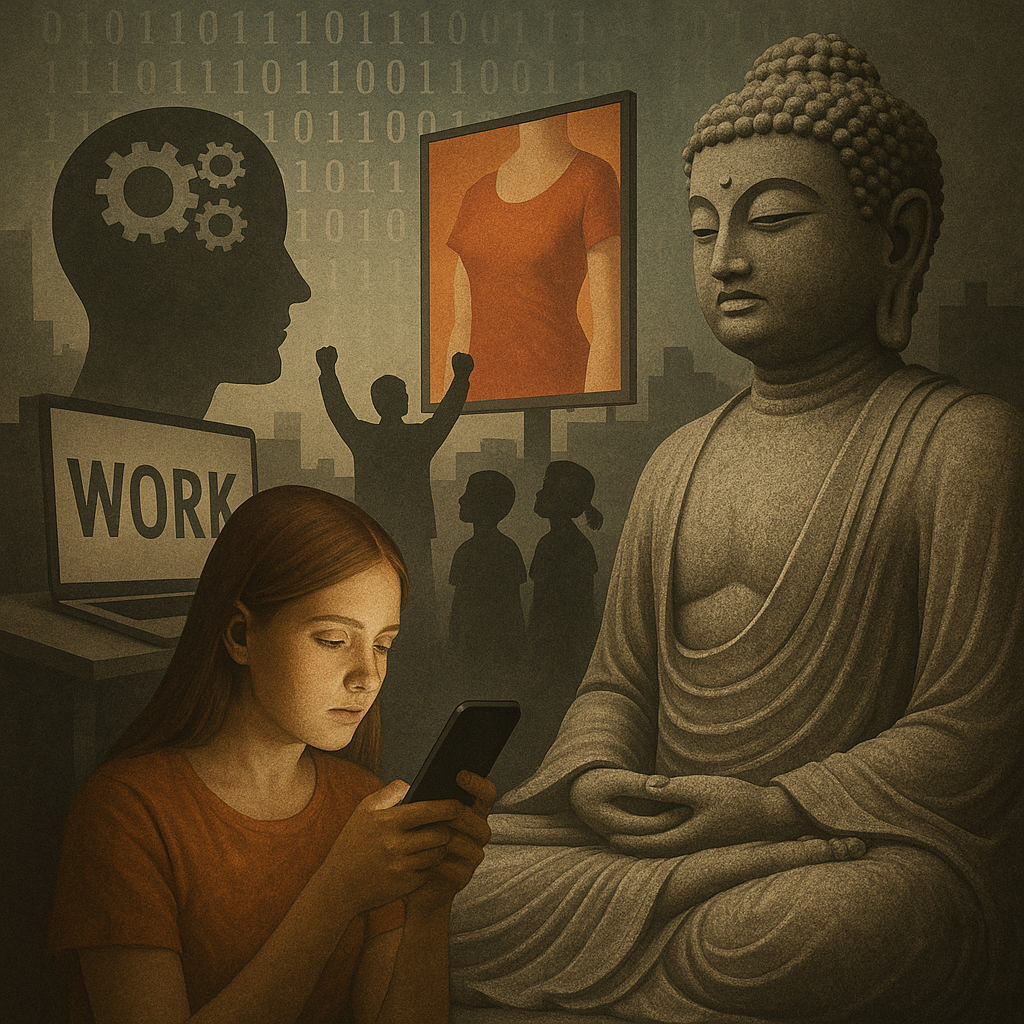
In an era when technological progress promises freedom and efficiency, many find themselves paradoxically more burdened, less satisfied, and increasingly detached from meaningful work and community. The rise of artificial intelligence and digital optimisation has revolutionised industries and redefined productivity—but not without cost. Beneath the surface lies a complex matrix of invisible control, user profiling, psychological manipulation, and systemic contradictions. Drawing from anthropologists, historians, and data scientists, this post explores how behaviour modification, corporate surveillance, and the proliferation of “bullshit jobs” collectively undermine our autonomy, well-being, and connection to the natural world.

Originally published in Substack https://substack.com/home/post/p-164145621

Manipulation of Desire

Large language models, or AI tools, are designed to optimise production by quantifying employees’ contributions relative to overall output and costs. This logic, however, rarely applies to upper management—those who oversee the operation of these very systems. Anthropologist David Graeber (2018) emphasised that administrative roles have exploded since the late 20th century, especially in institutions like universities where hierarchical roles were once minimal. He noted that science fiction authors can envision robots replacing sports journalists or sociologists, but never the upper-tier roles that uphold the basic functions of capitalism.

In today’s economy, these “basic functions” involve finding the most efficient way to allocate available resources to meet present or future consumer demand—a task Graeber argues could be performed by computers. He contends that the Soviet economy faltered not because of its structure, but because it collapsed before the era of powerful computational coordination. Ironically, even in our data-rich age, not even science fiction dares to imagine an algorithm that replaces executives.

Ironically, the power of computers is not being used to streamline economies for collective benefit, but rather to refine the art of influencing individual behaviour. Instead of coordinating production or replacing bureaucracies, these tools have been repurposed for something far more insidious: shaping human desires, decisions, and actions. From Buddhist perspective manipulation of human desire sounds dangerous. The Buddha said that the cause or suffering and dissatisfaction is tanha, which is usually translates as desire or craving. If human desires or thirst is manipulated and controlled, we can be sure that suffering will not end if we rely on surveillance capitalism. To understand how we arrived at this point, we must revisit the historical roots of behaviour modification and the psychological tools developed in times of geopolitical crisis.

The roots of modern Behaviour modification trace back to mid-20th-century geopolitical conflicts and psychological experimentation. During the Korean War, alarming reports emerged about American prisoners of war allegedly being “brainwashed” by their captors. These fears catalysed the CIA’s MKUltra program—covert mind control experiments carried out at institutions like Harvard, often without subjects’ consent.

Simultaneously, B.F. Skinner’s Behaviourist theories gained traction. Skinner argued that human behaviour could be shaped through reinforcement, laying the groundwork for widespread interest in behaviour modification. Although figures like Noam Chomsky would later challenge Skinner’s reductionist model, the seed had been planted.

What was once a domain of authoritarian concern is now the terrain of corporate power. In the 21st century, the private sector—particularly tech giants—has perfected the tools of psychological manipulation. Surveillance capitalism, a term coined by Harvard professor Shoshana Zuboff, describes how companies now collect and exploit vast quantities of personal data to subtly influence consumer behaviour. It is very possible your local super market is gathering date of your purchases and building a detailed user profile, which in turn is sold to their collaborators.  These practices—once feared as mechanisms of totalitarian control—are now normalised as personalised marketing. Yet, the core objective remains the same: predict and control human action – and turning that into profit. 

Advertising, Children, and the Logic of Exploitation

In the market economy, advertising reigns supreme. It functions as the central nervous system of consumption, seeking out every vulnerability, every secret desire. Jeff Hammerbacher, a data scientist and early Facebook engineer, resigned in disillusionment after realising that some of the smartest minds of his generation were being deployed to optimise ad clicks rather than solve pressing human problems.

Today’s advertising targets children. Their impulsivity and emotional responsiveness make them ideal consumers—and they serve as conduits to their parents’ wallets. Meanwhile, parents, driven by guilt and affection, respond to these emotional cues with purchases, reinforcing a cycle that ties family dynamics to market strategies.

Devices meant to liberate us—smartphones, microwave ovens, robotic vacuum cleaners—have in reality deepened our dependence on the very system that demands we work harder to afford them. Graeber (2018) terms the work that sustains this cycle “bullshit jobs”: roles that exist not out of necessity, but to perpetuate economic structures. These jobs are often mentally exhausting, seemingly pointless, and maintained only out of fear of financial instability.

Such jobs typically require a university degree or social capital and are prevalent at managerial or administrative levels. They differ from “shit jobs,” which are low-paid but societally essential. Bullshit jobs include roles like receptionists employed to project prestige, compliance officers producing paperwork no one reads, and middle managers who invent tasks to justify their existence.

Historian Rutger Bregman (2014) observes that medieval peasants, toiling in the fields, dreamt of a world of leisure and abundance. By many metrics, we have achieved this vision—yet rather than rest, we are consumed by dissatisfaction. Market logic now exploits our insecurities, constantly inventing new desires that hollow out our wallets and our sense of self.

Ecophilosopher Joanna Macy and Dr. Chris Johnstone (2012) give a telling example from Fiji, where eating disorders like bulimia were unknown before the arrival of television in 1995. Within three years, 11% of girls suffered from it. Media does not simply reflect society—it reshapes it, often violently. Advertisements now exist to make us feel inadequate. Only by internalising the belief that we are ugly, fat, or unworthy can the machine continue selling us its artificial solutions.

The Myth of the Self-Made Individual

Western individualism glorifies self-sufficiency, ignoring the fundamental truth that humans are inherently social and ecologically embedded. From birth, we depend on others. As we age, our development hinges on communal education and support.

Moreover, we depend on the natural world: clean air, water, nutrients, and shelter. Indigenous cultures like the Iroquois/Haudenosaunee express gratitude to crops, wind, and sun. They understand what modern society forgets—that survival is not guaranteed, and that gratitude is a form of moral reciprocity.

In Kalahari, the San people question whether they have the right to take an animal’s life for food, especially when its species nears extinction. In contrast, American officials once proposed exterminating prairie dogs on Navajo/Diné land to protect grazing areas. The Navajo elders objected: “If you kill all the prairie dogs, there will be no one to cry for the rain.” The result? The ecosystem collapsed—desertification followed. Nature’s interconnectedness, ignored by policymakers, proved devastatingly real.

Macy and Johnstone argue that the public is dangerously unaware of the scale of ecological and climate crises. Media corporations, reliant on advertising, have little incentive to tell uncomfortable truths. In the U.S., for example, television is designed not to inform, but to retain viewers between ads. News broadcasts instil fear, only to follow up with advertisements for insurance—offering safety in a world made to feel increasingly dangerous.

Unlike in Finland or other nations with public broadcasters, American media is profit-driven and detached from public interest. The result is a population bombarded with fear, yet denied the structural support—like healthcare or education—that would alleviate the very anxieties media stokes.

Conclusions 

The story of modern capitalism is not just one of freedom, but also of entrapment—psychological, economic, and ecological. Surveillance capitalism has privatised control, bullshit jobs sap our energy, and advertising hijacks our insecurities. Yet throughout this dark web, there remain glimmers of alternative wisdom: indigenous respect for the earth, critiques from anthropologists, and growing awareness of the need for systemic change.

The challenge ahead lies not in refining the algorithms, but in reclaiming the meaning and interdependence lost to them. A liveable future demands more than innovation; it requires imagination, gratitude, and a willingness to dismantle the myths we’ve mistaken for progress.


References

Bregman, R. (2014). Utopia for realists: And how we can get there. Bloomsbury Publishing.
Eisenstein, C. (2018). Climate: A new story. North Atlantic Books.
Graeber, D. (2018). Bullshit Jobs: A Theory. New York: Simon & Schuster.
Hammerbacher, J. (n.d.). As cited in interviews on ethical technology, 2013–2016.
Johnstone, C., & Macy, J. (2012). Active hope: How to face the mess we’re in without going crazy. New World Library.
Loy, D. R. (2019). Ecodharma: Buddhist Teachings for the Ecological Crisis. New York: Wisdom Publications.
Skinner, B. F. (1953). Science and human Behaviour. Macmillan.
Zuboff, S. (2019). The age of surveillance capitalism: The fight for a human future at the new frontier of power. London: PublicAffairs.
Chomsky, N. (1959). A review of B. F. Skinner’s Verbal Behaviour. Language, 35(1), 26–58.

Zen and the Art of Dissatisfaction – Part 13

Who Do We Owe?

This post delves into the often overlooked complexities of our financial systems and the deep-rooted mechanisms of debt that have shaped our world. In exploring the history of money, state power, and the intricate relationship between banks and citizens, we see how dissatisfaction has long been embedded in the foundations of economic systems. Just as Zen practice challenges the conventional pursuit of constant pleasure and accumulation, our financial history reveals a pattern of never-ending striving, often at the expense of broader social equity. The financial system, much like the pursuit of material satisfaction, is a cycle of continual debt, obligation, and inequality. All of this often equals suffering, or at least dissatisfaction. Understanding this cycle is key to understanding the dissatisfaction that runs through modern society—how it originates from systems that promise wealth and prosperity, yet often deliver nothing more than perpetual indebtedness.

Originally published in Substack https://substack.com/home/post/p-163455665

The Roots of Debt and Power

During the Middle Ages, rulers realised they could manipulate their finances by giving more power to bankers. Anthropologist David Graeber (2011) writes that the history of modern financial instruments and paper money traces back to municipal bond issuance. The Venetian government began this practice in the 12th century when it needed money for military purposes. They collected loans from taxpaying citizens, offering a 5% annual interest rate in return. These bonds were made transferable, creating a market for government debt. Since these bonds had no set maturity date, their market prices fluctuated wildly, as did the probability of repayment.

Similar practices spread quickly across Europe. The state ensured tax compliance by requiring citizens to lend money with interest. But what exactly is this interest? This concept originates from Roman economics, where interest (lat. interesse) was considered compensation for the lender’s loss if repayment was delayed. In practice, the Venetian state agreed to pay this Roman ”interest” — a penalty for late repayment — to citizens who lent money to the state.

Such a system undoubtedly raised questions about the legal and moral relationship between citizens and the state. However, it spread quickly, as it made financing wars and conquests easier for states. By 1650, most Dutch households owned government debt. The true paradox of this system appeared when such bonds were monetised, and citizens started using these promises of repayment as currency for trade.

These government bonds sparked an economic revolution, transforming independent townspeople and villagers into wage labourers, forced to work for those with access to higher forms of credit. Gold bars imported from the Americas were rarely used for daily transactions. Instead, they travelled from Spain’s Seville to Genoese bankers’ vaults, then onward to China, where they were exchanged for silk and other luxury goods.

The Birth of Paper Money: Shifting Trust and Power

Government bonds were, in principle, already paper money, but it wasn’t until the establishment of the Bank of England in 1694 that true paper money emerged. The bank issued notes that were not government debt obligations but were tied directly to the king’s war debts. This money marked a shift in the nature of currency, now determined by speculative forces — interest rates and profits derived from military success and the exploitation of colonial resources.

This development led to a market-based economy, still characterised by a complex relationship between militarism, banking, and exploitation. The value of money shifted from direct human trust and the exchange of precious metals to government bonds, promising profits. This practice of issuing debt extended from government bonds to shares in corporations, suggesting that money could be endlessly created through interest-bearing loans.

The US dollar today is still a form of debt issued by the Federal Reserve, a coalition of banks. This arrangement mirrors the initial loan system introduced by the Bank of England, where the central bank loans money to the US government by purchasing government bonds, which are then turned into money through further lending.

Supporters of market economies claim that such systems have existed for 5,000 years. Yet, when examining the history of monetary economies, we see that the earliest market economies, such as 17th-century Holland and 18th-century England, experienced disastrous speculative crashes, like the tulip mania and the South Sea bubble.

Ultimately, the money we use is an extension of public debt. We engage in trade based on government promises, which are essentially loans from future generations. State debt, as politicians have noted since its inception, is borrowed from future generations. On one hand, this arrangement increases political power in the hands of the state; on the other, it suggests the government owes something to its citizens. The problem lies in the fact that state debt originates from the deprivation of freedom, war, and violence. It is not owed equally to all people but primarily to capital owners. The word ”capitalist” originally referred to someone who owned government bonds.

Debt and Global Ruin?

Enlightenment thinkers feared that state debt could lead to global ruin. The introduction of impersonal debt carried the ever-present risk of bankruptcy. While individual bankruptcy meant losing property, imprisonment, torture, hunger, and death, no one knew what state bankruptcy might entail.

For centuries, capitalism operated in a state of perpetual anxiety, with thinkers like Karl Marx, Max Weber, Joseph Schumpeter, and Ludwig von Mises confident that the system could not last beyond two generations. Graeber describes how, in 1870s Chicago, many wealthy industrialists built homes near military bases, convinced a revolution was imminent.

Debt and interest are significant factors in our world today. Graeber recounts how the International Monetary Fund (IMF) was created when OPEC countries poured vast amounts of oil wealth into Western banks during the 1970s oil crisis. These banks could not find new investment opportunities, so they started persuading global South dictators and politicians to take loans. These loans began with low interest rates but soared to 20% during the tight monetary policies of the 1980s. This aggressive lending process led to a debt crisis in the global South in the 1980s and 1990s. To refinance these loans, the IMF required nations to cut food subsidies, abandon free healthcare and education, and so on.

The tragedy of such loans is that the global South has often repaid them multiple times. The initial loan often ended up in the pockets of dictators, and as interest accumulated, the debt never truly had an endpoint. The IMF created a way to generate money out of nothing, without a concrete limit. But what moral right did they have to act in this manner? What moral obligation do these countries have to repay something they have already paid?

Since the late 19th century, American economic thought has shaped global political and economic development. In the 1800s, anti-capitalist views in the United States, such as producerism, argued that labour, not capital, created true wealth. President Abraham Lincoln, a prominent producerist, stated that capital was merely the fruit of labour. However, from the 1890s, a new ideology emerged, promoted by industrial magnates, bankers, and political allies, arguing that it was capital, not labour, that created wealth.

This cultural campaign, championed by steel magnate Andrew Carnegie, argued that concentrated capital under wise leadership could reduce commodity prices so much that future workers would live as well as past kings. Carnegie believed that high wages for the poor were not beneficial for the ”race.”

It is crucial to remember that the Marxist term ”worker” never referred to factory workers. In fact, during Marx’s time, more working-class individuals were employed as maids, servants, shoeshiners, waste collectors, cooks, nurses, taxi drivers, teachers, prostitutes, janitors, and traders than in mines or factories.

The idea of wage labour, working under supervision in factories performing tasks set by a boss, originates from colonial plantation slavery and the hierarchical command structure of trading companies’ fleets.

Shaping of Modern Economies

By the early 20th century, this ideology of capital producing wealth became entrenched in Western thinking. Several events in the United States changed the relationship to work, family, leisure, and especially consumption. Advertisements for consumer products began to take their modern form in the 1920s, and with the Great Depression of the 1930s, the idea of a shorter workweek was no longer discussed.

In 1914, Henry Ford, the founder of the Ford Motor Company, reduced his factory’s workday from nine to eight hours, doubled workers’ wages, and promised to share profits with employees. The main reason for this was the shortage of good workers, as few were willing to work on Ford’s assembly line. The promise of better wages and potential company profits resolved this issue, providing a quick economic gain for Ford’s company.

Ford believed that, although the company would lose money initially, it would recover because workers would now have more money to spend on Ford products. Ford turned his employees into loyal consumers. However, this extra pay was tied to social expectations. Ford’s sociological department would visit workers’ homes unannounced to assess cleanliness, safety, and alcohol use. Any deviations would result in a deduction from their bonus.

Ford’s shareholders took him to court, claiming his duty was to maximise profits for shareholders, even if done legally. The court ruled that while Ford’s humanitarian sentiments were admirable, his company existed to make profits for its shareholders.

In the US, the debate about a shorter workweek continued until World War II, after which post-war economic growth led citizens to forget the issue, as shorter working hours would have meant lower wages, which in turn would have led to less money for consuming the products promoted by the media.

The United States has been an exceptional example of how the middle class has been built and, in recent decades, undermined. Despite consistent GDP growth since the 1960s, wages have stagnated since the early 1970s, even while workers were the best educated in the world. Globalisation and technological change have reshaped business practices.

Large companies like Amazon still employ thousands, but this is a fraction of what would have been needed before automation. AI algorithms optimise business operations, replacing human labour with machines. Today, the rule is that the working class continues to grow poorer while GDP rises.

Afterword
As we reflect on the origins of debt and finance, it becomes evident that the complex relationships between states, banks, and citizens have had far-reaching consequences for the modern world. From the early municipal bonds issued by Venetian rulers to the creation of the US dollar and the global financial system of today, the trajectory of money is intricately linked to power, conflict, and inequality. What was once a simple exchange of goods and services has evolved into a global network of debt and credit, often with severe repercussions for ordinary people. The lessons of history remind us that economic systems, while essential for progress, often come at the cost of social justice and equality. As we move forward, it is crucial to question the morality of the systems that govern our financial world and to explore alternatives that prioritise the well-being of all individuals, rather than just the few who control the flow of capital.


References

Graeber, D. (2011). Debt: The First 5,000 Years. Brooklyn, NY: Melville House.

Graeber, D. (2018). Bullshit Jobs: A Theory. New York: Simon & Schuster.

Harvey, D. (2005). A Brief History of Neoliberalism. Oxford University Press.

Klein, N. (2007). The Shock Doctrine: The Rise of Disaster Capitalism. Penguin.

Mazzucato, M. (2018). The Value of Everything: Making and Taking in the Global Economy. Allen Lane.

Standing, G. (2011). The Precariat: The New Dangerous Class. Bloomsbury Academic.