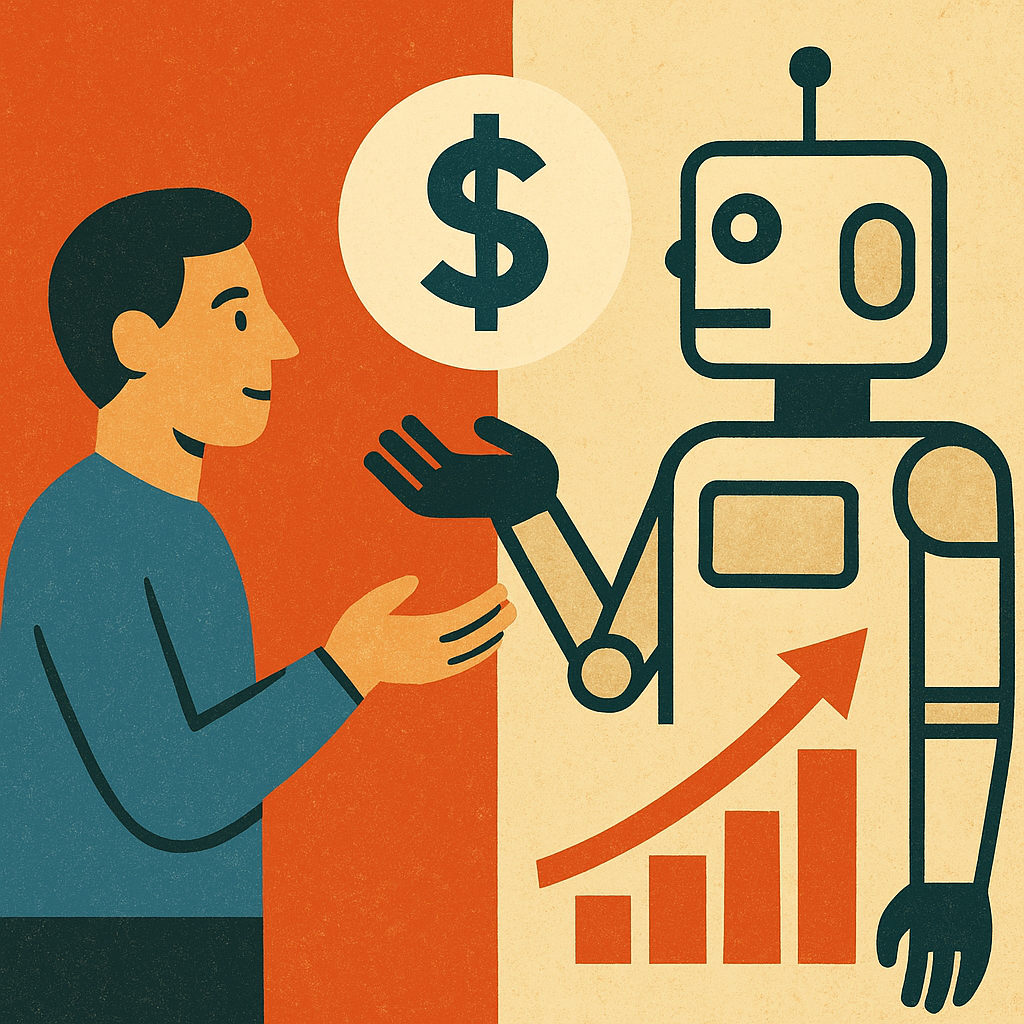
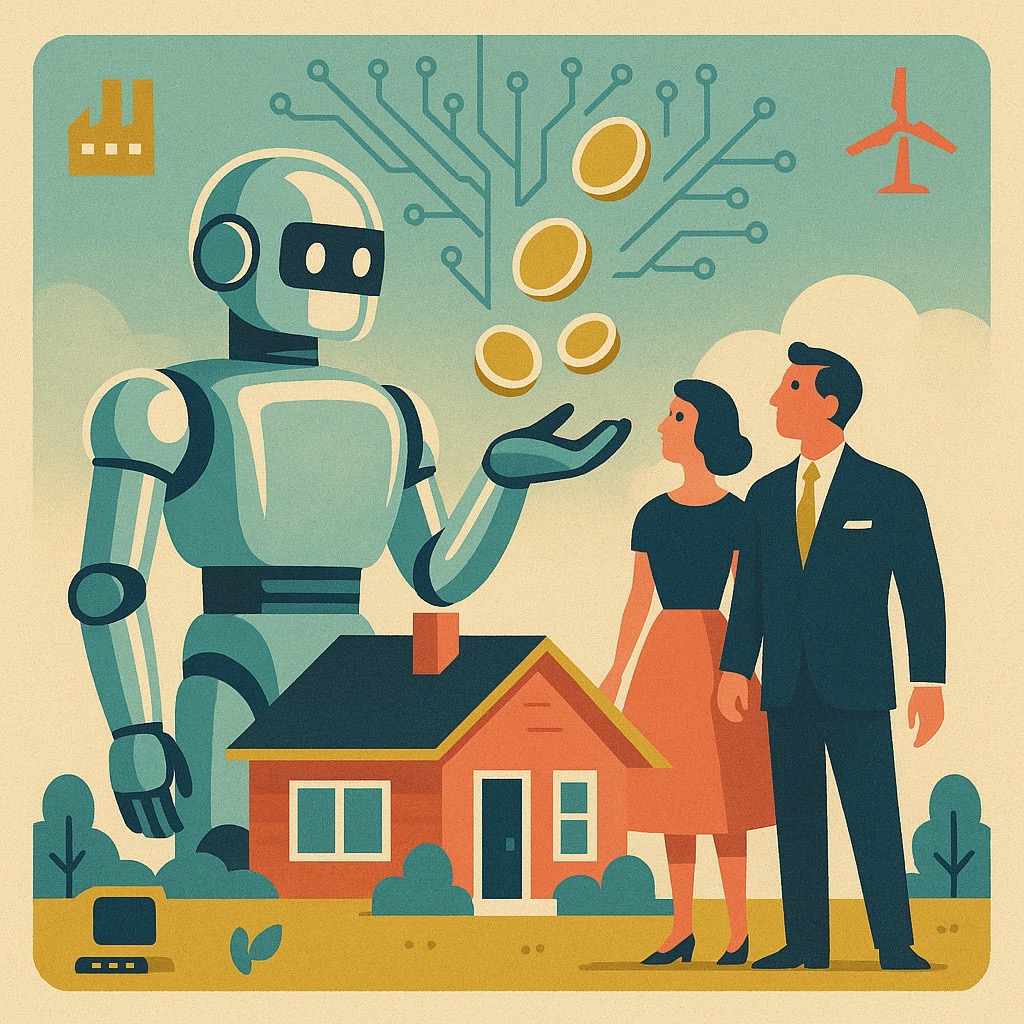
Zen and the Art of Dissatisfaction – Part 33

From Poverty to Productivity

Across the world, economists, sociologists and policymakers have long debated whether providing people with an unconditional basic income could help lift them out of poverty. Despite numerous pilot projects, there are relatively few long-term studies showing the large-scale social and health impacts of such measures. One striking exception, highlighted by the Dutch historian Rutger Bregman, provides rare empirical evidence of how a sudden, guaranteed flow of money can transform an entire community — not just economically, but psychologically and socially.

In 1997, in the state of North Carolina, the Eastern Band of Cherokee people opened the Harrah’s Cherokee Casino Resort. By 2010, the casino’s annual revenues had reached around 400 million USD, where they have remained relatively stable ever since. The income was used to build a new school, hospital and fire station — but the most significant portion of the profits went directly to the tribe’s members, about 8,000 in total.

The Findings: Money Really Did Change Everything

By 2001, the funds from the casino already accounted for roughly 25–33 per cent of household income for many families. These payments acted, in effect, as an unconditional basic income.

What made this case extraordinary was that, purely by coincidence, a research group led by psychiatrist Jane Costello at Duke University had been tracking the mental health of young people in the area since 1991. This provided a unique opportunity to compare the same community before and after the introduction of this new source of income.

Costello’s long-term data revealed that children who had grown up in poverty were far more likely to suffer from behavioural problems than their better-off peers. Yet after the casino opened — and the Cherokee families’ financial situation improved — behavioural problems among children lifted out of poverty declined by up to 40 per cent, reaching levels comparable to those of children from non-poor households.

The benefits went beyond behaviour. Youth crime, alcohol consumption and drug use all decreased, while school performance improved significantly. Ten years later, researchers found that the earlier a child had been lifted out of poverty, the better their mental health as a teenager.

Bregman (2018) uses this case to make a clear point: poverty is not caused by laziness, stupidity or lack of discipline. It is caused by not having enough money. When poor families finally have the financial means to meet their basic needs, they frequently become more productive citizens and better parents.

In his words, “Poor people don’t make stupid decisions because they are stupid, but because they live in a context where anyone would make stupid decisions.” Scarcity — whether of time or money — narrows focus and drains cognitive resources, leading to short-sighted, survival-driven choices. And as Bregman puts it poignantly:

“There is one crucial difference between the busy and the poor: you can take a holiday from busyness, but you can’t take a holiday from poverty.”

How Poverty Shapes the Developing Brain

The deeper roots of these findings lie in how poverty and stress affect brain development and emotional regulation. The Canadian physician and trauma expert Gábor Maté (2018) explains how adverse childhood experiences — known as ACE scores — are far more common among children raised in poverty. Such children face a higher risk of being exposed to violence or neglect, or of witnessing domestic conflict in their homes and neighbourhoods.

Chronic stress, insecurity and emotional unavailability of caregivers can leave lasting marks on the developing brain. The orbitofrontal cortex — located behind the eyes and crucial for interpreting non-verbal emotional cues such as tone, facial expressions and pupil size — plays a vital role in social bonding and empathy. If parents are emotionally detached due to stress, trauma or substance use, this brain region may develop abnormally.

Maté describes how infants depend on minute non-verbal signals — changes in the caregiver’s pupils or micro-expressions — to determine whether they are safe and loved. Smiling faces and dilated pupils signal joy and security, whereas flat or constricted expressions convey threat or absence. These signals shape how a child’s emotional circuits wire themselves for life.

When children grow up surrounded by tension or neglect, they may turn instead to peers for validation. Yet peer-based attachment, as Maté notes, often fosters riskier behaviour: substance use, early pregnancy, and susceptibility to peer pressure. Such patterns are not signs of inherent cruelty or weakness, but rather of emotional immaturity born of unmet attachment needs.

Not Just a Poverty Problem: The Role of Emotional Availability

Interestingly, these developmental challenges are not confined to low-income families. Children from wealthy but emotionally absent households often face similar struggles. Parents who are chronically busy or glued to their smartphones may be physically present yet emotionally unavailable. The result can be comparable levels of stress and insecurity in their children.

Thus, whether a parent is financially poor or simply time-poor, the emotional outcome for the child can be strikingly similar. In both cases, high ACE scores predict poorer mental and physical health, lower educational attainment, and reduced social mobility.

While Finland is often praised for its high social mobility, countries like the United States show a much stronger intergenerational persistence of poverty. In rigidly stratified societies, the emotional and economic consequences of childhood disadvantage are far harder to escape.

Towards a More Humane Future: Basic Income and the AI Revolution

As artificial intelligence reshapes industries and redefines the meaning of work, society faces a profound question: how do we ensure everyone has the means — and the mental space — to live well?

If parents could earn their income doing the work they truly value, rather than chasing pay cheques for survival, they would likely become more productive, more fulfilled, and more emotionally attuned to their children. In turn, those children would grow into healthier, happier adults, capable of sustaining positive cycles of wellbeing and productivity.

Such an outcome would not only enhance individual happiness but would also reduce public expenditure on health care, policing and welfare. Investing in people’s emotional and economic stability yields returns that compound across generations. A universal basic income (UBI), far from being utopian, could therefore represent one of the wisest and most humane investments a modern society could make.

Conclusion

The story of the Eastern Band of Cherokee people and the Harrah’s Cherokee Casino stands as powerful evidence that unconditional income can transform lives — not through moral exhortation, but through simple material security. Poverty, as Bregman reminds us, is not a character flaw; it is a cash-flow problem. And as Maté shows, the effects of that scarcity extend deep into the wiring of the human brain. When financial stress eases, parents can connect, children can thrive, and communities can flourish. In an age of automation and abundance, perhaps the greatest challenge is no longer how to produce wealth — but how to distribute it in ways that allow everyone the freedom to be fully human.


References

Bregman, R. (2018). Utopia for Realists: The Case for a Universal Basic Income, Open Borders, and a 15-Hour Workweek. Bloomsbury.
Maté, G. (2018). In the Realm of Hungry Ghosts: Close Encounters with Addiction. North Atlantic Books.

Zen and the Art of Dissatisfaction – Part 30

The Case for Universal Basic Income

Universal Basic Income (UBI) is a concept that was originally conceived as a solution to poverty, ensuring that markets could continue to grow during normal economic times. The growing interest in UBI in Silicon Valley reflects a future vision driven by concerns over mass unemployment caused by artificial intelligence. Key figures like Sam Altman, CEO of OpenAI, and Chris Hughes, co-founder of Facebook, have both funded research into UBI. Hughes also published a book on the subject, Fair Shot (2018). Elon Musk, in his usual bold fashion, has expressed support for UBI in the context of AI-driven economic change. In August 2021, while unveiling the new Tesla Bot, Musk remarked: ”In the future, physical labour will essentially be a choice. For that reason, I think we will need a Universal Basic Income in the long run.” (Sheffey, 2021)

However, the future of UBI largely hinges on the willingness of billionaires like Musk to fund its implementation. Left-wing groups typically oppose the idea that work should be merely a choice, advocating for guaranteed jobs and wages as a means for individuals to support themselves. While it is undeniable that, in the current world, employment is necessary to afford life’s essentials, UBI could potentially redefine work as a matter of personal choice for everyone.

The Historical Roots of Universal Basic Income

Historian Rutger Bregman traces the historical roots of the UBI concept and its potential in the modern world in his book Free Money for All (2018). According to Bregman, UBI could be humanity’s only viable future, but it wouldn’t come without cost. Billionaires like Musk and Jeff Bezos must contribute their share. If the AI industry grows as expected, it could strip individuals of the opportunity for free and meaningful lives, where their work is recognised and properly rewarded. In such a future, people would need financial encouragement to pursue a better life.

The first mentions of UBI can be found in the works of Thomas More (1478–1535), an English lawyer and Catholic saint, who proposed the idea in his book Utopia (1516). Following More, the concept gained attention particularly after World War II, but it was American economist and Nobel laureate Milton Friedman (1912–2006) who gave the idea widespread recognition. Known as one of the most influential economists of the 20th century, Friedman advocated for a ”negative income tax” as a means to implement UBI, where individuals earning below a certain threshold would receive support from the government based on the difference between their income and a national income standard.

Friedman’s ideas were embraced by several American Republican presidents, including Richard Nixon (1913–1994) and Ronald Reagan (1911–2004), as well as the UK’s prime minister Margaret Thatcher (1925–2013), who championed privatization and austerity. Friedman argued that a negative income tax could replace bureaucratic welfare systems, reducing poverty and related social costs while avoiding the need for active job creation policies.

UBI and the Politics of Welfare

Friedman’s position was influenced by his concern with bureaucratic inefficiencies in the welfare system. He argued that citizens should be paid a basic monthly income or negative income tax instead of relying on complex, often intrusive welfare programs. In his view, this approach would allow people to work towards a better future without the stigma or dependency associated with full unemployment.

In Finland, Olli Kangas, research director at the Finnish Centre for Pensions, has been a vocal advocate for negative income tax. Anyone who has been unemployed and had to report their earnings to the Finnish social insurance institution (Kela) will likely agree with Kangas: any alternative would be preferable. Kela provides additional housing and basic income support, but the process is often cumbersome and requires constant surveillance and reporting.

Rutger Bregman (2018) describes the absurdity of a local employment office in Amsterdam, where the unemployed were instructed to separate staples from old paper stacks, count pages, and check their work multiple times. This, according to the office, was a step towards ”dream jobs.” Bregman highlights how this obsession with paid work is deeply ingrained, even in capitalist societies, noting a pathological fixation on employment.

UBI experiments have been conducted worldwide with positive results. In Finland, a 2017-2018 trial involved providing participants with €560 per month with no strings attached. While this was a helpful supplement for part-time workers, it was still less than the unemployment benefits provided by Kela, which, after tax, amounts to just under €600 per month, with the possibility of receiving housing benefits as well.

In Germany, the private initiative Mein Grundeinkommen (My Basic Income) began in 2020, offering 120 participants €1,200 per month for three years. Funded by crowdfunding, this experiment aimed to explore the social and psychological effects of unconditional financial support.

The core idea of UBI is to provide a guaranteed income to all, allowing people to live independently of traditional forms of employment. This could empower individuals by reducing unnecessary bureaucracy, acknowledging the fragmented nature of modern labour markets, and securing human rights. For example, one study conducted in India (Davala et al., 2015) found that UBI led to a reduction in domestic violence, as many of the incidents had been linked to financial disputes. UBI also enabled women in disadvantaged communities to move more freely within society.

The Future of Work in an AI-Driven World

Kai-Fu Lee (2018) argues that the definition of work needs to be reevaluated because many important tasks are currently not compensated. Lee suggests that, if these forms of work were redefined, a fair wage could be paid for activities that benefit society but are not currently monetised. However, Lee notes that this would require governments to implement higher taxes on large corporations and the wealthiest individuals to redistribute the newfound wealth generated by the AI industry.

In Lee’s home city of Taipei, volunteer networks, often made up of retirees or older citizens, provide essential services to their communities, such as helping children cross the street or assisting visitors with information about Taiwan’s indigenous cultures. These individuals, whose pensions meet their basic needs, choose to spend their time giving back to society. Lee believes that UBI is a wasted opportunity and proposes the creation of a ”social investment stipend” instead. This stipend would provide a state salary for individuals who dedicate their time and energy to activities that foster a kinder, more compassionate, and creative society in the age of artificial intelligence. Such activities might include caregiving, community service, and education.

While UBI could reduce state bureaucracy, Lee’s ”social investment stipend” would require the development of a new, innovative form of bureaucracy, or at least an overhaul of existing systems.

Conclusion

Universal Basic Income remains a highly debated concept, with advocates pointing to its potential to reduce poverty, streamline bureaucratic systems, and empower individuals in a rapidly changing world. While experiments have shown promising results, the true success of UBI will depend on global political will, particularly the involvement of the wealthiest individuals and industries in its implementation. The future of work, especially in the context of AI, will likely require a paradigm shift that goes beyond traditional notions of employment, promoting societal well-being and human rights over rigid economic models.


References

Bregman, R. (2018). Free Money for All: A Basic Income Guarantee and How We Can Make It Happen. Hachette UK.
Davala, S., et al. (2015). Basic Income and the Welfare State. A Report on the Indian Pilot Program.
Friedman, M. (1962). Capitalism and Freedom. University of Chicago Press.
Lee, K. F. (2018). AI Superpowers: China, Silicon Valley, and the New World Order. Houghton Mifflin Harcourt.
Sheffey, M. (2021). Elon Musk and the Future of Work: The Role of Automation in the Economy. CNBC.