Zen and the Art of Dissatisfaction – Part 30

The Case for Universal Basic Income

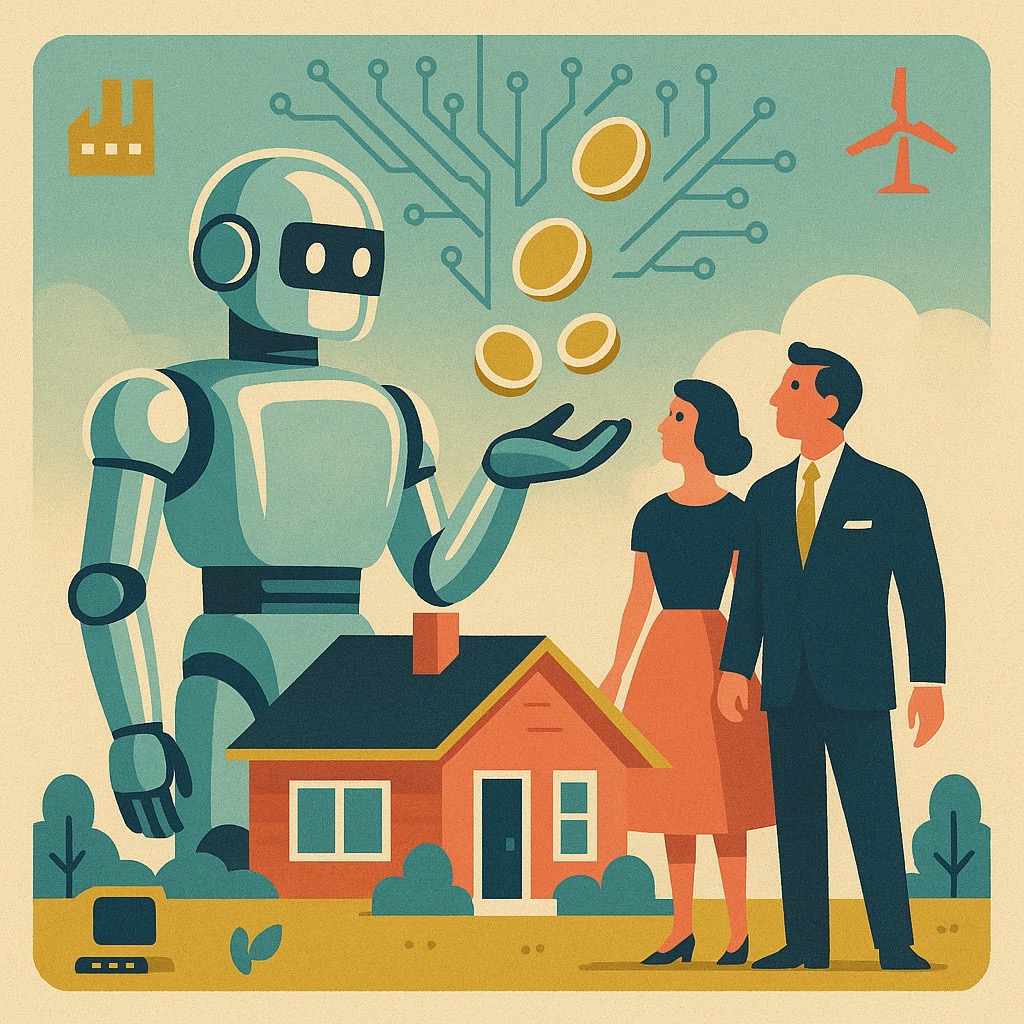
Universal Basic Income (UBI) is a concept that was originally conceived as a solution to poverty, ensuring that markets could continue to grow during normal economic times. The growing interest in UBI in Silicon Valley reflects a future vision driven by concerns over mass unemployment caused by artificial intelligence. Key figures like Sam Altman, CEO of OpenAI, and Chris Hughes, co-founder of Facebook, have both funded research into UBI. Hughes also published a book on the subject, Fair Shot (2018). Elon Musk, in his usual bold fashion, has expressed support for UBI in the context of AI-driven economic change. In August 2021, while unveiling the new Tesla Bot, Musk remarked: ”In the future, physical labour will essentially be a choice. For that reason, I think we will need a Universal Basic Income in the long run.” (Sheffey, 2021)

However, the future of UBI largely hinges on the willingness of billionaires like Musk to fund its implementation. Left-wing groups typically oppose the idea that work should be merely a choice, advocating for guaranteed jobs and wages as a means for individuals to support themselves. While it is undeniable that, in the current world, employment is necessary to afford life’s essentials, UBI could potentially redefine work as a matter of personal choice for everyone.

The Historical Roots of Universal Basic Income

Historian Rutger Bregman traces the historical roots of the UBI concept and its potential in the modern world in his book Free Money for All (2018). According to Bregman, UBI could be humanity’s only viable future, but it wouldn’t come without cost. Billionaires like Musk and Jeff Bezos must contribute their share. If the AI industry grows as expected, it could strip individuals of the opportunity for free and meaningful lives, where their work is recognised and properly rewarded. In such a future, people would need financial encouragement to pursue a better life.

The first mentions of UBI can be found in the works of Thomas More (1478–1535), an English lawyer and Catholic saint, who proposed the idea in his book Utopia (1516). Following More, the concept gained attention particularly after World War II, but it was American economist and Nobel laureate Milton Friedman (1912–2006) who gave the idea widespread recognition. Known as one of the most influential economists of the 20th century, Friedman advocated for a ”negative income tax” as a means to implement UBI, where individuals earning below a certain threshold would receive support from the government based on the difference between their income and a national income standard.

Friedman’s ideas were embraced by several American Republican presidents, including Richard Nixon (1913–1994) and Ronald Reagan (1911–2004), as well as the UK’s prime minister Margaret Thatcher (1925–2013), who championed privatization and austerity. Friedman argued that a negative income tax could replace bureaucratic welfare systems, reducing poverty and related social costs while avoiding the need for active job creation policies.

UBI and the Politics of Welfare

Friedman’s position was influenced by his concern with bureaucratic inefficiencies in the welfare system. He argued that citizens should be paid a basic monthly income or negative income tax instead of relying on complex, often intrusive welfare programs. In his view, this approach would allow people to work towards a better future without the stigma or dependency associated with full unemployment.

In Finland, Olli Kangas, research director at the Finnish Centre for Pensions, has been a vocal advocate for negative income tax. Anyone who has been unemployed and had to report their earnings to the Finnish social insurance institution (Kela) will likely agree with Kangas: any alternative would be preferable. Kela provides additional housing and basic income support, but the process is often cumbersome and requires constant surveillance and reporting.

Rutger Bregman (2018) describes the absurdity of a local employment office in Amsterdam, where the unemployed were instructed to separate staples from old paper stacks, count pages, and check their work multiple times. This, according to the office, was a step towards ”dream jobs.” Bregman highlights how this obsession with paid work is deeply ingrained, even in capitalist societies, noting a pathological fixation on employment.

UBI experiments have been conducted worldwide with positive results. In Finland, a 2017-2018 trial involved providing participants with €560 per month with no strings attached. While this was a helpful supplement for part-time workers, it was still less than the unemployment benefits provided by Kela, which, after tax, amounts to just under €600 per month, with the possibility of receiving housing benefits as well.

In Germany, the private initiative Mein Grundeinkommen (My Basic Income) began in 2020, offering 120 participants €1,200 per month for three years. Funded by crowdfunding, this experiment aimed to explore the social and psychological effects of unconditional financial support.

The core idea of UBI is to provide a guaranteed income to all, allowing people to live independently of traditional forms of employment. This could empower individuals by reducing unnecessary bureaucracy, acknowledging the fragmented nature of modern labour markets, and securing human rights. For example, one study conducted in India (Davala et al., 2015) found that UBI led to a reduction in domestic violence, as many of the incidents had been linked to financial disputes. UBI also enabled women in disadvantaged communities to move more freely within society.

The Future of Work in an AI-Driven World

Kai-Fu Lee (2018) argues that the definition of work needs to be reevaluated because many important tasks are currently not compensated. Lee suggests that, if these forms of work were redefined, a fair wage could be paid for activities that benefit society but are not currently monetised. However, Lee notes that this would require governments to implement higher taxes on large corporations and the wealthiest individuals to redistribute the newfound wealth generated by the AI industry.

In Lee’s home city of Taipei, volunteer networks, often made up of retirees or older citizens, provide essential services to their communities, such as helping children cross the street or assisting visitors with information about Taiwan’s indigenous cultures. These individuals, whose pensions meet their basic needs, choose to spend their time giving back to society. Lee believes that UBI is a wasted opportunity and proposes the creation of a ”social investment stipend” instead. This stipend would provide a state salary for individuals who dedicate their time and energy to activities that foster a kinder, more compassionate, and creative society in the age of artificial intelligence. Such activities might include caregiving, community service, and education.

While UBI could reduce state bureaucracy, Lee’s ”social investment stipend” would require the development of a new, innovative form of bureaucracy, or at least an overhaul of existing systems.

Conclusion

Universal Basic Income remains a highly debated concept, with advocates pointing to its potential to reduce poverty, streamline bureaucratic systems, and empower individuals in a rapidly changing world. While experiments have shown promising results, the true success of UBI will depend on global political will, particularly the involvement of the wealthiest individuals and industries in its implementation. The future of work, especially in the context of AI, will likely require a paradigm shift that goes beyond traditional notions of employment, promoting societal well-being and human rights over rigid economic models.


References

Bregman, R. (2018). Free Money for All: A Basic Income Guarantee and How We Can Make It Happen. Hachette UK.
Davala, S., et al. (2015). Basic Income and the Welfare State. A Report on the Indian Pilot Program.
Friedman, M. (1962). Capitalism and Freedom. University of Chicago Press.
Lee, K. F. (2018). AI Superpowers: China, Silicon Valley, and the New World Order. Houghton Mifflin Harcourt.
Sheffey, M. (2021). Elon Musk and the Future of Work: The Role of Automation in the Economy. CNBC.

Zen and the Art of Dissatisfaction – Part 24

How Algorithms and Automation Redefine Work and Society

The concept of work in Western societies has undergone dramatic transformations, yet in some ways it has remained surprisingly static. Work and the money made with work also remains one of the leading causes for dissatisfactoriness. There’s usually too much work and the compensation never seems to be quite enough. While the Industrial Revolution replaced manual labour with machinery, the age of Artificial Intelligence (AI) threatens to disrupt not only blue-collar jobs but also highly skilled professions. This post traces the historical shifts in the nature of work, from community-driven agricultural labour to the rise of mass production, the algorithmic revolution, and the looming spectre of general artificial intelligence. Along the way, it examines the ethical, economic, and social implications of automation, surveillance, and machine decision-making — raising critical questions about the place of humans in a world increasingly run by machines.

Originally published in Substack: https://substack.com/home/post/p-170864875

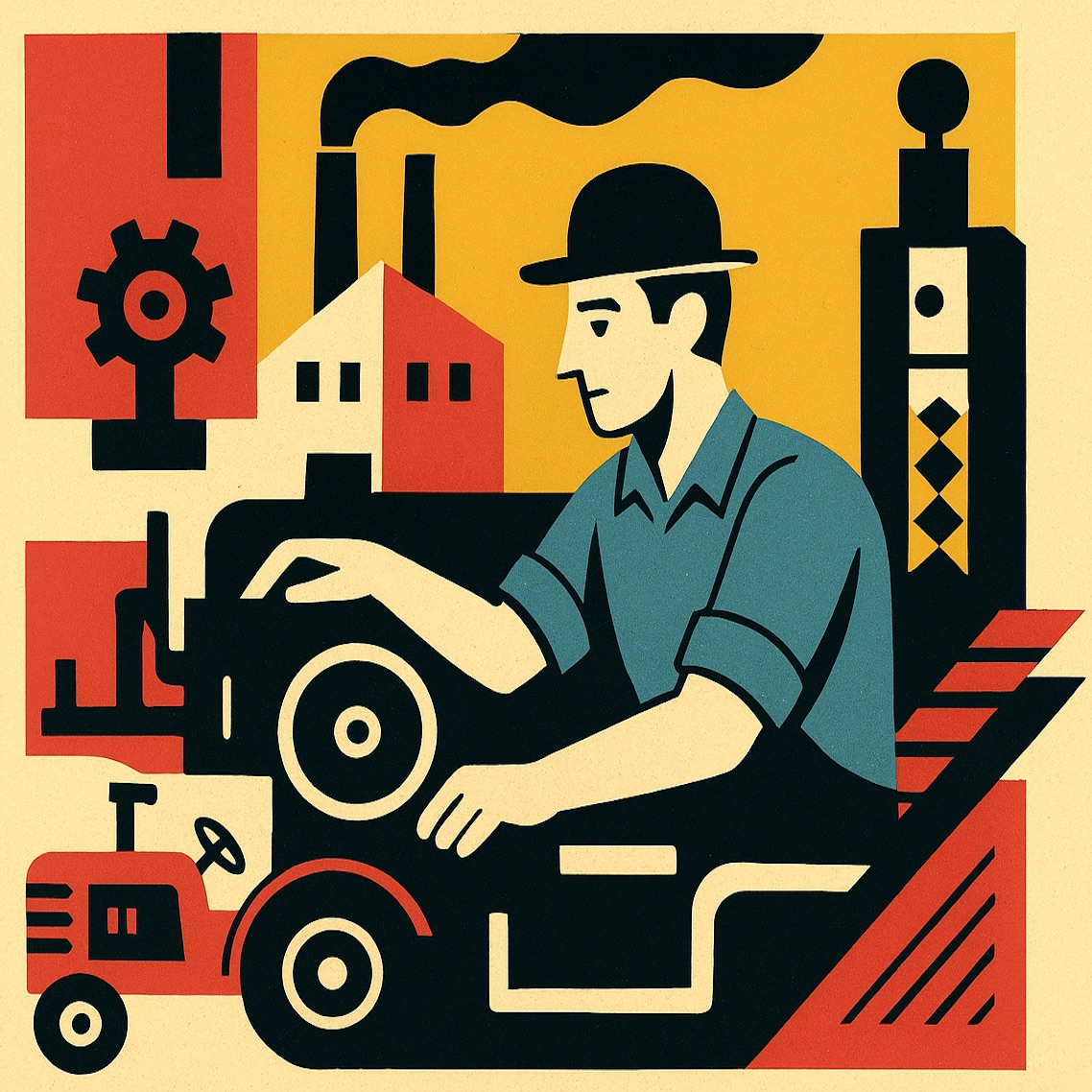
The Western concept of work has hardly changed in essence: half the population still shuffles papers, projecting an image of busyness. The Industrial Revolution transformed the value of individual human skill, rendering many artisanal professions obsolete. A handcrafted product became far more expensive compared to its mass-produced equivalent. This shift also eroded the communal nature of work. Rural villagers once gathered for annual harvest festivities, finding strength in togetherness. The advent of threshing machines, tractors, and milking machines eliminated the need for such collective efforts.

In his wonderful and still very important film Modern Times (1936), Charlie Chaplin depicts industrial society’s alienating coexistence: even when workers are physically together, they are often each other’s competitors. In a factory, everyone knows that anyone can be replaced — if not by another worker, then by a machine.

In the early 1940s, nearly 40% of the American workforce was employed in manufacturing; today, production facilities employ only about 8%. While agricultural machinery displaced many farmworkers, those machines still require transportation, repairs, and eventual replacement — generating jobs in other, less specialised sectors.

The Algorithmic Disruption

Artificial intelligence algorithms have already displaced workers in multiple industries, but the most significant disruption is still to come. Previously, jobs were lost in sectors requiring minimal training and were easily passed on to other workers. AI will increasingly target professions demanding long academic training — such as lawyers and doctors. Algorithms can assess legal precedents for future court cases more efficiently than humans, although such capabilities raise profound ethical issues.

One famous Israeli study suggested that judges imposed harsher sentences before lunch than after (Lee, 2018). Although later challenged — since case order was pre-arranged by severity — it remains widely cited to argue for AI’s supposed superiority in legal decision-making.

Few domains reveal human irrationality as starkly as traffic. People make poor decisions when tired, angry, intoxicated, or distracted while driving. In 2016, road traffic accidents claimed 1.35 million lives worldwide. In Finland in 2017, 238 people died and 409 were seriously injured in traffic; there were 4,432 accidents involving personal injury.

The hope of the AI industry is that self-driving cars will vastly improve road safety. However, fully autonomous vehicles remain distant, partly because they require a stable and predictable environment — something rare in the real world. Like all AI systems, they base predictions on past events, which limits their adaptability in chaotic, unpredictable situations.

Four Waves of Machine-Driven Change

The impact of machines on human work can be viewed as four distinct waves:

  1. The Industrial Revolution — people moved from rural to urban areas for factory jobs.
  2. The Algorithmic Wave — AI has increased efficiency in many industries, with tech giants like Amazon, Apple, Alphabet, Microsoft, Huawei, Meta Platforms, Alibaba, IBM, Tencent, and OpenAI leading the way. In 2020, their combined earnings were just under USD 1.5 trillion. Today they are pushing 2 trillion. The leader, Amazon, making 630 billion dollars per year. 
  3. The Sensorimotor Machine Era — autonomous cars, drones, and increasingly automated factories threaten remaining manual jobs.
  4. The Age of Artificial General Intelligence (AGI) — as defined by Nick Bostrom (2015), machines could one day surpass human intelligence entirely.

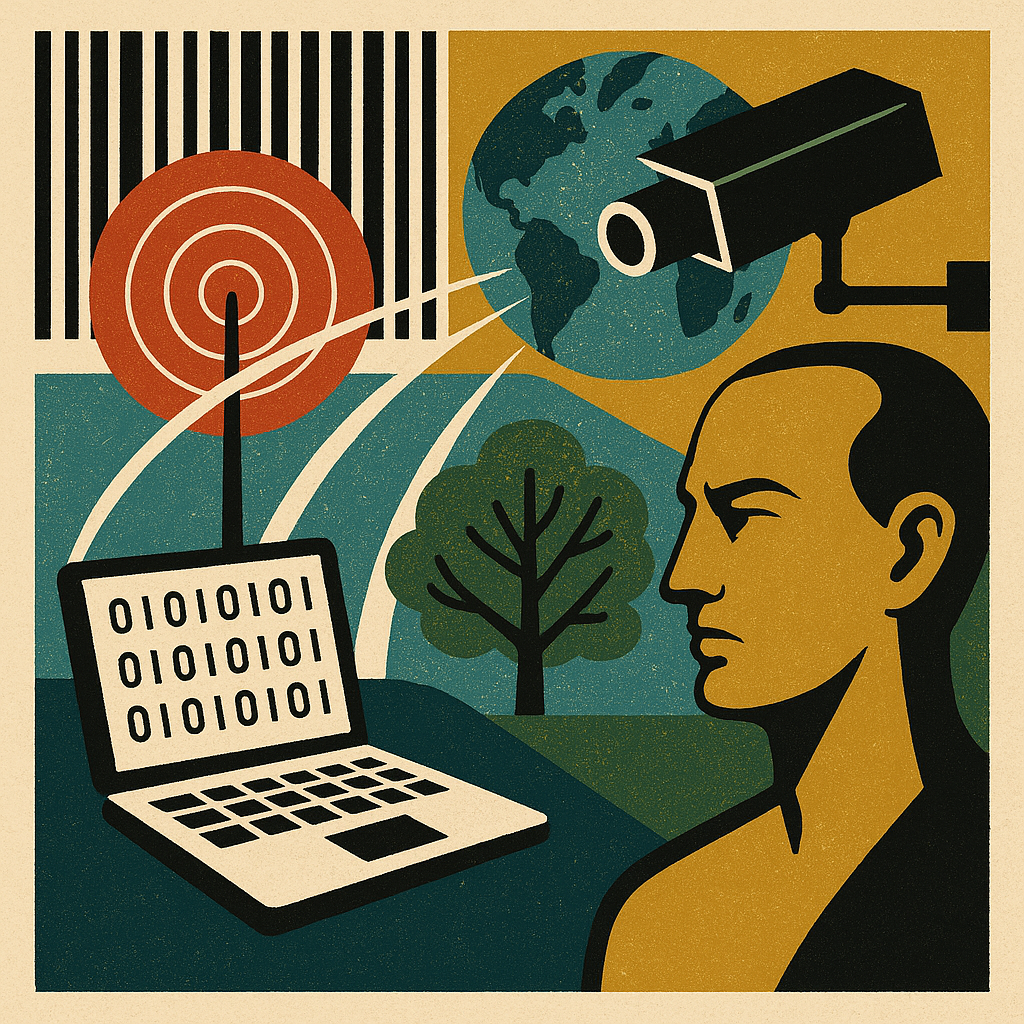
The rise of AI-driven surveillance evokes George Orwell’s Nineteen Eighty-Four (1949), in which people live under constant watch. Modern citizens voluntarily buy devices that track them, competing for public attention online. Privacy debates date back to the introduction of the Kodak camera in 1888 and intensified in the 1960s with computerised tax records. Today, exponentially growing data threatens individual privacy in unprecedented ways.

AI also inherits human prejudices. Studies show that people with African-American names face discrimination from algorithms, and biased data can lead to unequal treatment based on ethnicity, gender, or geography — reinforcing, rather than eliminating, inequality.

Conclusion

From the threshing machine to the neural network, every technological leap has reshaped the world of work, altering not only what we do but how we define ourselves. The coming decades may bring the final convergence of machine intelligence and autonomy, challenging the very premise of human indispensability. The question is not whether AI will change our lives, but how — and whether we will have the foresight to ensure that these changes serve humanity’s best interests rather than eroding them.


References

Bostrom, N. (2015). Superintelligence: Paths, dangers, strategies. Oxford University Press.
Lee, D. (2018). Do you get fairer sentences after lunch? BBC Future.
Orwell, G. (1999). Nineteen eighty-four. Penguin. (Original work published 1949)

Zen and the Art of Dissatisfaction – Part 20

The Triple Crisis of Civilisation

“At the time I climbed the mountain or crossed the river, I existed, and the time should exist with me. Since I exist, the time should not pass away. […] The ‘three heads and eight arms’ pass as my ‘sometimes’; they seem to be over there, but they are now.”

Dōgen

Introduction

This blog post explores the intertwining of ecology, technology, politics and data collection through the lens of modern civilisation’s crises. It begins with a quote by the Japanese Zen master Dōgen, drawing attention to the temporal nature of human existence. From climate emergency to digital surveillance, from Brexit to barcodes, the post analyses how personal data has become the currency of influence and control.


Originally published in Substack: https://mikkoijas.substack.com/

The climate emergency currently faced by humanity is only one of the pressing concerns regarding the future of civilisation. A large-scale ecological crisis is an even greater problem—one that is also deeply intertwined with social injustice. A third major concern is the rapidly developing situation created by technology, which is also connected to problems related to nature and the environment.

Cracks in the System: Ecology, Injustice, and the Digital Realm

The COVID-19 pandemic  revealed new dimensions of human interaction. We are dependent on technology-enabled applications to stay connected to the world through computers and smart devices. At the same time, large tech giants are generating immense profits while all of humanity struggles with unprecedented challenges.

Brexit finally came into effect at the start of 2021. On Epiphany of that same year, angry supporters of Donald Trump stormed the United States Capitol. Both Brexit and Trump are children of the AI era. Using algorithms developed by Cambridge Analytica, the Brexit campaign and Trump’s 2016 presidential campaign were able to identify voters who were unsure of their decisions. These individuals were then targeted via social media with marketing and curated news content to influence their opinions. While the data for this manipulation was gathered online, part of the campaigning also happened offline, as campaign offices knew where undecided voters lived and how to sway them.

I have no idea how much I am being manipulated when browsing content online or spending time on social media. As I move from one website to another, cookies are collected, offering me personalised content and tailored ads. Algorithms working behind websites monitor every click and search term, and AI-based systems form their own opinion of who I am.

Surveillance and the New Marketplace

A statistical analysis algorithm in a 2013 study analysed the likes of 58,000 Facebook users. The algorithm guessed users’ sexual orientation with 88% accuracy, skin colour with 95% accuracy, and political orientation with 85% accuracy. It also guessed with 75% accuracy whether a user was a smoker (Kosinski et al., 2013).

Companies like Google and Meta Platforms—which includes Facebook, Instagram, Messenger, Threads, and WhatsApp—compete for users’ attention and time. Their clients are not individuals like me, but advertisers. These companies operate under an advertising-based revenue model. Individuals like me are the users whose attention and time are being competed for.

Facebook and other similar companies that collect data about users’ behaviour will presumably have a competitive edge in future AI markets. Data is the oil of the future. Steve Lohr, long-time technology journalist at the New York Times, wrote in 2015 that data-driven applications will transform our world and behaviour just as telescopes and microscopes changed our way of observing and measuring the universe. The main difference with data applications is that they will affect every possible field of action. Moreover, they will create entirely new fields that have not previously existed.

In computing, the word ”data” refers to various numbers, letters or images as such, without specific meaning. A data point is an individual unit of information. Generally, any single fact can be considered a data point. In a statistical or analytical context, a data point is derived from a measurement or a study. A data point is often the same as data in singular form.

From Likes to Lives: How Behaviour Becomes Prediction

Decisions and interpretations are created from data points through a variety of processes and methods, enabling individual data points to form applicable information for some purpose. This process is known as data analysis, through which the aim is to derive interesting and comprehensible high-level information and models from collected data, allowing for various useful conclusions to be drawn.

A good example of a data point is a Facebook like. A single like is not much in itself and cannot yet support major interpretations. But if enough people like the same item, even a single like begins to mean something significant. The 2016 United States presidential election brought social media data to the forefront. The British data analytics firm Cambridge Analytica gained access to the profile data of millions of Facebook users.

The data analysts hired by Cambridge Analytica could make highly reliable stereotypical conclusions based on users’ online behaviour. For example, men who liked the cosmetics brand MAC were slightly more likely to be homosexual. One of the best indicators of heterosexuality was liking the hip-hop group Wu-Tang Clan. Followers of Lady Gaga were more likely to be extroverted. Each such data point is too weak to provide a reliable prediction. But when there are tens, hundreds or thousands of data points, reliable predictions about users’ thoughts can be made. Based on 270 likes, social media knows as much about a user as their spouse does.

The collection of data is a problem. Another issue is the indifference of users. A large portion of users claim to be concerned about their privacy, while simultaneously worrying about what others think of them on social platforms that routinely violate their privacy. This contradiction is referred to as the Privacy Paradox. Many people claim to value their privacy, yet are unwilling to pay for alternatives to services like Facebook or Google’s search engine. These platforms operate under an advertising-based revenue model, generating profits by collecting user data to build detailed behavioural profiles. While they do not sell these profiles directly, they monetise them by selling highly targeted access to users through complex ad systems—often to the highest bidder in real-time auctions. This system turns user attention into a commodity, and personal data into a tool of influence.

The Privacy Paradox and the Illusion of Choice

German psychologist Gerd Gigerenzer, who has studied the use of bounded rationality and heuristics in decision-making, writes in his excellent book How to Stay Smart in a Smart World (2022) that targeted ads usually do not even reach consumers, as most people find ads annoying. For example, eBay no longer pays Google for targeted keyword advertising because they found that 99.5% of their customers came to their site outside paid links.

Gigerenzer calculates that Facebook could charge users for its service. Facebook’s ad revenue in 2022 was about €103.04 billion. The platform had approximately 2.95 billion users. So, if each user paid €2.91 per month for using Facebook, their income would match what they currently earn from ads. In fact, they would make significantly more profit because they would no longer need to hire staff to sell ad space, collect user data, or develop new analysis tools for ad targeting.

According to Gigerenzer’s study, 75% of people would prefer that Meta Platforms’ services remain free, despite privacy violations, targeted ads, and related risks. Of those surveyed, 18% would be willing to pay a maximum of €5 per month, 5% would be willing to pay €6–10, and only 2% would be willing to pay more than €10 per month.

But perhaps the question is not about money in the sense that Facebook would forgo ad targeting in exchange for a subscription fee. Perhaps data is being collected for another reason. Perhaps the primary purpose isn’t targeted advertising. Maybe it is just one step toward something more troubling.

From Barcodes to Control Codes: The Birth of Modern Data

But how did we end up here? Today, data is collected everywhere. A good everyday example of our digital world is the barcode. In 1948, Bernard Silver, a technology student in Philadelphia, overheard a local grocery store manager asking his professors whether they could develop a system that would allow purchases to be scanned automatically at checkout. Silver and his friend Norman Joseph Woodland began developing a visual code based on Morse code that could be read with a light-based scanner. Their research only became standardised as the current barcode system in the early 1970s. Barcodes have enabled a new form of logistics and more efficient distribution of products. Products have become data, whose location, packaging date, expiry date, and many other attributes can be tracked and managed by computers in large volumes.

Conclusion

We are living in a certain place in time, as Dōgen described—an existence with a past and a future. Today, that future is increasingly built on data: on clicks, likes, and digital traces left behind.

As ecological, technological, and political threats converge, it is critical that we understand the tools and structures shaping our lives. Data is no longer neutral or static—it has become currency, a lens, and a lever of power.


References

Gigerenzer, G. (2022). How to stay smart in a smart world: Why human intelligence still beats algorithms. Penguin.

Kosinski, M., Stillwell, D., & Graepel, T. (2013). Private traits and attributes are predictable from digital records of human behaviour. Proceedings of the National Academy of Sciences, 110(15), 5802–5805. https://doi.org/10.1073/pnas.1218772110

Lohr, S. (2015). Data-ism: The revolution transforming decision making, consumer behavior, and almost everything else. HarperBusiness.

Dōgen / Sōtō Zen Text Project. (2023). Treasury of the True Dharma Eye: Dōgen’s Shōbōgenzō (Vols. I–VII, Annotated trans.). Sōtōshū Shūmuchō, Administrative Headquarters of Sōtō Zen Buddhism.