Zen and the Art of Dissatisfaction – Part 26

Unrelenting Battle for AI Supremacy

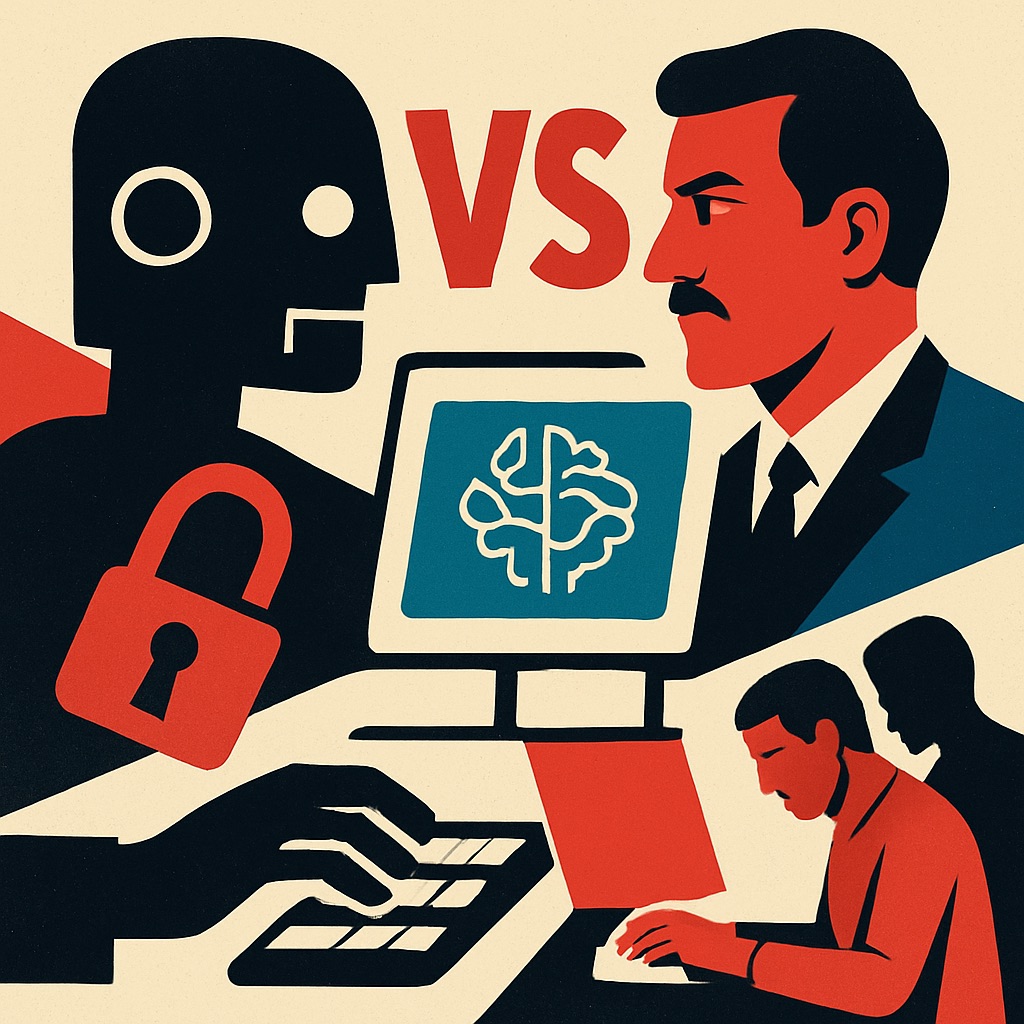
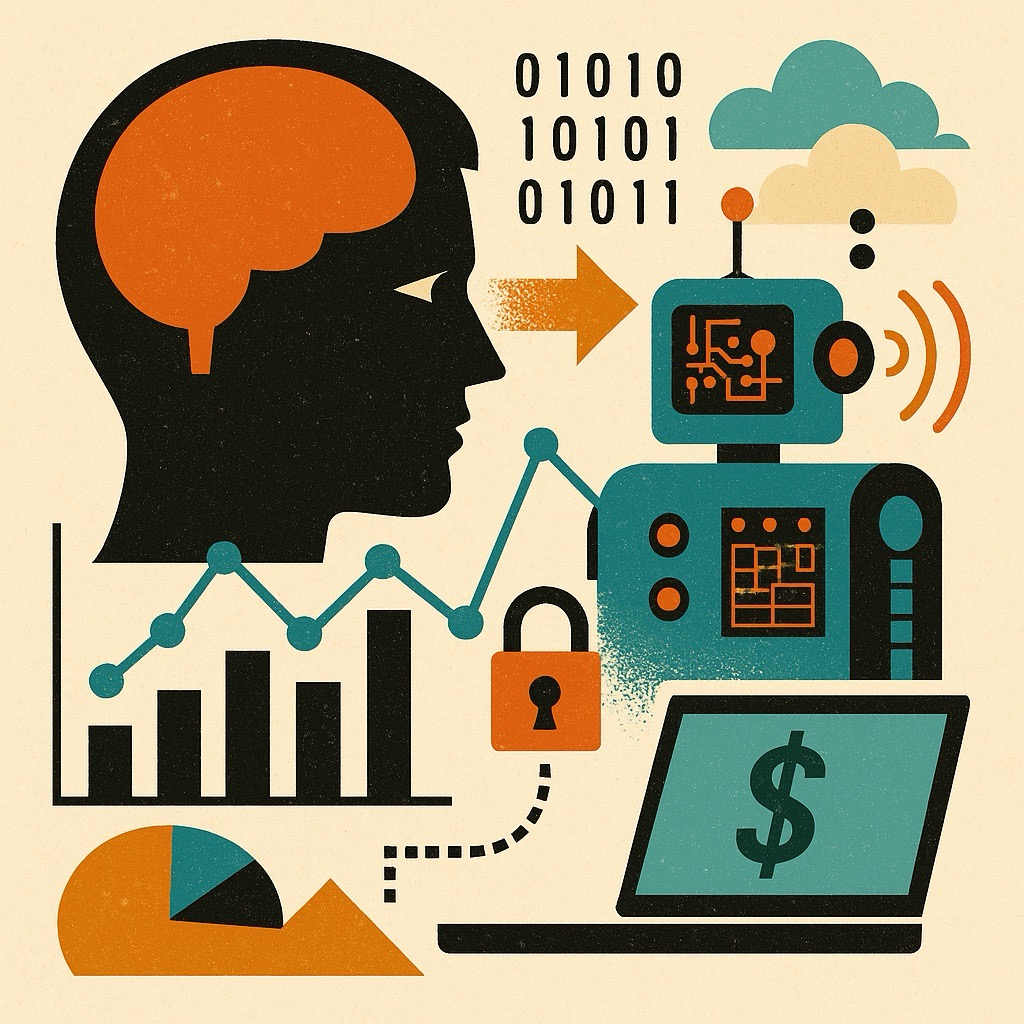
In today’s fast-evolving digital landscape, the titanic technology corporations are locked in a merciless struggle for AI dominance. Their competitive advantage is fuelled by the ability to access vast quantities of data. Yet this race holds profound implications for privacy, ethics, and the overlooked human labour that quietly powers it.

Originally published in Substack: https://substack.com/home/post/p-172413535

Large technology conglomerates are engaged in a cutthroat contest for AI supremacy, a competition shaped in large part by the free availability of data. Chinese rivals may be narrowing the gap in this contest, where the free flow of data reigns supreme. In contrast, in Western nations, personal data remains, at least for now, considered the property of the individual; its use requires the individual’s awareness and consent. Nevertheless, people freely share their data—opinions, consumption habits, images, location—when signing up for platforms or interacting online. The freer companies can exploit this user data, the quicker their AI systems learn. Machine learning is often applauded because it promises better services and more accurately targeted advertisements.

Hidden Human Labour

Yet, behind these learning systems are human workers—micro‑workers—who teach data to AI algorithms. Often subcontracted by the tech giants, they are paid meagrely yet exposed to humanity’s darkest content, and they must keep what they see secret. In principle, anyone can post almost anything on social media. Platforms may block or “lock” content that violates their policies—only to have the original poster appeal, rerouting the content to micro‑workers for review.

These shadow workers toil from home, performing tasks such as identifying forbidden sexual content, violence, or categorising products for companies like Walmart and Amazon. For example, they may have to distinguish whether two similar items are the same or retag products into different categories. Despite the rise of advanced AI, these micro‑tasks remain foundational—and are compensated only by the cent.

The relentless gathering of data is crucial for deep‑learning AI systems. In the United States, the tension between user privacy and corporate surveillance remains unresolved—largely stemming from the Facebook–Cambridge Analytica scandal. In autumn 2021, Frances Haugen, a data scientist and whistleblower, exposed how Facebook prioritised maximising user time on the platform over public safety Wikipedia+1.

Meanwhile, the roots of persuasive design trace back to Stanford University’s Persuasive Technology Lab (now known as the Behavior Design Lab), under founder B. J. Fogg, where concepts to hook and retain users—regardless of the consequences—were born. On face value, social media seems benign—connecting people, facilitating ideas, promoting second‑hand sales. Yet beneath the surface lie algorithms designed to keep users engaged, often by feeding content tailored to their interests. The more platforms learn, the more they serve users exactly what they want—drawing them deeper into addictive cycles.

Renowned psychologists from a PNAS study found that algorithms—based on just a few likes—could know users better than even their closest friends. About 90 likes enabled better personality predictions than an average friend, while 270 likes made AI more accurate than a spouse.

The Cambridge Analytica scandal revealed how personal data can be weaponised to influence political outcomes in events like Brexit and the 2016 US Presidential Election. All that was needed was to identify and target individuals with undecided votes based on their location and psychological profiles.

Frances Haugen’s whistleblowing further confirmed that Facebook exacerbates political hostility and supports authoritarian messaging especially in countries like Brazil, Hungary, the Philippines, India, Sri Lanka, Myanmar, and the USA.

As critics note, these platforms never intended to serve as central political channels—they were optimized to maximise engagement and advertising revenue. One research group led by Laura Edelson found that misinformation posts received six times more likes than posts from trusted sources like CNN or the World Health Organization The Guardian.

In theory, platforms could offer news feeds filled exclusively with content that made users feel confident, loved, safe—but such feeds don’t hold attention long enough for profit. Instead, platforms profit more from cultivating anxiety, insecurity, and outrage. The algorithm knows us so deeply that we often don’t even realise when we’re entirely consumed by our feelings, fighting unseen ideological battles. Hence, ad-based revenue models prove extremely harmful. Providers could instead charge a few euros a month—but the real drive is harvesting user data for long‑term strategic advantage.

Conclusion

The race for AI supremacy is not just a competition of algorithms—it’s a battle over data, attention, design, and ethics. The tech giants are playing with our sense of dissatisfasction, and we have no psychological tools to avoid it. While tech giants vie for the edge, a hidden workforce labours in obscurity, and persuasive systems steer human behaviour toward addiction and division. Awareness, regulation, and ethical models—potentially subscription‑based or artist‑friendly—are needed to reshape the future of AI for human benefit.


References

B. J. Fogg. (n.d.). B. J. Fogg. Wikipedia. Retrieved from https://en.wikipedia.org/wiki/B._J._Fogg
Behavior Design Lab. (n.d.). Stanford Behavior Design Lab. Wikipedia. Retrieved from https://en.wikipedia.org/wiki/Stanford_Behavior_Design_Lab
Captology. (n.d.). Captology. Wikipedia. Retrieved from https://en.wikipedia.org/wiki/Captology
Frances Haugen. (n.d.). Frances Haugen. Wikipedia. Retrieved from https://en.wikipedia.org/wiki/Frances_Haugen
2021 Facebook leak. (n.d.). 2021 Facebook leak. Wikipedia. Retrieved from https://en.wikipedia.org/wiki/2021_Facebook_leak

Zen and the Art of Dissatisfaction – Part 25

Exponential Futures

Throughout history, humanity has navigated the interplay between population growth, technological progress, and ethical responsibility. As automation, artificial intelligence, and biotechnology advance at exponential rates, philosophers, scientists, and entrepreneurs have raised profound questions: Are we heading towards liberation from biological limits, or into a new form of dependency on machines? Can we satisfy our dissatisfaction with more intelligent machines and unlimited growth? What would be enough? The following post explores these dilemmas, drawing from historical parables, the logic of Moore’s law, transhumanism, and the latest breakthroughs in artificial intelligence.

“The current explosive growth in population has frighteningly coincided with the development of technology, which, due to automation, makes large parts of the population ‘superfluous’, even as labour. Because of nuclear energy, this double threat can be tackled with means beside which Hitler’s gas chambers look like the malicious child’s play of an evil brat.”
– Hannah Arendt

Originally published in Substack: https://substack.com/inbox/post/171630771

Our technological development has been tied to Moore’s law. Named after Gordon Moore, the founder of Intel, one of the world’s largest semiconductor manufacturers, the law states that the number of transistors on a microchip doubles every 18–24 months. As a result, chips become more powerful while their price falls. Moore’s prediction in 1965 has remained remarkably accurate, as innovation has kept the process alive long past the point when the laws of physics should have slowed it down. This type of growth is called exponential, characterised by slow initial development which suddenly accelerates at an unexpected pace.

A Parable of Exponential Growth

The Islamic scholar Ibn Khallikan described the logic of exponential growth in a tale from 1256. According to the story, chess originated in India during the 6th century. Its inventor travelled to Pataliputra and presented the game to the emperor. Impressed, the ruler offered him any reward. The inventor requested rice, calculated using the chessboard: one grain on the first square, two on the second, four on the third, doubling with each square.

Such exponential growth seems modest at first, but by the 64th square it yields more than 18 quintillion grains of rice, or about 1.4 trillion tonnes. By comparison, the world currently produces about 772 million tonnes of wheat annually. The inventor’s demand thus exceeded yearly wheat production by a factor of over 2,000. The crucial lesson lies not in the quantity but in the speed at which exponential processes accelerate.

The central question remains: at what stage of the chessboard are we today in terms of microchip development? According to Moore’s law, we are heading towards an increasingly technological future. Futurists such as Ray Kurzweil, Chief Engineer at Google, believe that transhumanism is the only viable path for humanity to collaborate with AI. Kurzweil predicts that artificial intelligence will surpass human mental capabilities by 2045.

Transhumanism posits that the limits of the human biological body are a matter of choice. For transhumanists, ageing should be voluntary, and cognitive capacities should lie within individual control. Kurzweil forecasts that by 2035 nanobots will be implanted in our brains to connect with neurons, upgrading both mental and physical abilities. The aim is to prevent humans from becoming inferior to machines, preserving self-determination.

The Intelligence of Machines – Real or Illusion?

Yet artificial intelligence has not, until recently, been very intelligent. Algorithms can process data and make deductions, but image recognition, for example, has long struggled with tasks a child could solve instantly. A child, even after seeing a school bus once, can intuitively identify it; an algorithm, trained on millions of images, may still fail under slightly altered conditions. This gap between human intuition and machine logic underscores the challenge.

Nevertheless, AI is evolving rapidly. Vast financial resources drive competition over the future of intelligence and power.

The South African-born Elon Musk, founder of Neuralink, has already demonstrated an implant that allows a monkey named Pager to play video games using only thought. Musk suggests such implants could treat depressionAlzheimer’s disease, and paralysis, and even restore sight to the blind.

Though such ideas may sound outlandish, history suggests that visionary predictions often materialise sooner than expected.

The Warnings of Tristan Harris

Tristan Harris, who leads the non-profit Centre for Humane Technology, has been at the heart of Silicon Valley’s AI story, from Apple internships to Instagram development and work at Google. In 2023, alongside Aza Raskin, he warned of AI’s dangers. Their presentation demonstrated AI systems capable of cloning a human voice within seconds, or reconstructing mental images using fMRI brain scans.

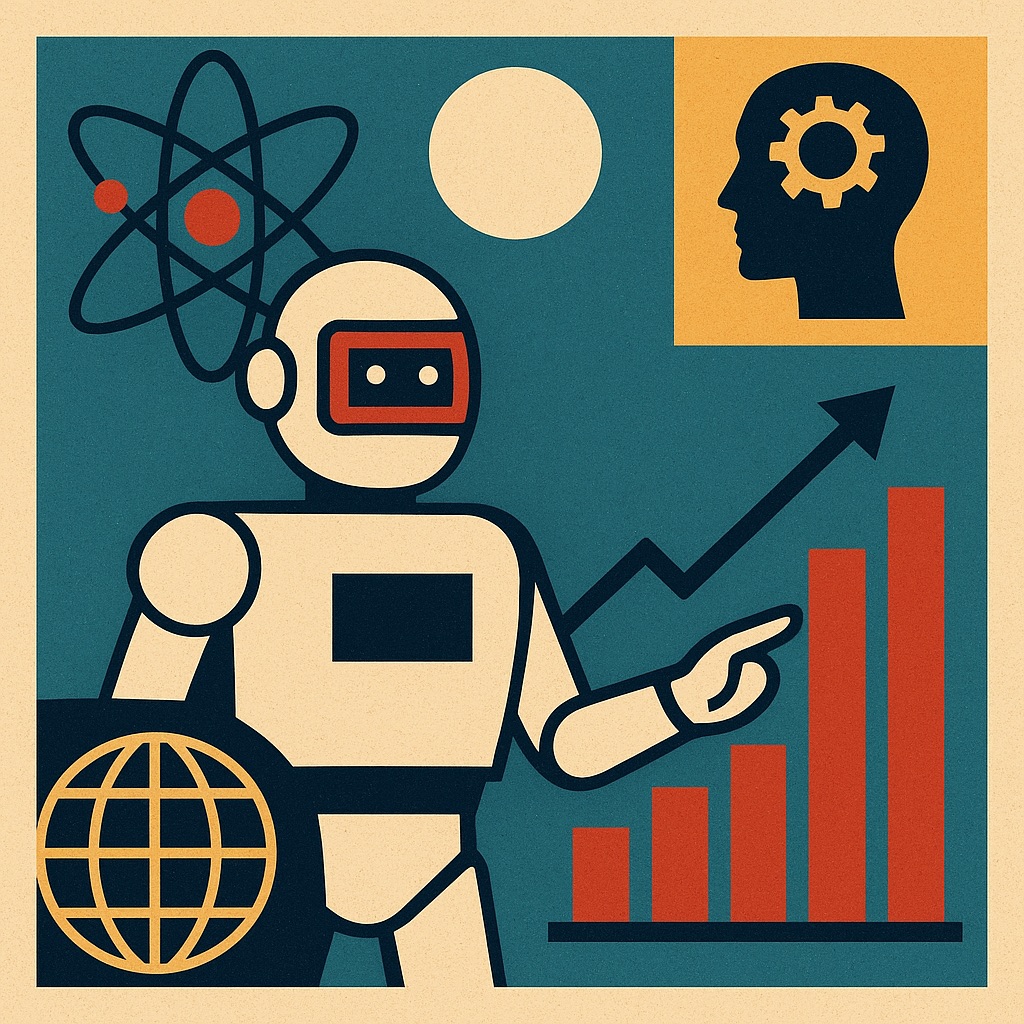
AI models have begun to exhibit unexpected abilities. A system trained in English suddenly understands PersianChatGPT, launched by OpenAI, has independently learned advanced chemistry, though it was never explicitly trained in the subject. Algorithms now self-improve, rewriting code to double its speed, creating new training data, and exhibiting exponential capability growth. Experts foresee improvements at double-exponential rates, represented on a graph as a near-vertical line surging upwards.

Conclusion

The trajectory of human civilisation now intertwines with exponential technological growth. From the rice-on-the-chessboard parable to Moore’s law and the visions of Kurzweil, Musk, and Harris, the central issue remains: will humanity adapt, or will machines redefine what it means to be human? The pace of change is no longer linear, and as history shows, exponential processes accelerate suddenly, leaving little time to adjust.


References

Arendt, H. (1963). Eichmann in Jerusalem: A report on the banality of evil. Viking Press.
Harris, T., & Raskin, A. (2023). The AI dilemma [Presentation]. Center for Humane Technology.
Kurzweil, R. (2005). The singularity is near: When humans transcend biology. Viking.
Moore, G. E. (1965). Cramming more components onto integrated circuits. Electronics, 38(8).

Zen and the Art of Dissatisfaction – Part 24

How Algorithms and Automation Redefine Work and Society

The concept of work in Western societies has undergone dramatic transformations, yet in some ways it has remained surprisingly static. Work and the money made with work also remains one of the leading causes for dissatisfactoriness. There’s usually too much work and the compensation never seems to be quite enough. While the Industrial Revolution replaced manual labour with machinery, the age of Artificial Intelligence (AI) threatens to disrupt not only blue-collar jobs but also highly skilled professions. This post traces the historical shifts in the nature of work, from community-driven agricultural labour to the rise of mass production, the algorithmic revolution, and the looming spectre of general artificial intelligence. Along the way, it examines the ethical, economic, and social implications of automation, surveillance, and machine decision-making — raising critical questions about the place of humans in a world increasingly run by machines.

Originally published in Substack: https://substack.com/home/post/p-170864875

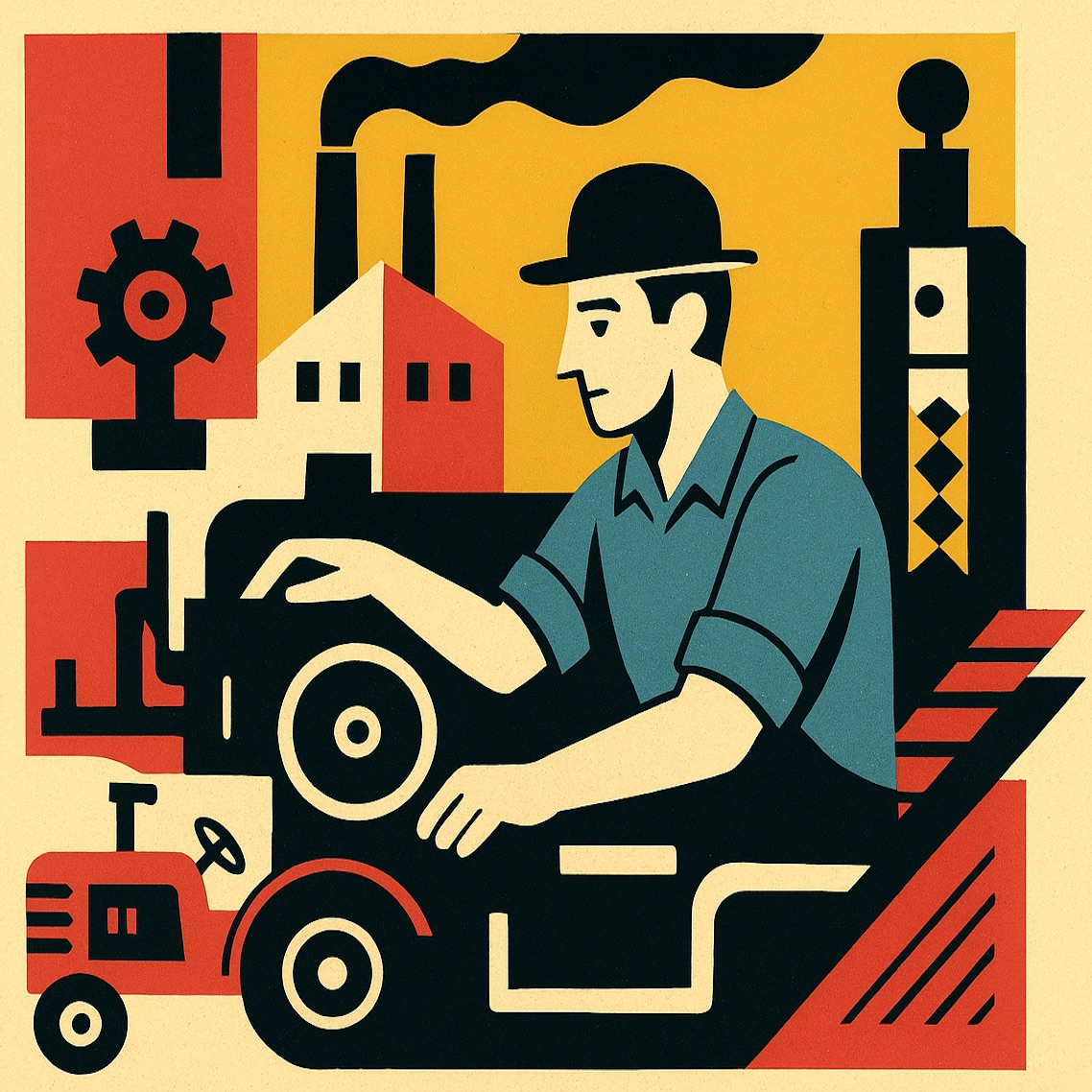
The Western concept of work has hardly changed in essence: half the population still shuffles papers, projecting an image of busyness. The Industrial Revolution transformed the value of individual human skill, rendering many artisanal professions obsolete. A handcrafted product became far more expensive compared to its mass-produced equivalent. This shift also eroded the communal nature of work. Rural villagers once gathered for annual harvest festivities, finding strength in togetherness. The advent of threshing machines, tractors, and milking machines eliminated the need for such collective efforts.

In his wonderful and still very important film Modern Times (1936), Charlie Chaplin depicts industrial society’s alienating coexistence: even when workers are physically together, they are often each other’s competitors. In a factory, everyone knows that anyone can be replaced — if not by another worker, then by a machine.

In the early 1940s, nearly 40% of the American workforce was employed in manufacturing; today, production facilities employ only about 8%. While agricultural machinery displaced many farmworkers, those machines still require transportation, repairs, and eventual replacement — generating jobs in other, less specialised sectors.

The Algorithmic Disruption

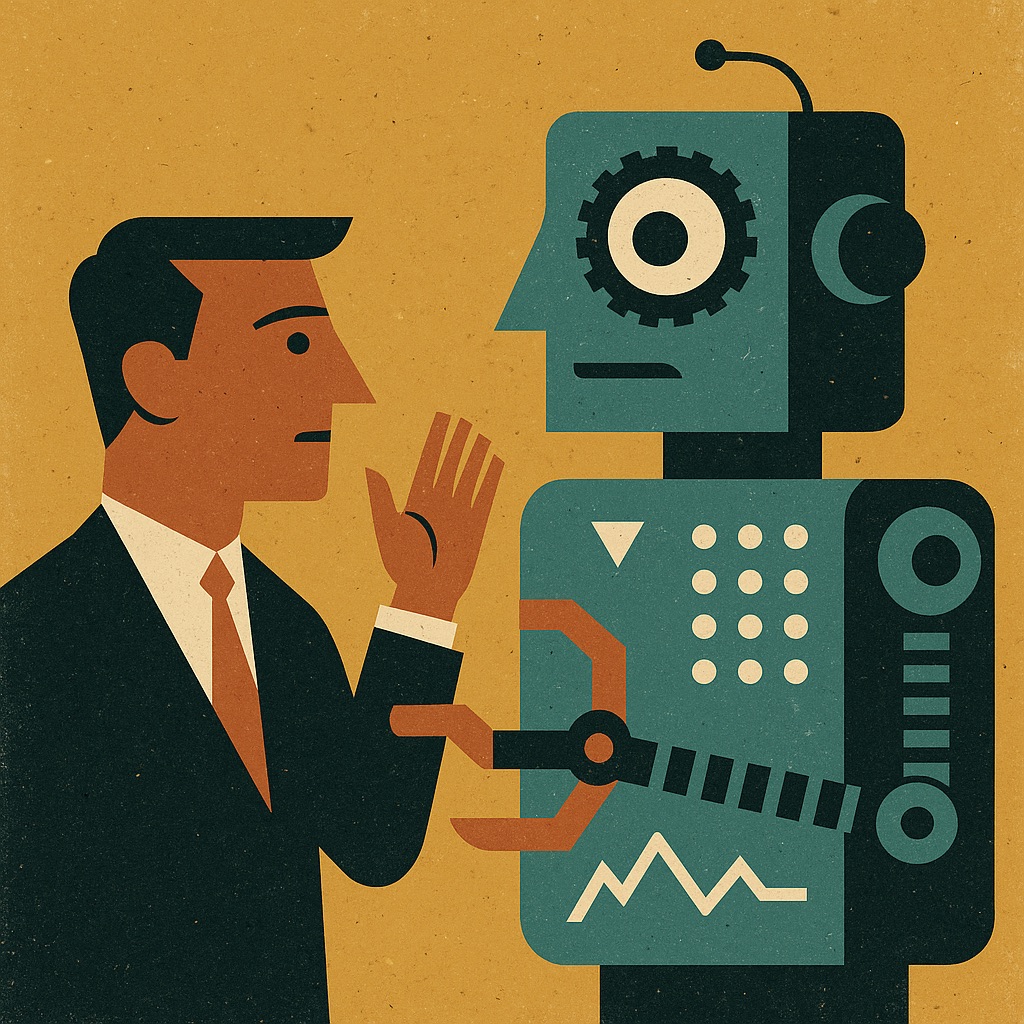
Artificial intelligence algorithms have already displaced workers in multiple industries, but the most significant disruption is still to come. Previously, jobs were lost in sectors requiring minimal training and were easily passed on to other workers. AI will increasingly target professions demanding long academic training — such as lawyers and doctors. Algorithms can assess legal precedents for future court cases more efficiently than humans, although such capabilities raise profound ethical issues.

One famous Israeli study suggested that judges imposed harsher sentences before lunch than after (Lee, 2018). Although later challenged — since case order was pre-arranged by severity — it remains widely cited to argue for AI’s supposed superiority in legal decision-making.

Few domains reveal human irrationality as starkly as traffic. People make poor decisions when tired, angry, intoxicated, or distracted while driving. In 2016, road traffic accidents claimed 1.35 million lives worldwide. In Finland in 2017, 238 people died and 409 were seriously injured in traffic; there were 4,432 accidents involving personal injury.

The hope of the AI industry is that self-driving cars will vastly improve road safety. However, fully autonomous vehicles remain distant, partly because they require a stable and predictable environment — something rare in the real world. Like all AI systems, they base predictions on past events, which limits their adaptability in chaotic, unpredictable situations.

Four Waves of Machine-Driven Change

The impact of machines on human work can be viewed as four distinct waves:

  1. The Industrial Revolution — people moved from rural to urban areas for factory jobs.
  2. The Algorithmic Wave — AI has increased efficiency in many industries, with tech giants like Amazon, Apple, Alphabet, Microsoft, Huawei, Meta Platforms, Alibaba, IBM, Tencent, and OpenAI leading the way. In 2020, their combined earnings were just under USD 1.5 trillion. Today they are pushing 2 trillion. The leader, Amazon, making 630 billion dollars per year. 
  3. The Sensorimotor Machine Era — autonomous cars, drones, and increasingly automated factories threaten remaining manual jobs.
  4. The Age of Artificial General Intelligence (AGI) — as defined by Nick Bostrom (2015), machines could one day surpass human intelligence entirely.

The rise of AI-driven surveillance evokes George Orwell’s Nineteen Eighty-Four (1949), in which people live under constant watch. Modern citizens voluntarily buy devices that track them, competing for public attention online. Privacy debates date back to the introduction of the Kodak camera in 1888 and intensified in the 1960s with computerised tax records. Today, exponentially growing data threatens individual privacy in unprecedented ways.

AI also inherits human prejudices. Studies show that people with African-American names face discrimination from algorithms, and biased data can lead to unequal treatment based on ethnicity, gender, or geography — reinforcing, rather than eliminating, inequality.

Conclusion

From the threshing machine to the neural network, every technological leap has reshaped the world of work, altering not only what we do but how we define ourselves. The coming decades may bring the final convergence of machine intelligence and autonomy, challenging the very premise of human indispensability. The question is not whether AI will change our lives, but how — and whether we will have the foresight to ensure that these changes serve humanity’s best interests rather than eroding them.


References

Bostrom, N. (2015). Superintelligence: Paths, dangers, strategies. Oxford University Press.
Lee, D. (2018). Do you get fairer sentences after lunch? BBC Future.
Orwell, G. (1999). Nineteen eighty-four. Penguin. (Original work published 1949)

Zen and the Art of Dissatisfaction – 23

Bullshit Jobs and Smart Machines

This post explores how many of today’s high‑paid professions depend on collecting and analysing data, and on decisions made on the basis of that process. Drawing on thinkers such as Hannah ArendtGerd Gigerenzer, and others, I examine the paradoxes of complex versus simple algorithms, the ethical dilemmas arising from algorithmic decision‑making, and how automation threatens not only unskilled but increasingly highly skilled work. I also situate these issues in historical context, from the Fordist assembly line to modern AI’s reach into law and medicine.

Originally published in Substack: https://substack.com/inbox/post/170023572

Many contemporary highly paid professions rely on data gathering, its analysis, and decisions based on that process. According to Hannah Arendt (2017 [original 1963]), such a threat already existed in the 1950s when she wrote:

“The explosive population growth of today has coincided frighteningly with technological progress that makes vast segments of the population unnecessary—indeed superfluous as a workforce—due to automation.”

In the words of David Ferrucci, the leader of Watson’s Jeopardy! team, the next phase in AI’s development will evaluate data and causality in parallel. The way data is currently used will change significantly when algorithms can construct data‑based hypotheses, theories and mental models answering the question “why?”

The paradox of complexity: simple versus black‑box algorithms

Paradoxically, one of the biggest problems with complex algorithms such as Watson and Google Flu Trends is their very complexity. Gerd Gigerenzer (2022) argues that simple, transparent algorithms often outperform complex ones. He criticises secret machine‑learning “black‑box” systems that search vast proprietary datasets for hidden correlations without understanding the physical or psychological principles of the world. Such systems can make bizarre errors—mistaking correlation for causation, for instance between Swiss chocolate consumption and number of Nobel Prize winners, or between drowning deaths in American pools and the number of films starring Nicolas Cage. A stronger correlation exists between the age of Miss America and rates of murder: when Miss America is aged twenty or younger, murders committed by hot steam or weapons are fewer. Gigerenzer advocates for open, simple algorithms; for example, the 1981 model The Keys to the White House, developed by historian Allan Lichtman and geophysicist Vladimir Keilis‑Borok, which has correctly predicted every US presidential election since 1984, with the single exception of the result in the Al Gore vs. George W. Bush contest.

Examples where individuals have received long prison sentences illustrate how secret, proprietary algorithms such as COMPAS (“Correctional Offender Management Profiling for Alternative Sanctions”) produce risk assessments that can label defendants as high‑risk recidivists. Such black‑box systems, which may determine citizens’ liberty, pose enormous risks to individual freedom. Similar hidden algorithms are used in credit scoring and insurance. Citizens are unknowingly categorised and subject to prejudices that constrain their opportunities in society.

The industrial revolution, automation, and the meaning of work

Even if transformative technologies like Watson may fail to deliver on all the bold promises made by IBM’s marketing, algorithms are steadily doing tasks once carried out by humans. Just as industrial machines displaced heavy manual labour and beasts of burden—especially in agriculture—today’s algorithms are increasingly supplanting cognitive roles.

Since the Great Depression of the 1930s, warnings have circulated that automation would render millions unemployed. British economist John Maynard Keynes (1883–1946) coined the term “technological unemployment” to describe this risk. As David Graeber (2018) notes, automation did indeed trigger mass unemployment. Political forces on both the right and left share a deep belief that paid employment is essential for moral citizenship; they agree that unemployment in wealthy countries should never exceed around 8 percent. Graeber nonetheless argues that the Great Depression produced a collapse in real need for work—and much contemporary work is “bullshit jobs”. If 37–40 percent of jobs are such meaningless roles, more than 50–60 percent of the population are effectively unemployed.

Karl Marx warned of industrial alienation, where people are uprooted from their villages and placed into factories or mines to do simple, repetitive work requiring no skill, knowledge or training, and easily replaceable. Global corporations have shifted assembly lines and mines to places where workers have few rights, as seen in electronics assembly in Chinese factory towns, garment workshops in Bangladesh, and mineral extraction by enslaved children—all under appalling conditions.

Henry Ford’s Western egalitarian idea of the assembly line—that all workers are equal—became a system where anybody can be replaced. In Charles Chaplin’s 1936 film Modern Times, inspired by his encounter in 1931 with Mahatma Gandhi, he highlighted our dependence on machines. Gandhi argued that Britain had enslaved Indians through its machines; he sought non‑violent resistance and self‑sufficiency to show that Indians did not need British machines or Britain itself.

From industrial jobs to algorithmic threat to professional work

At its origin in Ford’s factory in 1913, the T‑model moved through 45 fixed stations and was completed in 93 minutes, borrowing the idea from Chicago slaughterhouses where carcasses moved past stationary cutters. Though just 8 percent of the American workforce was engaged in manufacturing by the 1940s, automation created jobs in transport, repair, and administration—though these often required only low-skilled labour.

Today, AI algorithms threaten not only blue‑collar but also white‑collar roles. Professions requiring long training—lawyers and doctors, for example—are now at risk. AI systems can assess precedent for legal cases more accurately than humans. While such systems promise reliability, they also bring profound ethical risks. Human judges are fallible: one Israeli study suggested that judges issue harsher sentences before lunch than after—but that finding has been contested due to case‑severity ordering. Yet such results are still invoked to support AI’s superiority.

Summary

This blog post has considered how our economy is increasingly structured around data collection, analysis, and decision‑making by both complex and simple algorithms. It has explored the paradox that simple, transparent systems can outperform opaque ones, and highlighted the grave risks posed by black‑box algorithms in criminal justice and financial systems. Tracing the legacy from Fordist automation to modern AI, I have outlined the existential threats posed to human work and purpose—not only for low‑skilled labour but for highly skilled professions. The text argues that while automation may deliver productivity, it also risks alienation, injustice, and meaninglessness unless we critically examine the design, application, and social framing of these systems.


References

Arendt, H. (2017). The Human Condition (Original work published 1963). University of Chicago Press.
Ferrucci, D. (n.d.). [Various works on IBM Watson]. IBM Research.
Gigerenzer, G. (2022). How to Stay Smart in a Smart World: Why Human Intelligence Still Beats Algorithms. MIT Press.
Graeber, D. (2018). Bullshit Jobs: A Theory. Simon & Schuster.
Keynes, J. M. (1930). Economic Possibilities for our Grandchildren. Macmillan.
Lee, C. J. (2018). The misinterpretation of the Israeli parole study. Nature Human Behaviour, 2(5), 303–304.
Lichtman, A., & Keilis-Borok, V. (1981). The Keys to the White House. Rowman & Littlefield.

Zen and the Art of Dissatisfaction – Part 21

Data: The Oil of the Digital Age

Data applications rely fundamentally on data—its extraction, collection, storage, interpretation, and monetisation—making them arguably the most significant feature of our contemporary world. Often referred to as ”the new oil,” data is, from the perspective of persistent capitalists, a valuable resource capable of sustaining economic growth even after conventional natural reserves have been exhausted. This new form of capitalism has been titled Surveillance Capitalism (Zuboff 2019).

Originally published in Substack: https://substack.com/@mikkoijas

Data matters more than opinions. For developers of data applications, the key goal is that we browse online, click “like,” follow links, spend time on their platforms, and accept cookies. What we think or do does not matter; what matters is the digital behavioural surplus, a trace we leave and our consent to tracking. That footprint has become immensely valuable—companies are willing to pay for it, and sometimes break laws to get it.

Cookies and Consumer Privacy in Europe

European legislation like the General Data Protection Regulation (GDPR) ensures some personal protection, but we still leave traces even if we refuse to share personal data. Websites are legally obligated to request our cookie consent, making privacy violations more visible. Rejecting cookies and clearing them out later becomes a time-consuming and frustrating chore.

In stark contrast, China’s data laws are much more relaxed, granting companies broader operational freedom. The more data a company gathers, the more fine-tuned its predictive algorithms can be. It’s much like environmental regulation: European firms are restricted from drilling for oil in protected areas, which reduces profit but protects nature. Chinese firms, unrestrained by such limits, may harm ecosystems while driving profits. In the data realm, restrictive laws narrow the available datasets. Whereas Chinese firms harvest freely, they might gain a major competitive edge that could help them lead the global AI market.

Data for Good: Jeff Hammerbacher’s Vision

American data scientist Jeff Hammerbacher is one of the field’s most influential figures. As journalist Steve Lohr (2015) reports, Hammerbacher started on Wall Street and later helped build Facebook’s data infrastructure. Today, he curates data collection and interpretation for the purpose of improving human lives—a fundamental ethos across the data industry. According to Hammerbacher, we must understand the current data landscape to predict the future. Practically, this means equipping everything we care about with sensors that collect data. His current focus? Transforming medicine by centring it on data. Data science is one of the most promising fields, where evidence trumps intuition.

Hammerbacher has been particularly interested in mental health and how data can improve psychological wellbeing. His close friend and former classmate, Steven Snyder, tragically died by suicide after struggling with bipolar disorder. This event, combined with Hammerbacher’s own breakdown at age 27—after being diagnosed with bipolar disorder and generalised anxiety disorder—led him to rethink his life. He notes that mental illness is a major cause of workforce dropout and ranks third among causes of early death. Researchers are now collecting neurobiological data from those with mental health conditions. Hammerbacher calls this “one of the most necessary and challenging data problems of our time.”

Pharmaceuticals haven’t solved the issue. Selective serotonin reuptake inhibitors(SSRIs), introduced in the 1980s, have failed to deliver a breakthrough for mood disorders. These remain a leading cause of death; roughly 90% of suicides involve untreated or poorly treated mood disorders, and about 50% of Western populations are affected at some point. The greater challenge lies in defining mental wellness—should people simply adapt to lives that feel unfit?

“Bullshit Jobs” and Social Systems

Investigative anthropologist David Graeber (2018) reported that 37–40% of Western workers view their jobs as “bullshit”—work they see as socially pointless. Thus, the problem isn’t merely psychological; our entire social structure normalises employment that values output over wellbeing.

Data should guide smarter decisions. Yet as our world digitises, data accumulates faster than our ability to interpret it. As Steve Lohr (2015) notes, a 20-bed intensive care unit can generate around 160,000 data points per second—a torrent demanding constant vigilance. Still, this data deluge offers positive outcomes: continuous patient monitoring enables proactive, personalised care.

Data-driven forecasting is set to reshape society, concentrating power and wealth. Not long ago, anyone could found a company; now a single corporation could dominate an entire sector with superior data. A case in point is the partnership between McKesson and IBM. In 2009, Kaan Katircioglu (IBM researcher) sought data for predictive modelling. He found it at McKesson—clean datasets recording medication inventory, prices, and logistics. IBM used this to build a predictive model, enabling McKesson to optimise its warehouse near Memphis and improve delivery accuracy from 90% to 99%.

At present, data-mining algorithms behave as clever tools. An algorithm is simply a set of steps for solving problems—think cooking recipes or coffee machine programming. Even novices can produce impressive outcomes by following a good set of instructions.

Historian Yuval Noah Harari (2015) provocatively suggests we are ourselves algorithms. Unlike machines, our algorithms run through emotions, perceptions, and thoughts—biological processes shaped by evolution, environment, and culture.

Summary

Personal data is the new source of extraction and exploitation—vital for technological progress yet governed by uneven regulations that determine competitive advantage. Pioneers like Jeff Hammerbacher highlight its potential for social good, especially in mental health, while revealing our complex psychology. We collect data abundantly, yet face the challenge of interpreting it effectively. Predictive systems can drive efficiency, but they can also foster monopolies. Ultimately, whether data serves or subsumes us depends on navigating its ethical, legal, and societal implications.


References

Graeber, D. (2018). Bullshit Jobs: A Theory. New York: Simon & Schuster.
Hammerbacher, J. (n.d.). [Interview in Lohr 2015].
Harari, Y. N. (2015). Homo Deus: A History of Tomorrow. New York: Harper.
Lohr, S. (2015). Data-ism: The Revolution Transforming Decision Making, Consumer Behavior, and Almost Everything Else. New York: Harper Business.
Zuboff, Shoshana (2019). The Age of Surveillance Capitalism: The Fight for a Human Future at the New Frontier of Power. PublicAffairs.

Zen and the Art of Dissatisfaction – Part 20

The Triple Crisis of Civilisation

“At the time I climbed the mountain or crossed the river, I existed, and the time should exist with me. Since I exist, the time should not pass away. […] The ‘three heads and eight arms’ pass as my ‘sometimes’; they seem to be over there, but they are now.”

Dōgen

Introduction

This blog post explores the intertwining of ecology, technology, politics and data collection through the lens of modern civilisation’s crises. It begins with a quote by the Japanese Zen master Dōgen, drawing attention to the temporal nature of human existence. From climate emergency to digital surveillance, from Brexit to barcodes, the post analyses how personal data has become the currency of influence and control.


Originally published in Substack: https://mikkoijas.substack.com/

The climate emergency currently faced by humanity is only one of the pressing concerns regarding the future of civilisation. A large-scale ecological crisis is an even greater problem—one that is also deeply intertwined with social injustice. A third major concern is the rapidly developing situation created by technology, which is also connected to problems related to nature and the environment.

Cracks in the System: Ecology, Injustice, and the Digital Realm

The COVID-19 pandemic  revealed new dimensions of human interaction. We are dependent on technology-enabled applications to stay connected to the world through computers and smart devices. At the same time, large tech giants are generating immense profits while all of humanity struggles with unprecedented challenges.

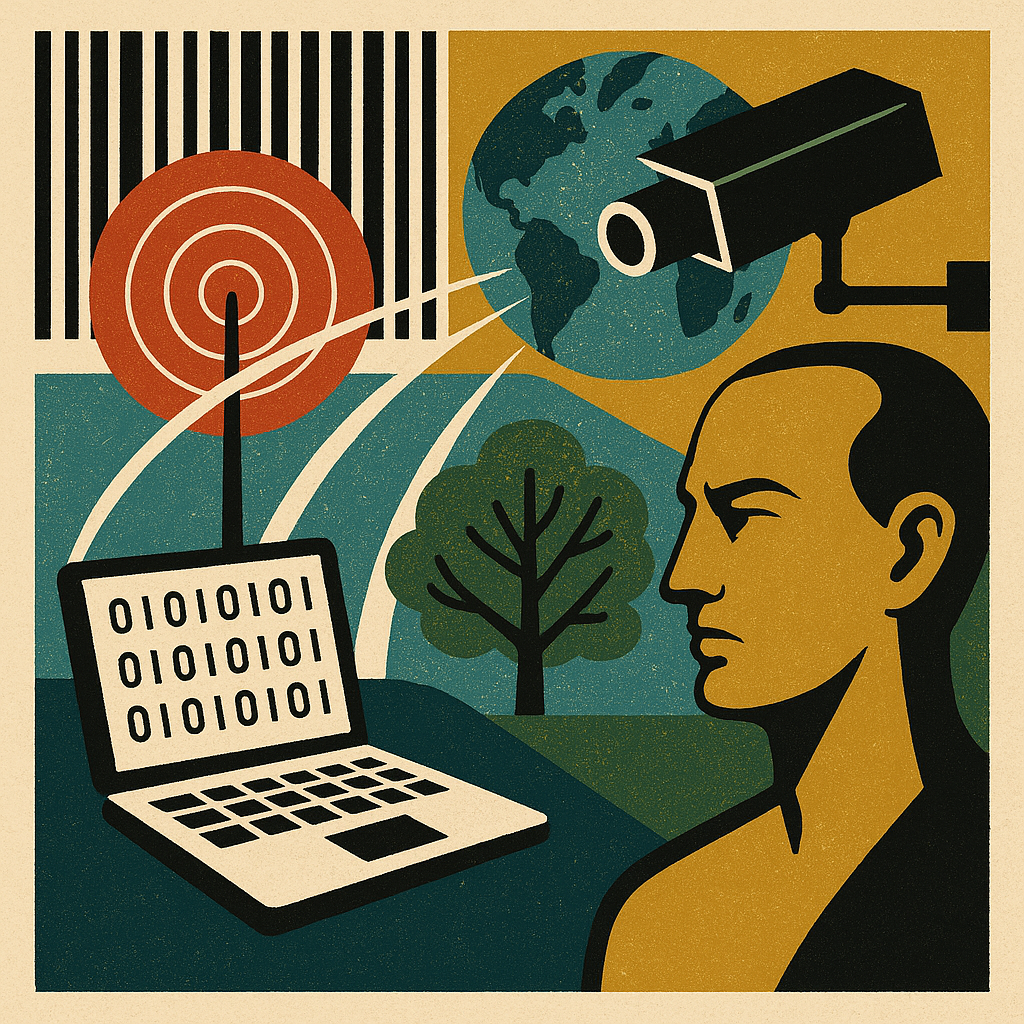
Brexit finally came into effect at the start of 2021. On Epiphany of that same year, angry supporters of Donald Trump stormed the United States Capitol. Both Brexit and Trump are children of the AI era. Using algorithms developed by Cambridge Analytica, the Brexit campaign and Trump’s 2016 presidential campaign were able to identify voters who were unsure of their decisions. These individuals were then targeted via social media with marketing and curated news content to influence their opinions. While the data for this manipulation was gathered online, part of the campaigning also happened offline, as campaign offices knew where undecided voters lived and how to sway them.

I have no idea how much I am being manipulated when browsing content online or spending time on social media. As I move from one website to another, cookies are collected, offering me personalised content and tailored ads. Algorithms working behind websites monitor every click and search term, and AI-based systems form their own opinion of who I am.

Surveillance and the New Marketplace

A statistical analysis algorithm in a 2013 study analysed the likes of 58,000 Facebook users. The algorithm guessed users’ sexual orientation with 88% accuracy, skin colour with 95% accuracy, and political orientation with 85% accuracy. It also guessed with 75% accuracy whether a user was a smoker (Kosinski et al., 2013).

Companies like Google and Meta Platforms—which includes Facebook, Instagram, Messenger, Threads, and WhatsApp—compete for users’ attention and time. Their clients are not individuals like me, but advertisers. These companies operate under an advertising-based revenue model. Individuals like me are the users whose attention and time are being competed for.

Facebook and other similar companies that collect data about users’ behaviour will presumably have a competitive edge in future AI markets. Data is the oil of the future. Steve Lohr, long-time technology journalist at the New York Times, wrote in 2015 that data-driven applications will transform our world and behaviour just as telescopes and microscopes changed our way of observing and measuring the universe. The main difference with data applications is that they will affect every possible field of action. Moreover, they will create entirely new fields that have not previously existed.

In computing, the word ”data” refers to various numbers, letters or images as such, without specific meaning. A data point is an individual unit of information. Generally, any single fact can be considered a data point. In a statistical or analytical context, a data point is derived from a measurement or a study. A data point is often the same as data in singular form.

From Likes to Lives: How Behaviour Becomes Prediction

Decisions and interpretations are created from data points through a variety of processes and methods, enabling individual data points to form applicable information for some purpose. This process is known as data analysis, through which the aim is to derive interesting and comprehensible high-level information and models from collected data, allowing for various useful conclusions to be drawn.

A good example of a data point is a Facebook like. A single like is not much in itself and cannot yet support major interpretations. But if enough people like the same item, even a single like begins to mean something significant. The 2016 United States presidential election brought social media data to the forefront. The British data analytics firm Cambridge Analytica gained access to the profile data of millions of Facebook users.

The data analysts hired by Cambridge Analytica could make highly reliable stereotypical conclusions based on users’ online behaviour. For example, men who liked the cosmetics brand MAC were slightly more likely to be homosexual. One of the best indicators of heterosexuality was liking the hip-hop group Wu-Tang Clan. Followers of Lady Gaga were more likely to be extroverted. Each such data point is too weak to provide a reliable prediction. But when there are tens, hundreds or thousands of data points, reliable predictions about users’ thoughts can be made. Based on 270 likes, social media knows as much about a user as their spouse does.

The collection of data is a problem. Another issue is the indifference of users. A large portion of users claim to be concerned about their privacy, while simultaneously worrying about what others think of them on social platforms that routinely violate their privacy. This contradiction is referred to as the Privacy Paradox. Many people claim to value their privacy, yet are unwilling to pay for alternatives to services like Facebook or Google’s search engine. These platforms operate under an advertising-based revenue model, generating profits by collecting user data to build detailed behavioural profiles. While they do not sell these profiles directly, they monetise them by selling highly targeted access to users through complex ad systems—often to the highest bidder in real-time auctions. This system turns user attention into a commodity, and personal data into a tool of influence.

The Privacy Paradox and the Illusion of Choice

German psychologist Gerd Gigerenzer, who has studied the use of bounded rationality and heuristics in decision-making, writes in his excellent book How to Stay Smart in a Smart World (2022) that targeted ads usually do not even reach consumers, as most people find ads annoying. For example, eBay no longer pays Google for targeted keyword advertising because they found that 99.5% of their customers came to their site outside paid links.

Gigerenzer calculates that Facebook could charge users for its service. Facebook’s ad revenue in 2022 was about €103.04 billion. The platform had approximately 2.95 billion users. So, if each user paid €2.91 per month for using Facebook, their income would match what they currently earn from ads. In fact, they would make significantly more profit because they would no longer need to hire staff to sell ad space, collect user data, or develop new analysis tools for ad targeting.

According to Gigerenzer’s study, 75% of people would prefer that Meta Platforms’ services remain free, despite privacy violations, targeted ads, and related risks. Of those surveyed, 18% would be willing to pay a maximum of €5 per month, 5% would be willing to pay €6–10, and only 2% would be willing to pay more than €10 per month.

But perhaps the question is not about money in the sense that Facebook would forgo ad targeting in exchange for a subscription fee. Perhaps data is being collected for another reason. Perhaps the primary purpose isn’t targeted advertising. Maybe it is just one step toward something more troubling.

From Barcodes to Control Codes: The Birth of Modern Data

But how did we end up here? Today, data is collected everywhere. A good everyday example of our digital world is the barcode. In 1948, Bernard Silver, a technology student in Philadelphia, overheard a local grocery store manager asking his professors whether they could develop a system that would allow purchases to be scanned automatically at checkout. Silver and his friend Norman Joseph Woodland began developing a visual code based on Morse code that could be read with a light-based scanner. Their research only became standardised as the current barcode system in the early 1970s. Barcodes have enabled a new form of logistics and more efficient distribution of products. Products have become data, whose location, packaging date, expiry date, and many other attributes can be tracked and managed by computers in large volumes.

Conclusion

We are living in a certain place in time, as Dōgen described—an existence with a past and a future. Today, that future is increasingly built on data: on clicks, likes, and digital traces left behind.

As ecological, technological, and political threats converge, it is critical that we understand the tools and structures shaping our lives. Data is no longer neutral or static—it has become currency, a lens, and a lever of power.


References

Gigerenzer, G. (2022). How to stay smart in a smart world: Why human intelligence still beats algorithms. Penguin.

Kosinski, M., Stillwell, D., & Graepel, T. (2013). Private traits and attributes are predictable from digital records of human behaviour. Proceedings of the National Academy of Sciences, 110(15), 5802–5805. https://doi.org/10.1073/pnas.1218772110

Lohr, S. (2015). Data-ism: The revolution transforming decision making, consumer behavior, and almost everything else. HarperBusiness.

Dōgen / Sōtō Zen Text Project. (2023). Treasury of the True Dharma Eye: Dōgen’s Shōbōgenzō (Vols. I–VII, Annotated trans.). Sōtōshū Shūmuchō, Administrative Headquarters of Sōtō Zen Buddhism.