Zen and the Art of Dissatisfaction – Part 14

Manufacturing Desire

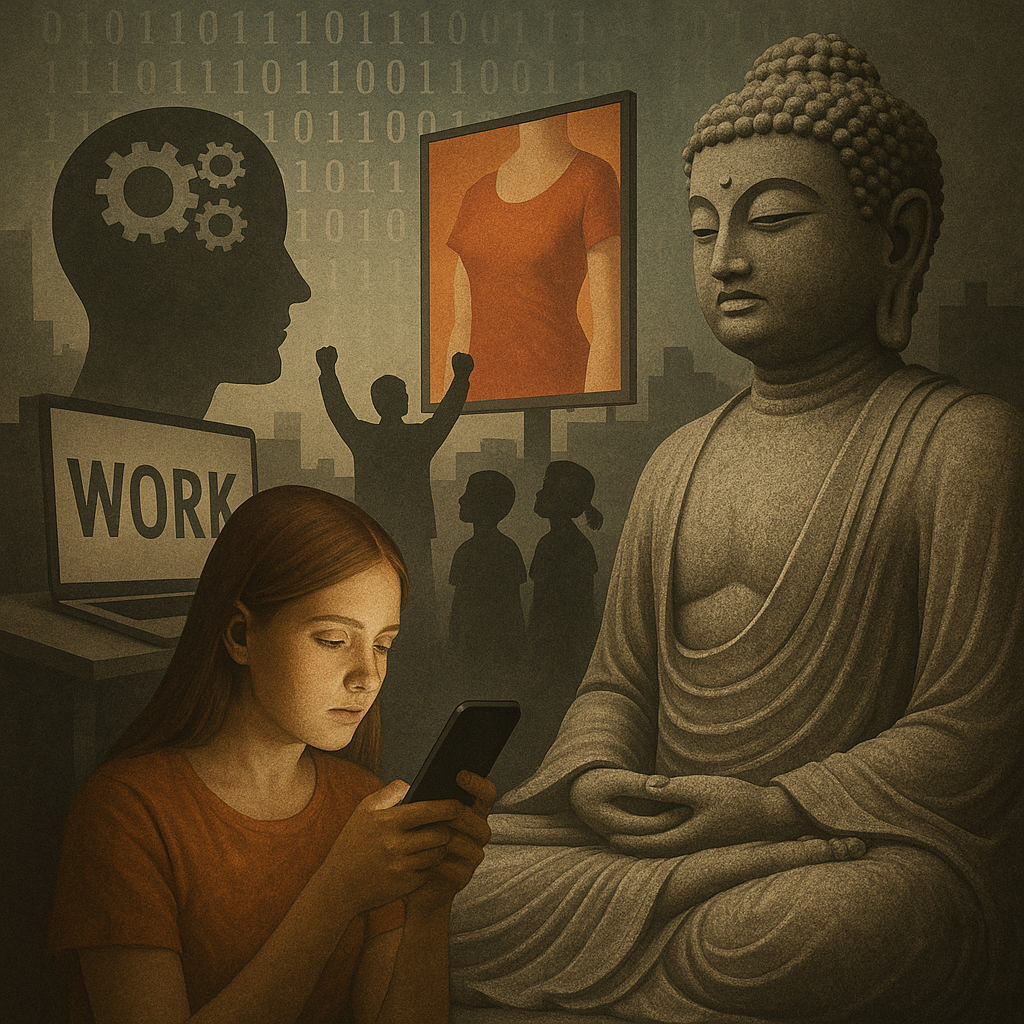
In an era when technological progress promises freedom and efficiency, many find themselves paradoxically more burdened, less satisfied, and increasingly detached from meaningful work and community. The rise of artificial intelligence and digital optimisation has revolutionised industries and redefined productivity—but not without cost. Beneath the surface lies a complex matrix of invisible control, user profiling, psychological manipulation, and systemic contradictions. Drawing from anthropologists, historians, and data scientists, this post explores how behaviour modification, corporate surveillance, and the proliferation of “bullshit jobs” collectively undermine our autonomy, well-being, and connection to the natural world.

Originally published in Substack https://substack.com/home/post/p-164145621

Manipulation of Desire

Large language models, or AI tools, are designed to optimise production by quantifying employees’ contributions relative to overall output and costs. This logic, however, rarely applies to upper management—those who oversee the operation of these very systems. Anthropologist David Graeber (2018) emphasised that administrative roles have exploded since the late 20th century, especially in institutions like universities where hierarchical roles were once minimal. He noted that science fiction authors can envision robots replacing sports journalists or sociologists, but never the upper-tier roles that uphold the basic functions of capitalism.

In today’s economy, these “basic functions” involve finding the most efficient way to allocate available resources to meet present or future consumer demand—a task Graeber argues could be performed by computers. He contends that the Soviet economy faltered not because of its structure, but because it collapsed before the era of powerful computational coordination. Ironically, even in our data-rich age, not even science fiction dares to imagine an algorithm that replaces executives.

Ironically, the power of computers is not being used to streamline economies for collective benefit, but rather to refine the art of influencing individual behaviour. Instead of coordinating production or replacing bureaucracies, these tools have been repurposed for something far more insidious: shaping human desires, decisions, and actions. From Buddhist perspective manipulation of human desire sounds dangerous. The Buddha said that the cause or suffering and dissatisfaction is tanha, which is usually translates as desire or craving. If human desires or thirst is manipulated and controlled, we can be sure that suffering will not end if we rely on surveillance capitalism. To understand how we arrived at this point, we must revisit the historical roots of behaviour modification and the psychological tools developed in times of geopolitical crisis.

The roots of modern Behaviour modification trace back to mid-20th-century geopolitical conflicts and psychological experimentation. During the Korean War, alarming reports emerged about American prisoners of war allegedly being “brainwashed” by their captors. These fears catalysed the CIA’s MKUltra program—covert mind control experiments carried out at institutions like Harvard, often without subjects’ consent.

Simultaneously, B.F. Skinner’s Behaviourist theories gained traction. Skinner argued that human behaviour could be shaped through reinforcement, laying the groundwork for widespread interest in behaviour modification. Although figures like Noam Chomsky would later challenge Skinner’s reductionist model, the seed had been planted.

What was once a domain of authoritarian concern is now the terrain of corporate power. In the 21st century, the private sector—particularly tech giants—has perfected the tools of psychological manipulation. Surveillance capitalism, a term coined by Harvard professor Shoshana Zuboff, describes how companies now collect and exploit vast quantities of personal data to subtly influence consumer behaviour. It is very possible your local super market is gathering date of your purchases and building a detailed user profile, which in turn is sold to their collaborators.  These practices—once feared as mechanisms of totalitarian control—are now normalised as personalised marketing. Yet, the core objective remains the same: predict and control human action – and turning that into profit. 

Advertising, Children, and the Logic of Exploitation

In the market economy, advertising reigns supreme. It functions as the central nervous system of consumption, seeking out every vulnerability, every secret desire. Jeff Hammerbacher, a data scientist and early Facebook engineer, resigned in disillusionment after realising that some of the smartest minds of his generation were being deployed to optimise ad clicks rather than solve pressing human problems.

Today’s advertising targets children. Their impulsivity and emotional responsiveness make them ideal consumers—and they serve as conduits to their parents’ wallets. Meanwhile, parents, driven by guilt and affection, respond to these emotional cues with purchases, reinforcing a cycle that ties family dynamics to market strategies.

Devices meant to liberate us—smartphones, microwave ovens, robotic vacuum cleaners—have in reality deepened our dependence on the very system that demands we work harder to afford them. Graeber (2018) terms the work that sustains this cycle “bullshit jobs”: roles that exist not out of necessity, but to perpetuate economic structures. These jobs are often mentally exhausting, seemingly pointless, and maintained only out of fear of financial instability.

Such jobs typically require a university degree or social capital and are prevalent at managerial or administrative levels. They differ from “shit jobs,” which are low-paid but societally essential. Bullshit jobs include roles like receptionists employed to project prestige, compliance officers producing paperwork no one reads, and middle managers who invent tasks to justify their existence.

Historian Rutger Bregman (2014) observes that medieval peasants, toiling in the fields, dreamt of a world of leisure and abundance. By many metrics, we have achieved this vision—yet rather than rest, we are consumed by dissatisfaction. Market logic now exploits our insecurities, constantly inventing new desires that hollow out our wallets and our sense of self.

Ecophilosopher Joanna Macy and Dr. Chris Johnstone (2012) give a telling example from Fiji, where eating disorders like bulimia were unknown before the arrival of television in 1995. Within three years, 11% of girls suffered from it. Media does not simply reflect society—it reshapes it, often violently. Advertisements now exist to make us feel inadequate. Only by internalising the belief that we are ugly, fat, or unworthy can the machine continue selling us its artificial solutions.

The Myth of the Self-Made Individual

Western individualism glorifies self-sufficiency, ignoring the fundamental truth that humans are inherently social and ecologically embedded. From birth, we depend on others. As we age, our development hinges on communal education and support.

Moreover, we depend on the natural world: clean air, water, nutrients, and shelter. Indigenous cultures like the Iroquois/Haudenosaunee express gratitude to crops, wind, and sun. They understand what modern society forgets—that survival is not guaranteed, and that gratitude is a form of moral reciprocity.

In Kalahari, the San people question whether they have the right to take an animal’s life for food, especially when its species nears extinction. In contrast, American officials once proposed exterminating prairie dogs on Navajo/Diné land to protect grazing areas. The Navajo elders objected: “If you kill all the prairie dogs, there will be no one to cry for the rain.” The result? The ecosystem collapsed—desertification followed. Nature’s interconnectedness, ignored by policymakers, proved devastatingly real.

Macy and Johnstone argue that the public is dangerously unaware of the scale of ecological and climate crises. Media corporations, reliant on advertising, have little incentive to tell uncomfortable truths. In the U.S., for example, television is designed not to inform, but to retain viewers between ads. News broadcasts instil fear, only to follow up with advertisements for insurance—offering safety in a world made to feel increasingly dangerous.

Unlike in Finland or other nations with public broadcasters, American media is profit-driven and detached from public interest. The result is a population bombarded with fear, yet denied the structural support—like healthcare or education—that would alleviate the very anxieties media stokes.

Conclusions 

The story of modern capitalism is not just one of freedom, but also of entrapment—psychological, economic, and ecological. Surveillance capitalism has privatised control, bullshit jobs sap our energy, and advertising hijacks our insecurities. Yet throughout this dark web, there remain glimmers of alternative wisdom: indigenous respect for the earth, critiques from anthropologists, and growing awareness of the need for systemic change.

The challenge ahead lies not in refining the algorithms, but in reclaiming the meaning and interdependence lost to them. A liveable future demands more than innovation; it requires imagination, gratitude, and a willingness to dismantle the myths we’ve mistaken for progress.


References

Bregman, R. (2014). Utopia for realists: And how we can get there. Bloomsbury Publishing.
Eisenstein, C. (2018). Climate: A new story. North Atlantic Books.
Graeber, D. (2018). Bullshit Jobs: A Theory. New York: Simon & Schuster.
Hammerbacher, J. (n.d.). As cited in interviews on ethical technology, 2013–2016.
Johnstone, C., & Macy, J. (2012). Active hope: How to face the mess we’re in without going crazy. New World Library.
Loy, D. R. (2019). Ecodharma: Buddhist Teachings for the Ecological Crisis. New York: Wisdom Publications.
Skinner, B. F. (1953). Science and human Behaviour. Macmillan.
Zuboff, S. (2019). The age of surveillance capitalism: The fight for a human future at the new frontier of power. London: PublicAffairs.
Chomsky, N. (1959). A review of B. F. Skinner’s Verbal Behaviour. Language, 35(1), 26–58.

Zen and the Art of Dissatisfaction – Part 13

Who Do We Owe?

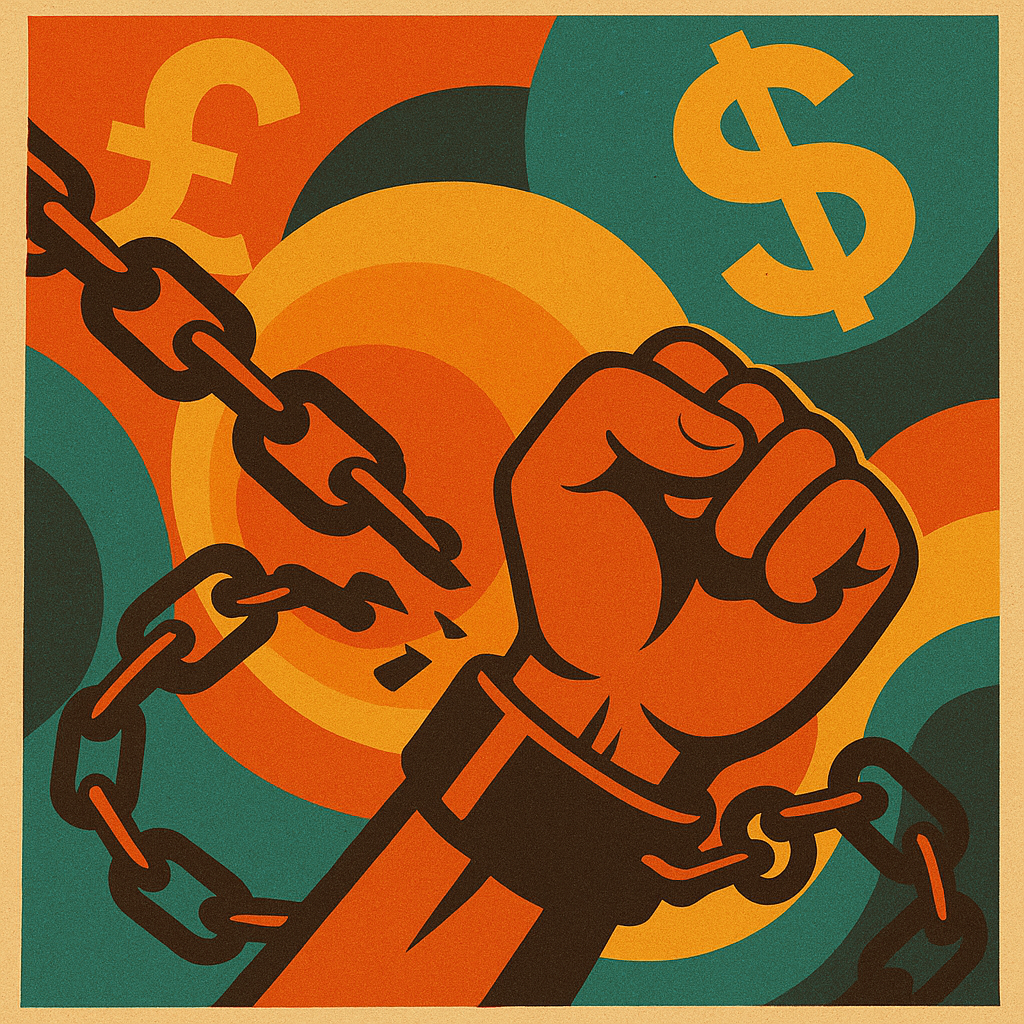
This post delves into the often overlooked complexities of our financial systems and the deep-rooted mechanisms of debt that have shaped our world. In exploring the history of money, state power, and the intricate relationship between banks and citizens, we see how dissatisfaction has long been embedded in the foundations of economic systems. Just as Zen practice challenges the conventional pursuit of constant pleasure and accumulation, our financial history reveals a pattern of never-ending striving, often at the expense of broader social equity. The financial system, much like the pursuit of material satisfaction, is a cycle of continual debt, obligation, and inequality. All of this often equals suffering, or at least dissatisfaction. Understanding this cycle is key to understanding the dissatisfaction that runs through modern society—how it originates from systems that promise wealth and prosperity, yet often deliver nothing more than perpetual indebtedness.

Originally published in Substack https://substack.com/home/post/p-163455665

The Roots of Debt and Power

During the Middle Ages, rulers realised they could manipulate their finances by giving more power to bankers. Anthropologist David Graeber (2011) writes that the history of modern financial instruments and paper money traces back to municipal bond issuance. The Venetian government began this practice in the 12th century when it needed money for military purposes. They collected loans from taxpaying citizens, offering a 5% annual interest rate in return. These bonds were made transferable, creating a market for government debt. Since these bonds had no set maturity date, their market prices fluctuated wildly, as did the probability of repayment.

Similar practices spread quickly across Europe. The state ensured tax compliance by requiring citizens to lend money with interest. But what exactly is this interest? This concept originates from Roman economics, where interest (lat. interesse) was considered compensation for the lender’s loss if repayment was delayed. In practice, the Venetian state agreed to pay this Roman ”interest” — a penalty for late repayment — to citizens who lent money to the state.

Such a system undoubtedly raised questions about the legal and moral relationship between citizens and the state. However, it spread quickly, as it made financing wars and conquests easier for states. By 1650, most Dutch households owned government debt. The true paradox of this system appeared when such bonds were monetised, and citizens started using these promises of repayment as currency for trade.

These government bonds sparked an economic revolution, transforming independent townspeople and villagers into wage labourers, forced to work for those with access to higher forms of credit. Gold bars imported from the Americas were rarely used for daily transactions. Instead, they travelled from Spain’s Seville to Genoese bankers’ vaults, then onward to China, where they were exchanged for silk and other luxury goods.

The Birth of Paper Money: Shifting Trust and Power

Government bonds were, in principle, already paper money, but it wasn’t until the establishment of the Bank of England in 1694 that true paper money emerged. The bank issued notes that were not government debt obligations but were tied directly to the king’s war debts. This money marked a shift in the nature of currency, now determined by speculative forces — interest rates and profits derived from military success and the exploitation of colonial resources.

This development led to a market-based economy, still characterised by a complex relationship between militarism, banking, and exploitation. The value of money shifted from direct human trust and the exchange of precious metals to government bonds, promising profits. This practice of issuing debt extended from government bonds to shares in corporations, suggesting that money could be endlessly created through interest-bearing loans.

The US dollar today is still a form of debt issued by the Federal Reserve, a coalition of banks. This arrangement mirrors the initial loan system introduced by the Bank of England, where the central bank loans money to the US government by purchasing government bonds, which are then turned into money through further lending.

Supporters of market economies claim that such systems have existed for 5,000 years. Yet, when examining the history of monetary economies, we see that the earliest market economies, such as 17th-century Holland and 18th-century England, experienced disastrous speculative crashes, like the tulip mania and the South Sea bubble.

Ultimately, the money we use is an extension of public debt. We engage in trade based on government promises, which are essentially loans from future generations. State debt, as politicians have noted since its inception, is borrowed from future generations. On one hand, this arrangement increases political power in the hands of the state; on the other, it suggests the government owes something to its citizens. The problem lies in the fact that state debt originates from the deprivation of freedom, war, and violence. It is not owed equally to all people but primarily to capital owners. The word ”capitalist” originally referred to someone who owned government bonds.

Debt and Global Ruin?

Enlightenment thinkers feared that state debt could lead to global ruin. The introduction of impersonal debt carried the ever-present risk of bankruptcy. While individual bankruptcy meant losing property, imprisonment, torture, hunger, and death, no one knew what state bankruptcy might entail.

For centuries, capitalism operated in a state of perpetual anxiety, with thinkers like Karl Marx, Max Weber, Joseph Schumpeter, and Ludwig von Mises confident that the system could not last beyond two generations. Graeber describes how, in 1870s Chicago, many wealthy industrialists built homes near military bases, convinced a revolution was imminent.

Debt and interest are significant factors in our world today. Graeber recounts how the International Monetary Fund (IMF) was created when OPEC countries poured vast amounts of oil wealth into Western banks during the 1970s oil crisis. These banks could not find new investment opportunities, so they started persuading global South dictators and politicians to take loans. These loans began with low interest rates but soared to 20% during the tight monetary policies of the 1980s. This aggressive lending process led to a debt crisis in the global South in the 1980s and 1990s. To refinance these loans, the IMF required nations to cut food subsidies, abandon free healthcare and education, and so on.

The tragedy of such loans is that the global South has often repaid them multiple times. The initial loan often ended up in the pockets of dictators, and as interest accumulated, the debt never truly had an endpoint. The IMF created a way to generate money out of nothing, without a concrete limit. But what moral right did they have to act in this manner? What moral obligation do these countries have to repay something they have already paid?

Since the late 19th century, American economic thought has shaped global political and economic development. In the 1800s, anti-capitalist views in the United States, such as producerism, argued that labour, not capital, created true wealth. President Abraham Lincoln, a prominent producerist, stated that capital was merely the fruit of labour. However, from the 1890s, a new ideology emerged, promoted by industrial magnates, bankers, and political allies, arguing that it was capital, not labour, that created wealth.

This cultural campaign, championed by steel magnate Andrew Carnegie, argued that concentrated capital under wise leadership could reduce commodity prices so much that future workers would live as well as past kings. Carnegie believed that high wages for the poor were not beneficial for the ”race.”

It is crucial to remember that the Marxist term ”worker” never referred to factory workers. In fact, during Marx’s time, more working-class individuals were employed as maids, servants, shoeshiners, waste collectors, cooks, nurses, taxi drivers, teachers, prostitutes, janitors, and traders than in mines or factories.

The idea of wage labour, working under supervision in factories performing tasks set by a boss, originates from colonial plantation slavery and the hierarchical command structure of trading companies’ fleets.

Shaping of Modern Economies

By the early 20th century, this ideology of capital producing wealth became entrenched in Western thinking. Several events in the United States changed the relationship to work, family, leisure, and especially consumption. Advertisements for consumer products began to take their modern form in the 1920s, and with the Great Depression of the 1930s, the idea of a shorter workweek was no longer discussed.

In 1914, Henry Ford, the founder of the Ford Motor Company, reduced his factory’s workday from nine to eight hours, doubled workers’ wages, and promised to share profits with employees. The main reason for this was the shortage of good workers, as few were willing to work on Ford’s assembly line. The promise of better wages and potential company profits resolved this issue, providing a quick economic gain for Ford’s company.

Ford believed that, although the company would lose money initially, it would recover because workers would now have more money to spend on Ford products. Ford turned his employees into loyal consumers. However, this extra pay was tied to social expectations. Ford’s sociological department would visit workers’ homes unannounced to assess cleanliness, safety, and alcohol use. Any deviations would result in a deduction from their bonus.

Ford’s shareholders took him to court, claiming his duty was to maximise profits for shareholders, even if done legally. The court ruled that while Ford’s humanitarian sentiments were admirable, his company existed to make profits for its shareholders.

In the US, the debate about a shorter workweek continued until World War II, after which post-war economic growth led citizens to forget the issue, as shorter working hours would have meant lower wages, which in turn would have led to less money for consuming the products promoted by the media.

The United States has been an exceptional example of how the middle class has been built and, in recent decades, undermined. Despite consistent GDP growth since the 1960s, wages have stagnated since the early 1970s, even while workers were the best educated in the world. Globalisation and technological change have reshaped business practices.

Large companies like Amazon still employ thousands, but this is a fraction of what would have been needed before automation. AI algorithms optimise business operations, replacing human labour with machines. Today, the rule is that the working class continues to grow poorer while GDP rises.

Afterword
As we reflect on the origins of debt and finance, it becomes evident that the complex relationships between states, banks, and citizens have had far-reaching consequences for the modern world. From the early municipal bonds issued by Venetian rulers to the creation of the US dollar and the global financial system of today, the trajectory of money is intricately linked to power, conflict, and inequality. What was once a simple exchange of goods and services has evolved into a global network of debt and credit, often with severe repercussions for ordinary people. The lessons of history remind us that economic systems, while essential for progress, often come at the cost of social justice and equality. As we move forward, it is crucial to question the morality of the systems that govern our financial world and to explore alternatives that prioritise the well-being of all individuals, rather than just the few who control the flow of capital.


References

Graeber, D. (2011). Debt: The First 5,000 Years. Brooklyn, NY: Melville House.

Graeber, D. (2018). Bullshit Jobs: A Theory. New York: Simon & Schuster.

Harvey, D. (2005). A Brief History of Neoliberalism. Oxford University Press.

Klein, N. (2007). The Shock Doctrine: The Rise of Disaster Capitalism. Penguin.

Mazzucato, M. (2018). The Value of Everything: Making and Taking in the Global Economy. Allen Lane.

Standing, G. (2011). The Precariat: The New Dangerous Class. Bloomsbury Academic.