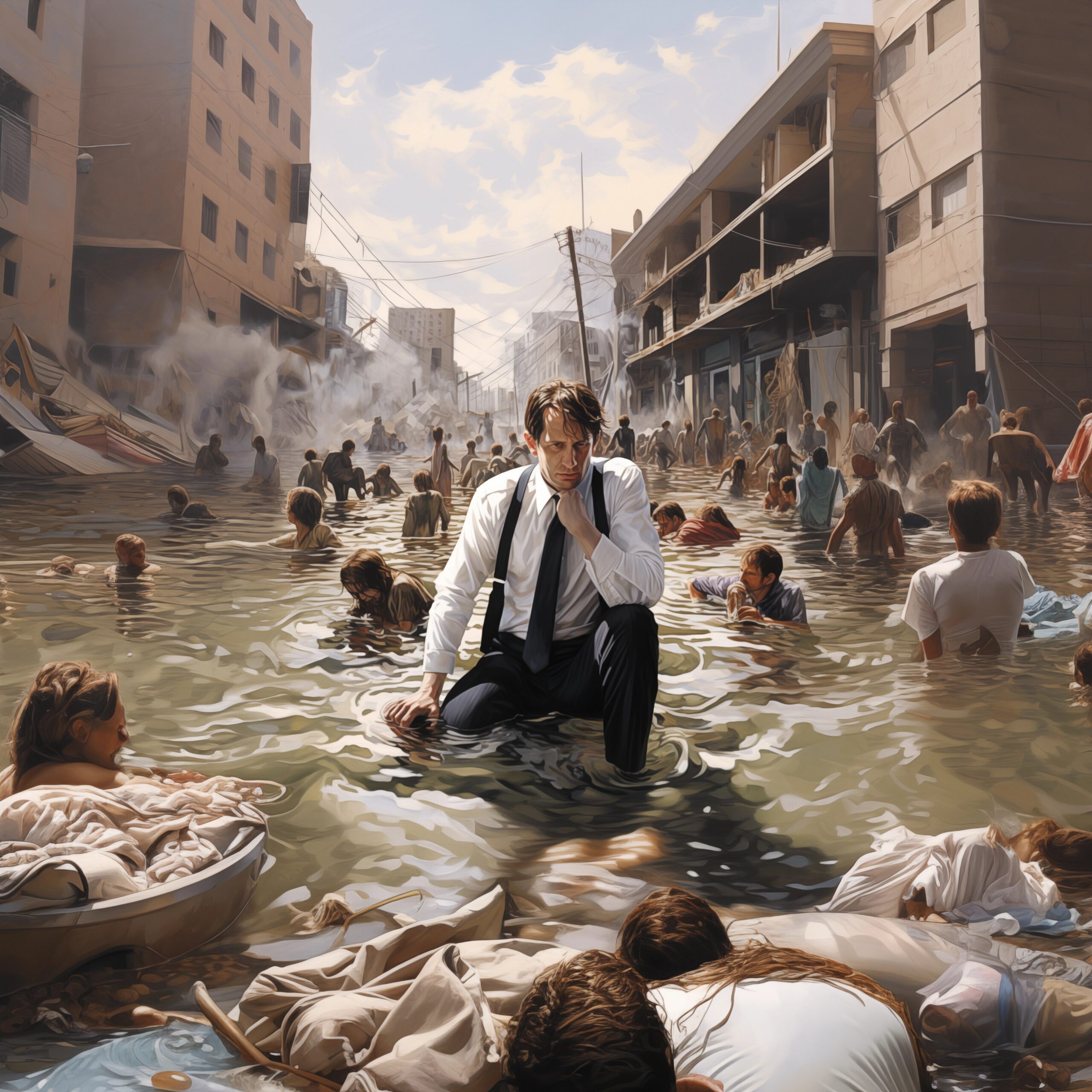
Money: Debt and the Death of Meaning
“If nature were a bank, we would have already saved it.”
— Eduardo Galeano
In today’s world, money is more than a means of exchange—it’s a source of power, anxiety, and inequality. The way we earn, spend, and owe has profound effects not only on our personal lives but also on the planet itself. This post explores the complex relationships between money, debt, environmental destruction, and the philosophies that seek to restore balance.

Originally published in Substack https://substack.com/home/post/p-161959754
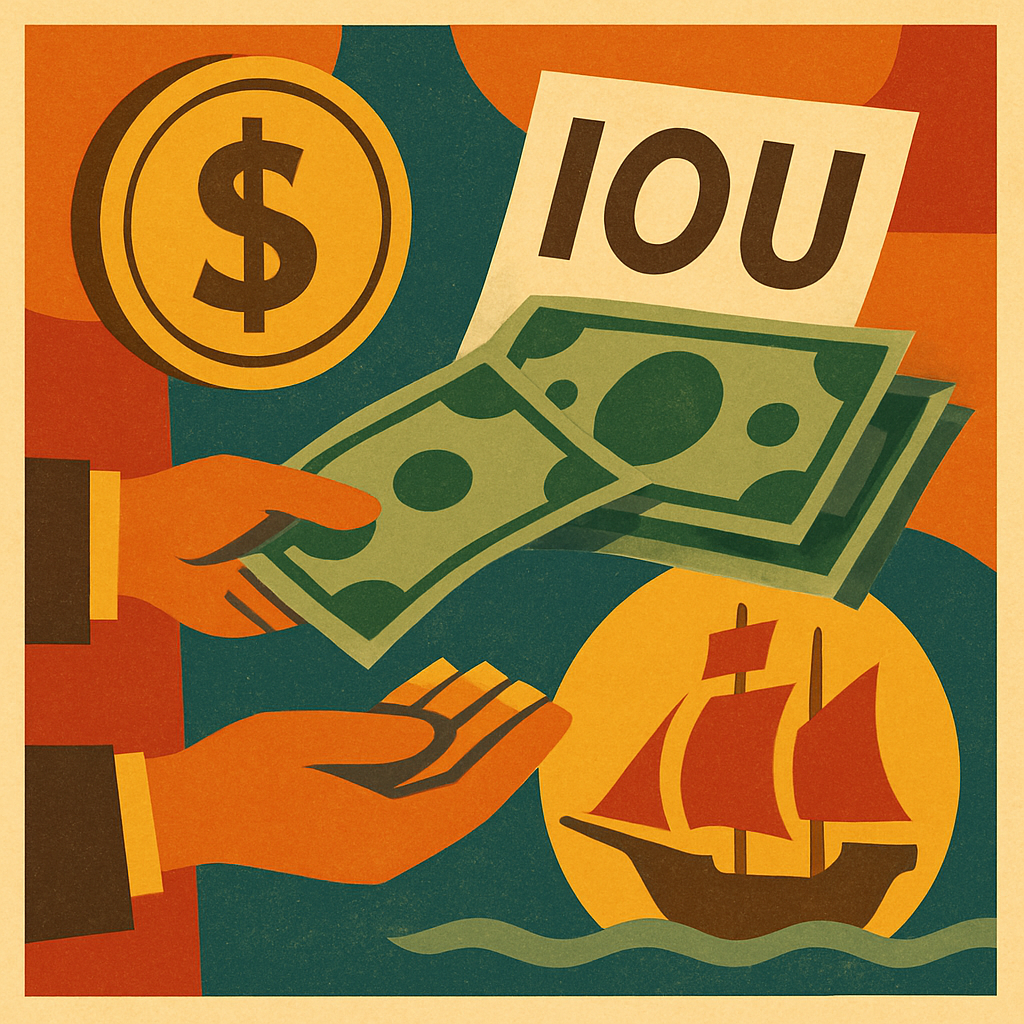
Money—and especially the lack of it—is one of the biggest sources of dissatisfaction. Debt in particular shapes our lives and influences our sense of contentment. Even though education is free in Finland, I still had to spend several years paying off my student loans, which had ballooned to incomprehensible amounts. But that’s nothing compared to what my American colleagues have to pay for their education. The average U.S. household carries about $111,740 in debt. In Finland, the average household debt is around €49,500. People are often blamed for borrowing money, as being in debt is seen as shameful or even sinful. Yet this money is rarely used for frivolous purposes. Studies show that most debt is incurred for housing, children’s education, sharing with friends, or maintaining relationships.
Anthropologist David Graeber explores the origin and meaning of debt, money, and credit in his groundbreaking work Debt: The First 5,000 Years (2012). According to Graeber, people must go into debt just to reach an income level that covers more than mere survival. Despite their debt, people still buy homes for their families, alcohol for celebrations, gifts for their friends. They’re willing to pay for weddings and funerals even if their credit cards are maxed out. One of the pillars of market economy is the idea of endless growth and the illusion of an ever-increasing GDP that promises a better future and free money for all. But is this really true? Can the limited resources of our planet sustain endless growth?
Humans have always transformed their environment when migrating to new areas, but the large-scale exploitation of nature and irreversible modification of the atmosphere began only after the principles of market economy solidified in the 18th century.
Did ancient hunter-gatherers destroy their environment with the same ruthlessness? Romanticising hunter-gatherers has its risks, and many scholars have pointed out that humans have been dangerous mass killers for as long as we’ve existed. Australia is one such example. When modern humans arrived on the continent some 50,000 years ago, nearly all large predators and edible animals vanished. These animals had no concept of how dangerous a hairless, two-legged ape could be—and not enough time to learn.
But just as it’s dangerous to romanticise hunter-gatherers, it’s also dangerous to label them as mass murderers. Nearly all examples show that Indigenous peoples eventually found some kind of balance with nature. There’s no known case where an Indigenous group caused large-scale ecological destruction on their own. Easter Island is often cited as an exception, but that may stem from misinterpretation. Scholars still debate whether the island’s original inhabitants were responsible for the collapse of their own culture.
Historian Rutger Bregman (2020) discusses this debate by reviewing research on Easter Island’s history. He concludes that everything was fine until Western explorers arrived—bringing with them violence and rats that altered the ecosystem. The islanders began to covet Western culture and treasures. Eventually, about a third of the population was taken as slaves to Peruvian mines. Some were returned, now infected with smallpox. That finally ended the peace on the island and eradicated most of the remaining inhabitants.
American environmental activist, author, Buddhist scholar, systems theorist, and deep ecology thinker Joanna Macy has become an influential figure in recent years as ecological activism has risen as a political movement. The climate movement Extinction Rebellion, which started in the UK in October 2018, has included from the beginning people of many religious backgrounds. Buddhist members, in particular, frequently cite Macy’s ideas.
Born in 1929 in Los Angeles, Macy attended the Lycée Français de New York and graduated from Wellesley College in 1950 with a degree in Biblical studies. Her husband, Francis Macy (1927–2009), was a Harvard-trained psychologist and expert in Slavic culture, which led them abroad during the Cold War on assignments for the United States Information Agency (USIA). Macy studied political science at the University of Bordeaux in the early 1950s and was recruited by the CIA to gather intelligence in Germany. While living there, she began a lifelong project translating the work of Austrian poet Rainer Maria Rilke (1875–1926).
Between 1964 and 1972, Macy traveled with her husband, who served in leadership roles with peacekeeping missions in India, Tunisia, Nigeria, and across Africa. She earned her doctorate from Syracuse University in 1978 on the relationship between systems theory and Buddhism, which she had studied while assisting Tibetan refugees in northern India. During that time, she became friends with the young Dalai Lama.
After the Cold War, Francis Macy played a pivotal role in supporting hundreds of activists in Russia, Ukraine, Georgia, and Kazakhstan as they confronted the environmental legacy of nuclear weapons and the Chernobyl disaster. He founded multiple professional associations and collaborated with former Soviet colleagues beginning in 1983.
Thanks to her rich life experience, Joanna Macy serves as a powerful role model for today’s environmental movement—on whose shoulders rests the future of the entire ecosystem. Macy has influenced many other thinkers who operate at the intersection of spirituality and environmental activism, such as philosopher and Zen teacher David R. Loy.
Joanna Macy (2021) argues that humanity does not truly believe the current situation is dangerous. On an individual level, we don’t feel we have a role in solving the crisis. We fear ridicule if we panic, because everyone else seems to think things are just fine. We also fear jeopardising our political or economic standing in our communities if we take action. We think it’s better not to think about it at all—because it is painful and terrifying. We’re paralysed: aware of the danger, but unsure what to do. Some may think nothing can be done, and nothing matters anymore.
Norwegian philosopher Arne Næss (1912–2009) coined the term deep ecology. He was a central figure in the environmental movement from the late 20th century, combining his ecological worldview with Gandhi’s principles of nonviolent resistance and actively participated in defending biodiversity. His ecological view could be described as a kind of elegant self-realisation: every living being—human, animal, or plant—has an equal right to live. Næss believed people could become part of Earth’s ecosystems through recognising the illusion of the separate self. Joanna Macy agrees, stating that no action in defence of biodiversity feels like a sacrifice, once we experience our deeper ecological self—one that includes all life. The whole world becomes myself. When we act on behalf of the world, we restore balance within ourselves.
In 2012, Joanna Macy and psychologist Chris Johnstone developed a method called The Work That Reconnects, which encourages people toward active hope—because what’s the point of acting if the game is already lost? They define hope in two ways. First, it’s the outcome we desire, which we believe is possible. The second aspect of hope is passion—the drive to work toward our desired outcome, no matter how unlikely. Passive hope is simply wishing things would go a certain way and waiting for external forces to make it happen. Active hope means taking the situation seriously and doing, right now, whatever we can to move toward our desired future.
Macy categorises today’s dominant narratives into three types. The first is business as usual—the belief that economic growth will inevitably lead to progress. While things have improved on average for many, the future depends on an unprecedented level of motivation and global cooperation—without any guarantees of economic reward.
Human creation
However, our economic system is not a law of nature, but rather a man-made construct—one that could be changed simply through collective human decision. It is not a force of nature or a law carved in stone for which there have never been alternatives. Market capitalism has merely proven so efficient at generating wealth and health that few dare to question it. Yet, the fruits of capitalism have not been shared equally among the world’s population. After the fall of communism, capitalism was left without serious competition.
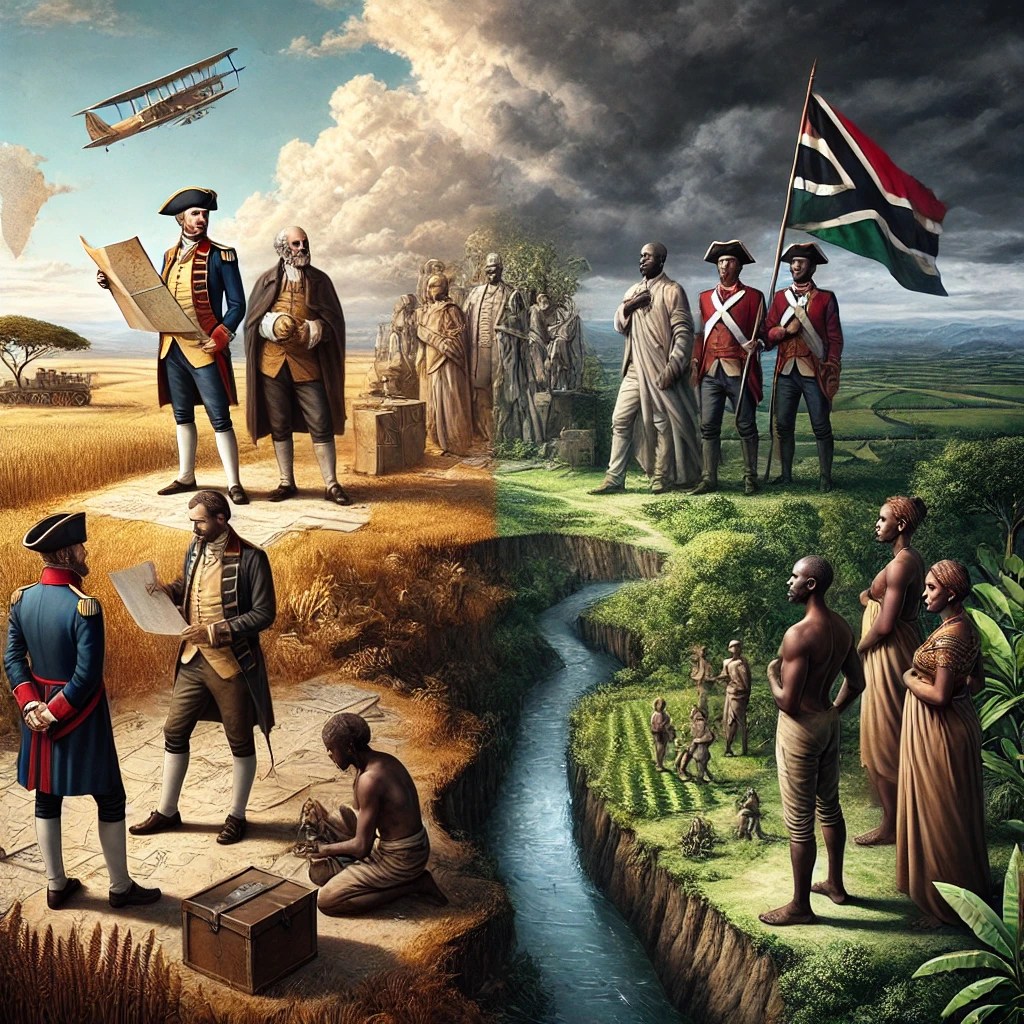
Although capitalism can be seen as the bearer of gifts and freedom here in the wealthy parts of the world, the relationship between capitalism and violence becomes evident when we look at countries once subjugated by colonial systems. In most cases, the original tribal borders and systems were dismantled, and the populations enslaved. In some instances, the entire indigenous population was replaced, as happened in the 17th century on the volcanic Banda Islands—now part of Indonesia.
Western culture underwent several significant changes in its transition from the Middle Ages to the Enlightenment, particularly concerning the treatment of colonial populations and the development of the banking system in the Renaissance Italy. Giovanni di Bicci de’ Medici (1360–1429) established his first bank in Florence in 1397. Though he had a branch in Rome, it was Florence’s investment opportunities that made the bank thrive. Art lovers know the House of Medici through their renowned patronage. The Medici bank became the largest in Europe during the 15th century. The family produced five popes in the 16th century—the last of whom, Leo XI, ascended the papacy and died in the same year, 1605—as well as two two queens of France—Catherine de’ Medici (1547–1559) and Marie de’ Medici (1600–1610). Their protégés included major artists of the Italian Renaissance such as Filippo Brunelleschi (1377–1446), Donatello (1386–1466), Fra Angelico (1395–1455), Leonardo da Vinci (1452–1519), and Michelangelo (1475–1564).
Western historical accounts also credit the Medici family with introducing double-entry bookkeeping. This system was devised by the Franciscan monk Luca Pacioli (c. 1447–1517), a friend of Leonardo da Vinci? The Medici’s accounting practice documented where money came from and where it went. Should we, then, each time someone asks whether we’re paying by debit or credit, remember this monk?
Conclusion: Rewriting the Script
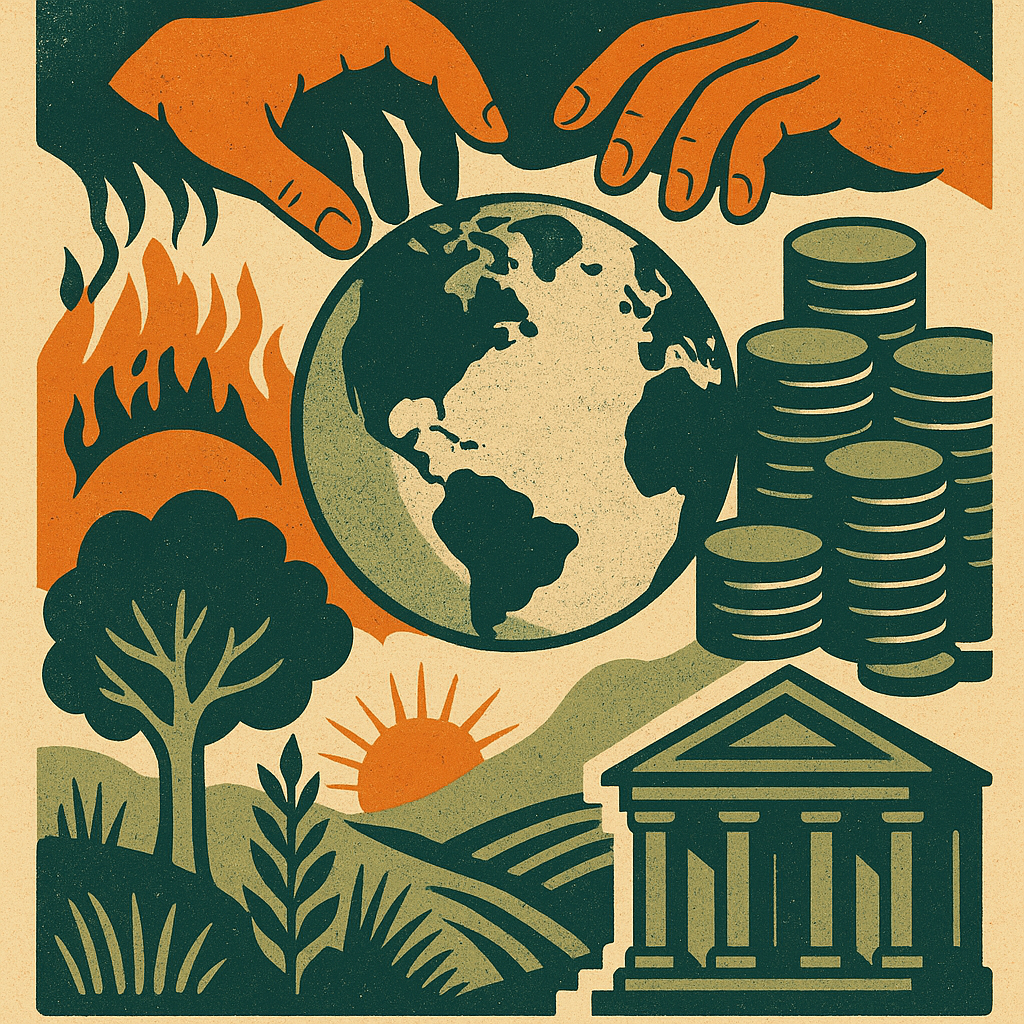
If nature were a bank, would we have saved it already? Eduardo Galeano’s biting quote still holds true. Our world is organised around the movement of money, not the flourishing of life. But the system we live in is not immutable. It was made by us, and we can remake it.
Hope begins when we realise this truth. Joanna Macy, David Graeber, Arne Næss—these thinkers remind us that alternatives are not only possible but necessary. Deep ecology, active hope, and historical self-awareness can help us shift from a paradigm of endless extraction to one of deep connection. The future isn’t written yet. Whether or not we act—together, and now—will determine how that story unfolds.
References
Atwood, M. (2008). Payback: Debt and the shadow side of wealth. Toronto, ON: Anansi Press.
Bregman, R. (2020). Humankind: A hopeful history. Bloomsbury.
Galeano, E. (n.d.). If nature were a bank, we would have already saved it [Quote].
Graeber, D. (2012). Debt: The first 5,000 years. Melville House.
Johnstone, C., & Macy, J. (2012). Active hope: How to face the mess we’re in with unexpected resilience and power. New World Library.
Macy, J. (2021). A wild love for the world: Joanna Macy and the work of our time (S. Macy, Ed.). Shambhala Publications.
Naess, A. (2008). The ecology of wisdom: Writings by Arne Naess (A. Drengson & B. Devall, Eds.). Counterpoint.
Pacioli, L. (2007). Particularis de computis et scripturis [Facsimile edition]. (Original work published 1494). Lucerne: Verlag am Klosterhof.