Zen and the Art of Dissatisfaction – Part 18

Humanity’s Legacy of Extinction and Exploitation

For centuries, human societies—whether ancient hunter-gatherers or modern industrial empires—have played a central role in the extinction of Earth’s largest animals. Although we often romanticise early humans as living in harmony with nature, archaeological and ecological evidence tells a different story. This blog post explores the global impact of Homo sapiens on megafauna, marine ecosystems, and keystone species across continents and millennia, from prehistoric Africa to industrial Japan. It also highlights the ongoing environmental and ethical consequences of our actions.

Originally published in Substack: https://substack.com/@mikkoijas

Humans have consistently driven megafauna to extinction wherever they have migrated. While we may associate the last remaining hunter-gatherers in Africa, Australia, or the Americas with sustainable living, historical patterns suggest otherwise. Wherever Homo sapiens arrived, they rapidly exterminated dangerous predators, large herbivores, and flightless birds.

The Human Legacy of Megafauna Extinction

One striking exception is Africa, where large land mammals have coexisted with humans far longer. This prolonged co-evolution allowed these animals to adapt to human presence. In other parts of the world, some megafauna managed to survive alongside humans—such as various species of bears, moose, deer, and the American bison. Europe’s bison relative, the wisent, nearly went extinct in the 20th century but was saved by zoos.

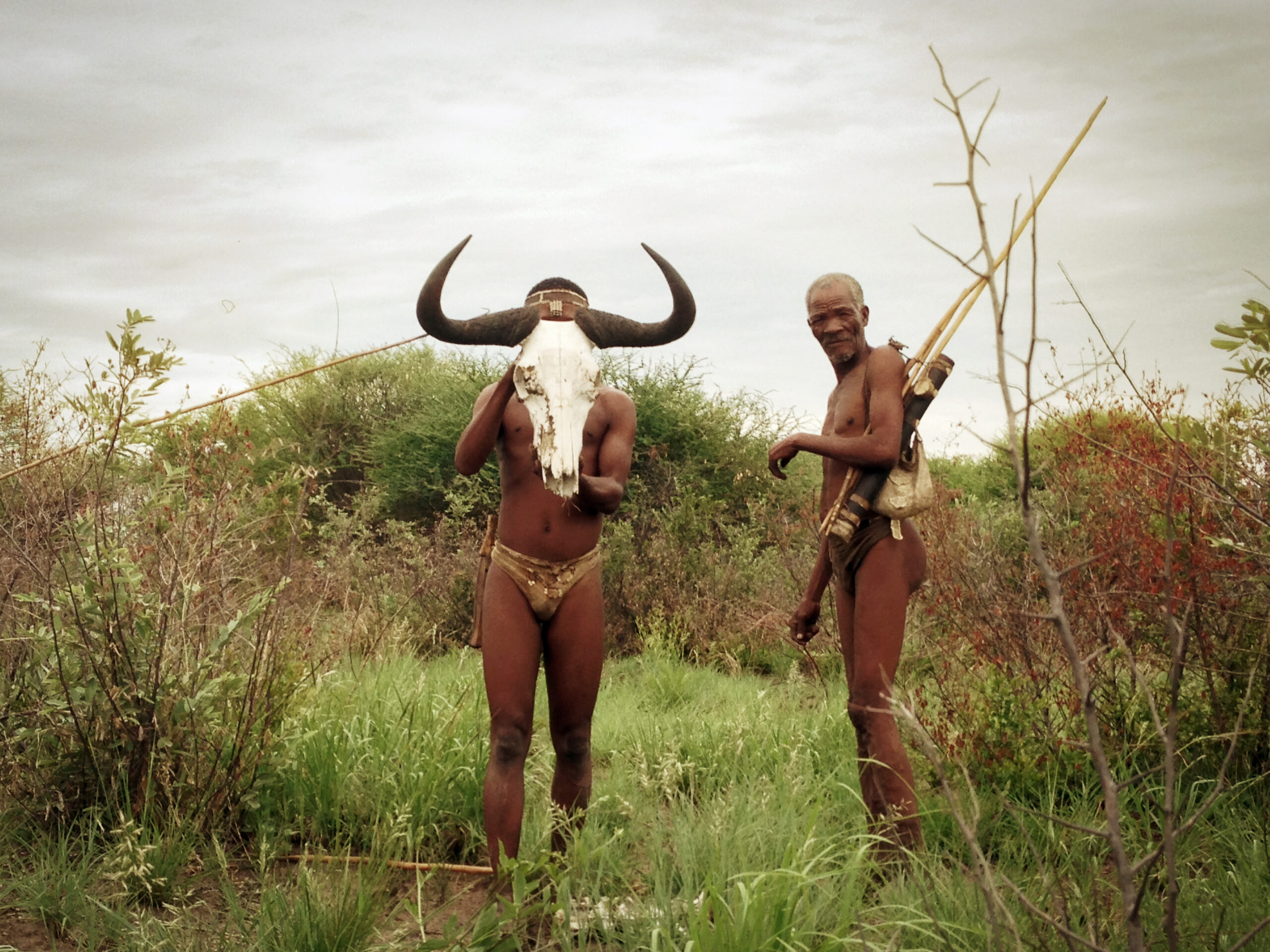
Even so, ancient hunter-gatherers eventually reached a balance with their prey. Among the San people of the Kalahari, for instance, there’s a known reluctance to hunt declining species. This balance was disrupted by European settlers, leaving San communities today unable to practice their traditions freely.

In North America, indigenous peoples coexisted with the American bison until European settlers deliberately disrupted the balance. Settlers intentionally slaughtered bison to deprive native populations of their primary resource. In the 1700s, 25–30 million bison roamed the plains. By 1880, systematic hunting—sometimes by the U.S. Army—reduced their population to under 100 individuals.

Human impact has extended deep into marine ecosystems. Although coastal communities have fished for thousands of years, their practices rarely led to ecological collapse. According to Curtis Marean, a professor of archaeology at Arizona State University, early Homo sapiens may have survived an extreme ice age (c. 195,000–123,000 years ago) by turning to coastal diets. Marean’s work at Pinnacle Point near Mossel Bay has shown that ancient humans relied on seafood like shellfish and marine mammals. This dietary shift played a crucial role in the survival of early humans during a population bottleneck when their numbers dropped to a few hundred individuals.

Nearby Blombos Cave, studied by archaeologists like Christopher Henshilwood, has yielded the earliest evidence of symbolic thought and advanced tools, including beads and bone-tipped spears.

Although early coastal communities scavenged stranded whales, they did not hunt them at scale. The Romans may have initiated the first industrial whale hunts, particularly off the Gibraltar peninsula, as confirmed by recent findings from Ana Rodrigues’ research team (2018). Later, the Basques became renowned whale hunters, operating from the 1000s to the 1500s across the North Atlantic. By the early 1900s, the North Atlantic right whale population had dropped to about 100. Recent estimates suggest there are only 336 left today.

Tuna, Greed, and the Cold Economics of Extinction

Whales are not the only marine giants hunted to the brink. Species like the bluefin tuna have faced similar pressure. On the Western Atlantic, tuna catches jumped from 1,000 tonnes in 1960 to 18,000 tonnes by 1964—only to collapse by 80% within the same decade. In the Mediterranean, overfishing continued longer but reached catastrophic levels by 1998, leading the IUCN to classify the species as endangered.

The surge in demand came from Japan, where raw tuna is essential for sushi and sashimi. In particular, the fatty underbelly known as otoro became a luxury delicacy in the 1960s. Meanwhile, in the West, tuna was mostly used for cat food.

Today, approximately 80% of all bluefin tuna caught globally is shipped to Japan. The Japanese conglomerate Mitsubishi controls about 40% of the global market, freezing and stockpiling tuna to artificially inflate scarcity and profit margins. Ironically, the Fukushima nuclear disaster compromised these stores when the electricity failed, ruining thousands of tonnes of frozen fish.

From an ecological viewpoint, Mitsubishi’s actions are deeply unethical. From an economic lens, however, they are brutally rational—rarity increases value. As stocks dwindle, prices rise, and shareholders benefit. The more endangered tuna become, the more lucrative they are.

All signs suggest that the oceans are under enormous pressure due to climate change. Seas are warming, acidifying, and absorbing unprecedented levels of carbon dioxide from human activity. In addition, they are polluted and eutrophicated by agriculture and industry.

The Baltic Sea, for example, is the most polluted marine area in the world—thanks in part to the impacts of livestock farming. The same agricultural runoff pollutes Finland’s lakes and rivers.

Ocean ecosystems are remarkably sensitive. A 2°C rise may seem minor—until we compare it to the human body. If your body temperature increased by two degrees and stayed there, you’d die. The sea is no different.

In her book On Fire (2020), journalist Naomi Klein reflects on the 2010 Deepwater Horizon oil spill in the Gulf of Mexico. Operated by Transocean and leased by BP, it remains the largest marine oil spill in history. Witnesses described the ocean as if it were bleeding. Klein recalls being struck by how the oil’s swirling patterns resembled prehistoric cave paintings—one shape even resembled a bird gasping for air, its eyes staring skyward.

Conclusion

From mammoths and bison to whales and tuna, humanity has left a trail of extinction and ecosystem collapse in its wake. Whether through hunting, pollution, or industrial overreach, our actions have irreversibly altered life on Earth. The myth of ancient ecological harmony dissolves under the weight of archaeological evidence and ecological reality. If we are to prevent the next wave of mass extinctions, we must confront the past honestly and reshape our relationship with the natural world—before there is nothing left to save.


References

Henshilwood, C. S. (2002). The Blombos Cave and the origins of symbolic thinking. Science, 295(5558), 1278–1280. https://doi.org/10.1126/science.1067575

Hickman, M. (2009). Mitsubishi and the bluefin tuna trade. The Independent. Retrieved from https://www.independent.co.uk

Klein, N. (2020). On Fire: The Burning Case for a Green New Deal. Penguin Books.

Lindsay, J. (2011). Mitsubishi loses tons of tuna after Fukushima power failure. Environmental News Network. Retrieved from https://www.enn.com

Marean, C. W. (2010). When the Sea Saved Humanity. Scientific American, 303(2), 54–61.

Rodrigues, A. et al. (2018). Forgotten whales: Evidence of ancient whaling by the Romans in the Gibraltar region. Proceedings of the Royal Society B: Biological Sciences, 285(1873). https://doi.org/10.1098/rspb.2018.1088

IUCN. (1998). Bluefin tuna listed as endangered. International Union for Conservation of Nature. https://www.iucn.org

Zen and the Art of Dissatisfaction – Part 17

From Mammoth Graves to Aurochs Temples

The archaeological record offers profound insights into the lives, beliefs, and practices of our prehistoric ancestors. From elaborate burials in Russia to monumental structures in Finland, and from intricate cave paintings in France to the extinction of megafauna across continents, these remnants challenge modern perceptions of early human societies. This article delves into various significant prehistoric sites and phenomena, shedding light on the complexity and richness of early human culture.

Originally published in Substack: https://substack.com/@mikkoijas

On the territory of present-day Russia, in Sungir some 34,000 years ago, Upper Palaeolithic humans left behind something truly extraordinary. In Sungir, an ancient grave has been discovered where two physically disabled children were buried together with precious treasures. The children of Sungir were adorned with beads carved from mammoth ivory—over 10,000 of them in total. Also found in the grave were 20 bracelets, 300 perforated fox teeth, 16 spears made from mammoth tusks, reindeer antlers, and other ornamental objects.

Unique Traces of Ancient Peoples and Lost Giants of the Ice Age

A common misconception suggests that ancient hunter-gatherers were nomadic wanderers trailing game animals, leaving behind little of note. This, however, is a misconception. We know that hunter-gatherer cultures constructed massive monuments even here in Finland. The 4,500-year-old “Giant’s Church” or Kastelli in Pattijoki is astonishing by any measure. The stone enclosure covers an area of about 2,200–2,300 square metres, with its walls rising on average 1–1.5 metres above the surrounding ground, and in some places nearly 2 metres.

Teotihuacán, located on the southern part of Mexico’s central plateau, is not necessarily ancient, but it too was built by hunter-gatherers. The city was founded in the 3rd century, and what makes it special is the complete absence of advanced technology. The inhabitants of Teotihuacán did not use sophisticated metal tools, did not practice agriculture, nor did they leave behind any administrative documents. The people who founded this city of around 100,000 inhabitants did not use draft animals or even the wheel in its construction. The city boasts two large pyramids, with the Pyramid of the Sun featuring 215-metre-long sides and a height of 60 metres.

In the Dordogne region of central France lies a particularly fascinating cave. After entering the cave, visitors board an electric train in a vast entrance hall, descending deep into the earth. The cave is, in places, so tall that the beam of a torch does not reach the ceiling. In other areas, it is so low that archaeologists had to crawl with their backs pressed against the ceiling to advance further in. After travelling about a kilometre and a half, the train stops, and the guide points to the cave wall. On the wall is an image of a woolly rhinoceros. A little later, the guide illuminates a beautiful depiction of two mammoths looking into each other’s eyes. Rhinoceroses and mammoths… in France! Like mammoths, woolly rhinoceroses disappeared from France after the end of the Ice Age.

In 1991, French diver Henri Cosquer accidentally discovered a cave sealed by an air pocket off the coast of Marseille in the Mediterranean. Now named Cosquer Cave, it lies 37 metres below sea level. Its walls are adorned with paintings of seals, auks, and lions.

Before the rise of modern humans, the lion was the most widely spread land mammal, present wherever land routes allowed. Upon the arrival of modern humans in Central Europe, large prides of cave lions roamed the mammoth steppe. Such prides are vividly depicted on the walls of Chauvet Cave, dating to around 35,000 years ago. Cave lions, likely dangerous to modern humans much like cave bears, went extinct around the same time as the most beautiful cave paintings were created in the Lascaux cave.

The Lascaux cave paintings are especially famous for their massive ceiling frescoes depicting aurochs. The production of these paintings appears to have taken place on an almost industrial scale. The large ceiling artworks were executed using temporarily erected scaffolding, upon which trained artists, working by the refined light of tallow lamps, painted anatomically precise depictions of wild animals as if floating weightlessly, upside down.

The cave is often compared to the Sistine Chapel. A visit to the replica of the Lascaux cave was an equally moving experience. In the first chamber of the cave, known as the Hall of the Bulls, the aurochs painted on the ceiling seem dreamlike. The bulls, wild horses, and other animals appear to fly in weightless space. This is a considerable achievement, especially for paintings made without any live models. The prehistoric artists were highly skilled. At the rear of the cave is a rock featuring a depiction of a horse floating upside down. Even from this two-dimensional image, one can see the animal has been rendered with flawless anatomical accuracy—an achievement that would be rare even among the finest animal illustrators in art history.

French archaeologist André Leroi-Gourhan (1911–1986) published several studies on French cave paintings, the most famous of which entered public discourse, especially in the 1960s, once translated into English. Leroi-Gourhan’s great achievement was his detailed mapping of caves and the precise counting of depicted motifs. Aurochs appear 137 times in the 72 caves he studied. However, the aurochs were less common than horses, which appear 610 times, bison 510 times, woolly mammoths 205 times, and the easily recognisable ibex with its majestic horns 176 times (Leroi-Gourhan 1967).

The aurochs held particular symbolic significance for Ice Age modern humans. South African archaeologist David Lewis-Williams, an expert on rock art, along with his colleague David Pearce (2011), have proposed that the depiction of aurochs in Central European caves may have led to the first organised religions, as modern humans settled into agricultural life. In southern Turkey, Çatalhöyük was, about 7,000 years ago, one of the first cities where people lived settled lives, farming the land and consuming domesticated animals. Lewis-Williams and Pearce suggest that the locals practised a form of religion centred on the aurochs.

At Çatalhöyük, there are rooms that appear to have been entered by crawling, with sculptures on the walls resembling the heads and horns of aurochs. According to Lewis-Williams and Pearce, at the core of this aurochs cult was a priesthood responsible for the domestication of sacrificial animals. Therefore, we can only speculate: did humans settle due to practical agricultural needs or because of religious practices? These rooms might also simply be domestic spaces with decorative aurochs heads.

Ritual, Settlement, and the Mystery of Agriculture

Today, we know that the people of Çatalhöyük did not consume domesticated aurochs. They had been domesticated a thousand years earlier in the Fertile Crescent. The inhabitants of Çatalhöyük continued to hunt wild aurochs but also farmed and raised sheep and goats.

Cities like Çatalhöyük—or even older archaeological sites in Turkey such as Göbekli Tepe—may have served as important religious gathering places, prompting the emergence of agricultural and pastoral lifestyles. But there is no certainty about which came first. Did people first settle and then begin farming? Hunter-gatherer societies may have gathered for seasonal ceremonies yet continued living in smaller, dispersed groups for parts of the year. Alternatively, such gatherings might have led to more permanent settlement—though other, likely very complex, factors were surely also involved.

Modern humans did not start farming universally because it was the best option. Plants have been cultivated in different parts of the world for a long time, but some cultures abandoned agriculture and returned to hunting, fishing, and gathering. Large civilisations have also been built in the Americas without agriculture. In these societies, the land and environment were sometimes altered to support certain plants and animals, and rivers were dammed to enhance fishing.

The Fall of the Aurochs and the Great Auk’s Last Stand

The last aurochs lived in the Jaktorów Forest near Warsaw in Poland as late as 1627. The habitat of the aurochs gradually shrank everywhere, and its meat was especially prized. The largest aurochs were bigger than modern cattle. Later aurochs living in Denmark and Germany reached around 180 centimetres in height and weighed about 700 kilograms, but Ice Age aurochs were even larger. The aurochs immortalised on the ceiling of Lascaux Cave may have weighed up to 1,500 kilograms.

Aurochs, woolly mammoths, woolly rhinoceroses, lions, and cave bears have disappeared from Europe. The great auk (possibly the flightless Pinguinus impennis)depicted on the walls of Cosquer Cave survived in places in great numbers until the 1800s, even though its use as game is evident from Stone Age excavations wherever it once lived.

Elisabeth Kolbert (2016) movingly recounts thestory of the flightless great auk. Before human interference, the auk lived along the eastern Atlantic coast from Norway to Italy, and across the western Atlantic from Canada to Florida. Iceland’s first settlers dined on the easily caught bird. The auk was unafraid of humans and could be caught simply by walking up and tapping it with a stick. With the rise of cod fishing, European fishermen in the 1500s began visiting islands off Newfoundland in northeast Canada.

Funk Island, north of Newfoundland, was known for its auks. An estimated 100,000 auk pairs lived there, potentially producing 100,000 eggs. Early European sailors easily filled their ships with these birds. People found many imaginative uses for the defenceless auk: as fish bait, for mattress stuffing with their feathers, and oil from their bodies was burned for fuel on the treeless, remote Atlantic islands. By the early 1800s, no auks remained on the North American coast. As Kolbert put it, the last American auk had been plucked, salted, and deep-fried.

Afterwards, the auks were confined to Geirfuglasker, an island off Iceland and their last significant habitat. A volcanic eruption destroyed the island in 1830, after which the remaining auks lived on the islet of Eldey. As they became rarer, wealthy European gentlemen competed for specimens and their eggs. The last two auks on Eldey were killed in 1844. A dozen Icelanders rowed to the islet. There they found two auks and a single egg. Sigurður Iselfsson, Ketil Ketilsson, and Jón Brandsson caught and strangled the birds. The last auk egg was broken during the struggle. The birds were sold to a private collector, and one of them is now part of the collection at the Natural History Museum of Los Angeles.

Giants Lost Across Continents

Large land-dwelling animals have also been forced out by humans outside of Europe. One of the best-known examples is Australia. Over 85 percent of Australian terrestrial species weighing more than 44 kilograms went extinct shortly after the arrival of modern humans around 50,000 years ago. Diprotodon, the largest known marsupial and a relative of the modern wombat, disappeared around 44,000 years ago. Diprotodon was about three metres long, two metres tall, and weighed up to three tonnes—a giant wombat. The same genus included Zygomaturus, weighing about 300–500 kilograms, which may have survived until about 35,000 years ago.

Around the same time, Palorchestes also vanished from Australia. This “ancient dancer” weighed about a tonne and may have been related to the ground sloths (Megalonychidae) that lived in North and South America, and which likewise went extinct after the Ice Age and the arrival of humans—although some individuals lived until the 1550s on the islands of Haiti and Cuba. The giant Megatherium, a ground sloth, lived mainly in South and Central America but became extinct around 12,000 years ago with the arrival of modern humans. Megatherium measured about six metres in length and weighed four tonnes.

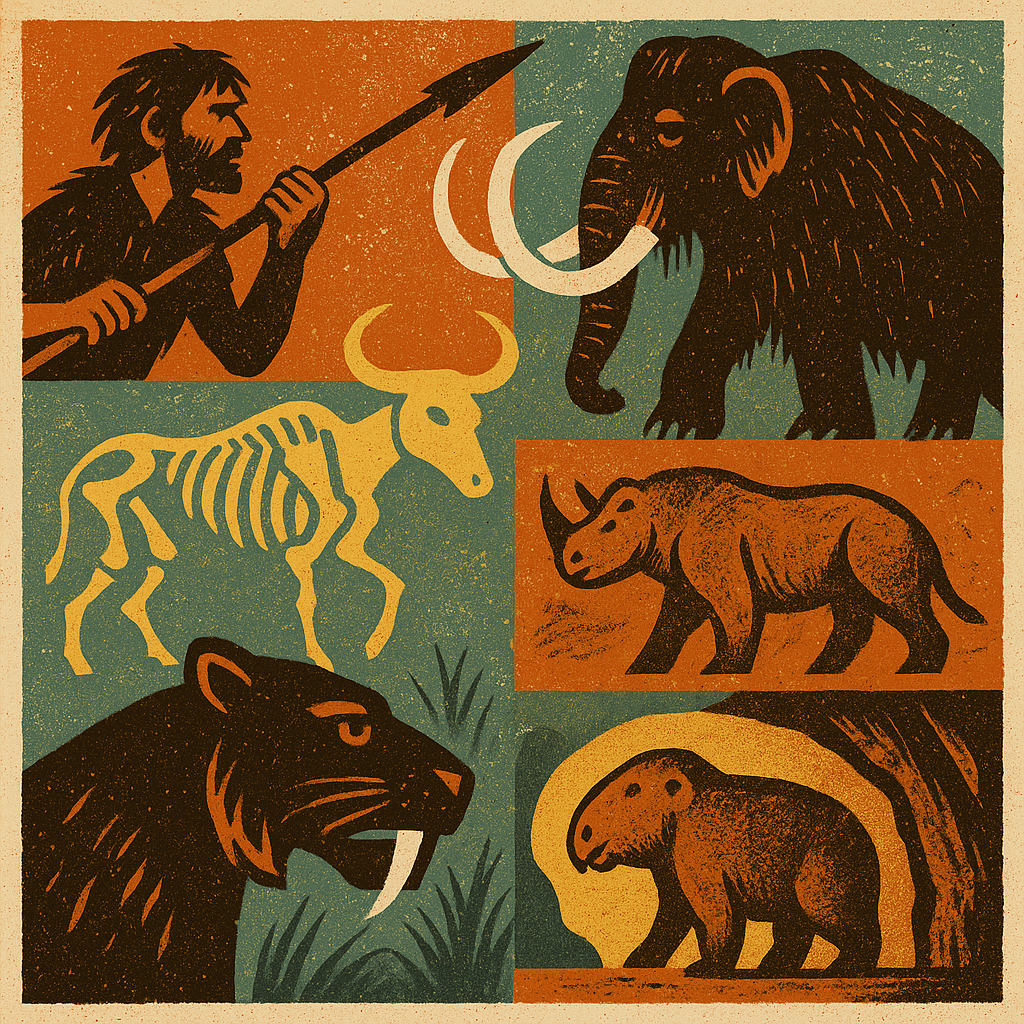
Almost all land animals in the Americas weighing over 44 kilograms disappeared after the arrival of humans—giant armadillos weighing around a tonne, giant beavers over 100 kilograms, woolly mammoths, and nearly tonne-sized, cold-adapted camel relatives. Around the same time, Smilodon, the 400-kilogram, lion-height but far more robust sabre-toothed cat, also became extinct in both North and South America.

Conclusion

The archaeological and paleontological records underscore the complexity, adaptability, and impact of early human societies. From constructing monumental architecture and creating intricate art to influencing the extinction of megafauna, our ancestors demonstrated remarkable ingenuity and left enduring legacies that continue to inform our understanding of human history.


References

Kolbert, E. (2016). The Sixth Extinction: An Unnatural History. Bloomsbury Publishing.

Leroi-Gourhan, A. (1967). The Dawn of European Art: An Introduction to Palaeolithic Cave Painting. Cambridge University Press.

Lewis-Williams, D., & Pearce, D. (2011). Inside the Neolithic Mind: Consciousness, Cosmos and the Realm of the Gods. Thames & Hudson.

Roberts, R. G., Flannery, T. F., Ayliffe, L. K., et al. (2001). New Ages for the Last Australian Megafauna: Continent-Wide Extinction About 46,000 Years Ago. Science, 292(5523), 1888–1892. https://doi.org/10.1126/science.1060264