Zen and the Art of Dissatisfaction – Part 30

The Case for Universal Basic Income

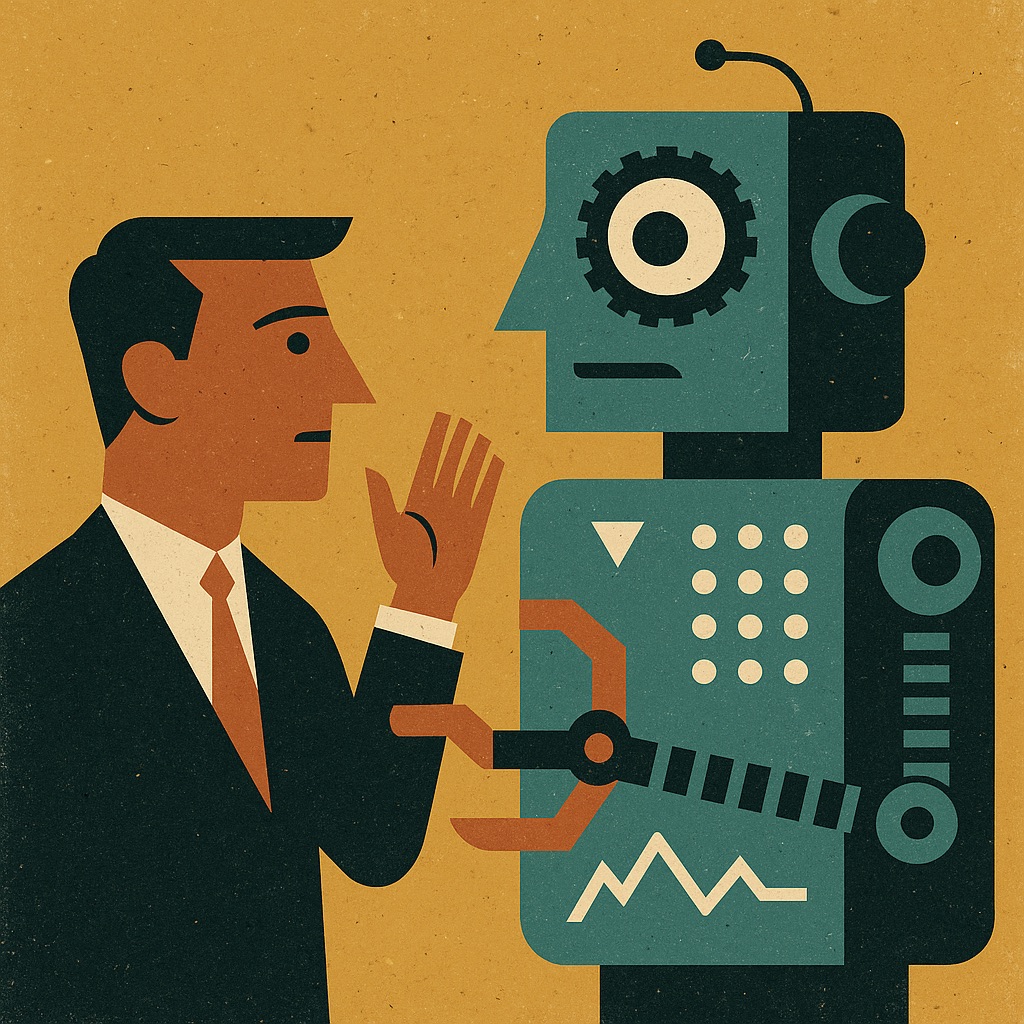
Universal Basic Income (UBI) is a concept that was originally conceived as a solution to poverty, ensuring that markets could continue to grow during normal economic times. The growing interest in UBI in Silicon Valley reflects a future vision driven by concerns over mass unemployment caused by artificial intelligence. Key figures like Sam Altman, CEO of OpenAI, and Chris Hughes, co-founder of Facebook, have both funded research into UBI. Hughes also published a book on the subject, Fair Shot (2018). Elon Musk, in his usual bold fashion, has expressed support for UBI in the context of AI-driven economic change. In August 2021, while unveiling the new Tesla Bot, Musk remarked: ”In the future, physical labour will essentially be a choice. For that reason, I think we will need a Universal Basic Income in the long run.” (Sheffey, 2021)

However, the future of UBI largely hinges on the willingness of billionaires like Musk to fund its implementation. Left-wing groups typically oppose the idea that work should be merely a choice, advocating for guaranteed jobs and wages as a means for individuals to support themselves. While it is undeniable that, in the current world, employment is necessary to afford life’s essentials, UBI could potentially redefine work as a matter of personal choice for everyone.

The Historical Roots of Universal Basic Income

Historian Rutger Bregman traces the historical roots of the UBI concept and its potential in the modern world in his book Free Money for All (2018). According to Bregman, UBI could be humanity’s only viable future, but it wouldn’t come without cost. Billionaires like Musk and Jeff Bezos must contribute their share. If the AI industry grows as expected, it could strip individuals of the opportunity for free and meaningful lives, where their work is recognised and properly rewarded. In such a future, people would need financial encouragement to pursue a better life.

The first mentions of UBI can be found in the works of Thomas More (1478–1535), an English lawyer and Catholic saint, who proposed the idea in his book Utopia (1516). Following More, the concept gained attention particularly after World War II, but it was American economist and Nobel laureate Milton Friedman (1912–2006) who gave the idea widespread recognition. Known as one of the most influential economists of the 20th century, Friedman advocated for a ”negative income tax” as a means to implement UBI, where individuals earning below a certain threshold would receive support from the government based on the difference between their income and a national income standard.

Friedman’s ideas were embraced by several American Republican presidents, including Richard Nixon (1913–1994) and Ronald Reagan (1911–2004), as well as the UK’s prime minister Margaret Thatcher (1925–2013), who championed privatization and austerity. Friedman argued that a negative income tax could replace bureaucratic welfare systems, reducing poverty and related social costs while avoiding the need for active job creation policies.

UBI and the Politics of Welfare

Friedman’s position was influenced by his concern with bureaucratic inefficiencies in the welfare system. He argued that citizens should be paid a basic monthly income or negative income tax instead of relying on complex, often intrusive welfare programs. In his view, this approach would allow people to work towards a better future without the stigma or dependency associated with full unemployment.

In Finland, Olli Kangas, research director at the Finnish Centre for Pensions, has been a vocal advocate for negative income tax. Anyone who has been unemployed and had to report their earnings to the Finnish social insurance institution (Kela) will likely agree with Kangas: any alternative would be preferable. Kela provides additional housing and basic income support, but the process is often cumbersome and requires constant surveillance and reporting.

Rutger Bregman (2018) describes the absurdity of a local employment office in Amsterdam, where the unemployed were instructed to separate staples from old paper stacks, count pages, and check their work multiple times. This, according to the office, was a step towards ”dream jobs.” Bregman highlights how this obsession with paid work is deeply ingrained, even in capitalist societies, noting a pathological fixation on employment.

UBI experiments have been conducted worldwide with positive results. In Finland, a 2017-2018 trial involved providing participants with €560 per month with no strings attached. While this was a helpful supplement for part-time workers, it was still less than the unemployment benefits provided by Kela, which, after tax, amounts to just under €600 per month, with the possibility of receiving housing benefits as well.

In Germany, the private initiative Mein Grundeinkommen (My Basic Income) began in 2020, offering 120 participants €1,200 per month for three years. Funded by crowdfunding, this experiment aimed to explore the social and psychological effects of unconditional financial support.

The core idea of UBI is to provide a guaranteed income to all, allowing people to live independently of traditional forms of employment. This could empower individuals by reducing unnecessary bureaucracy, acknowledging the fragmented nature of modern labour markets, and securing human rights. For example, one study conducted in India (Davala et al., 2015) found that UBI led to a reduction in domestic violence, as many of the incidents had been linked to financial disputes. UBI also enabled women in disadvantaged communities to move more freely within society.

The Future of Work in an AI-Driven World

Kai-Fu Lee (2018) argues that the definition of work needs to be reevaluated because many important tasks are currently not compensated. Lee suggests that, if these forms of work were redefined, a fair wage could be paid for activities that benefit society but are not currently monetised. However, Lee notes that this would require governments to implement higher taxes on large corporations and the wealthiest individuals to redistribute the newfound wealth generated by the AI industry.

In Lee’s home city of Taipei, volunteer networks, often made up of retirees or older citizens, provide essential services to their communities, such as helping children cross the street or assisting visitors with information about Taiwan’s indigenous cultures. These individuals, whose pensions meet their basic needs, choose to spend their time giving back to society. Lee believes that UBI is a wasted opportunity and proposes the creation of a ”social investment stipend” instead. This stipend would provide a state salary for individuals who dedicate their time and energy to activities that foster a kinder, more compassionate, and creative society in the age of artificial intelligence. Such activities might include caregiving, community service, and education.

While UBI could reduce state bureaucracy, Lee’s ”social investment stipend” would require the development of a new, innovative form of bureaucracy, or at least an overhaul of existing systems.

Conclusion

Universal Basic Income remains a highly debated concept, with advocates pointing to its potential to reduce poverty, streamline bureaucratic systems, and empower individuals in a rapidly changing world. While experiments have shown promising results, the true success of UBI will depend on global political will, particularly the involvement of the wealthiest individuals and industries in its implementation. The future of work, especially in the context of AI, will likely require a paradigm shift that goes beyond traditional notions of employment, promoting societal well-being and human rights over rigid economic models.


References

Bregman, R. (2018). Free Money for All: A Basic Income Guarantee and How We Can Make It Happen. Hachette UK.
Davala, S., et al. (2015). Basic Income and the Welfare State. A Report on the Indian Pilot Program.
Friedman, M. (1962). Capitalism and Freedom. University of Chicago Press.
Lee, K. F. (2018). AI Superpowers: China, Silicon Valley, and the New World Order. Houghton Mifflin Harcourt.
Sheffey, M. (2021). Elon Musk and the Future of Work: The Role of Automation in the Economy. CNBC.

Zen and the Art of Dissatisfaction – Part 28

AI Unemployment

Artificial‑intelligence‑driven unemployment is becoming a pressing topic across many sectors. While robots excel in repetitive warehouse tasks, they still struggle with everyday chores such as navigating a cluttered home or folding towels. Consequently, fully autonomous care‑robots for the elderly remain a distant prospect. Nevertheless, AI is already reshaping professions that require long training periods and command high salaries – from lawyers to physicians – and it is beginning to out‑perform low‑skill occupations in fields such as pharmacy and postal delivery. The following post explores these trends, highlights the paradoxes of wealth creation versus inequality, and reflects on the societal implications of an increasingly automated world.

“A good person knows what is right. A lesser‑valued person knows what sells.”

– Confucius

Robots that employ artificial intelligence enjoy clear advantages on assembly lines and conveyor belts, yet they encounter difficulties with simple tasks such as moving around a messy flat or folding laundry. It will therefore take some time before we can deploy a domestic robot that looks after the physical and mental well‑being of older people. Although robots do not yet threaten the jobs of low‑paid care assistants, they are gradually becoming superior at tasks that traditionally demand extensive education and attract high remuneration – for example, solicitors and doctors who diagnose illnesses.

Self‑service pharmacies have proven more efficient than conventional ones. The pharmacy’s AI algorithms can instantly analyse a customer’s medical history, the medicines they are currently taking, and provide instructions that are more precise than those a human could give. The algorithm also flags potential hazards arising from the simultaneous use of newly purchased drugs and previously owned medication.

Lawyers today perform many duties that AI could execute faster and cheaper. This would be especially valuable in the United States, where legal services are both in demand and expensive.

The Unrelenting Learning Curve of Algorithms

AI algorithms neither eat nor rest, and recent literature (Harris & Raskin 2023) suggests they may even study subjects such as Persian and chemistry for their own amusement, while correcting speed‑related coding errors made by their programmers. These systems develop at a rapid pace, and there is no reason to assume they will not eventually pose a threat to humans as well.

People are inherently irrational and absent‑minded. Ironically, AI has shown that we are also terrible at using search terms. Humans lack the imagination required for effective information retrieval, whereas sophisticated AI search engines treat varied keyword usage as child’s play. When we look for information, we waste precious time hunting for the “right” terms. Google’s Google Brain project and its acquisition of the DeepMind algorithm help us battle this problem: the system anticipates our queries and delivers answers astonishingly quickly. Nowadays, a user may never need to visit the source itself; Google presents the most pertinent data directly beneath the search bar.

Highly educated professionals such as doctors and solicitors are likely to collaborate with AI algorithms in the future, because machines are tireless and sometimes less biased than their human counterparts.

Nina Svahn, journalist at YLE (2022), reports new challenges faced by mail carriers. Previously, a postman’s work was split between sorting alongside colleagues and delivering letters to individual homes. Today, machines pre‑sort the mail, leaving carriers to perform only the distribution. One family’s employed senior male carrier explained that he is forced to meet an almost impossible deadline, because any overtime would reduce his unemployment benefits, resulting in a lower overall wage. Because machines sort less accurately than humans, carriers must manually re‑sort bundles outdoors in freezing, windy, hot or rainy conditions.

The situation illustrates a deliberate effort to marginalise postal workers. Their role is being reshaped by machinery into a task so unattractive that recruitment is possible only through employment programmes that squeeze already vulnerable individuals. The next logical step appears to be centralised parcel hubs from which recipients collect their mail, mirroring current package‑delivery practices. Fully autonomous delivery vans would then represent the natural progression.

Wealth Generation and Distribution

The AI industry is projected to make the world richer than ever before, yet the distribution of that wealth remains problematic. Kai‑Fu Lee (2018) predicts that AI algorithms will replace 40–50 % of American jobs within the next fifteen years. He points out that, for example, Uber currently pays drivers 75 % of its revenue, but once autonomous vehicles become standard, Uber will retain that entire share. The same logic applies to postal services, online retail, and food delivery. Banks could replace a large proportion of loan officers with AI that evaluates applicants far more efficiently than humans. Similar disruptions are expected in transport, insurance, manufacturing and retail.

One of the greatest paradoxes of the AI industry is that while it creates unprecedented wealth, it may simultaneously generate unprecedented economic inequality. Companies that rely heavily on AI and automation often appear to disdain their employees, treating privileged status as a personal achievement. Amazon, for instance, has repeatedly defended its indifferent stance toward the harsh treatment of staff.

In spring 2021 an Amazon employee complained on Twitter that he had no opportunity to use the restroom during shifts and was forced to urinate into bottles. Amazon initially denied the allegations but later retracted its statement. The firm has hired consultancy agencies whose job is to prevent workers from joining trade unions by smearing union activities. Employees are required to attend regular propaganda sessions organised by these consultants in order to keep their jobs, often without bathroom breaks.

Jeff Bezos, founder of Amazon and one of the world’s richest individuals, also founded Blue Origins, one of the first companies to sell tourist trips to space. Bezos participated in the inaugural flight on 20 July 2021. Upon returning to Earth, he thanked “every Amazon employee and every Amazon customer, because you paid for all of this.” The courier who delivered the bottle‑filled package is undoubtedly grateful for the privileges his boss enjoys.

Technological Inequality Across Nations

Technological progress has already rendered the world more unequal. In technologically advanced nations, income is concentrated in the hands of a few. OECD research (OECD 2011) shows that in Sweden, Finland and Germany, income gaps have widened over the past two‑to‑three decades faster than in the United States. Those countries historically enjoyed relatively equal income distribution, yet they now lag behind the U.S. The trend is similar worldwide.

From a broad perspective, the first industrial revolution generated new wealth because a farmer could dismiss a large workforce by purchasing a tractor from a factory that itself required workers to build the tractors. Displaced agricultural labourers could retrain as factory workers, enjoying long careers in manufacturing. Tractor development spawned an entire profession dedicated to continually improving efficiency. Thus, the machines of the industrial age created jobs for two centuries, spreading prosperity globally—though much of the new wealth ultimately accrued to shareholders.

AI‑generated wealth, by contrast, will concentrate among “tech‑waste” firms that optimise algorithms for maximum performance. These firms are primarily based in the United States and China. Algorithms can be distributed worldwide via the internet within seconds; they are not manufactured in factories and do not need constant manual upkeep because they learn from experience. The more work they perform, the more efficient they become. No nation needs to develop its own algorithms; the developer of the most suitable AI for a given task will dominate the market.

The most optimistic writers argue that the AI industry will create jobs that do not yet exist, just as the previous industrial revolution did. Yet AI differs fundamentally from earlier technological shifts. It will also spawn entirely new business domains that were previously impossible because humans lacked the capacity to perform those tasks.

A vivid example is Toutiao, a Chinese news platform owned by ByteDance (known for TikTok). Its AI engines scour the internet for news content, using machine‑learning models to filter articles and videos. Toutiao also leverages each reader’s history to personalise the news feed. Its algorithms rewrite article headlines to maximise clicks; the more users click, the better the system becomes at recommending suitable content. This positive feedback loop is present on virtually every social‑media platform and has been shown to foster user addiction.

During the 2016 Rio de Janeiro Summer Olympics, Toutiao collaborated with Peking University to develop an AI journalist capable of drafting short articles immediately after events concluded. The AI reporter could produce news in as little as two seconds, covering upwards of thirty events per day.

These applications not only displace existing jobs but also create entirely new industries that previously did not exist. The result is a world that becomes richer yet more unequal. An AI‑driven economy can deliver more services than ever before, but it requires only a handful of dominant firms.

Conclusion

Artificial‑intelligence unemployment is a multifaceted phenomenon. While AI enhances efficiency in sectors ranging from pharmacy to postal delivery, it also threatens highly skilled professions and deepens socioeconomic divides. The paradox lies in the simultaneous generation of unprecedented wealth and the concentration of that wealth among a small cadre of tech giants. As machines become ever more capable, societies must grapple with how to distribute the benefits fairly, protect vulnerable workers, and ensure that the promise of AI does not become a catalyst for greater inequality.


Bibliography

  • Harris, J., & Raskin, L. (2023). The accelerating evolution of AI algorithms. Journal of Computational Intelligence, 15(2), 87‑102.
  • Lee, K.-F. (2018). AI Superpowers: China, Silicon Valley, and the New World Order. Houghton Mifflin Harcourt.
  • OECD. (2011). Income inequality and poverty in OECD countries. OECD Publishing. https://doi.org/10.1787/9789264082092-en
  • Svahn, N. (2022). New challenges for postal workers in the age of automation. YLE News. Retrieved from https://yle.fi/news

Zen and the Art of Dissatisfaction – Part 24

How Algorithms and Automation Redefine Work and Society

The concept of work in Western societies has undergone dramatic transformations, yet in some ways it has remained surprisingly static. Work and the money made with work also remains one of the leading causes for dissatisfactoriness. There’s usually too much work and the compensation never seems to be quite enough. While the Industrial Revolution replaced manual labour with machinery, the age of Artificial Intelligence (AI) threatens to disrupt not only blue-collar jobs but also highly skilled professions. This post traces the historical shifts in the nature of work, from community-driven agricultural labour to the rise of mass production, the algorithmic revolution, and the looming spectre of general artificial intelligence. Along the way, it examines the ethical, economic, and social implications of automation, surveillance, and machine decision-making — raising critical questions about the place of humans in a world increasingly run by machines.

Originally published in Substack: https://substack.com/home/post/p-170864875

The Western concept of work has hardly changed in essence: half the population still shuffles papers, projecting an image of busyness. The Industrial Revolution transformed the value of individual human skill, rendering many artisanal professions obsolete. A handcrafted product became far more expensive compared to its mass-produced equivalent. This shift also eroded the communal nature of work. Rural villagers once gathered for annual harvest festivities, finding strength in togetherness. The advent of threshing machines, tractors, and milking machines eliminated the need for such collective efforts.

In his wonderful and still very important film Modern Times (1936), Charlie Chaplin depicts industrial society’s alienating coexistence: even when workers are physically together, they are often each other’s competitors. In a factory, everyone knows that anyone can be replaced — if not by another worker, then by a machine.

In the early 1940s, nearly 40% of the American workforce was employed in manufacturing; today, production facilities employ only about 8%. While agricultural machinery displaced many farmworkers, those machines still require transportation, repairs, and eventual replacement — generating jobs in other, less specialised sectors.

The Algorithmic Disruption

Artificial intelligence algorithms have already displaced workers in multiple industries, but the most significant disruption is still to come. Previously, jobs were lost in sectors requiring minimal training and were easily passed on to other workers. AI will increasingly target professions demanding long academic training — such as lawyers and doctors. Algorithms can assess legal precedents for future court cases more efficiently than humans, although such capabilities raise profound ethical issues.

One famous Israeli study suggested that judges imposed harsher sentences before lunch than after (Lee, 2018). Although later challenged — since case order was pre-arranged by severity — it remains widely cited to argue for AI’s supposed superiority in legal decision-making.

Few domains reveal human irrationality as starkly as traffic. People make poor decisions when tired, angry, intoxicated, or distracted while driving. In 2016, road traffic accidents claimed 1.35 million lives worldwide. In Finland in 2017, 238 people died and 409 were seriously injured in traffic; there were 4,432 accidents involving personal injury.

The hope of the AI industry is that self-driving cars will vastly improve road safety. However, fully autonomous vehicles remain distant, partly because they require a stable and predictable environment — something rare in the real world. Like all AI systems, they base predictions on past events, which limits their adaptability in chaotic, unpredictable situations.

Four Waves of Machine-Driven Change

The impact of machines on human work can be viewed as four distinct waves:

  1. The Industrial Revolution — people moved from rural to urban areas for factory jobs.
  2. The Algorithmic Wave — AI has increased efficiency in many industries, with tech giants like Amazon, Apple, Alphabet, Microsoft, Huawei, Meta Platforms, Alibaba, IBM, Tencent, and OpenAI leading the way. In 2020, their combined earnings were just under USD 1.5 trillion. Today they are pushing 2 trillion. The leader, Amazon, making 630 billion dollars per year. 
  3. The Sensorimotor Machine Era — autonomous cars, drones, and increasingly automated factories threaten remaining manual jobs.
  4. The Age of Artificial General Intelligence (AGI) — as defined by Nick Bostrom (2015), machines could one day surpass human intelligence entirely.

The rise of AI-driven surveillance evokes George Orwell’s Nineteen Eighty-Four (1949), in which people live under constant watch. Modern citizens voluntarily buy devices that track them, competing for public attention online. Privacy debates date back to the introduction of the Kodak camera in 1888 and intensified in the 1960s with computerised tax records. Today, exponentially growing data threatens individual privacy in unprecedented ways.

AI also inherits human prejudices. Studies show that people with African-American names face discrimination from algorithms, and biased data can lead to unequal treatment based on ethnicity, gender, or geography — reinforcing, rather than eliminating, inequality.

Conclusion

From the threshing machine to the neural network, every technological leap has reshaped the world of work, altering not only what we do but how we define ourselves. The coming decades may bring the final convergence of machine intelligence and autonomy, challenging the very premise of human indispensability. The question is not whether AI will change our lives, but how — and whether we will have the foresight to ensure that these changes serve humanity’s best interests rather than eroding them.


References

Bostrom, N. (2015). Superintelligence: Paths, dangers, strategies. Oxford University Press.
Lee, D. (2018). Do you get fairer sentences after lunch? BBC Future.
Orwell, G. (1999). Nineteen eighty-four. Penguin. (Original work published 1949)

Zen and the Art of Dissatisfaction – 23

Bullshit Jobs and Smart Machines

This post explores how many of today’s high‑paid professions depend on collecting and analysing data, and on decisions made on the basis of that process. Drawing on thinkers such as Hannah ArendtGerd Gigerenzer, and others, I examine the paradoxes of complex versus simple algorithms, the ethical dilemmas arising from algorithmic decision‑making, and how automation threatens not only unskilled but increasingly highly skilled work. I also situate these issues in historical context, from the Fordist assembly line to modern AI’s reach into law and medicine.

Originally published in Substack: https://substack.com/inbox/post/170023572

Many contemporary highly paid professions rely on data gathering, its analysis, and decisions based on that process. According to Hannah Arendt (2017 [original 1963]), such a threat already existed in the 1950s when she wrote:

“The explosive population growth of today has coincided frighteningly with technological progress that makes vast segments of the population unnecessary—indeed superfluous as a workforce—due to automation.”

In the words of David Ferrucci, the leader of Watson’s Jeopardy! team, the next phase in AI’s development will evaluate data and causality in parallel. The way data is currently used will change significantly when algorithms can construct data‑based hypotheses, theories and mental models answering the question “why?”

The paradox of complexity: simple versus black‑box algorithms

Paradoxically, one of the biggest problems with complex algorithms such as Watson and Google Flu Trends is their very complexity. Gerd Gigerenzer (2022) argues that simple, transparent algorithms often outperform complex ones. He criticises secret machine‑learning “black‑box” systems that search vast proprietary datasets for hidden correlations without understanding the physical or psychological principles of the world. Such systems can make bizarre errors—mistaking correlation for causation, for instance between Swiss chocolate consumption and number of Nobel Prize winners, or between drowning deaths in American pools and the number of films starring Nicolas Cage. A stronger correlation exists between the age of Miss America and rates of murder: when Miss America is aged twenty or younger, murders committed by hot steam or weapons are fewer. Gigerenzer advocates for open, simple algorithms; for example, the 1981 model The Keys to the White House, developed by historian Allan Lichtman and geophysicist Vladimir Keilis‑Borok, which has correctly predicted every US presidential election since 1984, with the single exception of the result in the Al Gore vs. George W. Bush contest.

Examples where individuals have received long prison sentences illustrate how secret, proprietary algorithms such as COMPAS (“Correctional Offender Management Profiling for Alternative Sanctions”) produce risk assessments that can label defendants as high‑risk recidivists. Such black‑box systems, which may determine citizens’ liberty, pose enormous risks to individual freedom. Similar hidden algorithms are used in credit scoring and insurance. Citizens are unknowingly categorised and subject to prejudices that constrain their opportunities in society.

The industrial revolution, automation, and the meaning of work

Even if transformative technologies like Watson may fail to deliver on all the bold promises made by IBM’s marketing, algorithms are steadily doing tasks once carried out by humans. Just as industrial machines displaced heavy manual labour and beasts of burden—especially in agriculture—today’s algorithms are increasingly supplanting cognitive roles.

Since the Great Depression of the 1930s, warnings have circulated that automation would render millions unemployed. British economist John Maynard Keynes (1883–1946) coined the term “technological unemployment” to describe this risk. As David Graeber (2018) notes, automation did indeed trigger mass unemployment. Political forces on both the right and left share a deep belief that paid employment is essential for moral citizenship; they agree that unemployment in wealthy countries should never exceed around 8 percent. Graeber nonetheless argues that the Great Depression produced a collapse in real need for work—and much contemporary work is “bullshit jobs”. If 37–40 percent of jobs are such meaningless roles, more than 50–60 percent of the population are effectively unemployed.

Karl Marx warned of industrial alienation, where people are uprooted from their villages and placed into factories or mines to do simple, repetitive work requiring no skill, knowledge or training, and easily replaceable. Global corporations have shifted assembly lines and mines to places where workers have few rights, as seen in electronics assembly in Chinese factory towns, garment workshops in Bangladesh, and mineral extraction by enslaved children—all under appalling conditions.

Henry Ford’s Western egalitarian idea of the assembly line—that all workers are equal—became a system where anybody can be replaced. In Charles Chaplin’s 1936 film Modern Times, inspired by his encounter in 1931 with Mahatma Gandhi, he highlighted our dependence on machines. Gandhi argued that Britain had enslaved Indians through its machines; he sought non‑violent resistance and self‑sufficiency to show that Indians did not need British machines or Britain itself.

From industrial jobs to algorithmic threat to professional work

At its origin in Ford’s factory in 1913, the T‑model moved through 45 fixed stations and was completed in 93 minutes, borrowing the idea from Chicago slaughterhouses where carcasses moved past stationary cutters. Though just 8 percent of the American workforce was engaged in manufacturing by the 1940s, automation created jobs in transport, repair, and administration—though these often required only low-skilled labour.

Today, AI algorithms threaten not only blue‑collar but also white‑collar roles. Professions requiring long training—lawyers and doctors, for example—are now at risk. AI systems can assess precedent for legal cases more accurately than humans. While such systems promise reliability, they also bring profound ethical risks. Human judges are fallible: one Israeli study suggested that judges issue harsher sentences before lunch than after—but that finding has been contested due to case‑severity ordering. Yet such results are still invoked to support AI’s superiority.

Summary

This blog post has considered how our economy is increasingly structured around data collection, analysis, and decision‑making by both complex and simple algorithms. It has explored the paradox that simple, transparent systems can outperform opaque ones, and highlighted the grave risks posed by black‑box algorithms in criminal justice and financial systems. Tracing the legacy from Fordist automation to modern AI, I have outlined the existential threats posed to human work and purpose—not only for low‑skilled labour but for highly skilled professions. The text argues that while automation may deliver productivity, it also risks alienation, injustice, and meaninglessness unless we critically examine the design, application, and social framing of these systems.


References

Arendt, H. (2017). The Human Condition (Original work published 1963). University of Chicago Press.
Ferrucci, D. (n.d.). [Various works on IBM Watson]. IBM Research.
Gigerenzer, G. (2022). How to Stay Smart in a Smart World: Why Human Intelligence Still Beats Algorithms. MIT Press.
Graeber, D. (2018). Bullshit Jobs: A Theory. Simon & Schuster.
Keynes, J. M. (1930). Economic Possibilities for our Grandchildren. Macmillan.
Lee, C. J. (2018). The misinterpretation of the Israeli parole study. Nature Human Behaviour, 2(5), 303–304.
Lichtman, A., & Keilis-Borok, V. (1981). The Keys to the White House. Rowman & Littlefield.