Zen and the Art of Dissatisfaction – PART 8.


The Self Illusion: Why We’re Never Quite Satisfied
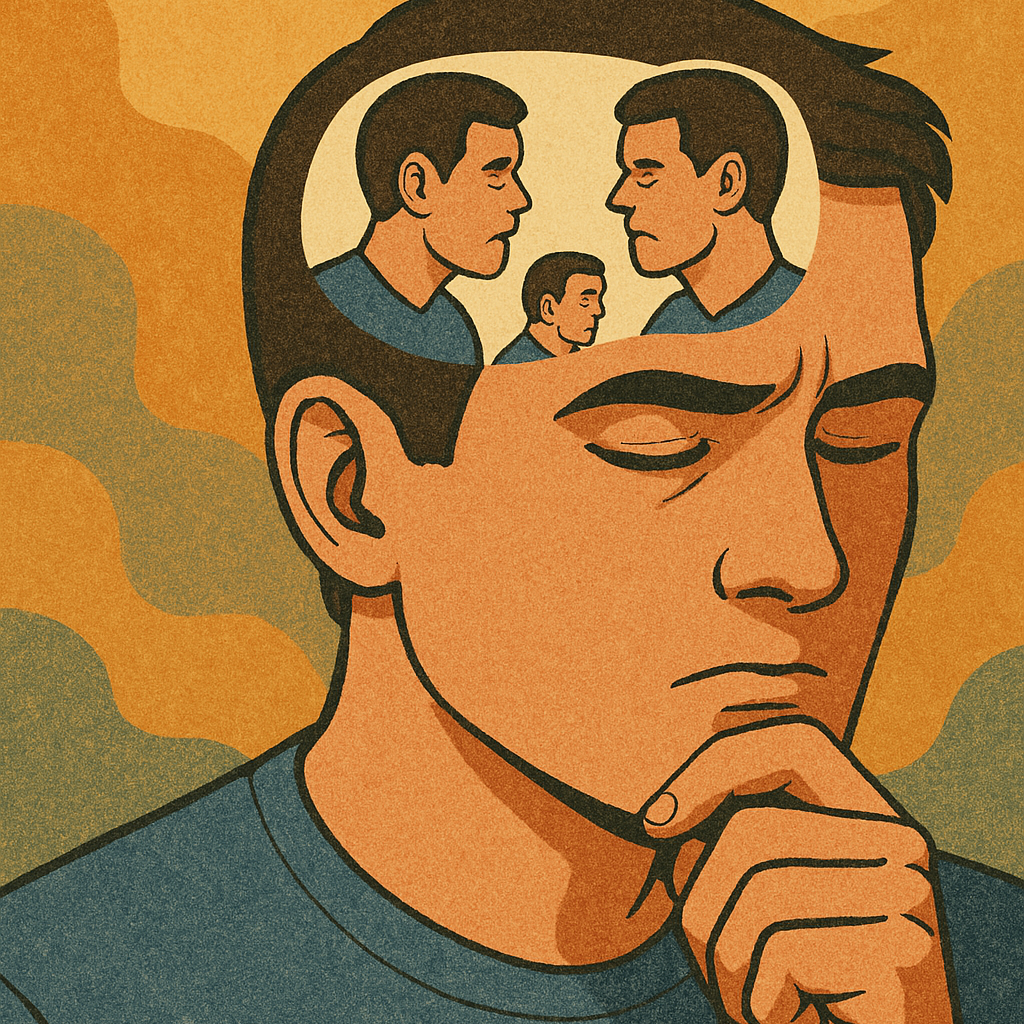
Why do we so often feel like something is missing in our lives? That quiet, persistent itch that if only we had this or changed that, we might finally be at peace. American philosopher David Loy argues that this dissatisfaction stems from a fundamental sense of inner lack—a feeling that we are somehow incomplete. But what if that very notion of incompleteness is built on a psychological illusion? In today’s blog, I’ll explore the deep roots of the self, or more precisely, the self illusion, from perspectives across philosophy, Buddhism, psychology, and neuroscience.

Originally published in Substack: https://substack.com/home/post/p-160701201

The Self Illusion

In his marvellous book Lack & transcendence (2018), the American philosopher and Zen teacher David Loy suggests that the feeling of dissatisfaction in human life stems from a never ending internal craving—or sense of lack. This sense of lack arises from the feeling that we must fulfil some need in order to make our inner self more stable or complete. We believe that satisfying this need will resolve our fundamental problems. However, according to Loy, this lack cannot truly be satisfied or solved, as it has no concrete foundation.

This deep-seated sense of something missing—something believed to be the key to our happiness—stems from a concept known in psychology as the “self illusion,” and in Buddhism it is formalized in the teaching of non-self (Pali: anattā, Sanskrit: anatman), which asserts that there is no unchanging, permanent self, but rather a constantly shifting flow of experiences, sensations, and mental formations. This idea suggests that human psychology is troubled by the uncertain belief that we possess a concrete, stable, immovable—even eternal—inner self. In reality, this “self” is merely an illusion, constructed by various psychological processes and lacking any true anchor or fixed substance. As David Loy suggests, this inner self is inherently dissatisfied, constantly demanding that we fulfil its desires in countless ways.

In everyday language, this inner self is often referred to by the Freudian term ego, though we might just as well call it the self. Nothing is more dissatisfied than our ego. In Freudian theory, the ego is one part of a dynamic system made up of the id, superego, and ego itself—each representing different aspects of our psyche: the pleasure-seeking id, the socially-minded superego, and the ego, which seeks realistic and balanced compromises between the two.

Modern neuropsychology suggests that the prefrontal cortex regulates these impulses of selfhood. In newborns, this region is underdeveloped, which explains their reactive behaviour. For individuals with Tourette’s syndrome, this regulatory function is partially impaired, contributing to difficulties in social interaction. Social situations often demand an inner struggle for conformity, and for someone with Tourette’s, the stress of adapting to social norms can trigger tics—physical manifestations of the effort to conform.

In the early 1900s, American sociologist Charles Horton Cooley (1902) introduced the concept of the ”looking-glass self.” It refers to how our self-concept is shaped by how others perceive us. Essentially, our autobiographical sense of self is a narrative built from the perspectives and impressions of those we’ve encountered. Cooley’s argues, we view our lives as a series of events in which we are the protagonist, shaped by the actions and opinions of others.

According to Cooley, people see us in their own ways. This explains why public figures often complain that no one truly understands them. But Cooley argues there is no “true self” behind these perceptions. In reality, we are precisely what others see us as—even if it’s difficult for us to accept their views of us.

In Jungian psychology, the term ”self” refers to the unification of the conscious and unconscious mind. It represents the totality of the psyche and manifests as a form of individual consciousness.

Many religions embed similar ideas into the concept of a permanent and immortal soul, which continues to exist beyond physical death and, in some traditions, reincarnates. Buddhism, however, challenged the Hindu notion of a permanent, reincarnating self (attā) with the doctrine of anattā (non-self), one of its foundational principles.

For clarity, when this text refers to the self, ego, or a permanent identity, it means essentially the same thing. When necessary, I also use terms like “brain talk,” “inner voice,” or “internal dialogue,” as this is often how this particular psychological phenomenon manifests. According to American neuropsychologist Chris Niebauer (2019), this process is more verb than noun—there is no tangible self, only the experience of self, which is created by mental processes that produce inner speech and feelings, which influence our behaviour.

From a neuropsychological perspective, the concept of self and the often-dissatisfied “brain talk” it generates might originate from processes such as these: the left and right hemispheres of the brain are responsible for slightly different aspects of interpreting the sense of self and the world—a theory of phenomenon called hemispheric asymmetry. The processes responsible for the illusion of a fixed self are thought to reside in the language centres of our the left hemisphere.

Modern brain scans has shown that when the brain is not engaged in any task, a specific neural system called the default mode network (DMN) becomes active. During such moments, our thoughts wander to self-related concerns, memories, anxieties, and hopes for the future. This inner activity is believed to amplify our brain talk and, when overactive, can turn against us—making us feel as though the world is against us.

Michael Gazzaniga, a pioneer in cognitive neuroscience, demonstrated in 1967 that the brain’s hemispheres perform surprisingly different roles. The left hemisphere processes language, categories, logic, and narrative structure. It loves categorisation, it divides things into right and wrong, good and bad. The right hemisphere, on the other hand, is responsible for spatial awareness, bodily sensations, and intuition.

The left hemisphere is believed to construct the narrative of a permanent self—with a beginning, middle, and imagined future. It also creates a static image of our physical selves—often distorted in relation to the current social norms and ideals. The right hemisphere, however, perceives our boundaries as more fluid and sees us as one with the timeless world of oneness. It’s the source of empathy, compassion, and a sense that the well-being of others is related with our own. It functions almost like a spiritual organ—like Star Wars’ Yoda reminding us that we are luminous beings, not this crude matter.

Although the theory of hemispheric asymmetry is controversial, it’s commonly misunderstood in popular culture. People are not left-brained or right-brained in any rigid sense. Both hemispheres contribute to self-perception in unique ways. Studying this phenomena empirically is difficult without harming subjects.

Fortunately—or unfortunately—neuroscientist Jill Bolte Taylor (2008) experienced a stroke that silenced her left hemisphere. She described her hand turning transparent and merging with the energy around her. She felt an overwhelming joy and silence in her internal dialogue. Though the stroke was traumatic and left her disabled for several years, she eventually recovered and shared her important insights.

Taylor wrote that her sense of self changed completely when she no longer perceived herself as a solid being. She felt fluid. She describes how everything around us, within us, and between us is composed of atoms and molecules vibrating in space. Even though the language centres of our brain prefer to define us as individual, solid entities, we are actually made up of countless cells and mostly water—and are in a constant state of change.

Beyond the language centres of the left hemisphere, the default mode network is another central component in producing internal dialogue. When scientists perform fMRI scans, they often begin by mapping the resting state of a participant’s brain. Marcus Raichle (et al 2001), a neurologist at Washington University, discovered that when participants were asked to do nothing, several brain regions actually became more active. He named this the ”default mode network” (DMN).

This network activates when there are no external tasks—when we are “just waiting.” It’s when our minds wander freely, contemplating ourselves, others, the past, and the future. It may even be the source of the continuous stream of consciousness we associate with our inner world.

The DMN is central to self-reflection. It kicks in when we think about who we are and how we feel. It’s also involved in social reflection—thinking not just of ourselves but others as well. Concepts like empathy, morality, and social belonging stem from this same process.

The DMN also stirs up memory. It plays a vital role in recalling past events and helps construct the narrative we tell about ourselves—those vivid, personal moments like when our father left, or we met our partner, or our child was born. The network also activates when we think about the future, dream, or fear what may come.

When our mind is at rest, it spins a self-protective, often conservative inner dialogue full of dreams, fears, regrets, and desires. This rarely produces contentment with the present moment. But why call it a dialogue? Isn’t there just one voice in our head? Shouldn’t it be a monologue? Apparently not—our inner speech behaves like it’s talking to someone else. For instance, when we are alone and looking for a lost key, and as we finally find it, we might exclaim, “Yes! Found them!” as if others were present. Our brain talk evolved alongside our spoken language, which is inherently dialogical.

Our inner dialogue often wanders to the past and future, where it finds plenty of material for dissatisfaction. From the past, it dredges up nostalgia, regret, and bitterness. From the future, it conjures hopes, dreams, and fears—overdue bills, home repairs, environmental collapse, health concerns, or children preparing to leave home.

Zen teacher Grover Genro Gauntt once described his first experience of noticing this inner voice. In the 1970s, as a new Zen practitioner, he listened to Japanese master Taizan Maezumi speak of this constant dialogue and the importance of not identifying with it. Genro had this dialogue pop in his mind, “What is this guy talking about? I don’t have any internal dialogue!” That moment captures the tragicomic nature of the mind’s attempts to deny its own patterns—like trying not to think of a pink elephant.

Jill Bolte Taylor also writes that one of the key roles of the left hemisphere (which she experienced as temporarily malfunctioning) is to define the self by saying, “I am.” Through what she calls ”brain talk,” our minds replay autobiographical events to keep them accessible in memory. Taylor locates the “self center” specifically in the language areas of the left hemisphere. It’s what allows us to know our own name, roles, abilities, skills, phone number, Social Security number, and home address. From time to time, we need to be able to explain to others what makes us who we are—such as when the police ask to see identification. 

Taylor writes that unlike most cells in the body, our brain neurons don’t regenerate unless there’s a specific need for it. All our other cells are in constant flux and in dialogue with the outside world. Taylor postulates that the illusion of a permanent self might arise from this neurological exception. We feel like we remain the same person throughout life because we spend our entire lives with the same neurons. 

However, the atoms and molecules that form our neurons do change over time. Everything in our bodies is in constant flux. Nothing is permanent, not even the matter that constitutes our neurons. Maybe this is the unhappy psychological reality: we believe in a permanent, unchanging self, obey its internal commands—and are therefore perpetually dissatisfied. This dissatisfaction stems from the deep emptiness that our inner dialogue continuously generates.

Our belief in a fixed self begins in childhood, when we first conceive of ourselves as separate from our parents and the outside world. This inner dialogue shapes behaviour, guiding our decisions for survival and well-being. The left hemisphere’s language centres negotiate with us—when to eat, what to crave, and how to avoid social pain or getting hit by a train. But we also need the awareness of the eternal and oneness conjured by the right hemisphere. Our life would not make any sense without it. 

Conclusion

What emerges from this exploration is a realisation: our sense of a permanent self is not a solid truth but a mental construct. It’s a story told by our brain, particularly the left hemisphere, supported by cultural narratives and social feedback. This illusion, while useful for navigating daily life, is also the root of our chronic dissatisfaction. However, perhaps the greatest relief lies in understanding that we are not trapped by this narrative. As Buddhist teachings and modern neuroscience suggest, loosening our grip on the idea of a fixed self may open the door to deeper peace, compassion, and freedom. There is so much more to ourselves than our inner voice is telling us. This voice is mostly trying to prevent accidents and embarrassment, but there’s more to our true selves than that. 


Resources

  • Cooley, C. H. (1902). Human nature and the social order. New York: Scribner’s.
  • Gazzaniga, M. S. (1967). The split brain in man. Scientific American, 217(2), 24–29.
  • Loy, D. R. (2019). Ecodharma: Buddhist teachings for the precipice. Somerville: Wisdom Publications.
  • Loy, D. R. (2018). Lack & transcendence: The problem of death and life in psychotherapy, existentialism, and Buddhism. Second edition. New York: Simon & Schuster.
  • Niebauer, C. (2019). No self, no problem: How neuropsychology is catching up to Buddhism. Hierophant Publishing.
  • Raichle, M. E. et al. (2001). A default mode of brain function. Proceedings of the National Academy of Sciences, 98(2), 676–682.
  • Taylor, J. B. (2008). My stroke of insight: A brain scientist’s personal journey. New York: Plume.

Zen and the Art of Dissatisfaction – Part 7.

Voices Within – Exploring the Inner Dialogue

Originally published in Substack: https://substack.com/inbox/post/160343816

The Canadian-born British experimental psychologist and philosopher, Bruce Hood, specialises in researching human psychological development in cognitive neuroscience. Hood works at the University of Bristol, and his research focuses on intuitive theories, sense of self, and the cognitive processes underlying adult magical thinking. In his book The Self Illusion: Why There Is No ‘You’ Inside Your Head (2012), Hood argues that our internal dissatisfaction stems from a form of psychological uncertainty. It is still very common to think that some kind of internal self or soul is the core that separates humans from other animals. It is also very common to think that after the human body dies, this core continues to live forever through some form of reincarnation, either here or in another parallel dimension. Our understanding of the internal self does not arise from nothing. It is the result of a long developmental process that takes time to build. According to Bruce Hood, this is an illusion because the sense of self has no permanent anchor or form, yet people experience it as very real and often claim it to be the essence that makes us who we are.

In neurosciences the human consciousness is often divided into various conceptual meanings that together form human consciousness. The first of these meanings is the awareness, referring to whether we are awake or not, such as when we are asleep, we are in a state of mild and temporary form of unconsciousness. The second significant concept related to consciousness is attention, which moves between different activities, depending on what requires our attention at the moment. The third concept of consciousness is experiential consciousness, which defines subjective experiences occurring within ourselves, such as how salt tastes, or what is the sensation a red colour evokes. The fourth meaning of consciousness is reflective consciousness. If something happens to us at the level of experiential consciousness, we begin to consciously ponder how we should act. For instance, if we hammer our finger with a mallet, this experience immediately enters our experiential consciousness as a very intense experience, but almost simultaneously, the same event jumps into our reflective consciousness, where we start weighing the severity of the injury and what we should do to ease pain and prevent further calamity. Should I cry for help? Should I go to the hospital? Or shall I just take a photo and post it on Instagram? Conscious thought flows in this way.

Reflective consciousness speaks of experience, and it leads to conscious thinking, which is characterised by the inability to think about more than one thing at a time. One important form of conscious thought is self-awareness, which also involves the awareness of our own body. The concept of self represents conscious thought and is formed by beliefs and thoughts about an individual’s personal history, identity, and future plans.

Self-awareness is also referred to as the self or sense self, a concept I have and will be using in my writings. However, it’s important to note that this term does not refer to identity. This same issue is often explored in the fields of psychology and sociology.  

The sense of self can be seen as an evolutionary tool or a feature, which helps the organism to stay alive. It makes the organisms feel that they are very important, more important than anyone or anything else. However, this sense of self can also transform over time and through adverse experience into a process that turns against itself. These processes have been seen underlying conditions such as severe depression, in which our sense of self has gone into a deep rut and goes through endless loops of self loathing.  

American journalist and Harvard professor Michael Pollan writes in his book How to Change Your Mind (2019) that modern psychedelic therapies have shown promising results for patients with depression. In his book, Pollan writes about the research conducted by British neuroscientist and psychologist Robin Carhart-Harris (2010) has researched the effect of the brain’s default mode network (DMN) on the formation of the self, ego, or sense of self. The DMN is a neurological process that turns on when the person is not engaged in goal-directed activity. This process has also been linked to the formation of a the sense self.

The human experience of the self is a biographical anchor created by multiple overlapping neural processes of our brain. We get a feeling that everything that happens in my life happens to me. The self is that which experiences all things. That inner center is significant particularly to me. Without our internal awareness and experience of the self, we would never have conceived of the Universal Declaration of Human Rights, drafted by a UN committee chaired by Eleanor Roosevelt. It protects the persons right to physical integrity. We believe that every human being is unique and valuable because we all have an inner sense of self.

However, humans are not the only animals with some form of internal self-awareness. When visiting the London Zoo in 1838, Charles Darwin (1809–1882) saw an orangutang named Jenny becoming upset when a keeper teased her with an apple. This made Darwin reflect on the orangutang’s subjective experience. He noticed Jenny looking into a mirror and wondered if she recognised herself in the reflection.

American psychologist Gordon G. Gallup (1970) experimentally studied self-recognition in two male and two female wild chimpanzees, none of whom had previously seen a mirror. Initially, the chimpanzees made threatening gestures in front of the mirror, perceiving their reflections as threats. Eventually, they began using the mirror for self-directed behaviours, such as grooming parts of their bodies they couldn’t see without it, picking their noses, grinning, and blowing bubbles at their reflections.

Bruce Hood (2012) writes that this process is crucial in human development because, without it, humans would struggle in socially challenging and complex environments. Human children fail the mirror test until around 18 months of age. Before this, they may think the reflection is of another child and look behind the mirror. However, by 18 months, they understand that the person reflected in the mirror is themselves. But humans and chimpanzees are not the only animals to pass the mirror test. Crows, dolphins, and orcas also pass the test. Elephants do too, but cats do not (although my guess is that cats could pass the test if they wanted).

The sensation of self, which the human mind creates, which feels like a concrete structure, and which is referred to as the self, ego, or ”I,” is a process aimed at protecting us from both internal and external threats. When everything functions as it should, our inner narrator keeps the organism on track, helping it achieve its goals and meet its needs, especially eating, seeking shelter, and reproducing. This process works well under normal circumstances, but it is inherently conservative. Our experience of the self is a process, not a fixed entity, though it often feels like one. It emerges as a result of various mental functions and manifests as an internal narrator, or even as an internal dialogue.

The dialogue generated by the self often sounds like someone is explaining things to us, as if to a blind person, about what’s happening around us. We enter a room and might hear someone say inside our mind, “Look, what a nice place this is! Those wallpapers are beautiful, and the furniture is great, but those electrical outlets needs replacing!”

Sometimes, we might hear an internal negotiation, such as whether to run through a red light to catch a tram. Running through traffic might put us in physical danger or cause us to be socially judged. Social shame is one of the worst things a person can experience, and our internal narrator picks up on such details immediately and warns us to at least consider the possibility. At times, our narrator can turn into an internal tyrant, turning its energy against us.

This narrator, or brain talk, sounds very reasonable, but it often shows how our minds are trying to preserve the structures formed earlier, built from previous experiences. Unfortunately, sometimes we’re left with that inner narrator and nothing else, which can leave one feeling out of place. And when this narrator becomes rigid and inflexible, it has the power to push us into states of psychological distress, even driving us into despair.

In cases where brain talk gets stuck in repetitive loops, as is often the case with anxiety, depression, or psychosis, people feel their lives are determined by this narrator, inner force living inside ones head. A stuck self could feel isolated in its inner world and find it impossible to reach outside. The idea of having self-awareness — of being someone in this world — becomes crushed under the weight of these loops. For some, it is as if the voice of our mind becomes detached from the physical person, forcing it into another dimension where everything becomes dark, and disconnected from the social world.

American author David Foster Wallace (1962–2008), who had much experience of this process, reminded us in his commencement speech at Kenyon College in 2005 of the old cliché that the mind is an excellent servant, but a terrible master. However, this cliché expresses a terrible truth. According to Wallace, it is no coincidence that people who commit suicide with firearms almost always shoot themselves in the head. They are shooting that terrible narrator turned into a master — a terrible dark lord. 

Mind out of a Dolmio pasta sauce commercial

People experience their brain talk in a unique and private way. Most of us have some form of inner voice. A voice that guides, directs, and commands us. A voice that warns “Watch out! Car!” or “Remember to buy toilet paper.” For many of us, this voice sounds like our own, but for some people, their inner narrator is not a straightforward speech that scolds, advises, or reminds them of things. For some, brain talk may take the form of an Italian arguing couple or a calm interviewer. Or it may not be a voice at all, but a taste, feeling, or colour. In some cases, there is no voice at all, only deep and calm silence.

English journalist Sirin Kale (2021) wrote an interesting article on this internal narrator, presenting a few rare examples of different types of inner voices. One of the people interviewed for the article, a 30-year-old English woman named Claudia, hears her inner dialogue in a unique way. Claudia has never been to Italy, nor does she have Italian family or friends. She has no idea why the loud, arguing Italian couple has taken over her inner voice. Claudia says, “I have no idea where this came from. It’s probably offensive to Italians.” The arguing couple in Claudia’s mind sounds like something straight out of a Dolmio pasta sauce commercial. They are expressive and prone to waving their hands and shouting. When Claudia needs to make a decision in her life, this Italian couple takes the reins.

The Italian couple living inside Claudia’s mind argues passionately about almost anything. Claudia finds it very helpful because they do all the work for her. The couple is always in the kitchen and surrounded by food. Claudia has not yet named her Italians, but they have helped her make important decisions, including encouraging her to quit her job and pursue her lifelong dream of going to sea.

Kale writes that the Italian woman in Claudia’s mind supported her resignation, but her husband was more cautious. The Italian man said, “It’s a stable job!” and the woman responded, “Let her enjoy life!” The woman won, and Claudia left for a job on the seas in Greece. Overall, this Italian couple has helped Claudia live a happier life, and they’ve even calmed down a bit. Claudia says, “Less shouting. They just argue now.”

Dr Helene Loevenbruck of Grenoble Alpes University’s, mentioned in the article, claims that the brain talk arises in the same way as our thoughts turn into actions. Our brains predict the consequences of actions. The same principle of predicting actions also applies to human speech. When we speak, our brains create a predictive simulation of speech in our minds to correct any potential mistakes. The inner voice is thought to arise when our minds plan verbalised actions but decide not to send motor commands to the speech muscles. Loevenbruck says this simulated auditory signal is the small voice we hear in our minds. Loevenbruck explains that for the most part, we hear something she refers to as inner language, a more comprehensive term for this phenomenon. This is because, for example, people with hearing impairments do not hear an inner voice but might see sign language or observe moving lips. (Loevenbruck et al., 2018).

In exploring the sense of self and inner voice, we’ve seen how the self emerges as a process rather than a fixed entity. It is shaped by our own evolution, culture, and personal experience. Our brain talk can guide us, deceive us, or even take on unexpected forms and destroy us, yet it remains central to our sense of identity. It feels like the core for which everything happens. But is the self really real? And if not, if the self is an illusion, as neuroscientists and psychologists suggest, what does that mean for how we live? In the next post, I’ll dive into Buddhist perspectives on the self—examining how centuries-old wisdom aligns with modern psychological insights.


Resources:

Carhart-Harris, RL, & Friston, KJ (2010). The default-mode, ego-functions and free-energy: a neurobiological account of Freudian ideas. Brain, 133(4), 1265-1283.

Gallup, GG (1970). Chimpanzees: Self-Recognition. Science. 167 (3914): 86–87.

Hood, B (2012). The self illusion: How the social brain creates identity. HarperCollins Publishers.

Kale, S (2021) The last great mystery of the mind: meet the people who have unusual – or non-existent – inner voices. Guardian 25 Oct 2021 <https://www.theguardian.com/science/2021/oct/25/the-last-great-mystery-of-the-mind-meet-the-people-who-have-unusual-or-non-existent-inner-voices&gt; Link visited 1 April 2025. 

Loevenbruck et al. (2018). A cognitive neuroscience view of inner language: to predict, to hear, to see and to feel. In Inner Speech:  New Voices. Peter Langland-Hassan & Agustín Vicente (eds.), Oxford University Press, 131-167. 

Pollan, M (2019). How to change your mind the new science of psychedelics. Penguin Books.

Zen and the Art of Dissatisfaction – Part 6.

Good-Natured: On the Roots of Human Kindness

Originally published in 21 March 2025 on Substack: https://substack.com/home/post/p-159540266

Dutch historian Rutger Bregman, in his beautiful work Humankind: A Hopeful History (2020), turns our collective gaze toward the innate goodness of humanity. In this Substack series, I have and will explore themes inspired by Bregman’s argument—that human nature is, at its core, good—and bring in reflections from my own research among hunter-gatherer communities. Bregman revisits and reinterprets famous stories and examples that argue for the inherent evil of human beings, revealing how these cases have often been misunderstood or misrepresented. Stories that highlight the darker side of humanity tend to align with public opinion and thus sell better, he notes, but that doesn’t make them accurate.

Bregman begins his exploration with a powerful account of the London Blitz—and later the strategic bombings in Germany—during World War II. The military commanders responsible believed that sustained bombing would crush civilian morale and plunge society into chaos, ultimately giving them a strategic edge. They were wrong. Civilians regarded the bombings as a necessary evil, and in the face of destruction, human kindness blossomed. Despite the deaths and destroyed homes, people helped one another in a calm and polite manner. Many have even remembered the London Blitz with a strange fondness—a time when people were kind to each other.

Another striking story in Bregman’s book is that of a real-life Lord of the Flies scenario. William Golding’s 1954 novel depicts English schoolboys stranded on a deserted island, descending into savagery. Bregman went to great lengths to find a real-life equivalent and discovered a 1965 case where six teenage boys were shipwrecked on an uninhabited island near Australia (see Tongan Schoolboys). They survived for 15 months, and when they were finally found by chance, all were in good health—one had broken his leg, but the others cared for him, and by the time they returned, his leg had fully healed. The boys had grown food, built a gym, and kept a fire burning the entire time by rubbing sticks together.

Throughout Bregman’s work, there’s a deep faith in human kindness, supported by concrete evidence. Ancient hunter-gatherers were not primarily violent, and this also holds true for the last remaining hunter-gatherer groups today. Bregman suggests that humans have self-domesticated through sexual selection, gradually favouring traits that make us more cooperative and less violent. One telling example is from the Battle of Gettysburg, where numerous muskets were found loaded 20 times or more, as reloading provided a perfect excuse not to fire again. Bregman discusses other examples of extreme lengths soldiers have gone to avoid killing another human being.

For many Indigenous societies, violence toward others is an alien and even repulsive concept. Bregman recounts how the U.S. Navy showed Hollywood movies to the inhabitants of the small Ifalik atoll in the Pacific, hoping to foster goodwill. But the movies horrified the islanders. The on-screen violence was so distressing that they felt physically ill for days. Years later, when an anthropologist arrived, the locals still asked, “Was it true? Are there really people in America who kill other people?” There is a deep mystery at the heart of human history: if we have an innate aversion to violence, where did things go wrong?

I’ve been fortunate to spend time in the Kalahari Desert with local Ju/’hoan hunter-gatherers. This experience showed me just how different we Westerners are. Despite decades of exposure to Western culture and every imaginable injustice from our side, they remain open, happy, curious, cheerful, and helpful.

The people I met call themselves Ju/’hoansi, meaning “real people.” Many Indigenous groups refer to themselves, and others with similar lifestyles, simply as “people.” Today, the descendants of southern Africa’s hunter-gatherers, who still speak their ancestral languages, have accepted the general term San, which I have also used when referring broadly to southern African hunter-gatherers. The name likely derives from a derogatory Khoekhoe term meaning “those who live in the bush and eat from the ground,” or possibly from sonqua, meaning “thief.” Other names—Bushman, Boesman, Basarawa, Bakalahari—are colonial impositions. The Kalahari San are gradually moving away from traditional hunting: many now raise chickens and goats and supplement their diets with milk, grains, tea, and sugar. Thus, calling them hunter-gatherers is somewhat misleading.

During my first research expedition, I had three primary goals: 1) find examples of persistence hunting; 2) understand the link between persistence hunting and trance ceremonies; 3) document a persistence hunt. On my first day, it became clear that no one in the camp remembered anyone chasing down and catching a large antelope. Ultimately, however, I uncovered valuable insights into the relationship between hunting and ceremony, crucial for completing my doctoral dissertation Fragments of the Hunt: Persistence Hunting, Tracking and Prehistoric Art (2017).

Bregman’s book reignited a question that has long troubled me: if ancient and modern hunter-gatherers are egalitarian, nonviolent, and friendly, why do modern societies periodically elect authoritarian despots? The San of the Kalahari go to great lengths to avoid envy; anyone behaving selfishly or possessively is swiftly admonished.

Elizabeth Marshall Thomas (2006) writes that necklaces and other ornaments were common gifts among the San when researchers first visited in the early 1950s. This gift economy was called xaro (or hxaro). Valuable or desirable items and clothing were quickly given away as xaro gifts to prevent envy, preserving the delicate structure of small communities. Xaro partnerships could last a lifetime. The gift giver waited patiently for reciprocation, which would always eventually come. These gifts were carefully considered—metal knives or ostrich shell jewelry, for example—and the relationships they forged reduced jealousy, ensuring reciprocity and generosity. Trance dances were another key method of relieving social tension.

As seen with xaro, people invent ways to strengthen social bonds. In the San people’s case, avoiding envy was paramount. If someone produced something special and desirable, the person was eager to gift it away as xaro, preventing envy and securing her place in a chain of social esteem.

In the 1960s, American social psychologist Stanley Milgram conducted obedience experiments to measure how far people would go in obeying authority, even when it involved immoral or inhumane actions. Participants were instructed to administer what they believed were dangerous electric shocks to others (who were actually actors). The study concluded that under authority, humans could commit extreme cruelty.

Milgram (1974) described this as obedience or “agentic state”—the individual sees themselves as an instrument for another’s wishes, not responsible for their own actions. This mentality was apparent after WWII, as the Nazi regime’s capacity for cruelty was examined. Philosopher Hannah Arendt, in Eichmann in Jerusalem: A Report on the Banality of Evil (1963), describes how destruction operated through a bureaucratic machine, where hierarchical actors worked together to solve the mundane and ”banal” problem of genocide.

Bregman argues that Milgram’s experiments are often cited as evidence of human cruelty, but they actually show that people commit harmful acts only under persuasion, believing they are doing good—like helping researchers get results. Milgram found that direct orders led to defiance; harsh commands didn’t work.

Psychologists Alexander Haslam and Stephen Reicher (2012) replicated the experiment and noted that participants wanted to collaborate with the persuading researcher. They were even grateful to be part of the study. Participants retrospectively appreciated the chance to contribute to human understanding.

The Myth of Progress

According to Rutger Bregman, good intentions were also behind the infamous Stanford prison experiment in 1971 (Zimbardo 1972). The same applied to David Jaffe, who originally came up with the idea and inspired Professor Philip Zimbardo to carry it out. When Jaffe persuaded the prison experiment guards to be more aggressive, he referred to the noble goals of the study. In other words, violent behaviour was encouraged, and the participants genuinely wanted to help. We are, by nature, good natured, as the Dutch primatologist Frans de Waal (1996) has persuasively shown through his research on primate behaviour.

In the Kalahari, a small group of people still live a life that vaguely resembles the lifestyle of their hunter-gatherer ancestors. Many traditional skills remain well remembered, such as where to find edible plants and how to track animals. However, this is increasingly coloured by a shift toward a more Western way of life. They now drink black tea sweetened with sugar, and eat cornmeal with milk. All of this supplement a diet that was, until recently, sourced almost entirely from the natural environment.

A young hunter named Kxao introduced us to local plants. He showed us how a delicate leaf growing next to a bush belonged to a tuber plant rich in water. After digging it up, Kxao carefully refilled the hole and replanted the leaf so the tuber could continue living. He also cleaned up the mess left by a porcupine, which had rummaged through the ground in search of wild onion roots. Kxao tidied the area and replanted the fragile onion stems, explaining that the tubers are toxic to humans, but the young shoots are very nice and taste like spring onions. He also showed us plants that only kudu antelopes and other animals consume.

Humans have lived in the Kalahari continuously for about 100,000 years—perhaps even 200,000. It might seem like their way of life hasn’t changed, but this can be deceptive. They have coexisted with pastoralist neighbours since at least the 1950s and have interacted with other settlers for thousands of years. It would be wrong to say that their culture represents something ancient. The truth is that their lifestyle is just as susceptible to cultural changes—new ways of doing and thinking—as ours. What might appear ancient to us is actually their unique version of modern life style.

My research visit to the Kalahari called into me to question the legitimacy of modern industrialised civilisation and Western notions of “progress.” The San peoples once inhabited all of southern Africa, from Victoria Falls down to the Cape of Good Hope. Around 2,000 years ago, Khoekhoe pastoralists arrived from what is now northern Botswana and spread all the way to the southern tip of Africa. The Khoekhoe were quite similar to the San, but the main difference lay in their nomadic lifestyle and domesticated animals.

A few hundred years later, the first Bantu peoples arrived in the region. Compared to the smaller-framed San and Khoekhoe, the Bantus were giants. They originated from the Gulf of Guinea, in what is now Nigeria and Cameroon, where their migration began 3,500 years ago. However, it took thousands of years for their culture to reach southern Africa.

The Bantus had the advantage of technology. They were among the first farmers south of the Sahara, making pottery, keeping livestock, and crafting tools and weapons from iron. They also drank cow’s milk and had the genetic ability to digest lactose—unlike the hunter-gatherers of the south. These cultural adaptations and innovations enabled the Bantus to conquer much of sub-Saharan Africa. Today, Bantu languages are the most widely spoken on the African continent, with similar words found in Nigeria, Kenya, and South Africa.

The Bantu expansion dealt a heavy blow to the San, who had managed to coexist with Khoekhoe settlers. Now, the San were forced to vacate areas suitable for farming and grazing. Conflict ensued between the San, Khoekhoe, and Bantu. The San were branded as cattle thieves for killing livestock that intruded their lands. However, the real death knell for the San came in the late 1600s when the first European settlers began to seriously colonise southern Africa. Europeans allied with both the Khoekhoe and the Bantus and dehumanised the San, hunting them for sport.

Europeans devised derogatory terms for their new neighbours, like the infamous “Hottentots”—a Dutch slur meaning stutterer, used for both San and Khoekhoe. Due to physical and linguistic similarities, settlers lumped them into a single group, Khoisan.

Initially, the San lived alongside European settlers, who sometimes attempted to teach them new ways. Farmers even gave them livestock, but the San, accustomed to sharing everything equally, slaughtered the animals and distributed the meat evenly. The concept of owning animals was foreign to them because ownership defied sharing. The Dutch East India Company (VOC) began a full-scale war in the early 1700s against the indigenous peoples of northern South Africa, who were resisting settler expansion.

The VOC was the biggest megacorporation of its time—the founder of the world’s first stock exchange—and held near-sovereign powers: it could wage war, imprison and execute suspects, mint money, and establish colonies. By the end of the 18th century, the VOC authorized privately formed commando units to evict and, at times, kill any Khoisan they found. In 1792, they began paying bounties for captured Khoisan.

By the early 1800s, the Khoisan genocide in what is now the Cape Province and southern Namibia was nearly complete. In northeastern South Africa and present-day Lesotho, the Khoisan sought refuge. But in 1830, Dutch settlers reached these regions, kidnapped Khoisan children, and killed their parents. The seasonal animals that had sustained them for hundreds of thousands of years were hunted to extinction in the Drakensberg mountains, leaving the San starving.

Those who remained resorted to cattle theft, which was often punished by death. Between 1845 and 1872, colonial police forces ruthlessly hunted and killed all San they could find. The last San chief, Soai, was brutally murdered by members of the Sotho, a Bantu-speaking group, who disemboweled him on the banks of the Orange River in 1872. All San men were killed; women and children were marched to Leribe, where their descendants lived into the 20th century. The Khoisan who survived were forced to assimilate.

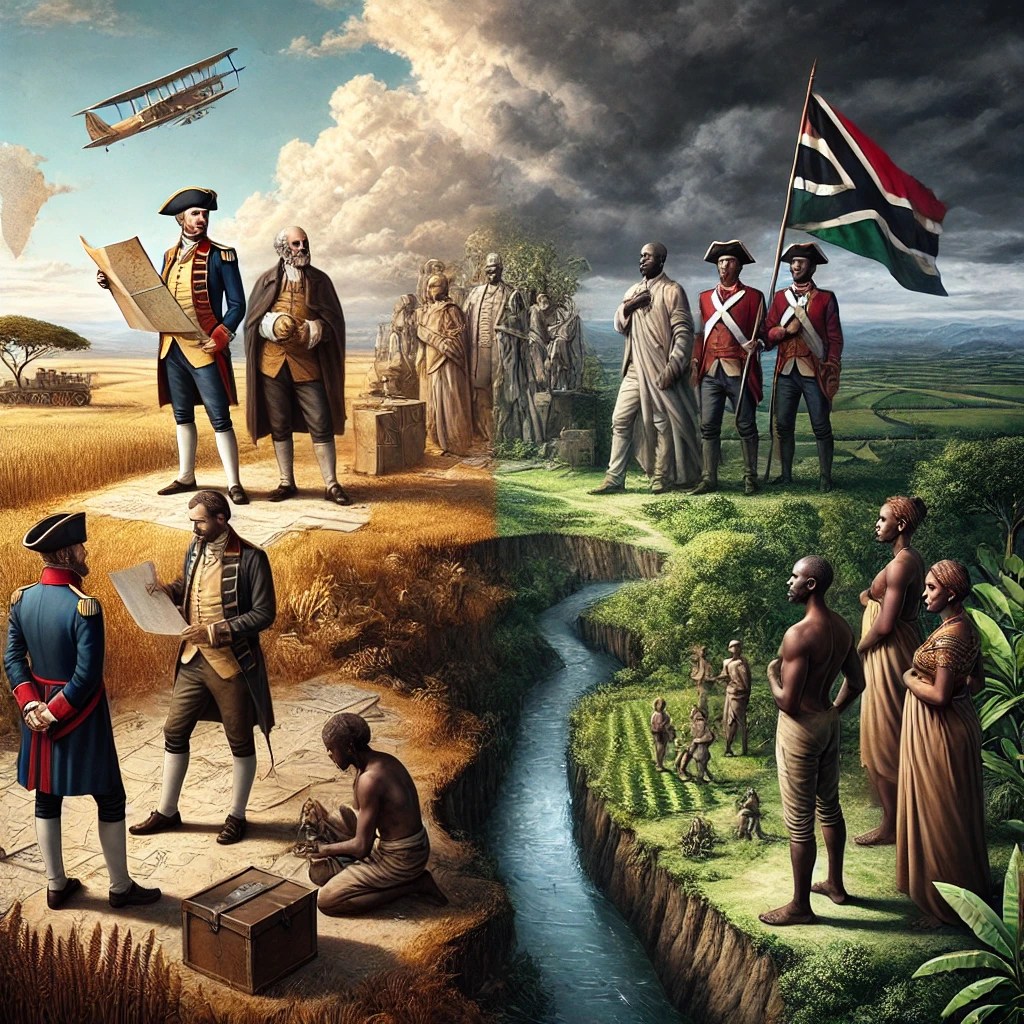
As late as 1870, only ten percent of Africa was under European control. German Chancellor Otto von Bismarck convened the Berlin Conference in 1884–1885, bringing together leaders from Europe, Russia, the Ottoman Empire, and the United States. Fourteen non-African nations were represented. A small group of white men determined the future of Africa and its people.

The Berlin Conference is often regarded as the formalisation of Africa’s colonisation. Its general act stated that any nation that claimed a portion of the African coast also gained the interior lands beyond it—without needing consent from local populations. King Leopold II of Belgium was granted control over what he dubbed the Congo Free State, initiating one of the bloodiest resource extractions in history. Over the next decade, around four million Congolese were brutally killed. The actual death toll might be higher; the Congolese population fell from 20–30 million to just eight million.

The partitioning of Africa spurred by the conference paved the way for Western incursion into the continent’s interior, ignoring tribal and ethnic boundaries. Territories were politely divided over a cup of hot tea or a glass of chilled gin. In 1884, only a tenth of Africa was under European control. By 1914, only a tenth remained under African rule. Only Ethiopia and Liberia remained independent.

Belgium was not the only nation to violently subjugate its new territories. The 20th century’s first ethnic cleansing took place in German-controlled Namibia, in an event referred as the Herero and Nama Genocide. The Herero (Bantu) and Nama (Khoekhoe) rebelled against their German overlords. With determination, organisation, and modern weapons, the Germans systematically exterminated around 100,000 Herero and 10,000 Nama by driving them into the Kalahari desert, away from drinkable water. By 1905, the remaining locals were imprisoned in the first German concentration camp on Haifischinsel (Shark Island), a peninsula off Lüderitz, Namibia. The camp was closed in 1907 after 1,000–3,000 people had died. By then, the last Southern African hunter-gatherers lived only in the Kalahari Desert.

Shark Island may have hosted the first German concentration camp—but it was not the last. Just over a decade later, in the summer of 1918, the Germans built their next concentration camps in Finland.

Originally published in 21 March 2025 on Substack: https://substack.com/home/post/p-159540266


Resources:

Arendt, H. (1963). Eichmann in Jerusalem: A Report on the Banality of Evil. Viking Press. LINK

Bregman, R. (2020). Humankind: A Hopeful History. Bloomsbury. LINK

de Waal, F. B. M. (1996). Good natured: The origins of right and wrong in humans and other animals. Harvard University Press. LINK

Haslam, S. A., & Reicher, S. D. (2012). Contesting the nature of conformity: What Milgram and Zimbardo’s studies really show. PLoS Biology, 10(11), e1001426. LINK

Ijäs, M. (2017). Fragments of the Hunt: Persistence Hunting, Tracking and Prehistoric Art. Helsinki: Aalto University. LINK

Marshall Thomas, E. (2006). The Old Way: A Story of the First People. New York: Farrar, Straus and Giroux. LINK

Milgram, S. (1974). Obedience to authority: An experimental view. Tavistock, London. LINK

Zimbardo, P. G. (1972). Stanford Prison Experiment: A Simulation Study of the Psychology of Imprisonment. LINK

Zen and the Art of Dissatisfaction – Part 5.

Can Money Buy Happiness?

Originally published in 17 March 2025 on Substack: https://substack.com/home/post/p-159249876

I traveled to the Kalahari Desert in northeastern Namibia, to the Nyae Nyae Conservancy on the border of Botswana, in November 2014 for two reasons. First, to collect ethnographic data for my doctoral dissertation. Second, to produce the accompanying documentary film The Origins (Ijäs & Kaunismaa 2018). My wife Maija and I lived in a tent on the roof of our 4WD vehicle, and sometimes we slept under the stars alongside local hunters, with nothing but our sleeping bags for shelter. Maija sang Brahms’ lullaby for us, and we explained to the hunters what angels were.

I had imagined (and hoped) that the Kalahari hunter-gatherers would be quite satisfied with their life, far from the psychological trappings of civilisation. This romanticised Rousseauian view had formed through reading books and research papers about the San people, especially since the Marshall family began visiting them in the 1950s. The San culture is often cited as one of the most thoroughly studied human groups in the world. There’s even a joke that every tribe has at least one white anthropologist. It was my time to be that guy.

Overall, the San do appear content with their lives, but they too have grievances and deep sources of dissatisfaction. They often wish for more wild animals to support their hunting culture. To compensate for the scarcity of game, they acquired a few goats and chickens in the spring of 2018. They also regularly bought milk from a nearby village outside the conservation area, where cattle farming is permitted. They were concerned about cattle herders crossing into their land from Botswana.

The San are happy to appear in traditional leather attire when cameras are rolling, but their culture has been changing quickly since the 1950s, as in everywhere. In fact, the group I studied had returned to a hunting culture only in the 1990s, partly as a response to the negative effects of Western influence, such as alcoholism and social challenges. Yet, thanks to Western aid, the Nyae Nyae Conservancy remains a viable area for groups that still practice hunting and gathering, at least in part.

For the purposes of this ongoing Substack series, Zen and the Art of Dissatisfaction, it is important that even the last indigenous peoples living in hunting cultures are not fully satisfied with their circumstances. They wish for more liberties, better education, and a more varied diet. One of our guides dreamed of working in the film industry. This is understandable as many of their visitors carry film equipment.

As I’ve previously noted, the deep profound dissatisfaction exists even among Kalahari hunter-gatherers. But the question is, do these hunter-gatherers want something they don’t have simply because of an internal dissatisfaction, or because they have glimpsed Western wealth and been enchanted by the promise of material satisfaction? The answer is likely a bit of both, because as long as our species Homo sapiens has existed, our actions have been marked by constant change, curiosity, and exploration.

Even when human cultures have settled in various parts of the world for extended periods, a closer look reveals that their cultures have been in constant dynamic motion. Their social structures, customs, art, food, clothing, tools, religions, and music have all evolved over time. Some indigenous peoples have changed their societal organisation, religions, property rights, and names with the seasons. Because of this dynamism, idealising indigenous cultures as somehow different than ours is a romanticised view. Seeing a foreign culture as superior is just the flip side of seeing it as inferior. Therefore, I try to be very cautious with such perspectives.

Swedish linguist, author and film maker Helena Norberg-Hodge is the founder and director of Local Futures, a non-profit dedicated to revitalising cultural and biological diversity and strengthening local communities and economies worldwide. In her book Ancient Futures (1991), she discusses cultural changes in Ladakh, a remote region in northern India bordering Pakistan and China. While politically part of India, culturally it is closer to Tibet. Ladakh remained largely isolated until 1962, when the first road was built over high mountain passes. In 1975, the Indian government opened Ladakh to tourism and Western development. Norberg-Hodge was one of the first Westerners to visit.

Norberg-Hodge describes Ladakh as a near paradise of social and ecological well-being that rapidly collapsed under external economic pressures. In the capital Leh, then with about 5,000 residents, cows were the main traffic hazard, and the air was crystal clear. Barley fields and farmhouses surrounded the city. Over the next 20 years, Norberg-Hodge witnessed Leh’s transformation. Streets filled with traffic and diesel fumes polluted the air. Soulless concrete housing projects sprawled into the distance. Water became undrinkable. Increased economic pressure led to unemployment and competition, sparking conflict between communities. Many changes were psychological.

On Norberg-Hodge’s first visit, all local houses in Ladakh were three-storied and beautifully painted. When she asked a young man to show her the poorest house in the village, he was puzzled—they had no concept of wealth inequality. Eight years later, that same man lamented their poverty, having seen images in the media of Westerners with fast cars and wealth. Suddenly, from his perspective, Ladakhi culture had morphed into primitive and poor.

Crime, depression, and suicide were rare in 1970s Ladakh. But in a short time, Western competition culture took root, and suicides became more common, even among schoolchildren. Until the 1970s, success and failure were communal experiences tied to tangible aspects of life like farming and family. Western consumer culture and market economy brought its hamster wheel to Ladakh, dividing people into winners and losers and turning personal success into everyone’s individual mission, and purpose of life.

Extreme individualism and the glorification of wealth have become so central to Western lifestyle that they seem quite natural or irrefutable. In the Western competitive mindset, happiness is always just around the corner, and we spend our lives trying to reach it. We imagine we need to succeed, and that success will lead us to more wealth. Financial security seems to be the ultimate state of happiness, but money itself doesn’t bring happiness. Money is a medium of exchange, based on trust, and it has value only because we agree it does. It is a means to an end, not an end in itself. Yet we see it as both, and that duality is worth exploring.

One might think that rich people would be happy in a world where wealth is the ultimate goal. But paradoxically, as they try to escape their own inner dissatisfaction, the world’s wealthiest people use the alcoholic drinks as the society’s poorest and most desperate. Studies show money does not bring happiness—but neither does poverty.

Poverty brings depression, but it is not only the lack of money that brings depression, it is the lack of freedom, which poverty brings along. Widespread depression among modern humans is largely due to lack of control over one’s circumstances. Depression is more common in poverty, where people feel trapped and unable to improve their circumstances. Wealth allows freer decision-making without worrying about consequences. Wealth also enables better planning for the future. Wealthy people can enrol to universities, and spend several years studying. The poor do not have this luxury. But even the rich suffer from the same existential emptiness and dissatisfaction. They seek meaning in luxury, exclusive holidays, fancy dinners, bespoke clothes, cars, watches—yet something is always missing. The inner void remains.

Did ancient hunter-gatherers have similar problems? Was their life freer in this sense? We might imagine they were fully capable of surviving in their environment, as long as they could find food, build shelter, and secure basic conditions for their family and offspring. After that, things were probably pretty good.

Ancient hunter-gatherers had no mortgages, insurance bills, electricity bills, credit card debt, or student loans. No college funds or extracurricular expenses for their children. Today, many people are up to their ears in debt. This abstract dependency on lenders causes various forms of undefined complicated anxiety. Humans have a natural need for at least some freedom and control over their lives; otherwise, they fall into despair. The Western debt-based system of dependency on power structures fosters further dissatisfaction.

Has our civilised Western lifestyle become a trap? Could we do something about it? Could we escape somewhere to be free? David Graeber and archaeologist David Wengrow (2021) remind us that in colonial North and South America, captured indigenous people often chose to return to their own communities rather than remain in ”civilisation”. The same applied to children captured by indigenous groups, who often preferred to remain with their indigenous captors. The main reasons might have been the intense social bonds among indigenous people: care, love, and above all, happiness—qualities impossible to replicate upon returning to civilisation. Graeber and Wengrow remind us that the concept of safety takes many forms. It’s one thing to know you statistically have a lower chance of being shot by an arrow. It’s another to know that around you are surrounded by who deeply care if that were to happen.

Depression has been found to be more common in impoverished conditions (Brown & Harris 1978). However, freedom or money does not ultimately save us from dissatisfaction. Andrew T. Jebb (2018), a researcher at Purdue University in Indiana, USA, studied with his colleagues whether money brings happiness. The study shows that money brings happiness up to a certain point, but not beyond a certain threshold. In Western Europe and here in Scandinavia, this threshold is around 50,000–100,000 euros in annual income, which is considerably higher than the average income. According to 2021 tax data, only 10.2% of the population reached this magical happiness threshold here in Finland, and 2% of the population surpassed this threshold. In other words, 87.8% of the population remained below that threshold. The situation is even more challenging because about 13% of the population with low incomes (below 60% of median income). The low-income threshold for a single-person household in 2021 was approximately 16,200 euros per year. No wonder we are not satisfied.

This post is the fifth part of my ongoing Substack series, Zen and the Art of Dissatisfaction, exploring the roots of human dissatisfaction, the paradox of progress, and the question of whether a meaningful life is possible in a world designed for endless desire.

Thanks for reading! This post is public so feel free to share it.

Share


Resources:

Brown, G. W., & Harris, T. (1978). Social Origins of Depression: A Study of Psychiatric Disorder in Women. Tavistock: London. LINK

Graeber, David & Wengrow, David. (2021). The Dawn of Everything: A New History of Humanity. London: Allen Lane. LINK

Ijäs, M. R. (2020). Fragments of the hunt: Persistence hunting approach to rock art. Hunter Gatherer Research, 6(3–4). LINK

Ijäs, M. (2017). Fragments of the Hunt: Persistence Hunting, Tracking and Prehistoric Art. Helsinki: Aalto University. LINK

Ijäs, M. & Kaunismaa, M. (2018). The Origins: Fragments of the Hunt. Documentary Film. LINK

Jebb, A.T., Tay, L., Diener, E., & Oishi, S. (2018). Happiness, income satiation and turning points around the world. Nature Human Behaviour. LINK

Norberg-Hodge, Helena (1991). Ancient Futures: Learning from Ladakh. San Francisco: Sierra Club Books. LINK

Zen and the Art of Dissatisfaction – Part 4.

The Hairless Ape

Originally published in 15 February 2025 on Substack https://substack.com/home/post/p-158762719

Let’s continue with the evolution of our own species. Around six million years ago, a group of apes found themselves living in a shrinking rainforest. Scientifically, these creatures belonged to the family known as great apes, or Hominidae, which today still includes humans, chimpanzees, gorillas, and orangutangs. These apes, who had evolved to live primarily on fruit and sought refuge from predators by climbing trees, eventually found their environment transforming into much dryer woodland savanna.

Forced to adapt, they began gathering new types of food, such as tubers and roots, rather than the fruits they once relied on. This shift required them to cover greater distances on the ground and use digging sticks to extract underground food sources. Identifying edible roots was no simple task—it demanded a new level of intelligence, as the only visible clues were the stems and leaves above ground.

Millions of years passed and these once rainforest-dwelling primates evolved into master survivors of the African savanna, where acquiring food required ingenuity and adaptability. About four million years after their exodus from the rainforest, they had already become almost entirely hairless, dark-skinned, and fully bipedal members of the genus Homo. The only significant body hair remained on the top of their heads, shielding them from the sun’s harsh rays.

Approximately two million years ago, a new species emerged—Homo erectus, the ”upright human.” Their survival and success on the West African savanna was unparalleled. Homo erectus was the first human species to resemble us in many ways. They stood between 145-185 cm tall and weighed between 40-70 kg. Unlike their ape ancestors, there was little size difference between males and females. Their near-complete hairlessness likely stemmed from four main reasons:

  1. Warmer nights meant body hair was no longer essential for insulation.

  2. The activation of the melanocortin-1 receptor darkened their skin, providing protection from harmful ultraviolet rays, eliminating the need for fur as a shield against sunburn.

  3. Most importantly, they developed an exceptional ability to sweat. Humans possess more sweat glands than any other animal, making perspiration a critical adaptation for savanna life.

  4. Lastly, hairlessness may have helped them avoid lice, fleas, and other parasites that plagued their hairy primate relatives.

According to Harvard professor Richard Wrangham (2009), Homo erectus used fire to cook food, keep warm at night, and ward off predators. This could partly explain their hairlessness and their more efficient and smaller digestive system compared to their ancestors. Even if they were not yet cooking food with fire, they were certainly already using external methods such as grinding, grating, chopping, pounding, and mashing their food with tools. Wrangham refers to Homo erectus as ”the cooking ape.”

Homo erectus was also the first of our ancestors to regularly eat meat. While it is uncertain how they acquired it, all evidence suggests they were either hunters or systematic scavengers. Even today, African hunter-gatherers observe the movements of vultures to locate their next meal (Liebenberg 2013). When vultures fly in a group toward a particular direction, they are heading for a carcass. If they are circling over a specific spot, the kill has already been found. In such cases, it is a race against time—those who arrive first get the best parts. Lions, for instance, only eat their fill before abandoning a carcass, making it possible for bold and hungry scavengers to drive them away with loud noise. The fortunate ones are rewarded with nutrient-rich bone marrow and sometimes even meat. Hyenas, however, are much more efficient and faster scavengers, arriving at kills within 30 minutes and leaving nothing behind. This urgency may have played a role in shaping humans’ long-distance running abilities—only the fastest could reach a carcass before the hyenas.

Systematic scavenging is unpredictable since it depends on the hunting success of other predators. Even when a carcass is available, it requires an alert scavenger, who happen to be nearby. Yet, Homo erectus consumed meat regularly, leading many researchers to conclude that they were also active hunters. However, there is no surviving evidence of effective hunting weapons from their time. They crafted simple stone tools suited for cutting, slicing, and pounding, along with more refined tools that could function as knives or scrapers. It is likely they also created tools from biodegradable materials such as wood, bark, or grass, which have not survived to the present day.

Hunting without weapons

The question is: if Homo erectus lacked sophisticated hunting weapons, how did they obtain meat?

Nearly all significant differences between Homo erectus and modern chimpanzees relate to locomotion. While chimpanzees still spend most of their time climbing trees, with long arms, short legs, and prehensile toes suited for an arboreal lifestyle, Homo erectus had traded these adaptations for something else entirely.

David Carrier (1984), Dennis Bramble (Bramble & Carrier, 1983), and my friend and supporter, Harvard professor Daniel E. Lieberman (2013), have proposed that Homo erectus was an endurance runner, shaped by natural selection for persistence hunting. This hypothesis explains many of their unique physical traits, particularly those related to energy efficiency, skeletal structure, balance, and thermoregulation. Unlike other apes, human feet generate force with minimal energy expenditure. The Achilles tendon, crucial for running, is disproportionately large in humans and first appears in Homo erectus. Their foot arch and larger joint surfaces resemble those of modern humans, suggesting greater endurance and stress tolerance. Additionally, larger gluteal muscles and the nuchal ligament (which stabilises the head) allowed for better balance. Without the nuchal ligament, a runners head would wobble uncontrollably—similar to how a pig’s head bobs when it runs.

Homo erectus also had a leaner body optimised for heat dissipation, with sweating and hairlessness playing major roles in preventing overheating. More efficient cerebral blood circulation helped cool the brain while running under the African sun.

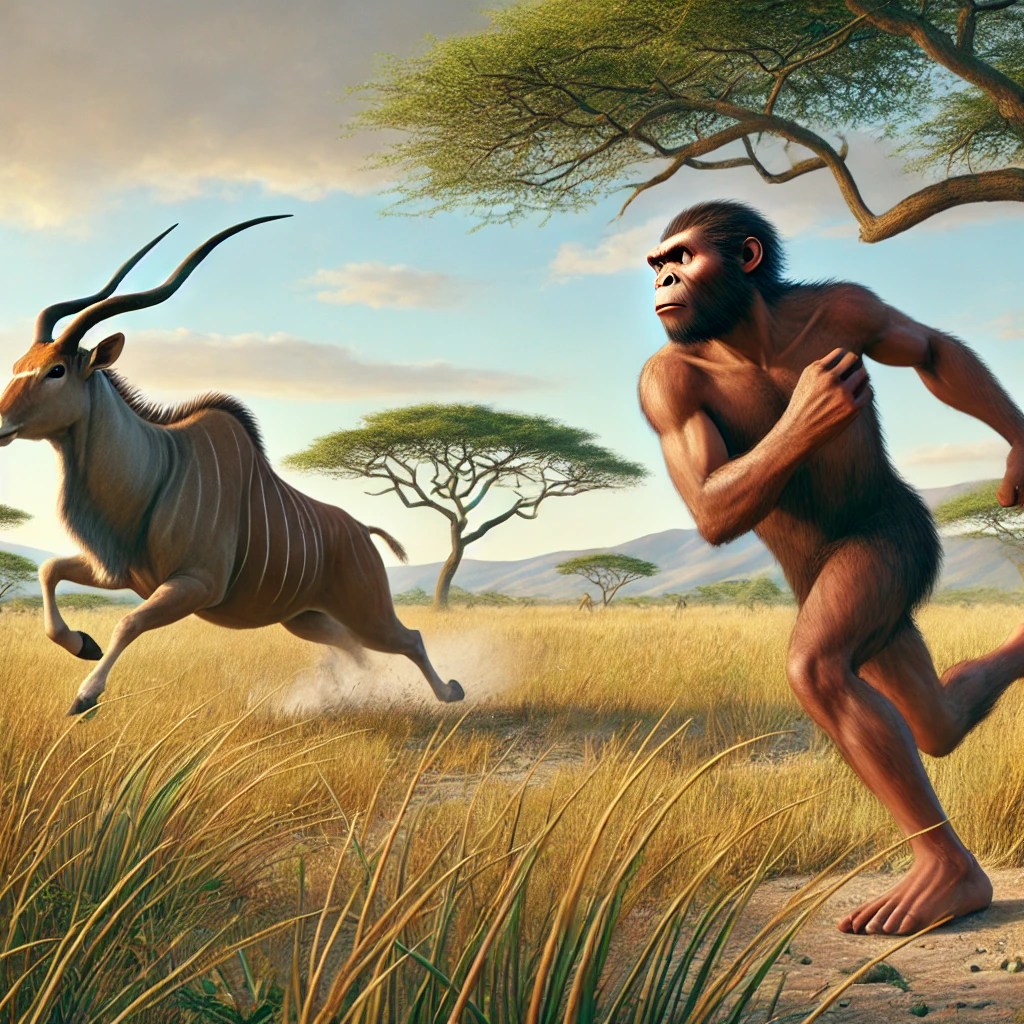
Lieberman and his colleagues have demonstrated that, given the right conditions, humans can outrun nearly any animal over long distances. Persistence hunting involves selecting a large, easily exhausted prey—such as an antelope or a giraffe—and chasing it at a steady pace. Quadrupedal animals must synchronise their breathing with their stride because their internal organs bounce with each step. This means they must periodically stop to pant and cool down. In contrast, a bipedal runner like Homo erectus could breathe independently of their stride. Moreover, furry quadrupeds expose much of their body to the sun, accelerating heat buildup. For Homo erectus, only the scalp and shoulders were directly exposed to sunlight.

As recently as the 1990s, some hunter-gatherer groups in Botswana still practiced persistence hunting, proving it to be an effective way to secure large amounts of meat. Only when big game became scarce did humans abandon this ancient method, which had once made all of us endurance runners.


Resources:

Bramble, D. M., & Carrier, D. R. (1983). Running and breathing in mammals. Science, 219, 251–256.

Carrier, D. R. (1984). The energetic paradox of human running and hominid evolution. Current Anthropology, 25, 483–495.

Ijäs, M. R. (2020). Fragments of the hunt: Persistence hunting approach to rock art. Hunter Gatherer Research, 6(3–4).

Ijäs, M. (2017). Fragments of the Hunt: Persistence Hunting, Tracking and Prehistoric Art. Helsinki: Aalto University.

Liebenberg, L. (2013). The origin of science. Cape Town: CyberTracker.

Lieberman, D. E. (2013). The Story of the Human Body: Evolution, Health, and Disease. New York: Pantheon Books.

Wrangham, R. (2009). Catching Fire: How Cooking Made Us Human. London: Profile Books.

Zen and the Art of Dissatisfaction – Part 3.

The Origin of Dissatisfaction

”He who is not content with what he has,
would not be content with what he would like to have.”
— Socrates

Originally published in 2 March 2025 on Substack https://substack.com/inbox/post/158235271

Are our closest relatives, such as chimpanzees or bonobos, dissatisfied? Research indicates that they experience feelings of unfairness when human researchers reward one individual with a cucumber and another with a grape for completing the same task. Is dissatisfaction something that has always existed? What drives us to always desire for more—consumer goods, exotic travels, romantic relationships, fancy clothes, flamboyant drinks—more of everything? We are like hungry ghosts, wanting everything, yet nothing quenches our thirst.

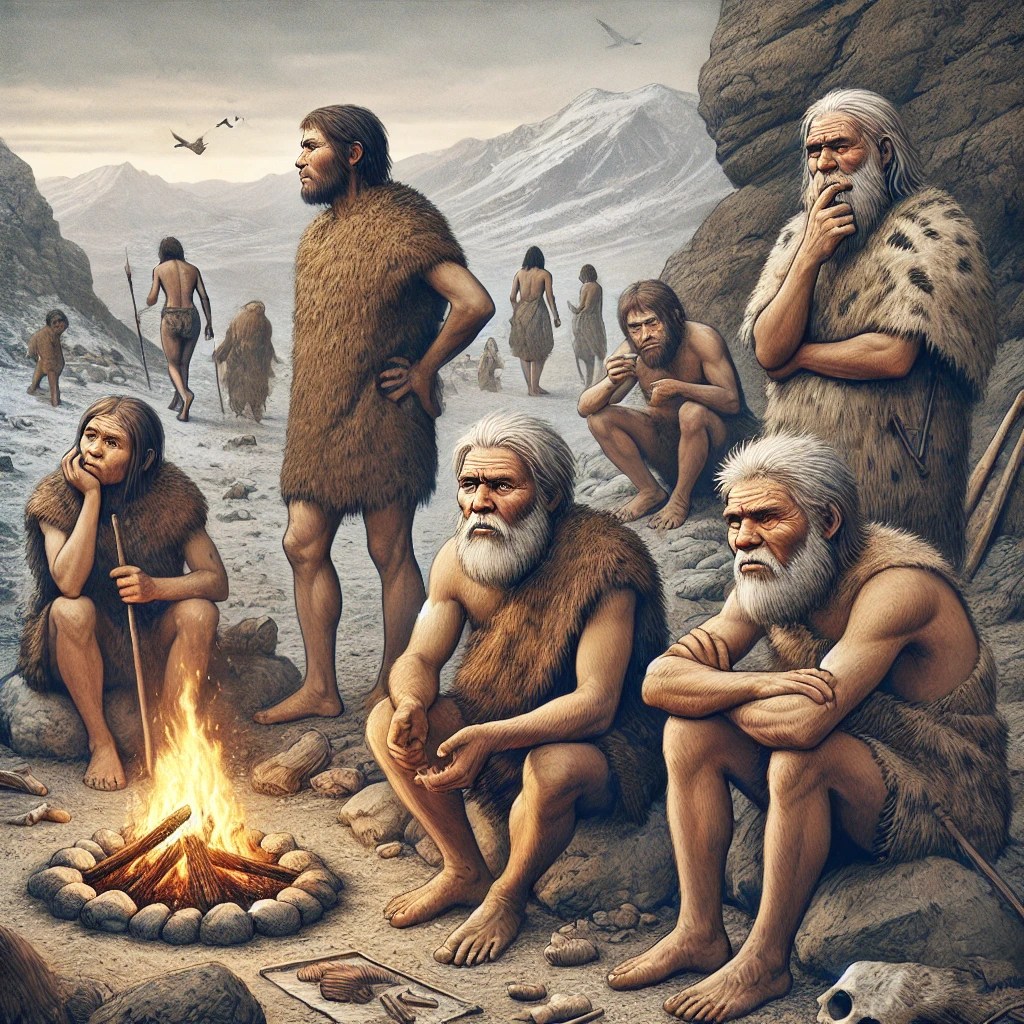
In principle, any stage in human history where cultural and technological evolution took a step toward greater complexity could be considered a potential source of origins of dissatisfaction. One such early step was taken around 70,000 years ago, marking the beginning of the Upper Palaeolithic. The culture of Middle Palaeolithic humans differed significantly from that of modern humans. Middle Palaeolithic people used hand axes similar to those that had been in use for hundreds of thousands of years. These people were biologically identical to us, yet this cultural ”contentment” with old ways feels foreign to us today.

However, we must approach such transitions cautiously. Although the shift to the Upper Palaeolithic is sometimes referred to as the ”Upper Palaeolithic explosion,” it was a slow process that took thousands of years and did not occur simultaneously in one place. Moreover, in this Substack series, we are discussing an internal dissatisfaction that other animals also seem to struggle with.

According to the Swedish geneticist, Nobel laureate Svante Pääbo, Neanderthals diverged from the same lineage as modern humans approximately 550,000–690,000 years ago. Earlier fossil-based estimates suggested that the split between modern humans and Neanderthals occurred around 250,000–300,000 years ago, while archaeological data estimates the separation at around 300,000 years.

Neanderthals inherited a similar method of making simple stone tools, and changes in tool evolution were relatively slow between 200,000 and 50,000 years ago. Meanwhile, modern humans in Africa gradually began engaging in extensive trade with other human groups. Archaeological evidence suggests that such behaviour was already occurring at least 80,000 years ago, though it is likely that it began even earlier, when modern humans had already existed for 300,000–200,000 years. The American anthropologist David Graeber and the British archaeologist David Wengrow remind us in their book The Dawn of Everything that Africa may have resembled something akin to J.R.R. Tolkien’s Middle-earth, populated by humans of various shapes and sizes.

The evidence for early interaction networks is scattered, but the tools used by early modern humans remained largely unchanged for long periods. Around 100,000 years ago, however, new types of tools and objects began to appear. For instance, very small and sophisticated arrowheads were made in southern Africa around 65,000–60,000 years ago, only to disappear from the archaeological record for some time before reappearing later.

Excavations reveal that Middle Palaeolithic people used the same tools and weapons for generations, which appear to have remained relatively unchanged. People did not move as frequently as they did later, nor do they seem to have had a rich symbolic culture involving body adornments or cave paintings.

By about 70,000 years ago, the transition to Upper Palaeolithic culture was well underway. It introduced cultural features that we still recognise as ”human.” However, there is no reason to assume that a major cognitive leap occurred at this point. British archaeologist Colin Renfrew coined the term sapient paradox to describe the illusion that we fail to recognise earlier human behaviour as human-like. The clearest archaeological evidence of the Upper Palaeolithic transition is the emergence of entirely new tools. Instead of heavy stone axes, modern humans began crafting refined stone blades that were sharp, lightweight, and required knowledge of the stone material. These blades were more portable and easier to attach to wooden shafts. Examples of this new technology include prismatic blades and sophisticated burins.

Some of the most recognisable Upper Palaeolithic achievements from Ice Age Europe include tools made from animal bones and tusks. Easily worked materials like bone were used to craft sewing needles, fishing hooks, harpoon tips, flutes, and small portable sculptures. The Upper Palaeolithic period also brought dietary changes. Previously, during the Middle Palaeolithic, humans primarily relied on large game, but Upper Palaeolithic humans expanded their diet to include snails, fish, shellfish, birds, smaller mammals, and terrestrial turtles.

Evidence of a plant-based diet during the Upper Palaeolithic has only emerged in recent years due to improved analysis methods. It now appears that humans consumed a variety of wild plants, herbs, tubers, roots, fungi, and nuts. These foods were processed by grinding, mashing, boiling, and roasting. Some researchers suggest that the Upper Palaeolithic era involved a broader participation of women and children in food gathering, though this may be a sexist assumption by male researchers. Studies of contemporary hunter-gatherer societies indicate that female hunting is quite common. Researchers from the University of Seattle, led by Abigail Anderson, found evidence that in 90% of the 50 analysed groups, women engaged in hunting. In over a third of these cases, women hunted all types of game, including large animals.

The Rise of Homo Non Satiatæ

The Upper Palaeolithic transition has been linked to advances in tools, diet, and cooperation, which in turn facilitated population growth and the rapid spread of humans across the Ice Age world, including Australia. It has also been suggested that this transition marked the end of earlier forms of cannibalism. While this is difficult to prove, it may have at least reduced such practices. Humans have occasionally engaged in cannibalism for various reasons, but in Upper Palaeolithic, they began burying their dead with respect and likely with ritual significance, as evidenced by grave goods found in burials.

Alongside these seemingly positive adaptations, something significant (for the lack of a better expression: modern) appears to have occurred in the human mind. Some have speculated that language and symbolic thought took a leap forward at this time. While this evolution was likely gradual, the archaeological record gives the impression of a sudden transformation. Natural selection favours those who are most reproductively successful, and new social and technological skills likely facilitated this process. However, natural selection does not consider whether the reproducing organism is healthy or happy. Humans at the dawn of the Upper Palaeolithic were likely neither always healthy nor necessarily happy—and perhaps this still applies. With the beginning of the Upper Palaeolithic, our species may have taken a step toward dissatisfaction. Perhaps the last 70,000—or at least 50,000—years of our evolution could be playfully described as the rise of Homo Non Satiatæ, the dissatisfied human.

From this perspective, we could frame the discussion as follows: one distinguishing feature of Upper Palaeolithic humans, compared to their predecessors, may have been the emergence of psychological dissatisfaction. I do not claim that people were content and happy before this transition, nor that it was the result of a sudden shift. Rather, it was likely a long, tens-of-thousands-of-years-long process during which humans lived in diverse communities, experimented with different ways of organising their societies, and adapted as best they could.

This trait had many enriching dimensions. Dissatisfaction made humans curious travellers, constantly searching for better hunting grounds. It also made them possessive, as evidenced by the extinction of large predators, megafauna, and competing species worldwide. Dissatisfaction also drove innovation—nothing old seemed to serve its purpose anymore, creating an urgent need for new tools, clothing, customs, and weapons.

Thanks for reading! This post is public so feel free to share it.

Share


Resources

Anderson, A., Chilczuk, S., Nelson, K., Ruther, R., & Wall-Scheffler, C. (2023). The Myth of Man the Hunter: Women’s Contribution to the Hunt Across Ethnographic Contexts. PLoS ONE, 18(6), e0287101.

Graeber, D., & Wengrow, D. (2021). The Dawn of Everything: A New History of Humanity. Farrar, Straus and Giroux.

Pääbo, S., et al. (1997). Neandertal DNA Sequences and the Origin of Modern Humans. Cell, 90(1), 19-30.

Renfrew, C. (2008). Neuroscience, Evolution and the Sapient Paradox / The Factuality of Value and of the Sacred. Philosophical Transactions of the Royal Society B: Biological Sciences, 363(1499), 2041-2047.

Zen and the Art of Dissatisfaction – Part 2.

The Second Crisis: Shaping the World Through Artificial Intelligence

Originally published in 24 February 2025 on Substack https://substack.com/inbox/post/157820189

While the first and greatest upcoming crisis is the environmental crisis: climate change, pollution, and mass extinction of species, the second crisis we face is the reshaping of the global order by the AI industry. Technological advancements are accelerating, making economic inequality more glaring than ever, with no end in sight. The potential of AI is difficult to assess, but it is clear that it will redefine our understanding of labor and work itself. This will force humanity to reconsider not only the nature of work but also economic systems as a whole. The greatest threat comes from the question: Can a company, whether American or Chinese, grow so wealthy that it could dictate economic and political decisions at will? Can wealth generated by AI be distributed equitably, empowering citizens worldwide, fostering equality, and reinforcing democracy everywhere? My son captured the irony of computer evolution in a joke: ”We’ve fooled rocks into thinking for us.” What if those rocks turn against us? Is this the new Stone Age?

This second crisis also touches on the erosion of democratic influence, a trend that could have catastrophic consequences for the future of civilisation. Let us not forget the looming threat of nuclear war, which still remains all too possible. The first two months of 2025 have made these challenges very clear.

Like many others, I consider myself an ordinary citizen—one who does their best each day, striving to care for their family. I am an artist, a researcher in human evolution and the prehistory of art, and a Zen buddhist priest. All three of these professions come with an implicit promise of poverty. However, I’ve learned that economic scarcity can be a gift and a privilege, especially for those wishing to understand what financial uncertainty feels like.

This series of writings began during fragmented writing sessions throughout 2021, a time when it seemed, for a brief moment, that the COVID-19 pandemic might be subsiding. After completing my doctorate in 2017, many areas of my life began following an unpredictable path. Despite spending most of my life with modest income and relying on social safety nets, I was poorer than ever while holding a doctorate. This reality prompted me to reflect deeply on economic inequality—one of the core themes of this series.

Seven generations

We live in the midst of mass extinctions and climate change. As a Zen priest, I often ask myself what it means to live in a world where, according to the UN’s environmental program, around 150–200 plant, insect, bird, and mammal species go extinct every day. How could we save these species?

My awakening to this reality came in early 2019, when I participated in an Extinction Rebellion event in Finland. I was placed in a small discussion group with a young woman and an older man. The woman’s reaction to the climate crisis was one of the main reasons I began writing about this. She was horrified at what the world could look like in just a few decades. She feared for her generation’s future and the generations to come. The Haudenosaunee (Iroquois) Nation’s philosophy suggests that the decisions we make today should lead to a sustainable world for seven generations ahead. This principle is often applied to environmental decisions—ensuring they are sustainable for the next 150–200 years. Can we actually think on such a scale?

Our species evolved in small hunter-gatherer groups of a few dozen, and later adapted to village communities of around 150 people. Anthropologist Robin Dunbar’s research suggests that the human mind can only maintain meaningful relationships within this group size—a concept known as Dunbar’s number. How, then, can we make decisions that consider the well-being of 7.9 billion people? Can we even comprehend such a task? Must we simply accept that we are falling behind in the face of biodiversity loss, while AI and robots serve the needs of the wealthy?

I believe that we could create conditions where wealth is shared equally, where people can find meaning in doing what they love, while still providing for their families. But for this to happen, we must free ourselves from beliefs that bind our minds, beliefs that prevent such possibilities. We must learn to open our hearts to all forms of life and respect each other as we are. We would truly benefit from being able to see ourselves as others and others as ourselves.

Ethical Roots of Engaged Buddhism

The German philosopher Karl Jaspers (1888–1969) developed the influential concept of the ”Axial Age,” which spans roughly from 800 BCE to 200 BCE, marking the transition from the ancient world to a more familiar era. During this period, significant shifts in thought occurred simultaneously across China, India, and Greece. Thinkers such as Siddhartha Gautama (Buddha), Confucius, and Pythagoras shaped philosophical and religious traditions that still impact the world today. It was also an era when the concept of money emerged, fundamentally changing the relationship between freedom and power.

As a Buddhist priest, I may be somewhat biased, but I believe the teachings of Buddha are particularly relevant when examining the nature and origins of human dissatisfaction. Buddha’s radical ideas—especially the notion that caste systems and idol worship are baseless—resonate deeply in our modern world. His core insight, which we call dukkha (often translated as suffering), points to the inherent dissatisfaction and suffering in life, and how to become aware of it and see what lies beyond it.

David Loy, an American philosopher and Zen teacher, has written extensively about the significance of Buddhist thought in the context of the ecological crisis. According to Loy, the crisis we face is not just ecological but also spiritual, requiring a profound understanding of our place in the world. Is the ecological crisis the world’s way of telling us to wake up or face the consequences?

Loy references Dom Helder Camara’s comment: ”Dom Helder Camara’s comment: ”When I feed the poor, they call me a saint. When I ask why the poor have no food, they call me a communist.” This tension between helping and questioning is something that also arises in Buddhist activism. Loy asks whether Buddhists, when engaging in activism, are accused of being too radical, despite the deep ethical roots in the tradition.

The concept of stress is also relevant here. Stress can be a form of dukkha—a psychological and physiological reaction to life’s challenges. But stress isn’t inherently harmful, as Kelly McGonigal, a Stanford psychologist, suggests. It’s not the stress itself that harms us, but how we relate to it. Social support, connection, and understanding stress as a natural response can mitigate its negative effects.

In Zen Buddhism, we approach dissatisfaction and suffering with openness and awareness. Zen, particularly in its modern form, encourages living fully in the present, embracing life as it is. Zen practice aims to break through illusions and social constructs, helping us see the world as it truly is. It is less intellectual and more experiential, emphasising personal realisation in everyday life.

Zen’s journey from India to China and then Japan, and later to the West, has led to many different interpretations and adaptations. My understanding of Zen has been deeply influenced by the teachings of Roshi Frank De Waele, a Belgian Zen teacher, and Roshi Bernie Glassman, who taught “Brooklyn Zen.”

This series is based on themes that are divided five segments, each exploring the history, manifestations, consequences, and possible solutions to human dissatisfaction. It is not a step-by-step guide to solving these issues, but a collection of ideas and themes that I believe are crucial in this historical moment.

The first segment examines historical movements that have shaped our understanding of dissatisfaction and suffering. The second one offers philosophical reflections on the nature of dissatisfaction. The third and fourth segments address the consequences of dissatisfaction, such as climate change, the potential dangers of AI, and economic inequality. The final fifth segment of the series presents cases where dissatisfaction has been addressed and resolved. This section also discusses mystical experiences and practices that could help solve our dissatisfaction.

Zen and the Art of Dissatisfaction – introduction and Part 1.

Why We Want More and How It’s Destroying Us

Climate, AI, Extinction, Money, Inequality & the Search for Freedom

My name is Mikko Rakushin Kendō Ijäs. I am an artist, researcher, and Zen Buddhist priest. My work spans from studying human evolution to exploring the depths of creativity, spirituality, and the structures that shape our world. Over the years, my journey has taken me through art, academia, and Zen practice—from research at Harvard to Bearing Witness retreats in Auschwitz and Street Retreats in Helsinki.

This series of writings is based on an unpublished book I have been working on—a book that examines the complex systems that govern our lives, from economics and technology to human psychology and spirituality. The themes I explore here are the same ones that have shaped my research, my practice, and my understanding of the world.

We live in an era of deep contradictions: endless innovation yet growing dissatisfaction, economic growth yet persistent inequality, technological progress yet environmental collapse. Through this series, I aim to reflect on these paradoxes, offering views that are grounded in both research and lived experience.

I invite you to read, reflect, and engage. Not from a place of certainty, but from a place of open awareness—what in Zen we call Not-Knowing. Let’s bear witness to the world as it is, so we can act with wisdom, compassion, and love.

Originally published in 15 February 2025 on Substack https://substack.com/@mikkoijas/p-157207211

Zen and the Art of Dissatisfaction 

Part 1. We Are All Prisoners

We are cooperative and innovative creatures. Humanity has been successful in many ways, yet dissatisfaction gnaws at us. This dissatisfaction makes us prisoners waiting for a better tomorrow, for a moment when everything will be perfect. But such a day will never come.

Dissatisfaction has driven us forward, yet at the same time, it is an illusion. We believe we are moving toward an inevitable peak of progress, but in reality, we are merely following paths we have built ourselves—sometimes misguided ones, sometimes wiser routes. We have created and abandoned cultures, innovations, and ways of life time and again.

But where does our creativity stem from? What truly drives us? Is it benevolent progress or endless greed and delusions? Dissatisfaction takes hold of our minds even when everything appears fine on the surface. We want more money, more fame, better working conditions, more benefits. Wages and the economy must continuously grow. But why? What is this force leading us, and in what direction?

Our economy relies on outdated metrics. The gross domestic product (GDP), developed during the Great Depression of the 1930s, has guided the world for nearly a century. However, it fails to account for everything: Wikipedia, which we develop and read for free, music and paintings we often enjoy without charge. Volunteer work and activism that drives all of our rights, nature and the well-being it provides. All of this exists, yet it remains invisible in economic measurements. And still, we expect economic growth. 

Our dissatisfaction is visible everywhere. We wage war against evil, bomb cities, and then wonder why refugees want to live among us. We buy chicken after seeing a recipe on TV, unwittingly participating in the meat industry’s cycle that breeds new diseases. We complain when pandemics confine us to our homes.

This series of writings will examine these complex systems that intertwine: climate and ecology, technological development, and economic injustice. We cannot change the world alone, but we can understand it better. Politicians do not experience the daily lives of ordinary people, nor can we expect them to understand its hardships. Their world is different from that of a cleaner who has to apply for support to afford dental care or an artist who must lie about their profession to receive unemployment benefits. Many of the examples in this series are from Finland and applicable only in Finnish context.

But how do we form our opinions? We think we learn by reading, but true understanding comes through experience. We react emotionally to politics, news, and social media. We get angry, but we do not always pause to ask: Why does someone think this way? Why is someone forced to beg on the streets? Why does the world’s richest man want to go to Mars while mocking politicians?

American Zen teacher Bernie Glassman encouraged approaching the world through Not-Knowing. To remain open, to listen, to Bear Witness, and to act based on what we internalise–through love. This may help us break free from the chains of our own minds.

We consider many things immutable: nations, the economy, human rights, the necessity of war. But nothing is permanent. Everything flows and changes. British physicist Helen Czerski notes that nothing alive can achieve true balance—stagnation would mean death. Even world peace is subject to constant change.

Dutch historian Rutger Bregman reminds us that the poor are not lazy; they simply lack money. Poverty is not a moral failing but a societal structure. And while Steven Pinker argues that the world is better today than ever before, we cannot turn a blind eye to new crises.

Humanity now faces several existential threats. The greatest is the environmental crisis: climate change, pollution, and mass extinction of species. The second is the imbalance between technological advancement and economic power. New political crises have also merged through authoritarian regimes. All of these are also intertwined, or interconnected. We must understand these structures and their effects if we want to build peace, and a more sustainable future.

Dissatisfaction will not disappear, but maybe we could learn to see it with new eyes. We can stop waiting for a better tomorrow and face the world as it is—and act in its favour—through love.