Zen and the Art of Dissatisfaction – Part 18

Humanity’s Legacy of Extinction and Exploitation

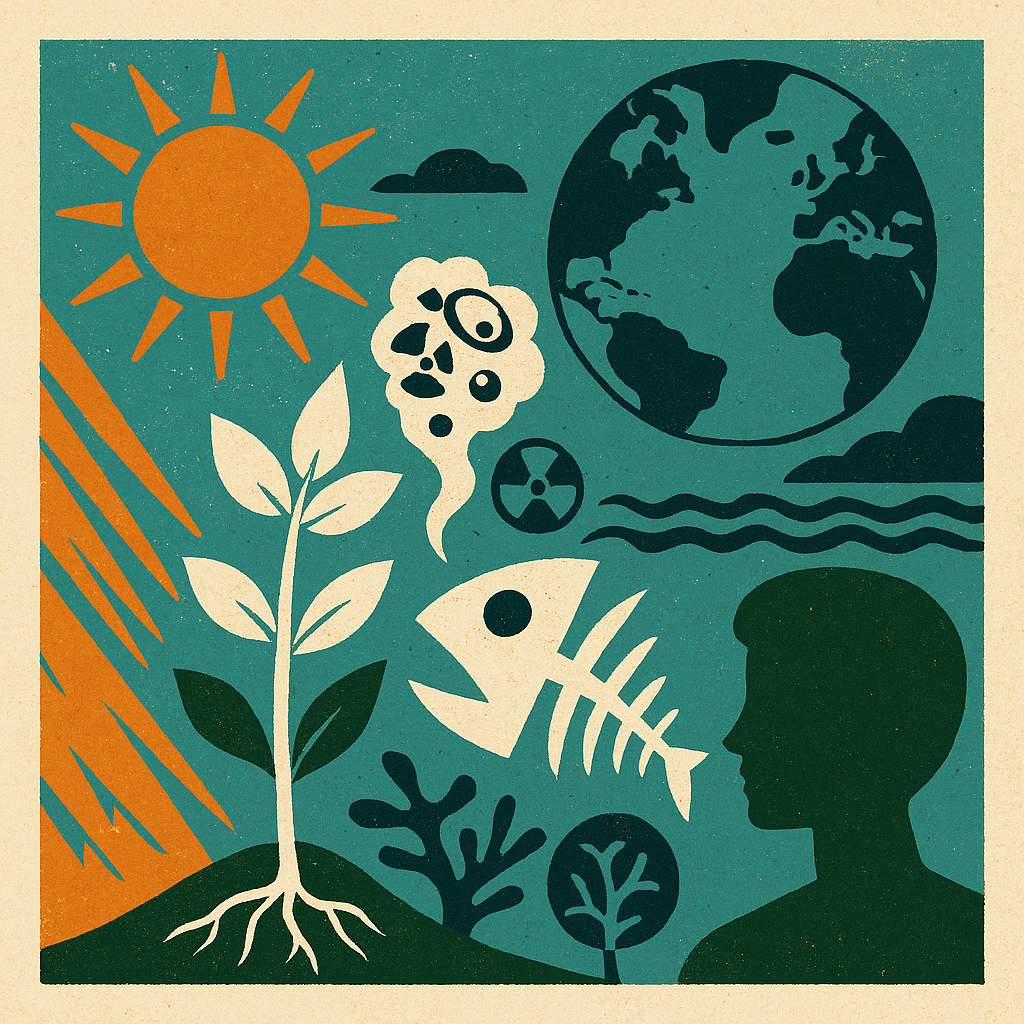
For centuries, human societies—whether ancient hunter-gatherers or modern industrial empires—have played a central role in the extinction of Earth’s largest animals. Although we often romanticise early humans as living in harmony with nature, archaeological and ecological evidence tells a different story. This blog post explores the global impact of Homo sapiens on megafauna, marine ecosystems, and keystone species across continents and millennia, from prehistoric Africa to industrial Japan. It also highlights the ongoing environmental and ethical consequences of our actions.

Originally published in Substack: https://substack.com/@mikkoijas

Humans have consistently driven megafauna to extinction wherever they have migrated. While we may associate the last remaining hunter-gatherers in Africa, Australia, or the Americas with sustainable living, historical patterns suggest otherwise. Wherever Homo sapiens arrived, they rapidly exterminated dangerous predators, large herbivores, and flightless birds.

The Human Legacy of Megafauna Extinction

One striking exception is Africa, where large land mammals have coexisted with humans far longer. This prolonged co-evolution allowed these animals to adapt to human presence. In other parts of the world, some megafauna managed to survive alongside humans—such as various species of bears, moose, deer, and the American bison. Europe’s bison relative, the wisent, nearly went extinct in the 20th century but was saved by zoos.

Even so, ancient hunter-gatherers eventually reached a balance with their prey. Among the San people of the Kalahari, for instance, there’s a known reluctance to hunt declining species. This balance was disrupted by European settlers, leaving San communities today unable to practice their traditions freely.

In North America, indigenous peoples coexisted with the American bison until European settlers deliberately disrupted the balance. Settlers intentionally slaughtered bison to deprive native populations of their primary resource. In the 1700s, 25–30 million bison roamed the plains. By 1880, systematic hunting—sometimes by the U.S. Army—reduced their population to under 100 individuals.

Human impact has extended deep into marine ecosystems. Although coastal communities have fished for thousands of years, their practices rarely led to ecological collapse. According to Curtis Marean, a professor of archaeology at Arizona State University, early Homo sapiens may have survived an extreme ice age (c. 195,000–123,000 years ago) by turning to coastal diets. Marean’s work at Pinnacle Point near Mossel Bay has shown that ancient humans relied on seafood like shellfish and marine mammals. This dietary shift played a crucial role in the survival of early humans during a population bottleneck when their numbers dropped to a few hundred individuals.

Nearby Blombos Cave, studied by archaeologists like Christopher Henshilwood, has yielded the earliest evidence of symbolic thought and advanced tools, including beads and bone-tipped spears.

Although early coastal communities scavenged stranded whales, they did not hunt them at scale. The Romans may have initiated the first industrial whale hunts, particularly off the Gibraltar peninsula, as confirmed by recent findings from Ana Rodrigues’ research team (2018). Later, the Basques became renowned whale hunters, operating from the 1000s to the 1500s across the North Atlantic. By the early 1900s, the North Atlantic right whale population had dropped to about 100. Recent estimates suggest there are only 336 left today.

Tuna, Greed, and the Cold Economics of Extinction

Whales are not the only marine giants hunted to the brink. Species like the bluefin tuna have faced similar pressure. On the Western Atlantic, tuna catches jumped from 1,000 tonnes in 1960 to 18,000 tonnes by 1964—only to collapse by 80% within the same decade. In the Mediterranean, overfishing continued longer but reached catastrophic levels by 1998, leading the IUCN to classify the species as endangered.

The surge in demand came from Japan, where raw tuna is essential for sushi and sashimi. In particular, the fatty underbelly known as otoro became a luxury delicacy in the 1960s. Meanwhile, in the West, tuna was mostly used for cat food.

Today, approximately 80% of all bluefin tuna caught globally is shipped to Japan. The Japanese conglomerate Mitsubishi controls about 40% of the global market, freezing and stockpiling tuna to artificially inflate scarcity and profit margins. Ironically, the Fukushima nuclear disaster compromised these stores when the electricity failed, ruining thousands of tonnes of frozen fish.

From an ecological viewpoint, Mitsubishi’s actions are deeply unethical. From an economic lens, however, they are brutally rational—rarity increases value. As stocks dwindle, prices rise, and shareholders benefit. The more endangered tuna become, the more lucrative they are.

All signs suggest that the oceans are under enormous pressure due to climate change. Seas are warming, acidifying, and absorbing unprecedented levels of carbon dioxide from human activity. In addition, they are polluted and eutrophicated by agriculture and industry.

The Baltic Sea, for example, is the most polluted marine area in the world—thanks in part to the impacts of livestock farming. The same agricultural runoff pollutes Finland’s lakes and rivers.

Ocean ecosystems are remarkably sensitive. A 2°C rise may seem minor—until we compare it to the human body. If your body temperature increased by two degrees and stayed there, you’d die. The sea is no different.

In her book On Fire (2020), journalist Naomi Klein reflects on the 2010 Deepwater Horizon oil spill in the Gulf of Mexico. Operated by Transocean and leased by BP, it remains the largest marine oil spill in history. Witnesses described the ocean as if it were bleeding. Klein recalls being struck by how the oil’s swirling patterns resembled prehistoric cave paintings—one shape even resembled a bird gasping for air, its eyes staring skyward.

Conclusion

From mammoths and bison to whales and tuna, humanity has left a trail of extinction and ecosystem collapse in its wake. Whether through hunting, pollution, or industrial overreach, our actions have irreversibly altered life on Earth. The myth of ancient ecological harmony dissolves under the weight of archaeological evidence and ecological reality. If we are to prevent the next wave of mass extinctions, we must confront the past honestly and reshape our relationship with the natural world—before there is nothing left to save.


References

Henshilwood, C. S. (2002). The Blombos Cave and the origins of symbolic thinking. Science, 295(5558), 1278–1280. https://doi.org/10.1126/science.1067575

Hickman, M. (2009). Mitsubishi and the bluefin tuna trade. The Independent. Retrieved from https://www.independent.co.uk

Klein, N. (2020). On Fire: The Burning Case for a Green New Deal. Penguin Books.

Lindsay, J. (2011). Mitsubishi loses tons of tuna after Fukushima power failure. Environmental News Network. Retrieved from https://www.enn.com

Marean, C. W. (2010). When the Sea Saved Humanity. Scientific American, 303(2), 54–61.

Rodrigues, A. et al. (2018). Forgotten whales: Evidence of ancient whaling by the Romans in the Gibraltar region. Proceedings of the Royal Society B: Biological Sciences, 285(1873). https://doi.org/10.1098/rspb.2018.1088

IUCN. (1998). Bluefin tuna listed as endangered. International Union for Conservation of Nature. https://www.iucn.org

Zen and the Art of Dissatisfaction – Part 16

Ancient Lessons for Modern Times

“It is horrifying that we have to fight our own government to save the environment.”
— Ansel Adams

In a world increasingly shaped by ecological turmoil and political inaction, a sobering truth has become clear: humanity is at a tipping point. In 2019, a video of Greta Thunberg speaking at the World Economic Forum in Davos struck a global nerve. With calm conviction, Thunberg urged world leaders to heed not her voice, but the scientific community’s dire warnings. What she articulated wasn’t just youthful idealism—it was a synthesis of the environmental truth we can no longer ignore. We are entering a new era—marked by irreversible biodiversity loss, climate destabilisation, and rising seas. But these crises are not random. They are the logical consequences of our disconnection from natural systems forged over millions of years. This post dives into Earth’s deep past, from ancient deserts to ocean floors, to reveal how nature’s patterns hold urgent messages for our present—and our future.

Originally published in Substack https://substack.com/home/post/p-165122353

Today, those in power bear an unprecedented responsibility for the future of humankind. We no longer have time to shift this burden forward. This is not merely about the future of the world—it’s about the future of a world we, as humankind, have come to know. It’s about the future of humanity and the biodiversity we depend on. The Earth itself will endure, but what will happen to the ever-growing list of endangered species?

The Sixth Mass Extinction: A Grim Reality

Climate change is just one problem, but many others stem from it. At its core, our crisis can be summarised in one concept: the sixth mass extinction. The last comparable event occurred 65 million years ago, when dinosaurs and many land and marine species went extinct, and ammonites vanished. Only small reptiles, mammals, and birds survived. The sixth mass extinction is advancing rapidly. According to scientists from the UN Environment Programme, about 150–200 species go extinct every single day.

One analogy described it well: imagine you’re in a plane, and parts begin to fall off. The plane represents the entire biosphere, and the falling bolts, nuts, and metal plates are the species going extinct. The question is: how many parts can fall off before the plane crashes, taking everything else with it?

Each of us can choose how we respond to this reality. Do we continue with business-as-usual, pretending nothing is wrong? Or do we accept that we are in a moment of profound transformation, one that demands our attention and action? Do we consider changes we might make in our own lives to steer this situation toward some form of control—assuming such control is still possible? Or do we resign ourselves to the idea that change has progressed too far for alternatives to remain?

The Carbon Cycle: A System Out of Balance

Currently, humanity emits around 48.3 million tonnes of carbon dioxide annually, which ends up dispersed across the planet. The so-called carbon cycle is a vital natural process that regulates the chemical composition of the Earth, oceans, and atmosphere. However, due to human activity, we have altered this cycle—a remarkable, albeit troubling, achievement. Earth is vast, and it’s hard for any individual to comprehend just how large our atmosphere is, or how much oxygen exists on the planet. This makes it difficult for many to take seriously the consequences of human activity on climate change.

Nature absorbs part of the carbon dioxide we emit through photosynthesis. The most common form is oxygenic photosynthesis used by plants, algae, and cyanobacteria, in which carbon dioxide and water are converted into carbohydrates like sugars and starch, with oxygen as a by-product. Plants absorb carbon dioxide from the air, while aquatic plants absorb it from water.

In this process, some of the carbon becomes stored in the plant and eventually ends up in the soil. Decaying plants release carbon dioxide back into the atmosphere. In lakes and oceans, the process is similar, but the carbon sinks to the bottom of the water instead of into soil. This all sounds simple, and it’s remarkable that such a cycle has created such favourable conditions for life. Yet none of this is accidental, nor is it the result of a supernatural design. It is the product of millions of years of evolution, during which every organism within this system has developed together—everyone needs someone. We should view our planet as one vast organism, with interconnected and co-dependent processes that maintain balance through mutual dependence and benefaction.

A Planet of Mutual Dependence: The Wisdom of Plants

Italian philosopher Emanuele Coccia explores this interdependence beautifully in his book The Life of Plants (2020). Coccia writes that the world is a living planet, its inhabitants immersed in a cosmic fluid. We live—or swim—in air, thanks to plants. The oxygen-rich atmosphere they created is our lifeline and is also connected to the forces of space. The atmosphere is cosmic in nature because it shields life from cosmic radiation. This cosmic fluid “surrounds and penetrates us, yet we are barely aware of it.”

NASA astronauts have popularised the concept of the overview effect—the emotional experience of seeing Earth from space, as a whole. Some describe it as a profound feeling of love for all living things. At first glance, the Sahara Desert and the Amazon rainforest may seem to belong to entirely different worlds. Yet their interaction illustrates the interconnectedness of our planet. Around 66 million years ago, a vast sea stretched from modern-day Algeria to Nigeria, cutting across the Sahara and linking to the Atlantic. The Sahara’s sand still contains the nutrients once present in that ancient sea.

In a 2015 article, NASA scientist Hongbin Yu and colleagues describe how millions of tonnes of nutrient-rich Saharan dust are carried by sandstorms across the Atlantic each year. About 28 million tonnes of phosphorus and other nutrients end up in the Amazon rainforest’s nutrient-poor soils, which are in constant need of replenishment.

In Darren Aronofsky’s 2018 documentary, Canadian astronaut Chris Hadfield describes how this cycle continues: nutrients washed from the rainforest soil travel via the Amazon River to the Atlantic Ocean, feeding microscopic diatoms. These single-celled phytoplankton build new silica-based cell walls from the dissolved minerals and reproduce rapidly through photosynthesis, producing oxygen in the process. Though tiny, diatoms are so numerous that their neon-green blooms can be seen from space. They produce roughly 20% of the oxygen in our atmosphere.

When their nutrients are depleted, many diatoms die and fall to the ocean floor like snow, forming sediment layers that can grow to nearly a kilometre thick. After millions of years, that ocean floor may become arid desert once again—starting the cycle anew, as dust blown from a future desert fertilises some distant forest.

Nature doesn’t always maintain its balance. Sometimes a species overtakes another, or conditions become unliveable for many. Historically, massive volcanic eruptions and asteroid impacts have caused major planetary disruptions. This likely happened 65 million years ago. Ash clouds blocked sunlight, temperatures plummeted, and Earth became uninhabitable for most life—except for four-legged creatures under 25 kilograms. We are descended from them.

Ocean Acidification: A Silent Threat

In her Pulitzer Prize-winning book The Sixth Extinction, American journalist Elizabeth Kolbert writes about researcher Jason Hall-Spencer, who studied how underwater geothermal vents can make local seawater too acidic for marine life. Fish and crustaceans flee these zones. The alarming part is that the world’s oceans are becoming acidic in this same way—but on a global scale. The oceans have already absorbed excess CO₂, making surface waters warmer and lower in oxygen. Ocean acidity is estimated to be 30% higher today than in 1800, and could be 150% higher by 2050.

Acidifying oceans spell disaster. Marine ecosystems are built like pyramids, with tiny organisms like krill at the base. These creatures are essential prey for many larger marine species. If we lose the krill, the pyramid collapses. Krill and other plankton form calcium carbonate shells, but acidic waters dissolve these before they can form properly.

There’s no doubt modern humans are the primary cause of the sixth mass extinction. As humans migrated from Africa around 60,000 years ago to every corner of the globe, they left destruction in their wake. Retired Harvard anthropologist Pat Shipman aptly dubbed Homo sapiens an invasive species in her book Invaders (2015). She suggests humans may have domesticated wolves into proto-dogs as early as 45,000 years ago. On the mammoth steppes of the Ice Age, this would have made humans—accustomed to persistence hunting—unbeatable. Wolves would exhaust the prey, and humans would deliver the fatal blow with spears.

Hunting is easy for wolves, but killing large prey is risky. Getting to a major artery is the most dangerous part. Human tools would have been an asset to the wolves. In return, wolves protected kills from scavengers and were richly rewarded. Since humans couldn’t consume entire megafauna carcasses, there was plenty left for wolves.

Why did some humans leave Africa? Not all did—only part of the population migrated, gradually over generations. One generation might move a few dozen kilometres, the next a few hundred. Over time, human groups drifted far from their origins.

Yet the migration wave seems to reveal something fundamental about our species. Traditionally, it’s been viewed as a bold and heroic expansion. But what if it was driven by internal dissatisfaction? The technological shift from Middle to Upper Palaeolithic cultures may signal not just innovation, but a restless urge for change.

This period saw increasingly complex tools, clothing, ornaments, and cave art. But it may also reflect discontent—where old ways, foods, and homes no longer satisfied. Why did they stop being enough?

As modern humans reached Central Europe, dangerous predators began to vanish. Hyenas, still a threat in the Kalahari today, disappeared from Europe 30,000 years ago. Cave bears, perhaps ritually significant (as suggested by skulls found near Chauvet cave art), vanished 24,000 years ago. Getting rid of them must have been a constant concern in Ice Age cultures.

The woolly mammoth disappeared from Central Europe about 12,000 years ago, with the last surviving population living on Wrangel Island off Siberia—until humans arrived there. The changing Holocene climate may have contributed to their extinction, but humans played a major role. Evidence suggests they were culturally dependent on mammoths. Some structures found in Czechia, Poland, and Ukraine were built from the bones of up to 60 different mammoths. These buildings, not used for permanent living, are considered part of early monumental architecture—similar to Finland’s ancient “giant’s churches.”

Conclusion: Ancient Wisdom, Urgent Choices

The planet is vast, complex, and self-regulating—until it isn’t. Earth’s past is marked by cataclysms and recoveries, extinctions and renaissances. The sixth mass extinction is not a mysterious, uncontrollable natural event—it is driven by us. Yet in this sobering truth lies a sliver of hope: if we are the cause, we can also be the solution.

Whether it’s the dust from the Sahara feeding the Amazon, or ancient diatoms giving us oxygen to breathe, Earth is a system of breathtaking interconnection. But it is also fragile. As Greta Thunberg implores, now is the time not just to listen—but to act.

We need a new kind of courage. Not just the bravery to innovate, but the humility to learn from the planet’s ancient lessons. We need to see the Earth not as a resource to be consumed, but as a living system to which we belong. For our own survival, and for the legacy we leave behind, let us make that choice—while we still can.


References

Coccia, E. (2020). The life of plants: A metaphysics of mixture (D. Wills, Trans.). Polity Press.

Kolbert, E. (2014). The sixth extinction: An unnatural history. Henry Holt and Company.

Shipman, P. (2015). The invaders: How humans and their dogs drove Neanderthals to extinction. Harvard University Press.

Yu, H., et al. (2015). Atmospheric transport of nutrients from the Sahara to the Amazon. NASA Earth Observatory. https://earthobservatory.nasa.gov

Zen and the Art of Dissatisfaction – Part 14

Manufacturing Desire

In an era when technological progress promises freedom and efficiency, many find themselves paradoxically more burdened, less satisfied, and increasingly detached from meaningful work and community. The rise of artificial intelligence and digital optimisation has revolutionised industries and redefined productivity—but not without cost. Beneath the surface lies a complex matrix of invisible control, user profiling, psychological manipulation, and systemic contradictions. Drawing from anthropologists, historians, and data scientists, this post explores how behaviour modification, corporate surveillance, and the proliferation of “bullshit jobs” collectively undermine our autonomy, well-being, and connection to the natural world.

Originally published in Substack https://substack.com/home/post/p-164145621

Manipulation of Desire

Large language models, or AI tools, are designed to optimise production by quantifying employees’ contributions relative to overall output and costs. This logic, however, rarely applies to upper management—those who oversee the operation of these very systems. Anthropologist David Graeber (2018) emphasised that administrative roles have exploded since the late 20th century, especially in institutions like universities where hierarchical roles were once minimal. He noted that science fiction authors can envision robots replacing sports journalists or sociologists, but never the upper-tier roles that uphold the basic functions of capitalism.

In today’s economy, these “basic functions” involve finding the most efficient way to allocate available resources to meet present or future consumer demand—a task Graeber argues could be performed by computers. He contends that the Soviet economy faltered not because of its structure, but because it collapsed before the era of powerful computational coordination. Ironically, even in our data-rich age, not even science fiction dares to imagine an algorithm that replaces executives.

Ironically, the power of computers is not being used to streamline economies for collective benefit, but rather to refine the art of influencing individual behaviour. Instead of coordinating production or replacing bureaucracies, these tools have been repurposed for something far more insidious: shaping human desires, decisions, and actions. From Buddhist perspective manipulation of human desire sounds dangerous. The Buddha said that the cause or suffering and dissatisfaction is tanha, which is usually translates as desire or craving. If human desires or thirst is manipulated and controlled, we can be sure that suffering will not end if we rely on surveillance capitalism. To understand how we arrived at this point, we must revisit the historical roots of behaviour modification and the psychological tools developed in times of geopolitical crisis.

The roots of modern Behaviour modification trace back to mid-20th-century geopolitical conflicts and psychological experimentation. During the Korean War, alarming reports emerged about American prisoners of war allegedly being “brainwashed” by their captors. These fears catalysed the CIA’s MKUltra program—covert mind control experiments carried out at institutions like Harvard, often without subjects’ consent.

Simultaneously, B.F. Skinner’s Behaviourist theories gained traction. Skinner argued that human behaviour could be shaped through reinforcement, laying the groundwork for widespread interest in behaviour modification. Although figures like Noam Chomsky would later challenge Skinner’s reductionist model, the seed had been planted.

What was once a domain of authoritarian concern is now the terrain of corporate power. In the 21st century, the private sector—particularly tech giants—has perfected the tools of psychological manipulation. Surveillance capitalism, a term coined by Harvard professor Shoshana Zuboff, describes how companies now collect and exploit vast quantities of personal data to subtly influence consumer behaviour. It is very possible your local super market is gathering date of your purchases and building a detailed user profile, which in turn is sold to their collaborators.  These practices—once feared as mechanisms of totalitarian control—are now normalised as personalised marketing. Yet, the core objective remains the same: predict and control human action – and turning that into profit. 

Advertising, Children, and the Logic of Exploitation

In the market economy, advertising reigns supreme. It functions as the central nervous system of consumption, seeking out every vulnerability, every secret desire. Jeff Hammerbacher, a data scientist and early Facebook engineer, resigned in disillusionment after realising that some of the smartest minds of his generation were being deployed to optimise ad clicks rather than solve pressing human problems.

Today’s advertising targets children. Their impulsivity and emotional responsiveness make them ideal consumers—and they serve as conduits to their parents’ wallets. Meanwhile, parents, driven by guilt and affection, respond to these emotional cues with purchases, reinforcing a cycle that ties family dynamics to market strategies.

Devices meant to liberate us—smartphones, microwave ovens, robotic vacuum cleaners—have in reality deepened our dependence on the very system that demands we work harder to afford them. Graeber (2018) terms the work that sustains this cycle “bullshit jobs”: roles that exist not out of necessity, but to perpetuate economic structures. These jobs are often mentally exhausting, seemingly pointless, and maintained only out of fear of financial instability.

Such jobs typically require a university degree or social capital and are prevalent at managerial or administrative levels. They differ from “shit jobs,” which are low-paid but societally essential. Bullshit jobs include roles like receptionists employed to project prestige, compliance officers producing paperwork no one reads, and middle managers who invent tasks to justify their existence.

Historian Rutger Bregman (2014) observes that medieval peasants, toiling in the fields, dreamt of a world of leisure and abundance. By many metrics, we have achieved this vision—yet rather than rest, we are consumed by dissatisfaction. Market logic now exploits our insecurities, constantly inventing new desires that hollow out our wallets and our sense of self.

Ecophilosopher Joanna Macy and Dr. Chris Johnstone (2012) give a telling example from Fiji, where eating disorders like bulimia were unknown before the arrival of television in 1995. Within three years, 11% of girls suffered from it. Media does not simply reflect society—it reshapes it, often violently. Advertisements now exist to make us feel inadequate. Only by internalising the belief that we are ugly, fat, or unworthy can the machine continue selling us its artificial solutions.

The Myth of the Self-Made Individual

Western individualism glorifies self-sufficiency, ignoring the fundamental truth that humans are inherently social and ecologically embedded. From birth, we depend on others. As we age, our development hinges on communal education and support.

Moreover, we depend on the natural world: clean air, water, nutrients, and shelter. Indigenous cultures like the Iroquois/Haudenosaunee express gratitude to crops, wind, and sun. They understand what modern society forgets—that survival is not guaranteed, and that gratitude is a form of moral reciprocity.

In Kalahari, the San people question whether they have the right to take an animal’s life for food, especially when its species nears extinction. In contrast, American officials once proposed exterminating prairie dogs on Navajo/Diné land to protect grazing areas. The Navajo elders objected: “If you kill all the prairie dogs, there will be no one to cry for the rain.” The result? The ecosystem collapsed—desertification followed. Nature’s interconnectedness, ignored by policymakers, proved devastatingly real.

Macy and Johnstone argue that the public is dangerously unaware of the scale of ecological and climate crises. Media corporations, reliant on advertising, have little incentive to tell uncomfortable truths. In the U.S., for example, television is designed not to inform, but to retain viewers between ads. News broadcasts instil fear, only to follow up with advertisements for insurance—offering safety in a world made to feel increasingly dangerous.

Unlike in Finland or other nations with public broadcasters, American media is profit-driven and detached from public interest. The result is a population bombarded with fear, yet denied the structural support—like healthcare or education—that would alleviate the very anxieties media stokes.

Conclusions 

The story of modern capitalism is not just one of freedom, but also of entrapment—psychological, economic, and ecological. Surveillance capitalism has privatised control, bullshit jobs sap our energy, and advertising hijacks our insecurities. Yet throughout this dark web, there remain glimmers of alternative wisdom: indigenous respect for the earth, critiques from anthropologists, and growing awareness of the need for systemic change.

The challenge ahead lies not in refining the algorithms, but in reclaiming the meaning and interdependence lost to them. A liveable future demands more than innovation; it requires imagination, gratitude, and a willingness to dismantle the myths we’ve mistaken for progress.


References

Bregman, R. (2014). Utopia for realists: And how we can get there. Bloomsbury Publishing.
Eisenstein, C. (2018). Climate: A new story. North Atlantic Books.
Graeber, D. (2018). Bullshit Jobs: A Theory. New York: Simon & Schuster.
Hammerbacher, J. (n.d.). As cited in interviews on ethical technology, 2013–2016.
Johnstone, C., & Macy, J. (2012). Active hope: How to face the mess we’re in without going crazy. New World Library.
Loy, D. R. (2019). Ecodharma: Buddhist Teachings for the Ecological Crisis. New York: Wisdom Publications.
Skinner, B. F. (1953). Science and human Behaviour. Macmillan.
Zuboff, S. (2019). The age of surveillance capitalism: The fight for a human future at the new frontier of power. London: PublicAffairs.
Chomsky, N. (1959). A review of B. F. Skinner’s Verbal Behaviour. Language, 35(1), 26–58.