Zen and the Art of Dissatisfaction – Part 37

Peacemaking as Rocket Science

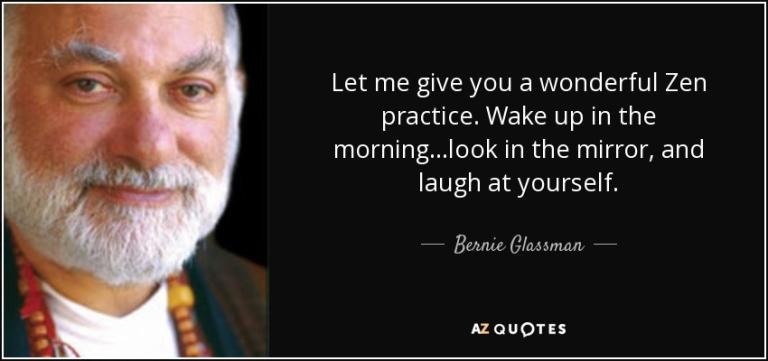
This post explores the peculiar life of American aeronautical engineer‑turned‑Zen teacher Bernie Glassman (1939–2018). It follows his transition from designing the first crewed mission to Mars at McDonnell Douglas in Huntington Beach, California, to founding the Zen Center of Los Angeles and later the socially‑oriented Greyston Bakery in New York. It also examines the philosophical underpinnings of his “peace‑making” practice, the influence of teachers such as Maezumi Hakuyū, and the broader cultural reception of his ideas within contemporary Zen discourse.

One day in 1965, the American aeronautical engineer Bernie Glassman (1939–2018) sat silently in his garage and was startled by the disappearance of his own sense of self. Glassman’s task at the time was to plan the first crewed journey to Mars. He served as unit leader at the McDonnell Douglas plant in Huntington Beach, California, just south of Los Angeles. Glassman was born in Brooklyn, New York, into a family of Jewish refugees who had fled Eastern Europe. He became interested in Buddhism during the 1950s in New York.

Shaken by his terrifying experience, Glassman sought a teacher at a Zen‑Buddhist temple in the Little‑Tokyo neighbourhood of Los Angeles. There he met a young Japanese monk named Hakuyū Taizan Maezumi (1931–1995). Maezumi had been born at the Kirigayaji Temple in Tokyo, but moved to the United States for missionary work in 1956. His father, Baian Hakujun Kuroda, ordained him as a monk at the age of eleven. Glassman became Maezumi’s first disciple. Maezumi continued to study with his own Japanese teachers, whom he also invited to the United States to lead retreats. Consequently, Glassman was able to study under Maezumi’s teachers as well. Glassman was installed as a Zen teacher in 1974.

Bernie helped his teacher Maezumi build and develop his own Zen temple in Los Angeles’ Koreatown. This centre, founded in 1967, still operates today as the Zen Center of Los Angeles (ZCLA), temple name Buddha Essence Temple. Initially, Bernie was a strict and demanding instructor. The writer and Zen teacher Peter Matthiessen (1985, p. 125) recorded how Bernie experienced a sudden awakening during a retreat led by Japanese master Osaka Kuryu at ZCLA in May 1970. Bernie himself was frightened by the experience; afterwards he stood in the centre’s courtyard drying his tears. He described looking at a tree standing in the yard:

“I didn’t feel I was the tree, it went deeper than that. I felt the wind on me, I felt the birds on me, all separation was completely gone.”

Nevertheless, this experience did not as itself force him to act for the benefit of everyone else. He continued to work solely for his own Zen community, often neglecting the needs of his family and children through his prolonged absences due to his responsibilities as a full time aeronautical engineer and zen priest. One morning at the end of 1976, on a car pool ride to his work, Bernie realised that the world was full of hungry ghosts that needed feeding. They thirsted for fame, power, drugs, money, sex, etc. Bernie saw how these these ghosts were also aspects of himself. The insight was so obvious that Bernie wept and laughed simultaneously throughout his work day.

Bernie’s experience is important to the work he dedicated himself to. However, it can also be seen to exemplify a phenomenon that American Zen teacher Brad Warner (2013) calls “enlightenment porn”. In a sense the term is justified: if the core of any spiritual practice is a personal realisation of the true nature of one’s true self, then another person’s experience cannot tell you anything about your own. Narrating such experiences about one’s own awakening is also a taboo in many spiritual circles. This attitude of explainin heroic awakening stories entered Zen Buddhism via the American‑edited volume Three Pillars of Zen (1967) by Philip Kapleau. Zen master Dōgen describes his own awakening very tersely: “I dropped both body and mind. That’s it.”

One could defend Bernie by saying he is a product of his era and culture. He even recounts reading Kapleau’s book just before his second awakening. Bernie eventually left his job in Los Angeles and devoted himself fully to a career as a Zen teacher. In 1979, Bernie Glassman founded his own Zen community north of Riverdale, New York. Some years after establishing the community he sold a donated mansion and used the proceeds to acquire a dilapidated building in Yonkers, a short walk from his own home. They opened the Greyston Bakery in 1982. The bakery produced cheesecakes and brownies for restaurants and shops across New York.

Glassman believed that, rather than practising traditional Japanese Zen, the community should strive to deal with problems caused by addiction and violence—homelessness, unemployment and the AIDS epidemic. According to him, realisation does not arise solely from conventional forms such as temple décor, incense, ceremonies, scriptures or robes, but from personal insight and awakening. Although the methods Glassman developed may not look Japanese, he trusted that they would help Western people experience the core at the heart of Zen practice, which is the realisation and actualisation of oneness of life.

Glassman taught that the Buddhist ideal of the Bodhisattva, i.e., the peacemaker, is one of Buddhism’s most important teachings. The peacemaker has a personal glimpse of what oneness of life is, and what liberation from dissatisfaction might mean. They then cultivate this insight to the best of their ability. They also feel that their ultimate liberation depends on the liberation of all other forms of life (not only humans); therefore they will do everything they can to give every being the chance to free itself from dissatisfaction and delusion. This work, done for the benefit of all, cultivates the peacemaker’s own spiritual growth, which in turn enables them to continue acting on behalf of others.

This work is not done through preaching and trying to make eveyone see the same way they do. Actually it is quite the opposite. The peacemaker is a servant. The work is done through their own example, and through the practice of the Three Tenets of the Peacemakers. These are 1) Not-Knowing 2) Bearing Witness, and 3) Loving Action, which arises from Not-Knowing and Bearing Witness.

Glassman’s vision for the Greyston bakery was that it would employ anyone who applied, through a concept of open hiring. That means no interviews, no background checks, and no resumes are required to get a job. Recognising that employment is just the first step toward self-sufficiency, Greyston quickly expanded into several social and community services areas.

Workers needed many things to survive their jobs: a home, childcare and a clinic for those living with AIDS. All of this was provided collectively. Greyston helped its employees refurbish derelict houses, allowing them to obtain their own homes. The AIDS clinic “Issan House”, founded by Greyston, was one of the first AIDS clinics in the United States. Issan House is a 35-unit facility offering housing to 40–to–50 formerly homeless individuals annually. All residents are living with HIV/AIDS, and many also are struggling with mental health issues and substance abuse.

Greyston expanded rapidly, acquiring new premises and services. Today the Greyston bakery continues to operate on the same principles and supplies brownie pieces for Ben & Jerry’s ice‑cream. Their open hiring policy and the book describing it (Glassman & Fields, 1996) are studied in economics courses at Yale and Harvard. The foundation that runs alongside the bakery still occupies the former convent that Glassman purchased.

Bernie Glassman’s life illustrates how the rigor of aeronautical engineering can inform a disciplined Zen practice, and how that practice can be transformed into concrete social action. His model of “peacemaking” bridges personal awakening with systemic change, offering a template for modern spiritual social entrepreneurs who wish to address concrete issues such as homelessness, addiction and health crises without sacrificing the depth of their inner work.

Conclusion

Bernie Glassman’s journey—from designing interplanetary rockets at McDonnell Douglas to building the Zen Center of Los Angeles and establishing the socially innovative Greyston Bakery—demonstrates a rare synthesis of organisational skills, spiritual insight, and social entrepreneurship. By recognising the “hungry ghosts” within himself and society, he created institutions that feed both material and spiritual needs. His legacy challenges contemporary practitioners to move beyond isolated meditation and to embody the Buddhist ideal of a Bodhisattva: cultivating personal awakening while actively serving and saving all beings.


References

Glassman, B., & Fields, R. (1996). Instructions to the cook: A Zen master’s lessons in living a life that matters. Harmony.
Kapleau, P. (1967). The three pillars of Zen. New York: Anchor Books.
Matthiessen, P. (1987). Nine-headed dragon river: Zen journals 1969-1982. Shambhala Publications.
Warner, B. (2013). There is No God and He is Always with You: A Search for God in Odd Places. New World Library.

Zen and the Art of Dissatisfaction – Part 35

Losing Myself and My Suitcase

This post explores how the stories our minds create – stories of guilt, inadequacy, or fear – can become far heavier burdens than the events that inspire them. A lost suitcase, a moment of confusion in a foreign railway station, or a lapse in attentiveness can transform into a mental storm. Yet within these storms lies an invitation: to examine who we believe ourselves to be and to recognise our deep entanglement with everything around us. Drawing from personal experience and classical Zen teachings-from Emperor Wu of Liang to Bodhidharma and Shitou Xiqian – this post reflects on illusion of the sense of self, perception, and the inseparable connection between all beings.

At times, the stories and self-accusations created by our own minds are our worst enemies. Anyone who has ever accidentally broken or lost something, or missed an important meeting or means of transport, knows how upsetting such moments can be. Even if nothing significant was ultimately harmed or endangered, the mind may still twist the situation into something impossibly difficult.

Lost Suitcase

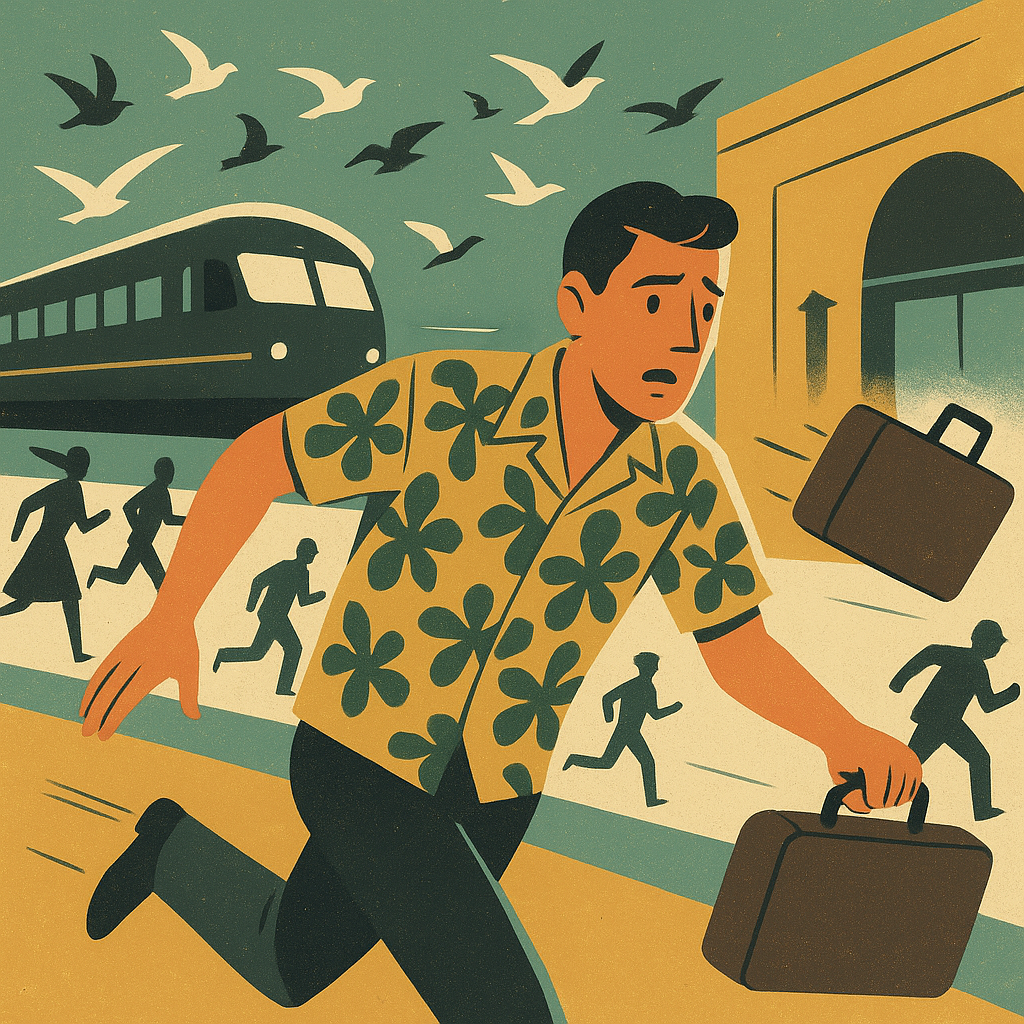
I lost my suitcase in August 2018 while travelling to a week-long silent Zen retreat in the Netherlands. My train stopped at Rotterdam station. I was heading toward a small Dutch town whose name I could not even pronounce. My phone’s internet connection wasn’t working, and I did not know where I was supposed to change trains. I saw a uniformed conductor on the platform and went outside to ask him for help. He told me that I was already running late. My train would leave in minutes, and I would have to switch platforms.

I ran to the new platform, arrived just in time to see the train that had brought me there gliding away. Another train arrived. I stepped in, found myself a seat, and realised that I had not taken my suitcase with me from the previous train. I had only a small shoulder bag and the clothes I was wearing.

My stomach dropped into a deep abyss beneath my feet. It felt as if all the blood in my body fell down with it. I tried to prevent myself from falling into that abyss, but my mind seized control. I began making a plan to retrieve my suitcase. I found the conductor; he gave me the number for the lost-and-found service. I called, but it was no use. No one could tell me where the train I had lost my suitcase on would go after its terminal station. Despite my best efforts, I never saw my suitcase again.

The Longest First Day

When I arrived at the retreat centre, my teacher burst out laughing. It was not mean at all, actually it felt nice. I knew I was safe. ”This is exactly why we practise mindfulness,” he said. His wife promised to bring me a toothbrush and toothpaste. The first day of the retreat felt endless. I noticed how my mind replayed the event again and again from different angles. I sat there in silence, watching how my mind meticulously showed me just how careless, stupid, and thoughtless I had been.

At bedtime my mind was still boiling, replaying the events and insisting on my stupidity and carelessness. Eventually I fell asleep but soon woke up again, my mind still seething with self-accusations. As the days passed, I began to see how utterly unnecessary this whole mental process was. It was merely the torrent of self-blame and fixation on loss. Though at first I had imagined that my suitcase held my entire life, I eventually realised that this was not true. Life is something entirely different.

What Is This Life We Are Living?

But what is this life of ours? Is it even possible to say? I notice that I cannot state with certainty what I mean by my self.

The Emperor Wu of Liang (c. 502-549) is said to have met the semi-mythical ancestor of Zen, the great Bodhidharma (c. 440-528), who arrived in China from somewhere along the Silk Road, presumably from India. During their short encounter, Emperor Wu questioned Bodhidharma about who this man standing before him really was. Bodhidharma replied laconically: ”I don’t know.”

What are we, what am I, truly? It feels irrelevant at first, but when I look deeper, I find it impossible to point to any one specific thing and say that this is me. If I pointed to myself and examined more closely, I would notice that it is not true. If I pointed, for instance, to my shoulder and asked whether that is me – no, it is not. It is only my shoulder, but even that is not so simple. The shoulder is merely a entaglement of various interconnected parts. It is a collection of things: skin, tendons, bone, nerve fibres, blood, and other fluids. The closer I look, the less any of these seem like ”me”. Any one of them could perhaps be replaced without that essential sense of ”I” disappearing. It is like the Ship of Thesius in this regard. Or its Chinese counterpart, the Zen Koan regarding the Cart of Keichu.

Even if my mind insists it is the same ”me” as it was meybe ten years ago, this is not the case. Our minds change, and our memories change with them. The atoms and molecules forming our bodies are replaced as we eat and drink. Food becomes part of us. Old material leaves us when we breathe out, or go to the bathroom, or brush off dry skin.

The skin surrounding the body is not me. It is merely skin. My bones are not me, for they too are merely bones. Yet if I must prove my identity to a police officer or to my computer, I instantly become a unique individual, distinct from all others in some incomprehensible way.

Interbeing: The World Within and Around Us

I sit by the window of our home and listen to the birds singing at the bird feeder. A great spotted woodpecker has given way to squabbling tits. Sound waves carry the birds’ calls to my ears. What separates me from those birds, when even the sound waves travelling through the air connect us? As I listen, the window between us ceases to exist.

The wind rustling the branches of spruces and pines takes shape in the sound it produces as it moves through them. The same play of awareness occurring in my mind is present in everything. It is in the branches of trees, in birdsong, even in the empty space binding us together. I breathe the oxygen these trees have produced. We are all interwoven together. None of us could exist without the other.

And yet, even though we are intertwined with birds, trees, and air, I can also view the same reality from another perspective, where each part becomes sharply distinct. The tit and the woodpecker take on their individual forms, and each of us has our own unique task in this moment. We are separated by our unique ways of being-yet still bound to one another.

The Chinese 8th-century Zen master Shitou Xiqian (700-790), known in Japanese as Sekito Kisen, ends his famous poem Sandokai (The Identity of Relitive and Absolute) with the words: ”Do not waste your time by night or day.” Both darkness and light are two aspects of reality intertwined and, in themselves, the same thing – two dimensions of experience. Everyday dissatisfaction and the bliss of freedom are both right here, right now.

Summary

What begins as a story about a lost suitcase unfolds into a reflection on the self, awareness, and our profound connection with all beings and things. The mind can turn trivial events into overwhelming crises, yet it also possesses the capacity to recognise their emptiness. Through personal experience, ancient Zen teachings, and the simple presence of birds and trees, we are reminded that life is both deeply individual and inseparably shared. In every moment-whether painful or peaceful-there is an invitation to see clearly and live fully.