Zen and the Art of Dissatisfaction – Part 35

Losing Myself and My Suitcase

This post explores how the stories our minds create – stories of guilt, inadequacy, or fear – can become far heavier burdens than the events that inspire them. A lost suitcase, a moment of confusion in a foreign railway station, or a lapse in attentiveness can transform into a mental storm. Yet within these storms lies an invitation: to examine who we believe ourselves to be and to recognise our deep entanglement with everything around us. Drawing from personal experience and classical Zen teachings-from Emperor Wu of Liang to Bodhidharma and Shitou Xiqian – this post reflects on illusion of the sense of self, perception, and the inseparable connection between all beings.

At times, the stories and self-accusations created by our own minds are our worst enemies. Anyone who has ever accidentally broken or lost something, or missed an important meeting or means of transport, knows how upsetting such moments can be. Even if nothing significant was ultimately harmed or endangered, the mind may still twist the situation into something impossibly difficult.

Lost Suitcase

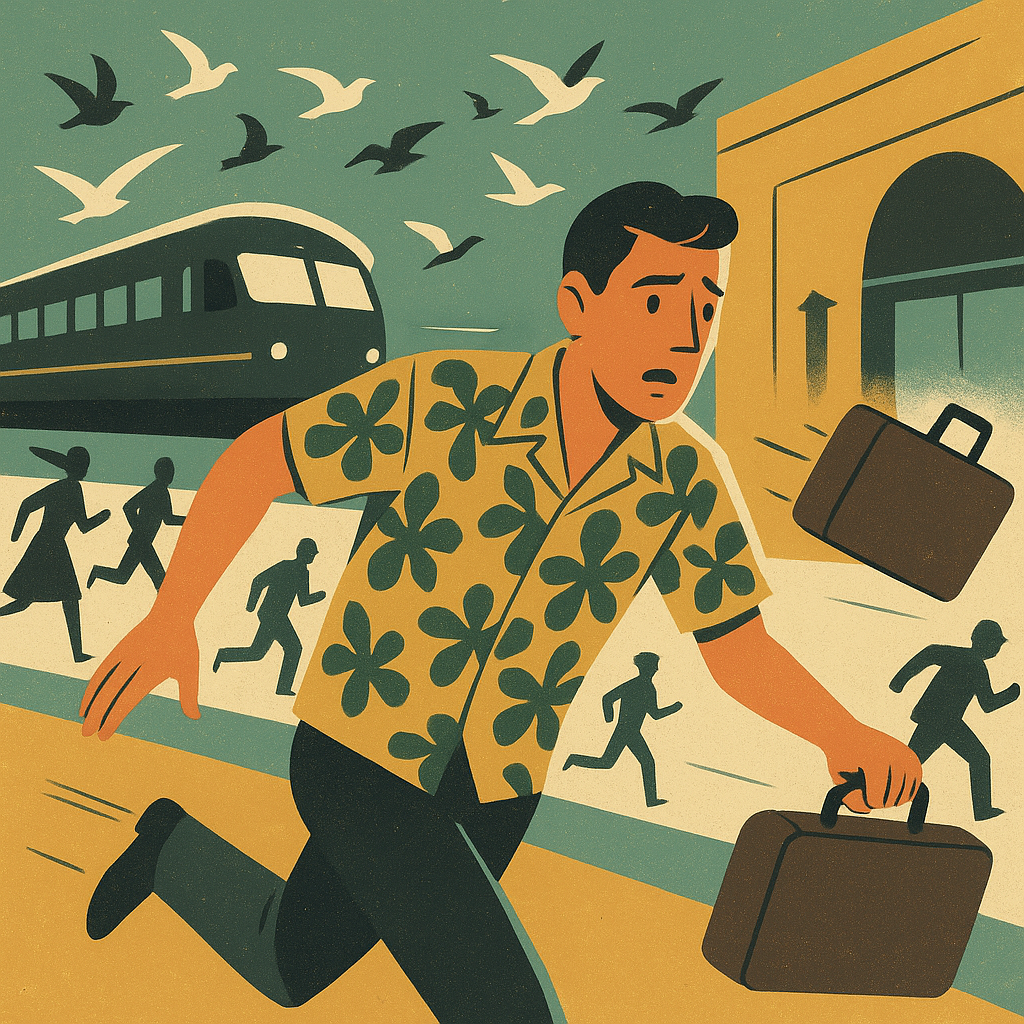
I lost my suitcase in August 2018 while travelling to a week-long silent Zen retreat in the Netherlands. My train stopped at Rotterdam station. I was heading toward a small Dutch town whose name I could not even pronounce. My phone’s internet connection wasn’t working, and I did not know where I was supposed to change trains. I saw a uniformed conductor on the platform and went outside to ask him for help. He told me that I was already running late. My train would leave in minutes, and I would have to switch platforms.

I ran to the new platform, arrived just in time to see the train that had brought me there gliding away. Another train arrived. I stepped in, found myself a seat, and realised that I had not taken my suitcase with me from the previous train. I had only a small shoulder bag and the clothes I was wearing.

My stomach dropped into a deep abyss beneath my feet. It felt as if all the blood in my body fell down with it. I tried to prevent myself from falling into that abyss, but my mind seized control. I began making a plan to retrieve my suitcase. I found the conductor; he gave me the number for the lost-and-found service. I called, but it was no use. No one could tell me where the train I had lost my suitcase on would go after its terminal station. Despite my best efforts, I never saw my suitcase again.

The Longest First Day

When I arrived at the retreat centre, my teacher burst out laughing. It was not mean at all, actually it felt nice. I knew I was safe. ”This is exactly why we practise mindfulness,” he said. His wife promised to bring me a toothbrush and toothpaste. The first day of the retreat felt endless. I noticed how my mind replayed the event again and again from different angles. I sat there in silence, watching how my mind meticulously showed me just how careless, stupid, and thoughtless I had been.

At bedtime my mind was still boiling, replaying the events and insisting on my stupidity and carelessness. Eventually I fell asleep but soon woke up again, my mind still seething with self-accusations. As the days passed, I began to see how utterly unnecessary this whole mental process was. It was merely the torrent of self-blame and fixation on loss. Though at first I had imagined that my suitcase held my entire life, I eventually realised that this was not true. Life is something entirely different.

What Is This Life We Are Living?

But what is this life of ours? Is it even possible to say? I notice that I cannot state with certainty what I mean by my self.

The Emperor Wu of Liang (c. 502-549) is said to have met the semi-mythical ancestor of Zen, the great Bodhidharma (c. 440-528), who arrived in China from somewhere along the Silk Road, presumably from India. During their short encounter, Emperor Wu questioned Bodhidharma about who this man standing before him really was. Bodhidharma replied laconically: ”I don’t know.”

What are we, what am I, truly? It feels irrelevant at first, but when I look deeper, I find it impossible to point to any one specific thing and say that this is me. If I pointed to myself and examined more closely, I would notice that it is not true. If I pointed, for instance, to my shoulder and asked whether that is me – no, it is not. It is only my shoulder, but even that is not so simple. The shoulder is merely a entaglement of various interconnected parts. It is a collection of things: skin, tendons, bone, nerve fibres, blood, and other fluids. The closer I look, the less any of these seem like ”me”. Any one of them could perhaps be replaced without that essential sense of ”I” disappearing. It is like the Ship of Thesius in this regard. Or its Chinese counterpart, the Zen Koan regarding the Cart of Keichu.

Even if my mind insists it is the same ”me” as it was meybe ten years ago, this is not the case. Our minds change, and our memories change with them. The atoms and molecules forming our bodies are replaced as we eat and drink. Food becomes part of us. Old material leaves us when we breathe out, or go to the bathroom, or brush off dry skin.

The skin surrounding the body is not me. It is merely skin. My bones are not me, for they too are merely bones. Yet if I must prove my identity to a police officer or to my computer, I instantly become a unique individual, distinct from all others in some incomprehensible way.

Interbeing: The World Within and Around Us

I sit by the window of our home and listen to the birds singing at the bird feeder. A great spotted woodpecker has given way to squabbling tits. Sound waves carry the birds’ calls to my ears. What separates me from those birds, when even the sound waves travelling through the air connect us? As I listen, the window between us ceases to exist.

The wind rustling the branches of spruces and pines takes shape in the sound it produces as it moves through them. The same play of awareness occurring in my mind is present in everything. It is in the branches of trees, in birdsong, even in the empty space binding us together. I breathe the oxygen these trees have produced. We are all interwoven together. None of us could exist without the other.

And yet, even though we are intertwined with birds, trees, and air, I can also view the same reality from another perspective, where each part becomes sharply distinct. The tit and the woodpecker take on their individual forms, and each of us has our own unique task in this moment. We are separated by our unique ways of being-yet still bound to one another.

The Chinese 8th-century Zen master Shitou Xiqian (700-790), known in Japanese as Sekito Kisen, ends his famous poem Sandokai (The Identity of Relitive and Absolute) with the words: ”Do not waste your time by night or day.” Both darkness and light are two aspects of reality intertwined and, in themselves, the same thing – two dimensions of experience. Everyday dissatisfaction and the bliss of freedom are both right here, right now.

Summary

What begins as a story about a lost suitcase unfolds into a reflection on the self, awareness, and our profound connection with all beings and things. The mind can turn trivial events into overwhelming crises, yet it also possesses the capacity to recognise their emptiness. Through personal experience, ancient Zen teachings, and the simple presence of birds and trees, we are reminded that life is both deeply individual and inseparably shared. In every moment-whether painful or peaceful-there is an invitation to see clearly and live fully.

Zen and the Art of Dissatisfaction – Part 34

Navigating the Times of Crisis

In a rapidly changing world, where the climate crisis, technological advancements, and social inequality loom large, many may feel overwhelmed by the forces shaping our future. Yet, in the face of such challenges, simple spiritual practices can offer us ways to navigate uncertainty and find meaning. Drawing on Eastern philosophy, we are reminded that the pursuit of peace, both within ourselves and in the world, is a path we can all walk.

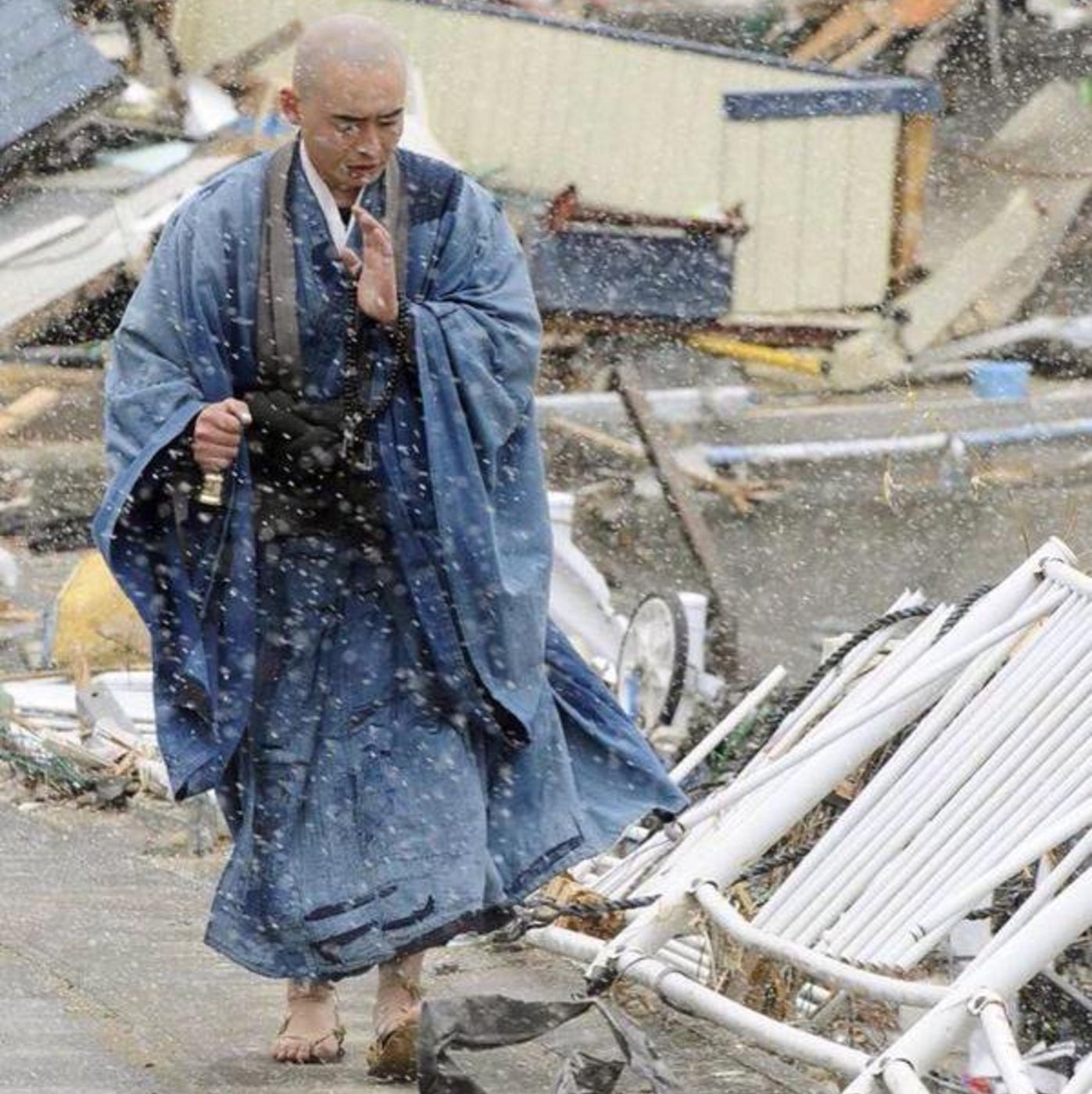
Photo: Buddhist monk Sokan Obara, 28, from Morioka, Iwate prefecture, prays for the victims in an area devastated by the earthquake and tsunami, in Ofunato, Iwate prefecture, April 7. Unknown photographer.

According to some estimates, our planet is heading towards a hothouse Earth scenario, where runaway climate change threatens the future of human civilisation (Steffen et al., 2018). This process will particularly affect the global South, countries that continue to bear the brunt of colonialism’s harmful legacy, yet have contributed the least to global warming, rising sea levels, and environmental degradation.

The Challenge of Our Time: Climate Crisis and Technology

The rise of artificial intelligence (AI) and its reliance on algorithms may also lead to large tech companies becoming the global decision-makers, shaping the economy and politics of the world. This shift could pose an existential challenge to the global South, as demand for human manual labour diminishes, further exacerbating social inequities.

But should we panic and give up hope? Is a hedonistic ”live for today” attitude the only remaining solution?

Philosopher David Loy (2019) has been exploring for decades the answers Eastern philosophies may offer to help us navigate these challenges. One such concept is the bodhisattva ideal, which originates from Sanskrit and refers to an awakened being who recognises the interconnectedness of all life. The bodhisattva understands that their well-being is intricately linked to the well-being of the world as a whole.

An embodiment of this ideal is Kanzeon (also known as Avalokiteśvara in Sanskrit and Guanyin in Chinese), a figure often depicted with a thousand arms, symbolising the countless ways in which this figure reaches out to help those in need. Another popular figure embodying the bodhisattva’s compassion is Hotei (also known as Budai in Chinese), a joyful, portly monk carrying a large bag, from which he pulls out healing remedies for the world’s suffering—whether it be a bandage for a fallen child or a new kidney for the ill.

Embracing Sorrow: The First Step Towards Action

The destruction of biodiversity and the decline of democracy are deeply sorrowful realities. Accepting this sorrow is the first step toward constructive action. As the great Joanna Macy (2021) reminded us, we are saddened by the loss of ecological diversity because we care. Our hearts break, and yet it is precisely our hearts that allow us to take action.

Acceptance of sorrow may lead us to take meaningful steps toward creating a better, fairer future. Paradoxically, to help the world, we must first let go and turn inward. The path of the peacemaker has two sides. One must care for their own well-being and strive to awaken to the oneness of life, but one should also aknowledge their own responsibility in the oneness of life and act accordingly.

The most basic spiritual practice that can help us on this path is mindfulness, which can begin with simply sitting in silence and staying aware of the open nature of our own mind. Through this practice, we can observe not just the sensations of our body, but also the nature of our mind. While suffering and dissatisfaction may not disappear, we can examine our relationship with them. Over time, our relationship with our innate dissatisfaction may change.

This process can also unveil the awareness that the nature of our mind is unknown to us. All the thoughts and emotions that arise in our mind come from someplace we cannot know – from the unknown. This insight may lead us to consider that the same interplay of consciousness occurs across all life forms. All beings have thoughts, ideas, and feelings, yet we cannot know exactly what another experiences.

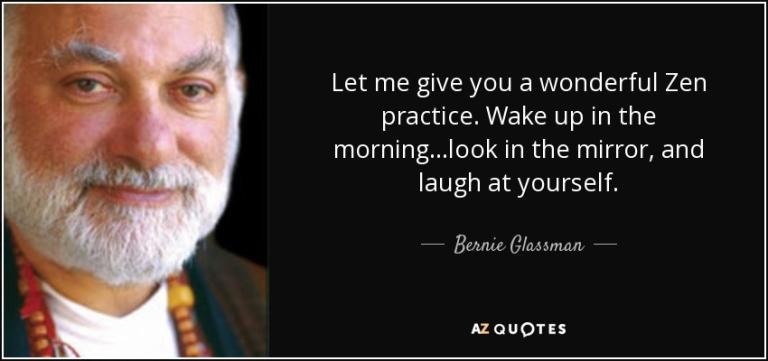
American Zen teacher Bernie Glassman (1998) reminded that we need to let go of our preconceived notions and ideas and trust the Not-Knowing. The next step in the peacemaker’s path is listening or Bearing Witness. We must pause for a moment and pay attention to what is happening around us, to what others are trying to communicate. Stopping to listen to others’ perspectives may challenge our previous assumptions, attitudes, and beliefs. The third step is action – Loving Action that arises from this process of not-knowing and deep listening.

The Peacemaker’s Responsibility

A peacemaker responds to each situation in a way that is appropriate. When one realises they are interconnected with everything, one feels that they also have personal responsibility. If we are tired, we must rest. If we are hungry, we must eat. We care for our children, ensuring they are picked up from daycare, fed, and put to bed on time. We help those who fall.

Every day, we can ask ourselves: what can we do for others – since others are ourselves.

A peacemaker may also come to see that the systems in place often work for the benefit of few and to cause harm the oneness of life. They may feel compelled to influence these unjust systems, helping others realise, through their own example, that the current system damages life and its interconnectedness. The peacemaker does not demand change forcefully nor does they try to impose their will on everyone else. The peacemaker listens to all perspectives and seeks to show, through their own actions, the interconnectedness and oneness of life.

The Struggle for Change

But how do we act in a world full of injustice and suffering? We often try to force others to change their minds and behave differently. But will that lead to the outcome we desire? The peacemaker’s ideal involves helping others through not-knowing, listening, and taking loving action. Through this process, they hope to find the best solutions for the wholeness of life. The peacemaker is not just hoping for change, but becomes the change themselves.

This kind of action is exceedingly difficult. The easiest solution may be to demand change, but would that help anyone realise the harm their actions cause? Mahatma Gandhi’s concept of civil disobedience and nonviolent resistance aimed to make the opposition recognise the wrongness of their violent actions. Nonviolent resistance has brought about significant change in the world when enough people collectively stand behind a cause.

However, we do not need to start by changing everything. We do not need to be Gandhi today. First, we must learn to know ourselves. Despite knowing much about the workings of the human brain and mind, we often fail to understand our own mind. We think of ourselves as the rulers of our own mind and consciousness, but we are barely gatekeepers. Even as gatekeepers, we often wander aimlessly through our minds like Snufkin in the Moomin stories.

The first appropriate step on the peacemaker’s path may simply be to sit down and be quiet for a moment.

Conclusion

The journey of a peacemaker is not easy, nor it is straight forward. It requires us to embrace sorrow, realise our interconnectedness, and take action in small and large ways. But ultimately, it is through open awareness of the nature of our mind, and compassion that we can navigate the complexities of the diversity of the world and contribute to a more peaceful and just future for all life.

References

Glassman, Bernie (1998). Bearing Witness: A Zen Master’s Lessons in Making Peace. Bell Tower.
Loy, D. R. (2019). Ecodharma: Buddhist Teachings for the Ecological Crisis. Wisdom Publications.
Macy, J. (2021). Active Hope: How to Face the Mess We’re in without Going Crazy. New World Library.
Steffen, W., Rockström, J., Richardson, K., Lenton, T. M., Folke, C., Liverman, D., … & Schellnhuber, H. J. (2018). Trajectories of the Earth System in the Anthropocene. Proceedings of the National Academy of Sciences, 115(33), 8252-8259. https://doi.org/10.1073/pnas.1810141115