Zen and the Art of Dissatisfaction – Part 34

Navigating the Times of Crisis

In a rapidly changing world, where the climate crisis, technological advancements, and social inequality loom large, many may feel overwhelmed by the forces shaping our future. Yet, in the face of such challenges, simple spiritual practices can offer us ways to navigate uncertainty and find meaning. Drawing on Eastern philosophy, we are reminded that the pursuit of peace, both within ourselves and in the world, is a path we can all walk.

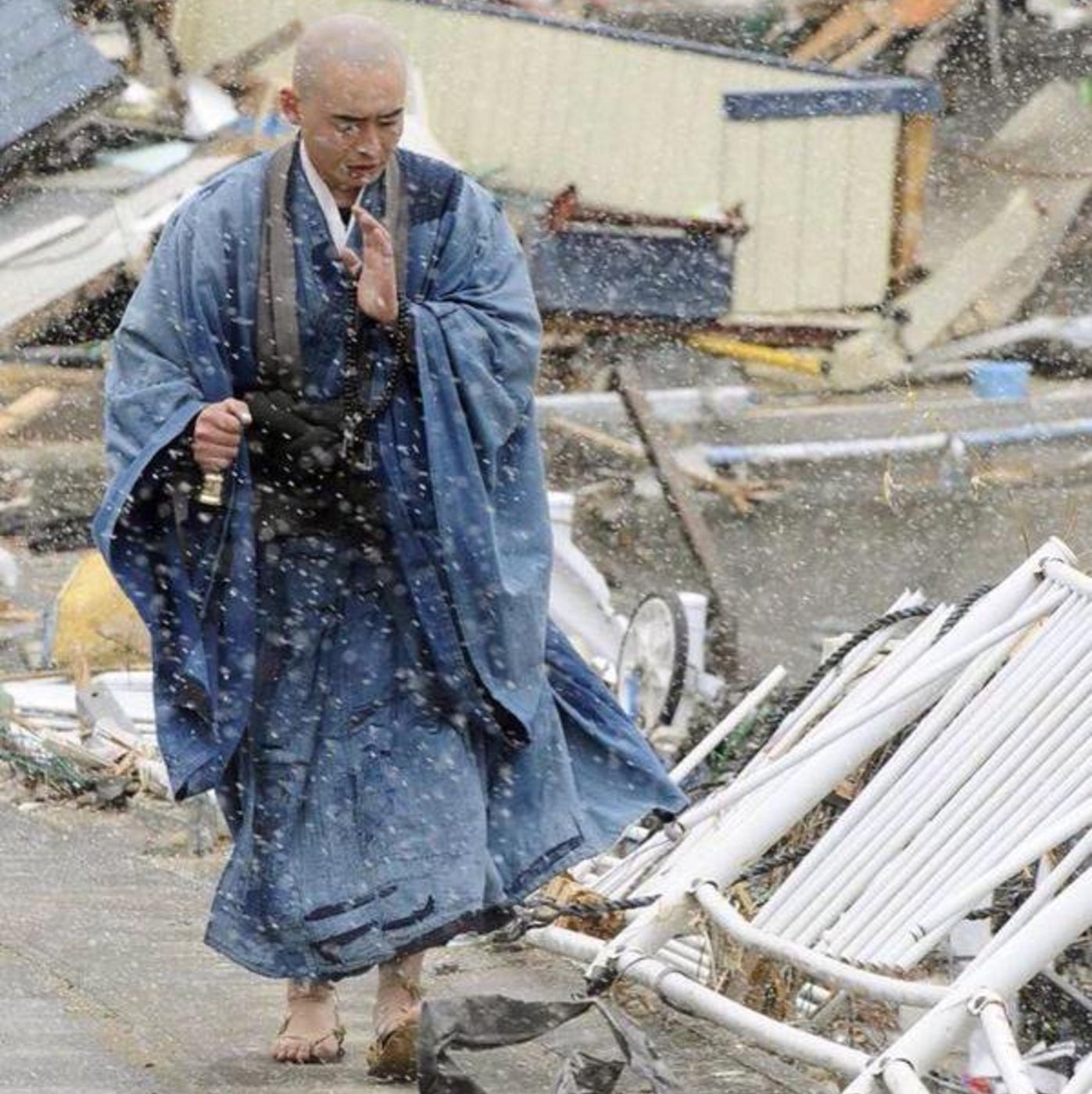
Photo: Buddhist monk Sokan Obara, 28, from Morioka, Iwate prefecture, prays for the victims in an area devastated by the earthquake and tsunami, in Ofunato, Iwate prefecture, April 7. Unknown photographer.

According to some estimates, our planet is heading towards a hothouse Earth scenario, where runaway climate change threatens the future of human civilisation (Steffen et al., 2018). This process will particularly affect the global South, countries that continue to bear the brunt of colonialism’s harmful legacy, yet have contributed the least to global warming, rising sea levels, and environmental degradation.

The Challenge of Our Time: Climate Crisis and Technology

The rise of artificial intelligence (AI) and its reliance on algorithms may also lead to large tech companies becoming the global decision-makers, shaping the economy and politics of the world. This shift could pose an existential challenge to the global South, as demand for human manual labour diminishes, further exacerbating social inequities.

But should we panic and give up hope? Is a hedonistic ”live for today” attitude the only remaining solution?

Philosopher David Loy (2019) has been exploring for decades the answers Eastern philosophies may offer to help us navigate these challenges. One such concept is the bodhisattva ideal, which originates from Sanskrit and refers to an awakened being who recognises the interconnectedness of all life. The bodhisattva understands that their well-being is intricately linked to the well-being of the world as a whole.

An embodiment of this ideal is Kanzeon (also known as Avalokiteśvara in Sanskrit and Guanyin in Chinese), a figure often depicted with a thousand arms, symbolising the countless ways in which this figure reaches out to help those in need. Another popular figure embodying the bodhisattva’s compassion is Hotei (also known as Budai in Chinese), a joyful, portly monk carrying a large bag, from which he pulls out healing remedies for the world’s suffering—whether it be a bandage for a fallen child or a new kidney for the ill.

Embracing Sorrow: The First Step Towards Action

The destruction of biodiversity and the decline of democracy are deeply sorrowful realities. Accepting this sorrow is the first step toward constructive action. As the great Joanna Macy (2021) reminded us, we are saddened by the loss of ecological diversity because we care. Our hearts break, and yet it is precisely our hearts that allow us to take action.

Acceptance of sorrow may lead us to take meaningful steps toward creating a better, fairer future. Paradoxically, to help the world, we must first let go and turn inward. The path of the peacemaker has two sides. One must care for their own well-being and strive to awaken to the oneness of life, but one should also aknowledge their own responsibility in the oneness of life and act accordingly.

The most basic spiritual practice that can help us on this path is mindfulness, which can begin with simply sitting in silence and staying aware of the open nature of our own mind. Through this practice, we can observe not just the sensations of our body, but also the nature of our mind. While suffering and dissatisfaction may not disappear, we can examine our relationship with them. Over time, our relationship with our innate dissatisfaction may change.

This process can also unveil the awareness that the nature of our mind is unknown to us. All the thoughts and emotions that arise in our mind come from someplace we cannot know – from the unknown. This insight may lead us to consider that the same interplay of consciousness occurs across all life forms. All beings have thoughts, ideas, and feelings, yet we cannot know exactly what another experiences.

American Zen teacher Bernie Glassman (1998) reminded that we need to let go of our preconceived notions and ideas and trust the Not-Knowing. The next step in the peacemaker’s path is listening or Bearing Witness. We must pause for a moment and pay attention to what is happening around us, to what others are trying to communicate. Stopping to listen to others’ perspectives may challenge our previous assumptions, attitudes, and beliefs. The third step is action – Loving Action that arises from this process of not-knowing and deep listening.

The Peacemaker’s Responsibility

A peacemaker responds to each situation in a way that is appropriate. When one realises they are interconnected with everything, one feels that they also have personal responsibility. If we are tired, we must rest. If we are hungry, we must eat. We care for our children, ensuring they are picked up from daycare, fed, and put to bed on time. We help those who fall.

Every day, we can ask ourselves: what can we do for others – since others are ourselves.

A peacemaker may also come to see that the systems in place often work for the benefit of few and to cause harm the oneness of life. They may feel compelled to influence these unjust systems, helping others realise, through their own example, that the current system damages life and its interconnectedness. The peacemaker does not demand change forcefully nor does they try to impose their will on everyone else. The peacemaker listens to all perspectives and seeks to show, through their own actions, the interconnectedness and oneness of life.

The Struggle for Change

But how do we act in a world full of injustice and suffering? We often try to force others to change their minds and behave differently. But will that lead to the outcome we desire? The peacemaker’s ideal involves helping others through not-knowing, listening, and taking loving action. Through this process, they hope to find the best solutions for the wholeness of life. The peacemaker is not just hoping for change, but becomes the change themselves.

This kind of action is exceedingly difficult. The easiest solution may be to demand change, but would that help anyone realise the harm their actions cause? Mahatma Gandhi’s concept of civil disobedience and nonviolent resistance aimed to make the opposition recognise the wrongness of their violent actions. Nonviolent resistance has brought about significant change in the world when enough people collectively stand behind a cause.

However, we do not need to start by changing everything. We do not need to be Gandhi today. First, we must learn to know ourselves. Despite knowing much about the workings of the human brain and mind, we often fail to understand our own mind. We think of ourselves as the rulers of our own mind and consciousness, but we are barely gatekeepers. Even as gatekeepers, we often wander aimlessly through our minds like Snufkin in the Moomin stories.

The first appropriate step on the peacemaker’s path may simply be to sit down and be quiet for a moment.

Conclusion

The journey of a peacemaker is not easy, nor it is straight forward. It requires us to embrace sorrow, realise our interconnectedness, and take action in small and large ways. But ultimately, it is through open awareness of the nature of our mind, and compassion that we can navigate the complexities of the diversity of the world and contribute to a more peaceful and just future for all life.

References

Glassman, Bernie (1998). Bearing Witness: A Zen Master’s Lessons in Making Peace. Bell Tower.
Loy, D. R. (2019). Ecodharma: Buddhist Teachings for the Ecological Crisis. Wisdom Publications.
Macy, J. (2021). Active Hope: How to Face the Mess We’re in without Going Crazy. New World Library.
Steffen, W., Rockström, J., Richardson, K., Lenton, T. M., Folke, C., Liverman, D., … & Schellnhuber, H. J. (2018). Trajectories of the Earth System in the Anthropocene. Proceedings of the National Academy of Sciences, 115(33), 8252-8259. https://doi.org/10.1073/pnas.1810141115

Zen and the Art of Dissatisfaction – Part 19

Pandora’s Livestock: How Animal Agriculture Threatens Our Planet and Our Health

The following post explores the interconnected crises of biodiversity loss, industrial animal agriculture, and climate change, presenting a comprehensive argument about humanity’s complex role in environmental degradation. Drawing from works by Bill Gates, Risto Isomäki, and others, the text combines ecological science, epidemiology, and cultural history to examine both systemic failures and potential paths forward. The post highlights how deeply entangled environmental destruction, pandemics, and human psychology are — while also questioning whether our current cognitive limits allow us to grasp and act upon such intertwined threats.

Originally published in Substack: https://substack.com/home/post/p-166887887

The destruction of ecological diversity, the shrinking habitats of wild animals, and the rise of industrial livestock production represent grave violations against the richness of life — and profound threats to humanity’s own future. These issues go beyond climate change, which is itself just one of many interconnected problems facing nature today.

The Decline of Biodiversity and the Rise of Climate Complexity

In How to Avoid a Climate Disaster (2021), Bill Gates outlines the sources of human-generated greenhouse gas emissions. Although many factors contribute to climate change, carbon dioxide (CO₂) remains the dominant greenhouse gas emitted by humans. Gates also includes emissions of methane, nitrous oxide, and fluorinated gases (F-gases) in his calculations. According to his book, the total annual global emissions amount to 46.2 billion tons of CO₂-equivalent.

These emissions are categorized by sector:

  • Manufacturing (cement, steel, plastics): 31%
  • Electricity generation: 27%
  • Agriculture (plants and animals): 19%
  • Transportation (planes, cars, trucks, ships): 16%
  • Heating and cooling: 7%

This classification is more reader-friendly than the Our World In Data approach, which aggregates emissions into broader categories like ”energy,” comprising 73.2% of total emissions. Agriculture accounts for 18.4%, waste for 3.2%, and industrial processes for 5.2%.

According to Statistics Finland, the country emitted 48.3 million tons of CO₂ in one year, with agriculture accounting for 13.66% — aligning closely with Gates’ method. However, Finnish author and environmentalist Risto Isomäki, in How Finland Can Halt Climate Change (2019) and Food, Climate and Health (2021), argues that the contribution of animal agriculture to greenhouse gases is severely underestimated. He points out its role in eutrophication — nutrient pollution that degrades lake and marine ecosystems, harming both biodiversity and nearby property values.

Animal farming requires vast resources: water, grains, hay, medicines, and space. Isomäki notes that 80% of agricultural land is devoted to livestock, and most of the crops we grow are fed to animals rather than people. Transport, slaughter, and the distribution of perishable meat further exacerbate the emissions. Official estimates put meat and other animal products at causing around 20% of global emissions, but Isomäki warns the real figure could be higher — particularly when emissions from manure-induced eutrophication are misclassified under energy or natural processes rather than livestock.

Antibiotic Resistance and Zoonotic Pandemics: The Hidden Cost of Meat

A more urgent and potentially deadly consequence of animal agriculture is the emergence of antibiotic-resistant bacteria and new viruses. 80% of all antibiotics produced globally are used in livestock — primarily as preventative treatment against diseases caused by overcrowded, unsanitary conditions. Even in Finland, where preventive use is officially banned, antibiotics are still prescribed on dubious grounds, as journalist Eveliina Lundqvist documents in Secret Diary from Animal Farms (2014).

This misuse of antibiotics accelerates antibiotic resistance, a serious global health threat. Simple surgeries have become riskier due to resistant bacterial infections. During the COVID-19 pandemic, roughly half of the deaths were linked not directly to the virus but to secondary bacterial pneumonia that antibiotics failed to treat. Isomäki (2021) emphasises that without resistance, this death toll might have been drastically lower.

Moreover, the close quarters of industrial animal farming create ideal conditions for viruses to mutate and jump species — including to humans. Early humans, living during the Ice Age, didn’t suffer from flu or measles. It was only after the domestication of animals roughly 10,000 years ago that humanity began facing zoonotic diseases — diseases that spread from animals to humans.

Smallpox, Conquest, and the Pandora’s Box of Domestication

This shift had catastrophic consequences. In the late 15th century, European colonizers possessed an unintended biological advantage: exposure to diseases their target populations had never encountered. Among the most devastating was smallpox, thought to have originated in India or Egypt over 3,000 years ago. Spread through close contact among livestock, it left distinct scars on ancient victims like Pharaoh Ramses V, whose mummy still bears signs of the disease.

When Spanish conquistadors reached the Aztec Empire in 1519, smallpox killed over three million people. Similar destruction followed in the Inca Empire. By 1600, the Indigenous population of the Americas had dropped from an estimated 60 million to just 6 million.

Europe began vaccinating against smallpox in 1796 using the cowpox virus. Still, over 300 million people died globally from smallpox in the 20th century. Finland ended smallpox vaccinations in 1980. I personally received the vaccine as an infant before moving to Nigeria in 1978.

From COVID-19 to Fur Farms: How Modern Exploitation Fuels Pandemics

The SARS-CoV-2 virus might have originated in bats, with an unknown intermediate host — maybe a farmed animal used for meat or fur. China is a major fur exporter, and Finnish fur farmers have reportedly played a role in launching raccoon dog (Nyctereutes procyonoides) farming in China, as noted by Isomäki (2021).

COVID-19 has been shown to transmit from humans to animals, including pets (cats, dogs), zoo animals (lions, tigers), farmed minks, and even gorillas. This highlights how human intervention in wildlife and farming practices can turn animals into vectors of global disease.

Are Our Brains Wired to Ignore Global Crises?

Why do humans act against their environment? Perhaps no one intentionally destroys nature out of malice. No one wants polluted oceans or deforested childhood landscapes. But the path toward genuine, large-scale cooperation is elusive.

The post argues that we are mentally unprepared to grasp systemic, large-scale problems. According to Dunbar’s number, humans can effectively maintain social relationships within groups of 150–200 people — a trait inherited from our village-dwelling ancestors. Our brains evolved to understand relationships like kinship, illness, or betrayal within tight-knit communities — not to comprehend or act on behalf of seven billion people.

This cognitive limitation makes it hard to process elections, policy complexity, or global consensus. As a result, people oversimplify problems, react conservatively, and mistrust systems that exceed their brain’s social bandwidth.

Summary: A Call for Compassionate Comprehension

The destruction of biodiversity, the misuse of antibiotics, the threat of pandemics, and climate change are not isolated crises. They are symptoms of a deeper disconnect between human behavior and ecological reality. While no one wants the Earth to perish, the language and actions needed to protect it remain elusive. Perhaps the real challenge is not just technical, but psychological — demanding that we transcend the mental architecture of a tribal species to envision a truly planetary society.


References

Gates, B. (2021). How to Avoid a Climate Disaster: The Solutions We Have and the Breakthroughs We Need. Alfred A. Knopf.

Isomäki, R. (2019). Miten Suomi pysäyttää ilmastonmuutoksen. Into Kustannus.

Isomäki, R. (2021). Ruoka, ilmasto ja terveys. Into Kustannus.

Lundqvist, E. (2014). Salainen päiväkirja eläintiloilta. Into Kustannus.

Our World In Data. (n.d.). Greenhouse gas emissions by sector. Retrieved from https://ourworldindata.org/emissions-by-sector

Statistics Finland. (n.d.). Greenhouse gas emissions. Retrieved from https://www.stat.fi/index_en.html

Zen and the Art of Dissatisfaction – Part 18

Humanity’s Legacy of Extinction and Exploitation

For centuries, human societies—whether ancient hunter-gatherers or modern industrial empires—have played a central role in the extinction of Earth’s largest animals. Although we often romanticise early humans as living in harmony with nature, archaeological and ecological evidence tells a different story. This blog post explores the global impact of Homo sapiens on megafauna, marine ecosystems, and keystone species across continents and millennia, from prehistoric Africa to industrial Japan. It also highlights the ongoing environmental and ethical consequences of our actions.

Originally published in Substack: https://substack.com/@mikkoijas

Humans have consistently driven megafauna to extinction wherever they have migrated. While we may associate the last remaining hunter-gatherers in Africa, Australia, or the Americas with sustainable living, historical patterns suggest otherwise. Wherever Homo sapiens arrived, they rapidly exterminated dangerous predators, large herbivores, and flightless birds.

The Human Legacy of Megafauna Extinction

One striking exception is Africa, where large land mammals have coexisted with humans far longer. This prolonged co-evolution allowed these animals to adapt to human presence. In other parts of the world, some megafauna managed to survive alongside humans—such as various species of bears, moose, deer, and the American bison. Europe’s bison relative, the wisent, nearly went extinct in the 20th century but was saved by zoos.

Even so, ancient hunter-gatherers eventually reached a balance with their prey. Among the San people of the Kalahari, for instance, there’s a known reluctance to hunt declining species. This balance was disrupted by European settlers, leaving San communities today unable to practice their traditions freely.

In North America, indigenous peoples coexisted with the American bison until European settlers deliberately disrupted the balance. Settlers intentionally slaughtered bison to deprive native populations of their primary resource. In the 1700s, 25–30 million bison roamed the plains. By 1880, systematic hunting—sometimes by the U.S. Army—reduced their population to under 100 individuals.

Human impact has extended deep into marine ecosystems. Although coastal communities have fished for thousands of years, their practices rarely led to ecological collapse. According to Curtis Marean, a professor of archaeology at Arizona State University, early Homo sapiens may have survived an extreme ice age (c. 195,000–123,000 years ago) by turning to coastal diets. Marean’s work at Pinnacle Point near Mossel Bay has shown that ancient humans relied on seafood like shellfish and marine mammals. This dietary shift played a crucial role in the survival of early humans during a population bottleneck when their numbers dropped to a few hundred individuals.

Nearby Blombos Cave, studied by archaeologists like Christopher Henshilwood, has yielded the earliest evidence of symbolic thought and advanced tools, including beads and bone-tipped spears.

Although early coastal communities scavenged stranded whales, they did not hunt them at scale. The Romans may have initiated the first industrial whale hunts, particularly off the Gibraltar peninsula, as confirmed by recent findings from Ana Rodrigues’ research team (2018). Later, the Basques became renowned whale hunters, operating from the 1000s to the 1500s across the North Atlantic. By the early 1900s, the North Atlantic right whale population had dropped to about 100. Recent estimates suggest there are only 336 left today.

Tuna, Greed, and the Cold Economics of Extinction

Whales are not the only marine giants hunted to the brink. Species like the bluefin tuna have faced similar pressure. On the Western Atlantic, tuna catches jumped from 1,000 tonnes in 1960 to 18,000 tonnes by 1964—only to collapse by 80% within the same decade. In the Mediterranean, overfishing continued longer but reached catastrophic levels by 1998, leading the IUCN to classify the species as endangered.

The surge in demand came from Japan, where raw tuna is essential for sushi and sashimi. In particular, the fatty underbelly known as otoro became a luxury delicacy in the 1960s. Meanwhile, in the West, tuna was mostly used for cat food.

Today, approximately 80% of all bluefin tuna caught globally is shipped to Japan. The Japanese conglomerate Mitsubishi controls about 40% of the global market, freezing and stockpiling tuna to artificially inflate scarcity and profit margins. Ironically, the Fukushima nuclear disaster compromised these stores when the electricity failed, ruining thousands of tonnes of frozen fish.

From an ecological viewpoint, Mitsubishi’s actions are deeply unethical. From an economic lens, however, they are brutally rational—rarity increases value. As stocks dwindle, prices rise, and shareholders benefit. The more endangered tuna become, the more lucrative they are.

All signs suggest that the oceans are under enormous pressure due to climate change. Seas are warming, acidifying, and absorbing unprecedented levels of carbon dioxide from human activity. In addition, they are polluted and eutrophicated by agriculture and industry.

The Baltic Sea, for example, is the most polluted marine area in the world—thanks in part to the impacts of livestock farming. The same agricultural runoff pollutes Finland’s lakes and rivers.

Ocean ecosystems are remarkably sensitive. A 2°C rise may seem minor—until we compare it to the human body. If your body temperature increased by two degrees and stayed there, you’d die. The sea is no different.

In her book On Fire (2020), journalist Naomi Klein reflects on the 2010 Deepwater Horizon oil spill in the Gulf of Mexico. Operated by Transocean and leased by BP, it remains the largest marine oil spill in history. Witnesses described the ocean as if it were bleeding. Klein recalls being struck by how the oil’s swirling patterns resembled prehistoric cave paintings—one shape even resembled a bird gasping for air, its eyes staring skyward.

Conclusion

From mammoths and bison to whales and tuna, humanity has left a trail of extinction and ecosystem collapse in its wake. Whether through hunting, pollution, or industrial overreach, our actions have irreversibly altered life on Earth. The myth of ancient ecological harmony dissolves under the weight of archaeological evidence and ecological reality. If we are to prevent the next wave of mass extinctions, we must confront the past honestly and reshape our relationship with the natural world—before there is nothing left to save.


References

Henshilwood, C. S. (2002). The Blombos Cave and the origins of symbolic thinking. Science, 295(5558), 1278–1280. https://doi.org/10.1126/science.1067575

Hickman, M. (2009). Mitsubishi and the bluefin tuna trade. The Independent. Retrieved from https://www.independent.co.uk

Klein, N. (2020). On Fire: The Burning Case for a Green New Deal. Penguin Books.

Lindsay, J. (2011). Mitsubishi loses tons of tuna after Fukushima power failure. Environmental News Network. Retrieved from https://www.enn.com

Marean, C. W. (2010). When the Sea Saved Humanity. Scientific American, 303(2), 54–61.

Rodrigues, A. et al. (2018). Forgotten whales: Evidence of ancient whaling by the Romans in the Gibraltar region. Proceedings of the Royal Society B: Biological Sciences, 285(1873). https://doi.org/10.1098/rspb.2018.1088

IUCN. (1998). Bluefin tuna listed as endangered. International Union for Conservation of Nature. https://www.iucn.org

Zen and the Art of Dissatisfaction – Part 16

Ancient Lessons for Modern Times

“It is horrifying that we have to fight our own government to save the environment.”
— Ansel Adams

In a world increasingly shaped by ecological turmoil and political inaction, a sobering truth has become clear: humanity is at a tipping point. In 2019, a video of Greta Thunberg speaking at the World Economic Forum in Davos struck a global nerve. With calm conviction, Thunberg urged world leaders to heed not her voice, but the scientific community’s dire warnings. What she articulated wasn’t just youthful idealism—it was a synthesis of the environmental truth we can no longer ignore. We are entering a new era—marked by irreversible biodiversity loss, climate destabilisation, and rising seas. But these crises are not random. They are the logical consequences of our disconnection from natural systems forged over millions of years. This post dives into Earth’s deep past, from ancient deserts to ocean floors, to reveal how nature’s patterns hold urgent messages for our present—and our future.

Originally published in Substack https://substack.com/home/post/p-165122353

Today, those in power bear an unprecedented responsibility for the future of humankind. We no longer have time to shift this burden forward. This is not merely about the future of the world—it’s about the future of a world we, as humankind, have come to know. It’s about the future of humanity and the biodiversity we depend on. The Earth itself will endure, but what will happen to the ever-growing list of endangered species?

The Sixth Mass Extinction: A Grim Reality

Climate change is just one problem, but many others stem from it. At its core, our crisis can be summarised in one concept: the sixth mass extinction. The last comparable event occurred 65 million years ago, when dinosaurs and many land and marine species went extinct, and ammonites vanished. Only small reptiles, mammals, and birds survived. The sixth mass extinction is advancing rapidly. According to scientists from the UN Environment Programme, about 150–200 species go extinct every single day.

One analogy described it well: imagine you’re in a plane, and parts begin to fall off. The plane represents the entire biosphere, and the falling bolts, nuts, and metal plates are the species going extinct. The question is: how many parts can fall off before the plane crashes, taking everything else with it?

Each of us can choose how we respond to this reality. Do we continue with business-as-usual, pretending nothing is wrong? Or do we accept that we are in a moment of profound transformation, one that demands our attention and action? Do we consider changes we might make in our own lives to steer this situation toward some form of control—assuming such control is still possible? Or do we resign ourselves to the idea that change has progressed too far for alternatives to remain?

The Carbon Cycle: A System Out of Balance

Currently, humanity emits around 48.3 million tonnes of carbon dioxide annually, which ends up dispersed across the planet. The so-called carbon cycle is a vital natural process that regulates the chemical composition of the Earth, oceans, and atmosphere. However, due to human activity, we have altered this cycle—a remarkable, albeit troubling, achievement. Earth is vast, and it’s hard for any individual to comprehend just how large our atmosphere is, or how much oxygen exists on the planet. This makes it difficult for many to take seriously the consequences of human activity on climate change.

Nature absorbs part of the carbon dioxide we emit through photosynthesis. The most common form is oxygenic photosynthesis used by plants, algae, and cyanobacteria, in which carbon dioxide and water are converted into carbohydrates like sugars and starch, with oxygen as a by-product. Plants absorb carbon dioxide from the air, while aquatic plants absorb it from water.

In this process, some of the carbon becomes stored in the plant and eventually ends up in the soil. Decaying plants release carbon dioxide back into the atmosphere. In lakes and oceans, the process is similar, but the carbon sinks to the bottom of the water instead of into soil. This all sounds simple, and it’s remarkable that such a cycle has created such favourable conditions for life. Yet none of this is accidental, nor is it the result of a supernatural design. It is the product of millions of years of evolution, during which every organism within this system has developed together—everyone needs someone. We should view our planet as one vast organism, with interconnected and co-dependent processes that maintain balance through mutual dependence and benefaction.

A Planet of Mutual Dependence: The Wisdom of Plants

Italian philosopher Emanuele Coccia explores this interdependence beautifully in his book The Life of Plants (2020). Coccia writes that the world is a living planet, its inhabitants immersed in a cosmic fluid. We live—or swim—in air, thanks to plants. The oxygen-rich atmosphere they created is our lifeline and is also connected to the forces of space. The atmosphere is cosmic in nature because it shields life from cosmic radiation. This cosmic fluid “surrounds and penetrates us, yet we are barely aware of it.”

NASA astronauts have popularised the concept of the overview effect—the emotional experience of seeing Earth from space, as a whole. Some describe it as a profound feeling of love for all living things. At first glance, the Sahara Desert and the Amazon rainforest may seem to belong to entirely different worlds. Yet their interaction illustrates the interconnectedness of our planet. Around 66 million years ago, a vast sea stretched from modern-day Algeria to Nigeria, cutting across the Sahara and linking to the Atlantic. The Sahara’s sand still contains the nutrients once present in that ancient sea.

In a 2015 article, NASA scientist Hongbin Yu and colleagues describe how millions of tonnes of nutrient-rich Saharan dust are carried by sandstorms across the Atlantic each year. About 28 million tonnes of phosphorus and other nutrients end up in the Amazon rainforest’s nutrient-poor soils, which are in constant need of replenishment.

In Darren Aronofsky’s 2018 documentary, Canadian astronaut Chris Hadfield describes how this cycle continues: nutrients washed from the rainforest soil travel via the Amazon River to the Atlantic Ocean, feeding microscopic diatoms. These single-celled phytoplankton build new silica-based cell walls from the dissolved minerals and reproduce rapidly through photosynthesis, producing oxygen in the process. Though tiny, diatoms are so numerous that their neon-green blooms can be seen from space. They produce roughly 20% of the oxygen in our atmosphere.

When their nutrients are depleted, many diatoms die and fall to the ocean floor like snow, forming sediment layers that can grow to nearly a kilometre thick. After millions of years, that ocean floor may become arid desert once again—starting the cycle anew, as dust blown from a future desert fertilises some distant forest.

Nature doesn’t always maintain its balance. Sometimes a species overtakes another, or conditions become unliveable for many. Historically, massive volcanic eruptions and asteroid impacts have caused major planetary disruptions. This likely happened 65 million years ago. Ash clouds blocked sunlight, temperatures plummeted, and Earth became uninhabitable for most life—except for four-legged creatures under 25 kilograms. We are descended from them.

Ocean Acidification: A Silent Threat

In her Pulitzer Prize-winning book The Sixth Extinction, American journalist Elizabeth Kolbert writes about researcher Jason Hall-Spencer, who studied how underwater geothermal vents can make local seawater too acidic for marine life. Fish and crustaceans flee these zones. The alarming part is that the world’s oceans are becoming acidic in this same way—but on a global scale. The oceans have already absorbed excess CO₂, making surface waters warmer and lower in oxygen. Ocean acidity is estimated to be 30% higher today than in 1800, and could be 150% higher by 2050.

Acidifying oceans spell disaster. Marine ecosystems are built like pyramids, with tiny organisms like krill at the base. These creatures are essential prey for many larger marine species. If we lose the krill, the pyramid collapses. Krill and other plankton form calcium carbonate shells, but acidic waters dissolve these before they can form properly.

There’s no doubt modern humans are the primary cause of the sixth mass extinction. As humans migrated from Africa around 60,000 years ago to every corner of the globe, they left destruction in their wake. Retired Harvard anthropologist Pat Shipman aptly dubbed Homo sapiens an invasive species in her book Invaders (2015). She suggests humans may have domesticated wolves into proto-dogs as early as 45,000 years ago. On the mammoth steppes of the Ice Age, this would have made humans—accustomed to persistence hunting—unbeatable. Wolves would exhaust the prey, and humans would deliver the fatal blow with spears.

Hunting is easy for wolves, but killing large prey is risky. Getting to a major artery is the most dangerous part. Human tools would have been an asset to the wolves. In return, wolves protected kills from scavengers and were richly rewarded. Since humans couldn’t consume entire megafauna carcasses, there was plenty left for wolves.

Why did some humans leave Africa? Not all did—only part of the population migrated, gradually over generations. One generation might move a few dozen kilometres, the next a few hundred. Over time, human groups drifted far from their origins.

Yet the migration wave seems to reveal something fundamental about our species. Traditionally, it’s been viewed as a bold and heroic expansion. But what if it was driven by internal dissatisfaction? The technological shift from Middle to Upper Palaeolithic cultures may signal not just innovation, but a restless urge for change.

This period saw increasingly complex tools, clothing, ornaments, and cave art. But it may also reflect discontent—where old ways, foods, and homes no longer satisfied. Why did they stop being enough?

As modern humans reached Central Europe, dangerous predators began to vanish. Hyenas, still a threat in the Kalahari today, disappeared from Europe 30,000 years ago. Cave bears, perhaps ritually significant (as suggested by skulls found near Chauvet cave art), vanished 24,000 years ago. Getting rid of them must have been a constant concern in Ice Age cultures.

The woolly mammoth disappeared from Central Europe about 12,000 years ago, with the last surviving population living on Wrangel Island off Siberia—until humans arrived there. The changing Holocene climate may have contributed to their extinction, but humans played a major role. Evidence suggests they were culturally dependent on mammoths. Some structures found in Czechia, Poland, and Ukraine were built from the bones of up to 60 different mammoths. These buildings, not used for permanent living, are considered part of early monumental architecture—similar to Finland’s ancient “giant’s churches.”

Conclusion: Ancient Wisdom, Urgent Choices

The planet is vast, complex, and self-regulating—until it isn’t. Earth’s past is marked by cataclysms and recoveries, extinctions and renaissances. The sixth mass extinction is not a mysterious, uncontrollable natural event—it is driven by us. Yet in this sobering truth lies a sliver of hope: if we are the cause, we can also be the solution.

Whether it’s the dust from the Sahara feeding the Amazon, or ancient diatoms giving us oxygen to breathe, Earth is a system of breathtaking interconnection. But it is also fragile. As Greta Thunberg implores, now is the time not just to listen—but to act.

We need a new kind of courage. Not just the bravery to innovate, but the humility to learn from the planet’s ancient lessons. We need to see the Earth not as a resource to be consumed, but as a living system to which we belong. For our own survival, and for the legacy we leave behind, let us make that choice—while we still can.


References

Coccia, E. (2020). The life of plants: A metaphysics of mixture (D. Wills, Trans.). Polity Press.

Kolbert, E. (2014). The sixth extinction: An unnatural history. Henry Holt and Company.

Shipman, P. (2015). The invaders: How humans and their dogs drove Neanderthals to extinction. Harvard University Press.

Yu, H., et al. (2015). Atmospheric transport of nutrients from the Sahara to the Amazon. NASA Earth Observatory. https://earthobservatory.nasa.gov

Zen and the Art of Dissatisfaction – Part 15

The Climate Story, The End of Holocene Stability 

Throughout human history, never before has the capital of states been as urgently needed as it is today. Canadian journalist, author, professor, and activist Naomi Klein, in her book On Fire (2020), argues that the accumulated wealth of the fossil fuel industry should be redirected as soon as possible to support the development of new, greener infrastructure. This process would also create new jobs. Similarly, Klein proposes a novel state-supported project whereby citizens help restore natural habitats to their original condition.

Originally published in Substack https://substack.com/history/post/164484451

In my public talks on climate, I often present a chart illustrating climate development in relation to the evolution of our species. The climate has warmed and cooled several times during the existence of Homo sapiens. Those who justify their privileged business-as-usual lifestyles often wrongly exploit this detail, because the rapid changes and fluctuations have always been deadly. 

From the Miocene Epoch to the Rise of Humans

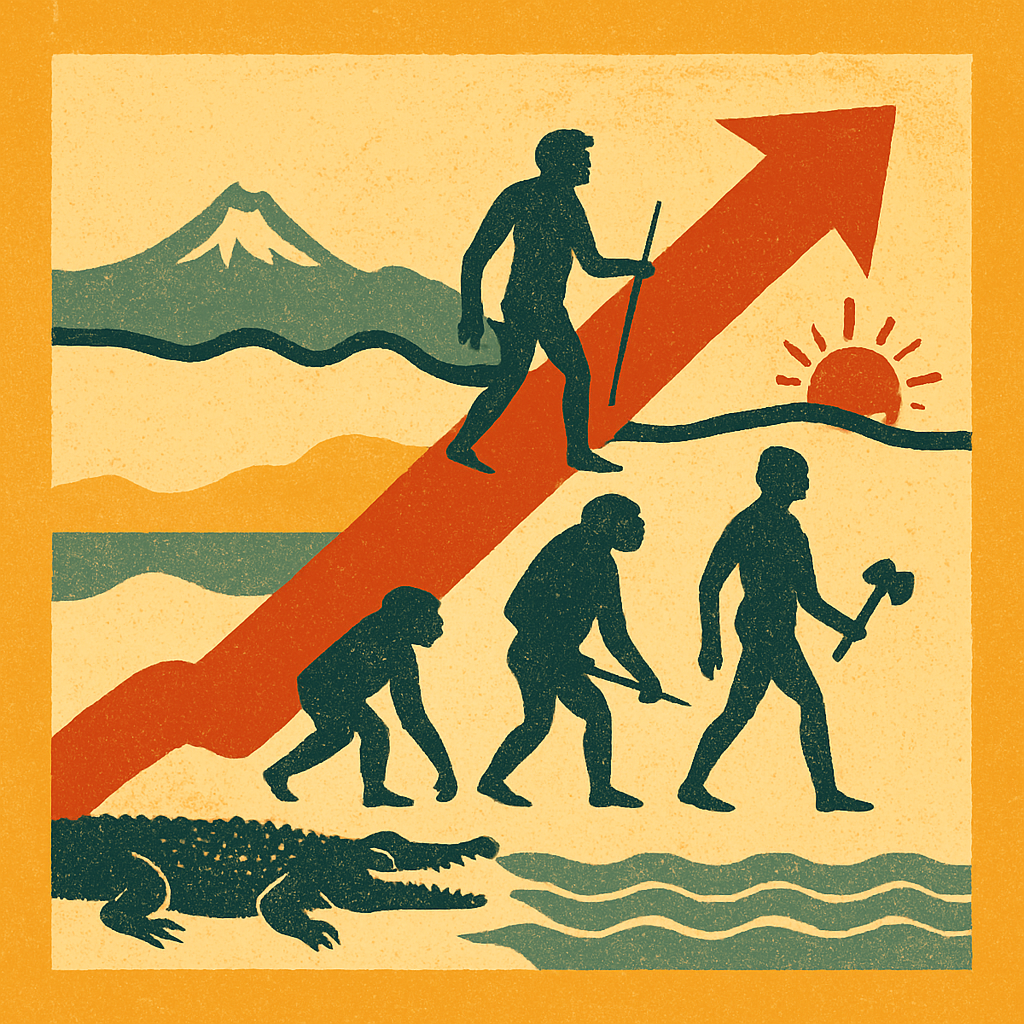
The chart begins in the Miocene epoch, shortly before the Pliocene, a geological period lasting from about 5.3 to 2.6 million years ago. Around the boundary of the Miocene and Pliocene, approximately six million years ago, the evolutionary paths of modern humans and chimpanzees diverged. During the Pliocene, the Earth’s average temperature gradually decreased. Around the middle of the Pliocene, the global temperature was roughly 2–3 degrees Celsius warmer than today, causing sea levels to be about 25 metres higher.

The temperature target of the Paris Agreement is to keep warming below +1.5 degrees Celsius. However, the countries that ratified the agreement have failed to meet this goal, and we are now headed back toward Miocene-era temperatures. Bill Gates (2021) reminds us that the last time the Earth’s average temperature was over four degrees warmer than today, crocodiles lived north of the Arctic Circle.

As the climate cooled and Africa’s rainforest areas shrank, a group of distant ancestors of modern humans adapted to life in woodlands and deserts, searching for food underground in the form of roots and tubers instead of relying on rainforest fruits. By the end of the Pliocene, the Homo erectus, or upright humans, appear in the archaeological record. Homo erectus is the most successful of all past human species, surviving in various parts of the world for nearly two million years. The oldest Homo erectus remains date back about two million years from Kenya, and the most recent ones are around 110,000 years old from the Indonesian island of Java.

Homo erectus travelled far from their African birthplace, reaching as far as Indonesia, adapting to diverse natural conditions. They likely tracked animals in various terrains, exhausting large antelopes and other prey by running them down until they could be suffocated or killed with stones. The animals were then butchered using stone tools made on site for specific purposes.

The Pleistocene and the Emergence of Modern Humans

About one million years ago, the Pliocene gave way to the Pleistocene epoch, a colder period marked by significant fluctuations in the Earth’s average temperature. The Pleistocene lasted from around one million to roughly 11,500 years ago. It is best known for the Earth’s most recent ice ages, when the Northern Hemisphere was covered by thick ice sheets.

Modern humans appear in the archaeological record from the Pleistocene in present-day Ethiopia approximately 200,000 years ago. More recent, somewhat surprising discoveries near Marrakech in Morocco suggest modern humans may have lived there as far back as 285,000 years ago. This indicates that the origin of modern humans could be more diverse than previously thought, with different groups of people of varying sizes and appearances living across Africa. While symbolic culture is not evident from this early period (285,000–100,000 years ago), it is reasonable to assume these humans were physically and behaviourally similar to us today. They had their own cultural traditions and histories and were aware political actors capable of consciously addressing challenges related to their lifestyles and societies.

Modern humans arrived in Europe about 45,000 years ago, towards the end of the last ice age. Their arrival coincided with the extinction of Neanderthals, our closest evolutionary relatives. Archaeological dates vary slightly, but Neanderthals disappeared either 4,000 or up to 20,000 years after modern humans arrived. There are multiple theories for their disappearance. In any case, modern humans interbred with Neanderthals, as evidenced by the fact that around 2% of the DNA of present-day humans outside Africa derives from Neanderthals.

The Holocene: An Era of Stability and Agricultural Beginnings

The Pleistocene ended with the conclusion of the last ice age and the beginning of the Holocene, around 11,500 years ago. The transition between these epochs is crucial to our discussion. The Pliocene was a period of steady cooling, while the Pleistocene featured dramatic temperature swings and ice ages. The Holocene ushered in a stable, warmer climate that allowed humans to begin experimenting with agriculture globally.

The steady temperatures of the Holocene provided predictable seasons and a climate suitable for domesticating and cultivating crops. I ask you to pay particular attention to the Holocene’s relatively stable temperatures—a unique period in the last six million years. Until the Holocene, our ancestors had lived as nomadic hunter-gatherers, moving to wherever food was available. Once a resource was depleted, they moved on.

This cultural pattern partly explains why modern humans travelled such great distances and settled vast parts of the planet during the last ice age. Only lions had previously spread as widely, but unlike lions, humans crossed vast bodies of water without fear. History has occasionally been marked by young reckless individuals, brimming with hormones and a desire to prove themselves (let’s call them “The Dudeson” types), who undertake risky ventures that ultimately benefit all humanity—such as crossing seas.

The stable Holocene climate also meant reliable rainfall and forest growth. Paleontologist and geologist R. Dale Guthrie (2005), who has studied Alaskan fossil records, describes the last ice age’s mammoth steppe. During that period, much of the Earth’s freshwater was locked in northern glaciers, leaving little moisture for clouds or rain. The mammoth steppe stretched from what is now northern Spain to Alaska, experiencing cold winters but sunny, relatively long summers. Humans, originating from African savannahs, thrived in this environment. Guthrie notes that ice age humans did not suffer from the common cold, which only emerged during the Holocene with domesticated animals.

The Anthropocene: Human Impact on Climate

The world as we know it exists within the context of Holocene. It is difficult to even imagine the conditions of the Pleistocene world. It is quite impossible for humans to even imagine what would the world be after the Holocene – and this moment is right now! Looking at the chart of global temperature history, we see that at the end of the Holocene, the temperature curve rises sharply. Since the Industrial Revolution in the 1800s, global temperatures have steadily increased. Because this warming is undoubtedly caused by humans, some suggest naming the period following the Holocene the Anthropocene—an era defined by human impact.

There is no consensus on how the Anthropocene will unfold, but atmospheric chemical changes and ice core records show that rising carbon dioxide (CO2) levels are a serious concern. Before industrialisation in the 1700s, atmospheric CO2 was about 278 parts per million (ppm). CO2 levels have steadily risen, especially since the 1970s, when it was 326 ppm. Based on the annual analysis from NOAA’s Global Monitoring Lab (Mauna Loa Observatory in Hawaii), global average atmospheric carbon dioxide was 422.8 ppm in 2024, a new record high. Other dangerous greenhouse gases produced by industry and agriculture include methane and nitrous oxide.

Greenhouse gases like CO2, methane, and nitrous oxide act like the glass roof of a greenhouse. They trap heat that would otherwise escape into space, reflecting warmth back to Earth’s surface. Industrial and agricultural emissions have altered atmospheric chemistry, causing global warming. This excess heat triggers dangerous feedback loops, such as increased water vapour in the atmosphere, which further amplifies warming by trapping more heat.

Monitoring atmospheric changes is essential for understanding our future. Because of climate system lags behind, temperatures are expected to continue rising for decades as ocean currents release stored heat. Eventually, temperatures will stabilise as excess heat radiates into space.

Climate Change, Food Security, and Global Uncertainty

A peer-reviewed article published in Nature Communications by Kornhuber et al. (2023) explores how climate change affects global food security. Changes in the atmosphere’s high-altitude jet streams, known as Rossby waves, directly impact crop production in the Northern Hemisphere. Climate change can cause these jet streams to become stuck or behave unpredictably, but current crop and climate models often fail to account for such irregularities.

The disruption of wind patterns due to ongoing warming could simultaneously expose major agricultural regions—such as North America, Europe, India, and East Asia—to extreme weather events. Global food production currently relies on balancing yields across regions. If one area experiences crop failure, others compensate. However, the risk of multiple simultaneous crop failures increases vulnerability. Since 2015, hunger in the Global South has grown alarmingly, with no clear solutions to climate-induced risks.

The greatest threat to humanity’s future may not be warming itself or extreme weather, but the uncertainty and unpredictability it brings. The Holocene was an era of safety and predictability, much like the Nile’s reliable flooding assured stability for ancient Egyptians. This stability provided a secure framework within which humanity thrived. Although crop failures have occurred throughout history, nothing compares to the potential loss of Holocene-era climatic reliability–nothing.

Conclusion

The climatic history of our planet and our species shows that we have lived through dramatic shifts—from the warm Miocene, through ice age Pleistocene swings, to the uniquely stable Holocene. It is this stability that enabled the rise of agriculture, settled societies, and civilisation. Today, human activity is destabilising this balance, pushing us into the uncertain Anthropocene.

Understanding this deep history is crucial for grasping the scale of the challenge we face. Climate change threatens the predictability that has underpinned human survival and food security for millennia. The future depends on our capacity to respond to these changes with informed, collective action, such as those Naomi Klein advocates: redirecting wealth and effort toward sustainable, green infrastructure and restoration projects.


References

Gates, B. (2021). How to avoid a climate disaster: The solutions we have and the breakthroughs we need. Penguin Random House.

Guthrie, R. D. (2005). The nature of Paleolithic art. University of Chicago Press.

Klein, N. (2020). On fire: The (burning) case for a green new deal. Simon & Schuster.

Kornhuber, K., O’Gorman, P. A., Coumou, D., Petoukhov, V., Rahmstorf, S., & Hoerling, M. (2023). Amplified Rossby wave activity and its impact on food production stability. Nature Communications, 14(1), 1234. https://doi.org/10.1038/s41467-023-XXX

Zen and the Art of Dissatisfaction – Part 12

From Nutmeg Wars to Domination

This post explores the dark undercurrents of the market economy, tracing its violent colonial roots and questioning the common myths of its origins. Drawing from history, anthropology, and the work of David Graeber, it challenges mainstream economic narratives and highlights the human cost behind capitalism’s foundations—from the spice trade in the Banda Islands to the coercive systems of debt in early modern Europe.

Originally published in Substack https://substack.com/home/post/p-162823221

In 1599, a Dutch expedition contacted the chiefs of the Banda Islands, famed for their nutmeg, to negotiate an agreement. The appeal and value of nutmeg were heightened by the fact that it grew nowhere else. The Dutch forbade the islanders from selling spices to representatives of other countries. However, the Banda islanders resisted the Dutch demand for a monopoly over the spice trade. In response, the Dutch East India Company—VOC (Vereenigde Oost-Indische Compagnie)—decided to conquer the islands by force. The company launched several military campaigns against the islanders, aided by Japanese mercenaries and samurai.

The conquest, which began in 1609, culminated in a massacre: VOC forces killed 2,800 Bandanese and enslaved 1,700. Weakened by hunger and ongoing conflict, the islanders felt powerless to resist and began negotiating surrender in 1621. The VOC official Jan Pieterszoon Coen (1587–1629) deported the remaining 1,000 islanders to what is now Jakarta. With the resistance crushed, the Dutch secured a monopoly over the spice trade, which they held until the 19th century. During the Napoleonic Wars, the British temporarily seized control of the islands and transferred nutmeg plants to Sri Lanka and Singapore.

In the 2020s, a statue of Jan Pieterszoon Coen erected in 1893 in the Dutch city of Hoorn has faced similar criticism to the statues of Robert E. Lee in the United States and Cecil Rhodes in Cape Town, South Africa. Defenders of the statue view it as a sacred symbol of secular Dutch identity.

Even though the business-as-usual attitude accelerating today’s ecological crisis may not entail the displacement of indigenous peoples by samurai and their replacement with slaves, the market economy undeniably has a dirty side.

Settler histories and forced migration

In 2010, I visited Amsterdam with my friend who was born in South Africa. He suggested we visit the VOC’s 17th-century headquarters, the Oost-Indisch Huis. The building is strikingly unassuming. Located at Oude Hoogstraat 24, a small passageway leads to a modest courtyard. At the back stands a three-storey building with a single small door, two windows on the left and one on the right. Staring into this minimal yet somehow claustrophobically ominous space, it’s difficult to comprehend the VOC’s profound impact on the world—comparable only to that of its British counterpart, the East India Company (EIC).

These joint-stock companies, founded in the early 1600s and backed by private armies and nearly limitless power, helped establish a system in which investors could profit from enterprise success by purchasing shares. Standing in that courtyard, my friend recounted how his Dutch ancestors had little choice in the mid-1600s but to board ships bound for what is now South Africa. He spoke of an uncle who spent his entire life in the Karoo desert herding sheep, never eating anything that didn’t come from a sheep. South African history is filled with such solitary shepherds.

Indeed, the VOC was so concerned about these isolated sheep farmers and the continuation of white European populations in the African wilderness that they abducted young girls from Amsterdam orphanages and shipped them to Africa to become wives for the shepherds.

Anthropologist David Graeber (2011) explores the common belief that markets and money evolved from a barter system—a view popularised by Scottish moral philosopher Adam Smith in his 1776 work An Inquiry into the Nature and Causes of the Wealth of Nations. Smith argued against the idea that money was a state invention. Following the liberal philosophical tradition of John Locke, who believed that governments existed to protect private property and functioned best when limited to that role, Smith extended the theory by claiming that property, money, and markets predated political institutions. According to Smith, these were the foundations of civilisation, and governments should confine themselves to guaranteeing the value of currency.

Graeber, however, challenges this assumption. He asks whether there has ever been a point in human history when people lived in a pure barter economy, as Smith claimed. His research finds no such evidence. Barter economies only existed in contexts where people were already familiar with cash.

Graeber introduces the term ”human economies” to describe anthropological cases in which value was measured according to personal honour and social standing. These systems are well-documented in ancient Greece, medieval Ireland, and among Indigenous cultures in Africa and the Americas. For most of human history, people didn’t need money or other exchange mediums to get what they needed. Help was offered without expectation of compensation. In human economies, value was attached only to human life, honour, and dignity.

Human economies and the value of honour

Written records in Ireland begin around 600 AD, by which time the once-thriving slave trade had already ceased. While the rest of Europe used Roman-inspired coinage, Ireland—lacking significant mineral wealth—did not. Its 150 kings could only trade for foreign luxury goods using cattle and people, which thus became the de facto currency. By the Middle Ages, the slave trade had ended, much like elsewhere in Europe. The collapse of slavery was a major consequence of the fall of the Roman Empire.

Medieval Irish lived on scattered farmsteads, growing wheat and raising livestock. There were no real towns, except those that formed around monasteries. Money served purely social purposes: for gifts, payments to artisans, doctors, poets, judges, entertainers, and for feudal obligations. Tellingly, lawmakers of the time didn’t even know how to price goods. Everyday objects were never exchanged for money. Food was shared within families or sent to lords who hosted feasts for friends, rivals, and vassals.

In such societies, honour and social status were everything. Though physical items had no monetary value, a person’s honour carried a precisely defined price. The most esteemed figures—kings, bishops, and master poets—had an ”honour price” equivalent to seven slave girls. Although slavery had ended, it remained a conceptual unit of value. Seven slave girls equalled 21 dairy cows and 21 ounces of silver.

Throughout history, human value—whether defined by honour or tangible worth—often served as the original measure of price, even when nothing else required valuation. One root of cash-based economies lies in the conduct of large-scale wars. For example, in Sumerian Mesopotamia, silver reserves were stored in temples merely as collateral in case debts had to be settled. The entire Sumerian economy was based on credit. Though silver backed these arrangements, it typically sat untouched inside temple vaults.

In such systems, not even kings could obtain anything they simply desired. But temple-held silver could be stolen—and the first coins likely arose this way. For instance, Alexander the Great’s (356–323 BC) vast conquests necessitated paying his soldiers, and what better means than minting coins from looted silver? This pattern is evident wherever money first emerged. Crucially, such systems required slavery. War captives—slaves—played a vital role in defining human value and, by extension, the value of all things. They also laboured in the extraction of key minerals like silver.

Military-coinage-slavery complex
Graeber (2011) refers to this dynamic as the military-coinage-slavery complex. Similar developments appeared around 2,500 years ago across the Western world, the Middle East, India, and China. Money remains deeply entangled with power and freedom. As Graeber notes, anyone working for money understands that true freedom is largely an illusion. Much of the violence has been pushed out of sight—but we can no longer even imagine a world based on social credit arrangements without surveillance systems, weapons, tasers, or security cameras.

Cash fundamentally altered the nature of economic systems. Initially, it was used primarily for transactions with strangers and for paying taxes. In Europe, up until the end of the Middle Ages, systems based on mutual aid and credit were more common than cash purchases.

The origins of the market economy lie in the collapse of trust between traditional communities, replaced by the impersonal force of markets. Human-based credit economies were transformed into interest-bearing debt systems. Moral networks gave way to debt structures upheld by vengeful and violent states. For instance, a 17th-century urban resident could not count on the legal system, even when technically in the right. Under Elizabeth I (1558–1603), the punishment for vagrancy—meaning unemployment—began with having one’s ears nailed to a post. Repeat offenders faced death. The same logic applied to debt: creditors could pursue repayment as though it were a crime.

Graeber gives the example of Margaret Sharples, who in 1660 was prosecuted in London for stealing fabric—used to make an underskirt—from Richard Bennett’s shop. She had negotiated the acquisition with Bennett’s servant, promising to pay later. Bennett confirmed she agreed to a price and even paid a deposit, offering valuables as collateral. Yet Bennett returned the deposit and initiated legal proceedings. Sharples was ultimately hanged.

This marks a profound shift in moral obligations and how societies managed debt. Previously, debt was a normal part of social life. But with state systems in place, creditors gained the right to recover their loans with interest—and to sue. Graeber writes:

“The criminalization of debt, then, was the criminalization of the very basis of human society. It cannot be overemphasized that in a small community, everyone normally was both lender and borrower. One can only imagine the tensions and temptations that must have existed in communities … when it became clear that with sufficiently clever scheming, manipulation, and perhaps a bit of strategic bribery, they could arrange to have almost anyone they hated imprisoned or even hanged.” (Graeber 2011, p. 381)

Conclusion
This historical and anthropological lens reveals the market economy not as a neutral or natural evolution, but as a system forged through conquest, coercion, and structural violence. From spice monopolies enforced with massacres to the criminalisation of everyday debt, market capitalism has long relied on hierarchies of power, enforced by law, military, and myth. As we face ecological and moral crises today, understanding this history is crucial to reimagining alternatives rooted in trust, community, and human dignity.


References:
Graeber, D. (2011). Debt: The first 5,000 years. New York: Melville House.
Smith, A. (1776). An Inquiry into the Nature and Causes of the Wealth of Nations. London, UK: W. Strahan and T. Cadell.

Zen and the Art of Dissatisfaction – PART 10.

Money: Debt and the Death of Meaning

“If nature were a bank, we would have already saved it.”
— Eduardo Galeano

In today’s world, money is more than a means of exchange—it’s a source of power, anxiety, and inequality. The way we earn, spend, and owe has profound effects not only on our personal lives but also on the planet itself. This post explores the complex relationships between money, debt, environmental destruction, and the philosophies that seek to restore balance.

Originally published in Substack https://substack.com/home/post/p-161959754

Money—and especially the lack of it—is one of the biggest sources of dissatisfaction. Debt in particular shapes our lives and influences our sense of contentment. Even though education is free in Finland, I still had to spend several years paying off my student loans, which had ballooned to incomprehensible amounts. But that’s nothing compared to what my American colleagues have to pay for their education. The average U.S. household carries about $111,740 in debt. In Finland, the average household debt is around €49,500. People are often blamed for borrowing money, as being in debt is seen as shameful or even sinful. Yet this money is rarely used for frivolous purposes. Studies show that most debt is incurred for housing, children’s education, sharing with friends, or maintaining relationships.

Anthropologist David Graeber explores the origin and meaning of debt, money, and credit in his groundbreaking work Debt: The First 5,000 Years (2012). According to Graeber, people must go into debt just to reach an income level that covers more than mere survival. Despite their debt, people still buy homes for their families, alcohol for celebrations, gifts for their friends. They’re willing to pay for weddings and funerals even if their credit cards are maxed out. One of the pillars of market economy is the idea of endless growth and the illusion of an ever-increasing GDP that promises a better future and free money for all. But is this really true? Can the limited resources of our planet sustain endless growth?

Humans have always transformed their environment when migrating to new areas, but the large-scale exploitation of nature and irreversible modification of the atmosphere began only after the principles of market economy solidified in the 18th century.

Did ancient hunter-gatherers destroy their environment with the same ruthlessness? Romanticising hunter-gatherers has its risks, and many scholars have pointed out that humans have been dangerous mass killers for as long as we’ve existed. Australia is one such example. When modern humans arrived on the continent some 50,000 years ago, nearly all large predators and edible animals vanished. These animals had no concept of how dangerous a hairless, two-legged ape could be—and not enough time to learn.

But just as it’s dangerous to romanticise hunter-gatherers, it’s also dangerous to label them as mass murderers. Nearly all examples show that Indigenous peoples eventually found some kind of balance with nature. There’s no known case where an Indigenous group caused large-scale ecological destruction on their own. Easter Island is often cited as an exception, but that may stem from misinterpretation. Scholars still debate whether the island’s original inhabitants were responsible for the collapse of their own culture.

Historian Rutger Bregman (2020) discusses this debate by reviewing research on Easter Island’s history. He concludes that everything was fine until Western explorers arrived—bringing with them violence and rats that altered the ecosystem. The islanders began to covet Western culture and treasures. Eventually, about a third of the population was taken as slaves to Peruvian mines. Some were returned, now infected with smallpox. That finally ended the peace on the island and eradicated most of the remaining inhabitants.

American environmental activist, author, Buddhist scholar, systems theorist, and deep ecology thinker Joanna Macy has become an influential figure in recent years as ecological activism has risen as a political movement. The climate movement Extinction Rebellion, which started in the UK in October 2018, has included from the beginning people of many religious backgrounds. Buddhist members, in particular, frequently cite Macy’s ideas.

Born in 1929 in Los Angeles, Macy attended the Lycée Français de New York and graduated from Wellesley College in 1950 with a degree in Biblical studies. Her husband, Francis Macy (1927–2009), was a Harvard-trained psychologist and expert in Slavic culture, which led them abroad during the Cold War on assignments for the United States Information Agency (USIA). Macy studied political science at the University of Bordeaux in the early 1950s and was recruited by the CIA to gather intelligence in Germany. While living there, she began a lifelong project translating the work of Austrian poet Rainer Maria Rilke (1875–1926).

Between 1964 and 1972, Macy traveled with her husband, who served in leadership roles with peacekeeping missions in India, Tunisia, Nigeria, and across Africa. She earned her doctorate from Syracuse University in 1978 on the relationship between systems theory and Buddhism, which she had studied while assisting Tibetan refugees in northern India. During that time, she became friends with the young Dalai Lama.

After the Cold War, Francis Macy played a pivotal role in supporting hundreds of activists in Russia, Ukraine, Georgia, and Kazakhstan as they confronted the environmental legacy of nuclear weapons and the Chernobyl disaster. He founded multiple professional associations and collaborated with former Soviet colleagues beginning in 1983.

Thanks to her rich life experience, Joanna Macy serves as a powerful role model for today’s environmental movement—on whose shoulders rests the future of the entire ecosystem. Macy has influenced many other thinkers who operate at the intersection of spirituality and environmental activism, such as philosopher and Zen teacher David R. Loy.

Joanna Macy (2021) argues that humanity does not truly believe the current situation is dangerous. On an individual level, we don’t feel we have a role in solving the crisis. We fear ridicule if we panic, because everyone else seems to think things are just fine. We also fear jeopardising our political or economic standing in our communities if we take action. We think it’s better not to think about it at all—because it is painful and terrifying. We’re paralysed: aware of the danger, but unsure what to do. Some may think nothing can be done, and nothing matters anymore.

Norwegian philosopher Arne Næss (1912–2009) coined the term deep ecology. He was a central figure in the environmental movement from the late 20th century, combining his ecological worldview with Gandhi’s principles of nonviolent resistance and actively participated in defending biodiversity. His ecological view could be described as a kind of elegant self-realisation: every living being—human, animal, or plant—has an equal right to live. Næss believed people could become part of Earth’s ecosystems through recognising the illusion of the separate self. Joanna Macy agrees, stating that no action in defence of biodiversity feels like a sacrifice, once we experience our deeper ecological self—one that includes all life. The whole world becomes myself. When we act on behalf of the world, we restore balance within ourselves.

In 2012, Joanna Macy and psychologist Chris Johnstone developed a method called The Work That Reconnects, which encourages people toward active hope—because what’s the point of acting if the game is already lost? They define hope in two ways. First, it’s the outcome we desire, which we believe is possible. The second aspect of hope is passion—the drive to work toward our desired outcome, no matter how unlikely. Passive hope is simply wishing things would go a certain way and waiting for external forces to make it happen. Active hope means taking the situation seriously and doing, right now, whatever we can to move toward our desired future.

Macy categorises today’s dominant narratives into three types. The first is business as usual—the belief that economic growth will inevitably lead to progress. While things have improved on average for many, the future depends on an unprecedented level of motivation and global cooperation—without any guarantees of economic reward.

Human creation

However, our economic system is not a law of nature, but rather a man-made construct—one that could be changed simply through collective human decision. It is not a force of nature or a law carved in stone for which there have never been alternatives. Market capitalism has merely proven so efficient at generating wealth and health that few dare to question it. Yet, the fruits of capitalism have not been shared equally among the world’s population. After the fall of communism, capitalism was left without serious competition.

Although capitalism can be seen as the bearer of gifts and freedom here in the wealthy parts of the world, the relationship between capitalism and violence becomes evident when we look at countries once subjugated by colonial systems. In most cases, the original tribal borders and systems were dismantled, and the populations enslaved. In some instances, the entire indigenous population was replaced, as happened in the 17th century on the volcanic Banda Islands—now part of Indonesia.

Western culture underwent several significant changes in its transition from the Middle Ages to the Enlightenment, particularly concerning the treatment of colonial populations and the development of the banking system in the Renaissance Italy. Giovanni di Bicci de’ Medici (1360–1429) established his first bank in Florence in 1397. Though he had a branch in Rome, it was Florence’s investment opportunities that made the bank thrive. Art lovers know the House of Medici through their renowned patronage. The Medici bank became the largest in Europe during the 15th century. The family produced five popes in the 16th century—the last of whom, Leo XI, ascended the papacy and died in the same year, 1605—as well as two two queens of France—Catherine de’ Medici (1547–1559) and Marie de’ Medici (1600–1610). Their protégés included major artists of the Italian Renaissance such as Filippo Brunelleschi (1377–1446), Donatello (1386–1466), Fra Angelico (1395–1455), Leonardo da Vinci (1452–1519), and Michelangelo (1475–1564).

Western historical accounts also credit the Medici family with introducing double-entry bookkeeping. This system was devised by the Franciscan monk Luca Pacioli (c. 1447–1517), a friend of Leonardo da Vinci? The Medici’s accounting practice documented where money came from and where it went. Should we, then, each time someone asks whether we’re paying by debit or credit, remember this monk?

Conclusion: Rewriting the Script

If nature were a bank, would we have saved it already? Eduardo Galeano’s biting quote still holds true. Our world is organised around the movement of money, not the flourishing of life. But the system we live in is not immutable. It was made by us, and we can remake it.

Hope begins when we realise this truth. Joanna Macy, David Graeber, Arne Næss—these thinkers remind us that alternatives are not only possible but necessary. Deep ecology, active hope, and historical self-awareness can help us shift from a paradigm of endless extraction to one of deep connection. The future isn’t written yet. Whether or not we act—together, and now—will determine how that story unfolds.

References

Atwood, M. (2008). Payback: Debt and the shadow side of wealth. Toronto, ON: Anansi Press. 
Bregman, R. (2020). Humankind: A hopeful history. Bloomsbury.
Galeano, E. (n.d.). If nature were a bank, we would have already saved it [Quote].
Graeber, D. (2012). Debt: The first 5,000 years. Melville House.
Johnstone, C., & Macy, J. (2012). Active hope: How to face the mess we’re in with unexpected resilience and power. New World Library.
Macy, J. (2021). A wild love for the world: Joanna Macy and the work of our time (S. Macy, Ed.). Shambhala Publications.
Naess, A. (2008). The ecology of wisdom: Writings by Arne Naess (A. Drengson & B. Devall, Eds.). Counterpoint.
Pacioli, L. (2007). Particularis de computis et scripturis [Facsimile edition]. (Original work published 1494). Lucerne: Verlag am Klosterhof.

Zen and the Art of Dissatisfaction – PART 9.

Chasing Shadows: Understanding the Roots of Human Dissatisfaction?

In this post, we explore the nature of dissatisfaction and the human tendency to experience suffering—a theme central to Eastern philosophy for over 2,500 years. Drawing primarily from Buddhist thought, this article outlines how dissatisfaction pervades human existence and how we might begin to understand and engage with it differently. Rather than proposing a clear-cut solution, it invites readers to reflect more deeply on the illusions of self, permanence, and happiness.

Originally published in Substack: https://substack.com/home/post/p-161291109

Dissatisfaction or Suffering?

The nature of dissatisfaction and the possibility of liberation from it has been a consistent theme in Eastern philosophy. Central to this discourse are the teachings of Siddhartha Gautama—known as the Buddha—who lived in India over 2,500 years ago. According to Buddhist thought, our fundamental dissatisfaction stems from a mistaken belief in a concrete, separate self—an illusion that this “I” exists independently of the surrounding world.

The Buddha’s understanding of suffering is summed up in what are known as the Four Noble Truths:

  1. Suffering is a natural part of life.
  2. Suffering is caused by craving and attachment.
  3. It is possible to end suffering.
  4. There is a path that leads to the end of suffering. This path includes eight guiding principles based on honesty, awareness, and ethical living: right understanding, right intention, right speech, right action, right livelihood, right effort, right mindfulness, and right concentration

The term the Buddha used for suffering is dukkha, a Pāli word often translated as “suffering,” though it also encompasses inner unease or stress. Even ancient Buddhist texts mention body image issues as a form of suffering. Feeling unattractive or unworthy has long been part of human dissatisfaction. In this view, suffering is caused by our own actions, desires, and failure to perceive the true nature of reality.

Dukkha can be categorised in three ways:

  • Dukkha-dukkha: physical and emotional suffering due to aging, illness, birth, and death.
  • Viparinama-dukkha: suffering of change, frustration that pleasant experiences don’t last.
  • Sankhara-dukkha: existential dissatisfaction rooted in impermanence and change. we fear that life doesn’t offer us solid ground and that our very existence is questionable. It is the fear that life doesn’t offer us solid ground and that the very existence is questionable.

Philosopher and Zen teacher David R. Loy (2018) describes dissatisfaction as a kind of existential void, which cannot be fulfilled. He argues that we cannot address dissatisfaction without deconstructing the illusion of self. If dissatisfaction is inherent to our identity, then perhaps humans are, by nature, dissatisfied beings. Loy emphasises that fixing one area of life often just shifts our dissatisfaction elsewhere, without addressing its root.

In Christianity, dissatisfaction is often interpreted as the result of sin—original disobedience against God. If we are to overcome our dissatisfaction, we must theoretically resolve this ancient transgression, a task beyond our capabilities. In contrast, Buddhism encourages us to accept dissatisfaction as real and to embark on a path toward liberation.

Sense of Lack

Dissatisfaction is an emotion, but it can’t be dismissed nor suppressed. According to Loy, our real struggle is a suppressed fear that our sense of self is groundless and insecure. Trying to secure it, is like trying to catch your own shadow. We try to solve this issue, which is internal, through external material means. We try to fulfil the psychological internal void with external achievements, validation, power, money, romantic relationships, and consumer goods—but the illusion persists.

Loy calls this the lack project. It’s our effort to overcome an internal void through symbolic acts—writing books, painting, founding hospitals, or competitive hot dog eating (Joey ”Jaws” Chestnut ate 76 hot dogs in ten minutes in 2021). In contemporary times, social media amplifies these projects, as we craft idealised identities and seek validation through likes.

Buddhism offers a surprisingly simple practice in response: just sit still. Literally. Sitting meditation—sometimes anchored to the breath or other body sensations—invites us to observe thoughts and emotions as temporary occurring phenomena without clinging to them. Over time, these mental bubbles burst like soap bubbles. The goal isn’t to eliminate dissatisfaction, but to develop awareness of it and our fleeting sense of self.

Loy notes that when dissatisfaction has nowhere left to go—when it cannot project itself outward—it collapses inward. The illusion of self, which is always craving, dissolves. And with it, the need to satisfy that craving. Dissatisfaction often manifests as guilt: “There’s something wrong with me.” It encompasses the trauma of birth, illness, aging, and the fear of death. We feel bound to situations we dislike, estranged from what we love. Even in moments of peace, the mind fears this peace won’t last. Why does everything nice and beautiful have to end? As long as we feel incomplete, real life always seems just out of reach, never quite here.

The opposite of dukkha is sukha, a Sanskrit word meaning joypleasure, or ease. It’s often mistakenly believed to be the root of the word for sugar in many languages—like sukkar (Arabic), zucchero (Italian), and azúcar (Spanish). While the similarity is striking, the actual linguistic roots are more complex and likely stem from the Sanskrit word śarkarā, meaning “gravel” or “sugar crystals.” Ironically, sugar—once a symbol of sweetness and pleasure—played a central role in one of humanity’s darkest chapters: the transatlantic slave trade.

In 17th- and 18th-century London, coffeehouses became centres of political and philosophical dialogue, fuelled by coffee, tea, and cocoa—all bitter substances sweetened with sugar. The rising demand for sugar drove mass slavery, with millions of Africans kidnapped, sold, and forced to labor on plantations under brutal conditions. The true number of lives affected may never be known.

Human cruelty has recurred throughout history—extinction of species, oppression, murder, ecological destruction. Our dissatisfaction has driven both innovation and devastation. Climate change and environmental collapse are now results of centuries of viewing nature merely as a resource. This seemingly logical mindset, has triggered nonlinear feedback loops we can no longer control.

Nonlinear processes—such as ecological collapse—don’t follow neat cause-and-effect paths. Small triggers can lead to large consequences. Our ability to cultivate our experience of interdependence through meditation practice, may help us understand and respond to these challenges.

But who are we, really? What makes us “us”? Are we truly unique?

Consider the Ship of Theseus. If every plank in a ship is eventually replaced, is it still the same ship? If every cell in our body is replaced over time, are we still the same person?

Imagine a teleportation device on Mars. It scans your body and transmits the data to Earth, where a perfect copy is reconstructed. After successful teleportation, you can choose whether the original ”you” on Mars is destroyed. But which one is really you? The teleported copy on Earth or the original on Mars?

Are we just a fleeting arrangement of atoms that briefly feels like a “self”? Our cells are replenished with food and expelled through waste. If our sense of self is rooted in this ever-changing matter, then our uniqueness—and perhaps even our suffering—may be far more fragile than we think.

Conclusion

Dissatisfaction is a fundamental part of human life—rooted in illusion, fear, and longing. Whether viewed through the lens of ancient Buddhist philosophy or modern existential thought, the sense of lack cannot be fulfilled through materialism, achievement, or even reason alone. Instead, it calls for a deeper chance in our awareness of the self and its impermanence. As paradoxical as it may seem, liberation from dissatisfaction may lie not in solving it, but in understanding and integrating it into our way of being.


Resources:

Loy, D. R. (2018). Lack & transcendence: The problem of death and life in psychotherapy, existentialism, and Buddhism. Second edition. New York: Simon & Schuster.
Walpola, R. (1967). What the Buddha taught. Bedford: Gordon Fraser.

Zen and the Art of Dissatisfaction – PART 8.


The Self Illusion: Why We’re Never Quite Satisfied
Why do we so often feel like something is missing in our lives? That quiet, persistent itch that if only we had this or changed that, we might finally be at peace. American philosopher David Loy argues that this dissatisfaction stems from a fundamental sense of inner lack—a feeling that we are somehow incomplete. But what if that very notion of incompleteness is built on a psychological illusion? In today’s blog, I’ll explore the deep roots of the self, or more precisely, the self illusion, from perspectives across philosophy, Buddhism, psychology, and neuroscience.

Originally published in Substack: https://substack.com/home/post/p-160701201

The Self Illusion

In his marvellous book Lack & transcendence (2018), the American philosopher and Zen teacher David Loy suggests that the feeling of dissatisfaction in human life stems from a never ending internal craving—or sense of lack. This sense of lack arises from the feeling that we must fulfil some need in order to make our inner self more stable or complete. We believe that satisfying this need will resolve our fundamental problems. However, according to Loy, this lack cannot truly be satisfied or solved, as it has no concrete foundation.

This deep-seated sense of something missing—something believed to be the key to our happiness—stems from a concept known in psychology as the “self illusion,” and in Buddhism it is formalized in the teaching of non-self (Pali: anattā, Sanskrit: anatman), which asserts that there is no unchanging, permanent self, but rather a constantly shifting flow of experiences, sensations, and mental formations. This idea suggests that human psychology is troubled by the uncertain belief that we possess a concrete, stable, immovable—even eternal—inner self. In reality, this “self” is merely an illusion, constructed by various psychological processes and lacking any true anchor or fixed substance. As David Loy suggests, this inner self is inherently dissatisfied, constantly demanding that we fulfil its desires in countless ways.

In everyday language, this inner self is often referred to by the Freudian term ego, though we might just as well call it the self. Nothing is more dissatisfied than our ego. In Freudian theory, the ego is one part of a dynamic system made up of the id, superego, and ego itself—each representing different aspects of our psyche: the pleasure-seeking id, the socially-minded superego, and the ego, which seeks realistic and balanced compromises between the two.

Modern neuropsychology suggests that the prefrontal cortex regulates these impulses of selfhood. In newborns, this region is underdeveloped, which explains their reactive behaviour. For individuals with Tourette’s syndrome, this regulatory function is partially impaired, contributing to difficulties in social interaction. Social situations often demand an inner struggle for conformity, and for someone with Tourette’s, the stress of adapting to social norms can trigger tics—physical manifestations of the effort to conform.

In the early 1900s, American sociologist Charles Horton Cooley (1902) introduced the concept of the ”looking-glass self.” It refers to how our self-concept is shaped by how others perceive us. Essentially, our autobiographical sense of self is a narrative built from the perspectives and impressions of those we’ve encountered. Cooley’s argues, we view our lives as a series of events in which we are the protagonist, shaped by the actions and opinions of others.

According to Cooley, people see us in their own ways. This explains why public figures often complain that no one truly understands them. But Cooley argues there is no “true self” behind these perceptions. In reality, we are precisely what others see us as—even if it’s difficult for us to accept their views of us.

In Jungian psychology, the term ”self” refers to the unification of the conscious and unconscious mind. It represents the totality of the psyche and manifests as a form of individual consciousness.

Many religions embed similar ideas into the concept of a permanent and immortal soul, which continues to exist beyond physical death and, in some traditions, reincarnates. Buddhism, however, challenged the Hindu notion of a permanent, reincarnating self (attā) with the doctrine of anattā (non-self), one of its foundational principles.

For clarity, when this text refers to the self, ego, or a permanent identity, it means essentially the same thing. When necessary, I also use terms like “brain talk,” “inner voice,” or “internal dialogue,” as this is often how this particular psychological phenomenon manifests. According to American neuropsychologist Chris Niebauer (2019), this process is more verb than noun—there is no tangible self, only the experience of self, which is created by mental processes that produce inner speech and feelings, which influence our behaviour.

From a neuropsychological perspective, the concept of self and the often-dissatisfied “brain talk” it generates might originate from processes such as these: the left and right hemispheres of the brain are responsible for slightly different aspects of interpreting the sense of self and the world—a theory of phenomenon called hemispheric asymmetry. The processes responsible for the illusion of a fixed self are thought to reside in the language centres of our the left hemisphere.

Modern brain scans has shown that when the brain is not engaged in any task, a specific neural system called the default mode network (DMN) becomes active. During such moments, our thoughts wander to self-related concerns, memories, anxieties, and hopes for the future. This inner activity is believed to amplify our brain talk and, when overactive, can turn against us—making us feel as though the world is against us.

Michael Gazzaniga, a pioneer in cognitive neuroscience, demonstrated in 1967 that the brain’s hemispheres perform surprisingly different roles. The left hemisphere processes language, categories, logic, and narrative structure. It loves categorisation, it divides things into right and wrong, good and bad. The right hemisphere, on the other hand, is responsible for spatial awareness, bodily sensations, and intuition.

The left hemisphere is believed to construct the narrative of a permanent self—with a beginning, middle, and imagined future. It also creates a static image of our physical selves—often distorted in relation to the current social norms and ideals. The right hemisphere, however, perceives our boundaries as more fluid and sees us as one with the timeless world of oneness. It’s the source of empathy, compassion, and a sense that the well-being of others is related with our own. It functions almost like a spiritual organ—like Star Wars’ Yoda reminding us that we are luminous beings, not this crude matter.

Although the theory of hemispheric asymmetry is controversial, it’s commonly misunderstood in popular culture. People are not left-brained or right-brained in any rigid sense. Both hemispheres contribute to self-perception in unique ways. Studying this phenomena empirically is difficult without harming subjects.

Fortunately—or unfortunately—neuroscientist Jill Bolte Taylor (2008) experienced a stroke that silenced her left hemisphere. She described her hand turning transparent and merging with the energy around her. She felt an overwhelming joy and silence in her internal dialogue. Though the stroke was traumatic and left her disabled for several years, she eventually recovered and shared her important insights.

Taylor wrote that her sense of self changed completely when she no longer perceived herself as a solid being. She felt fluid. She describes how everything around us, within us, and between us is composed of atoms and molecules vibrating in space. Even though the language centres of our brain prefer to define us as individual, solid entities, we are actually made up of countless cells and mostly water—and are in a constant state of change.

Beyond the language centres of the left hemisphere, the default mode network is another central component in producing internal dialogue. When scientists perform fMRI scans, they often begin by mapping the resting state of a participant’s brain. Marcus Raichle (et al 2001), a neurologist at Washington University, discovered that when participants were asked to do nothing, several brain regions actually became more active. He named this the ”default mode network” (DMN).

This network activates when there are no external tasks—when we are “just waiting.” It’s when our minds wander freely, contemplating ourselves, others, the past, and the future. It may even be the source of the continuous stream of consciousness we associate with our inner world.

The DMN is central to self-reflection. It kicks in when we think about who we are and how we feel. It’s also involved in social reflection—thinking not just of ourselves but others as well. Concepts like empathy, morality, and social belonging stem from this same process.

The DMN also stirs up memory. It plays a vital role in recalling past events and helps construct the narrative we tell about ourselves—those vivid, personal moments like when our father left, or we met our partner, or our child was born. The network also activates when we think about the future, dream, or fear what may come.

When our mind is at rest, it spins a self-protective, often conservative inner dialogue full of dreams, fears, regrets, and desires. This rarely produces contentment with the present moment. But why call it a dialogue? Isn’t there just one voice in our head? Shouldn’t it be a monologue? Apparently not—our inner speech behaves like it’s talking to someone else. For instance, when we are alone and looking for a lost key, and as we finally find it, we might exclaim, “Yes! Found them!” as if others were present. Our brain talk evolved alongside our spoken language, which is inherently dialogical.

Our inner dialogue often wanders to the past and future, where it finds plenty of material for dissatisfaction. From the past, it dredges up nostalgia, regret, and bitterness. From the future, it conjures hopes, dreams, and fears—overdue bills, home repairs, environmental collapse, health concerns, or children preparing to leave home.

Zen teacher Grover Genro Gauntt once described his first experience of noticing this inner voice. In the 1970s, as a new Zen practitioner, he listened to Japanese master Taizan Maezumi speak of this constant dialogue and the importance of not identifying with it. Genro had this dialogue pop in his mind, “What is this guy talking about? I don’t have any internal dialogue!” That moment captures the tragicomic nature of the mind’s attempts to deny its own patterns—like trying not to think of a pink elephant.

Jill Bolte Taylor also writes that one of the key roles of the left hemisphere (which she experienced as temporarily malfunctioning) is to define the self by saying, “I am.” Through what she calls ”brain talk,” our minds replay autobiographical events to keep them accessible in memory. Taylor locates the “self center” specifically in the language areas of the left hemisphere. It’s what allows us to know our own name, roles, abilities, skills, phone number, Social Security number, and home address. From time to time, we need to be able to explain to others what makes us who we are—such as when the police ask to see identification. 

Taylor writes that unlike most cells in the body, our brain neurons don’t regenerate unless there’s a specific need for it. All our other cells are in constant flux and in dialogue with the outside world. Taylor postulates that the illusion of a permanent self might arise from this neurological exception. We feel like we remain the same person throughout life because we spend our entire lives with the same neurons. 

However, the atoms and molecules that form our neurons do change over time. Everything in our bodies is in constant flux. Nothing is permanent, not even the matter that constitutes our neurons. Maybe this is the unhappy psychological reality: we believe in a permanent, unchanging self, obey its internal commands—and are therefore perpetually dissatisfied. This dissatisfaction stems from the deep emptiness that our inner dialogue continuously generates.

Our belief in a fixed self begins in childhood, when we first conceive of ourselves as separate from our parents and the outside world. This inner dialogue shapes behaviour, guiding our decisions for survival and well-being. The left hemisphere’s language centres negotiate with us—when to eat, what to crave, and how to avoid social pain or getting hit by a train. But we also need the awareness of the eternal and oneness conjured by the right hemisphere. Our life would not make any sense without it. 

Conclusion

What emerges from this exploration is a realisation: our sense of a permanent self is not a solid truth but a mental construct. It’s a story told by our brain, particularly the left hemisphere, supported by cultural narratives and social feedback. This illusion, while useful for navigating daily life, is also the root of our chronic dissatisfaction. However, perhaps the greatest relief lies in understanding that we are not trapped by this narrative. As Buddhist teachings and modern neuroscience suggest, loosening our grip on the idea of a fixed self may open the door to deeper peace, compassion, and freedom. There is so much more to ourselves than our inner voice is telling us. This voice is mostly trying to prevent accidents and embarrassment, but there’s more to our true selves than that. 


Resources

  • Cooley, C. H. (1902). Human nature and the social order. New York: Scribner’s.
  • Gazzaniga, M. S. (1967). The split brain in man. Scientific American, 217(2), 24–29.
  • Loy, D. R. (2019). Ecodharma: Buddhist teachings for the precipice. Somerville: Wisdom Publications.
  • Loy, D. R. (2018). Lack & transcendence: The problem of death and life in psychotherapy, existentialism, and Buddhism. Second edition. New York: Simon & Schuster.
  • Niebauer, C. (2019). No self, no problem: How neuropsychology is catching up to Buddhism. Hierophant Publishing.
  • Raichle, M. E. et al. (2001). A default mode of brain function. Proceedings of the National Academy of Sciences, 98(2), 676–682.
  • Taylor, J. B. (2008). My stroke of insight: A brain scientist’s personal journey. New York: Plume.