Zen and the Art of Dissatisfaction – Part 37

Peacemaking as Rocket Science

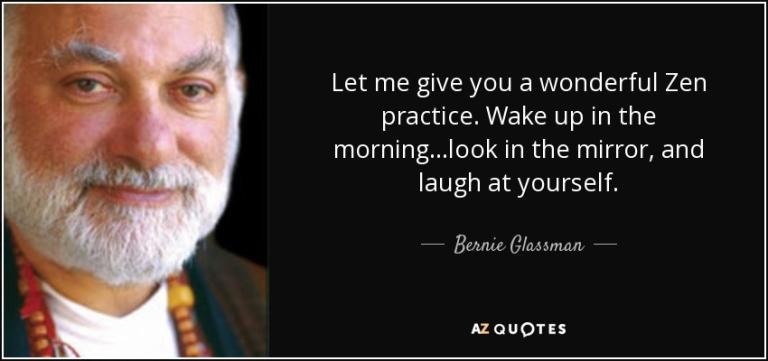
This post explores the peculiar life of American aeronautical engineer‑turned‑Zen teacher Bernie Glassman (1939–2018). It follows his transition from designing the first crewed mission to Mars at McDonnell Douglas in Huntington Beach, California, to founding the Zen Center of Los Angeles and later the socially‑oriented Greyston Bakery in New York. It also examines the philosophical underpinnings of his “peace‑making” practice, the influence of teachers such as Maezumi Hakuyū, and the broader cultural reception of his ideas within contemporary Zen discourse.

One day in 1965, the American aeronautical engineer Bernie Glassman (1939–2018) sat silently in his garage and was startled by the disappearance of his own sense of self. Glassman’s task at the time was to plan the first crewed journey to Mars. He served as unit leader at the McDonnell Douglas plant in Huntington Beach, California, just south of Los Angeles. Glassman was born in Brooklyn, New York, into a family of Jewish refugees who had fled Eastern Europe. He became interested in Buddhism during the 1950s in New York.

Shaken by his terrifying experience, Glassman sought a teacher at a Zen‑Buddhist temple in the Little‑Tokyo neighbourhood of Los Angeles. There he met a young Japanese monk named Hakuyū Taizan Maezumi (1931–1995). Maezumi had been born at the Kirigayaji Temple in Tokyo, but moved to the United States for missionary work in 1956. His father, Baian Hakujun Kuroda, ordained him as a monk at the age of eleven. Glassman became Maezumi’s first disciple. Maezumi continued to study with his own Japanese teachers, whom he also invited to the United States to lead retreats. Consequently, Glassman was able to study under Maezumi’s teachers as well. Glassman was installed as a Zen teacher in 1974.

Bernie helped his teacher Maezumi build and develop his own Zen temple in Los Angeles’ Koreatown. This centre, founded in 1967, still operates today as the Zen Center of Los Angeles (ZCLA), temple name Buddha Essence Temple. Initially, Bernie was a strict and demanding instructor. The writer and Zen teacher Peter Matthiessen (1985, p. 125) recorded how Bernie experienced a sudden awakening during a retreat led by Japanese master Osaka Kuryu at ZCLA in May 1970. Bernie himself was frightened by the experience; afterwards he stood in the centre’s courtyard drying his tears. He described looking at a tree standing in the yard:

“I didn’t feel I was the tree, it went deeper than that. I felt the wind on me, I felt the birds on me, all separation was completely gone.”

Nevertheless, this experience did not as itself force him to act for the benefit of everyone else. He continued to work solely for his own Zen community, often neglecting the needs of his family and children through his prolonged absences due to his responsibilities as a full time aeronautical engineer and zen priest. One morning at the end of 1976, on a car pool ride to his work, Bernie realised that the world was full of hungry ghosts that needed feeding. They thirsted for fame, power, drugs, money, sex, etc. Bernie saw how these these ghosts were also aspects of himself. The insight was so obvious that Bernie wept and laughed simultaneously throughout his work day.

Bernie’s experience is important to the work he dedicated himself to. However, it can also be seen to exemplify a phenomenon that American Zen teacher Brad Warner (2013) calls “enlightenment porn”. In a sense the term is justified: if the core of any spiritual practice is a personal realisation of the true nature of one’s true self, then another person’s experience cannot tell you anything about your own. Narrating such experiences about one’s own awakening is also a taboo in many spiritual circles. This attitude of explainin heroic awakening stories entered Zen Buddhism via the American‑edited volume Three Pillars of Zen (1967) by Philip Kapleau. Zen master Dōgen describes his own awakening very tersely: “I dropped both body and mind. That’s it.”

One could defend Bernie by saying he is a product of his era and culture. He even recounts reading Kapleau’s book just before his second awakening. Bernie eventually left his job in Los Angeles and devoted himself fully to a career as a Zen teacher. In 1979, Bernie Glassman founded his own Zen community north of Riverdale, New York. Some years after establishing the community he sold a donated mansion and used the proceeds to acquire a dilapidated building in Yonkers, a short walk from his own home. They opened the Greyston Bakery in 1982. The bakery produced cheesecakes and brownies for restaurants and shops across New York.

Glassman believed that, rather than practising traditional Japanese Zen, the community should strive to deal with problems caused by addiction and violence—homelessness, unemployment and the AIDS epidemic. According to him, realisation does not arise solely from conventional forms such as temple décor, incense, ceremonies, scriptures or robes, but from personal insight and awakening. Although the methods Glassman developed may not look Japanese, he trusted that they would help Western people experience the core at the heart of Zen practice, which is the realisation and actualisation of oneness of life.

Glassman taught that the Buddhist ideal of the Bodhisattva, i.e., the peacemaker, is one of Buddhism’s most important teachings. The peacemaker has a personal glimpse of what oneness of life is, and what liberation from dissatisfaction might mean. They then cultivate this insight to the best of their ability. They also feel that their ultimate liberation depends on the liberation of all other forms of life (not only humans); therefore they will do everything they can to give every being the chance to free itself from dissatisfaction and delusion. This work, done for the benefit of all, cultivates the peacemaker’s own spiritual growth, which in turn enables them to continue acting on behalf of others.

This work is not done through preaching and trying to make eveyone see the same way they do. Actually it is quite the opposite. The peacemaker is a servant. The work is done through their own example, and through the practice of the Three Tenets of the Peacemakers. These are 1) Not-Knowing 2) Bearing Witness, and 3) Loving Action, which arises from Not-Knowing and Bearing Witness.

Glassman’s vision for the Greyston bakery was that it would employ anyone who applied, through a concept of open hiring. That means no interviews, no background checks, and no resumes are required to get a job. Recognising that employment is just the first step toward self-sufficiency, Greyston quickly expanded into several social and community services areas.

Workers needed many things to survive their jobs: a home, childcare and a clinic for those living with AIDS. All of this was provided collectively. Greyston helped its employees refurbish derelict houses, allowing them to obtain their own homes. The AIDS clinic “Issan House”, founded by Greyston, was one of the first AIDS clinics in the United States. Issan House is a 35-unit facility offering housing to 40–to–50 formerly homeless individuals annually. All residents are living with HIV/AIDS, and many also are struggling with mental health issues and substance abuse.

Greyston expanded rapidly, acquiring new premises and services. Today the Greyston bakery continues to operate on the same principles and supplies brownie pieces for Ben & Jerry’s ice‑cream. Their open hiring policy and the book describing it (Glassman & Fields, 1996) are studied in economics courses at Yale and Harvard. The foundation that runs alongside the bakery still occupies the former convent that Glassman purchased.

Bernie Glassman’s life illustrates how the rigor of aeronautical engineering can inform a disciplined Zen practice, and how that practice can be transformed into concrete social action. His model of “peacemaking” bridges personal awakening with systemic change, offering a template for modern spiritual social entrepreneurs who wish to address concrete issues such as homelessness, addiction and health crises without sacrificing the depth of their inner work.

Conclusion

Bernie Glassman’s journey—from designing interplanetary rockets at McDonnell Douglas to building the Zen Center of Los Angeles and establishing the socially innovative Greyston Bakery—demonstrates a rare synthesis of organisational skills, spiritual insight, and social entrepreneurship. By recognising the “hungry ghosts” within himself and society, he created institutions that feed both material and spiritual needs. His legacy challenges contemporary practitioners to move beyond isolated meditation and to embody the Buddhist ideal of a Bodhisattva: cultivating personal awakening while actively serving and saving all beings.


References

Glassman, B., & Fields, R. (1996). Instructions to the cook: A Zen master’s lessons in living a life that matters. Harmony.
Kapleau, P. (1967). The three pillars of Zen. New York: Anchor Books.
Matthiessen, P. (1987). Nine-headed dragon river: Zen journals 1969-1982. Shambhala Publications.
Warner, B. (2013). There is No God and He is Always with You: A Search for God in Odd Places. New World Library.

Zen and the Art of Dissatisfaction – Part 34

Navigating the Times of Crisis

In a rapidly changing world, where the climate crisis, technological advancements, and social inequality loom large, many may feel overwhelmed by the forces shaping our future. Yet, in the face of such challenges, simple spiritual practices can offer us ways to navigate uncertainty and find meaning. Drawing on Eastern philosophy, we are reminded that the pursuit of peace, both within ourselves and in the world, is a path we can all walk.

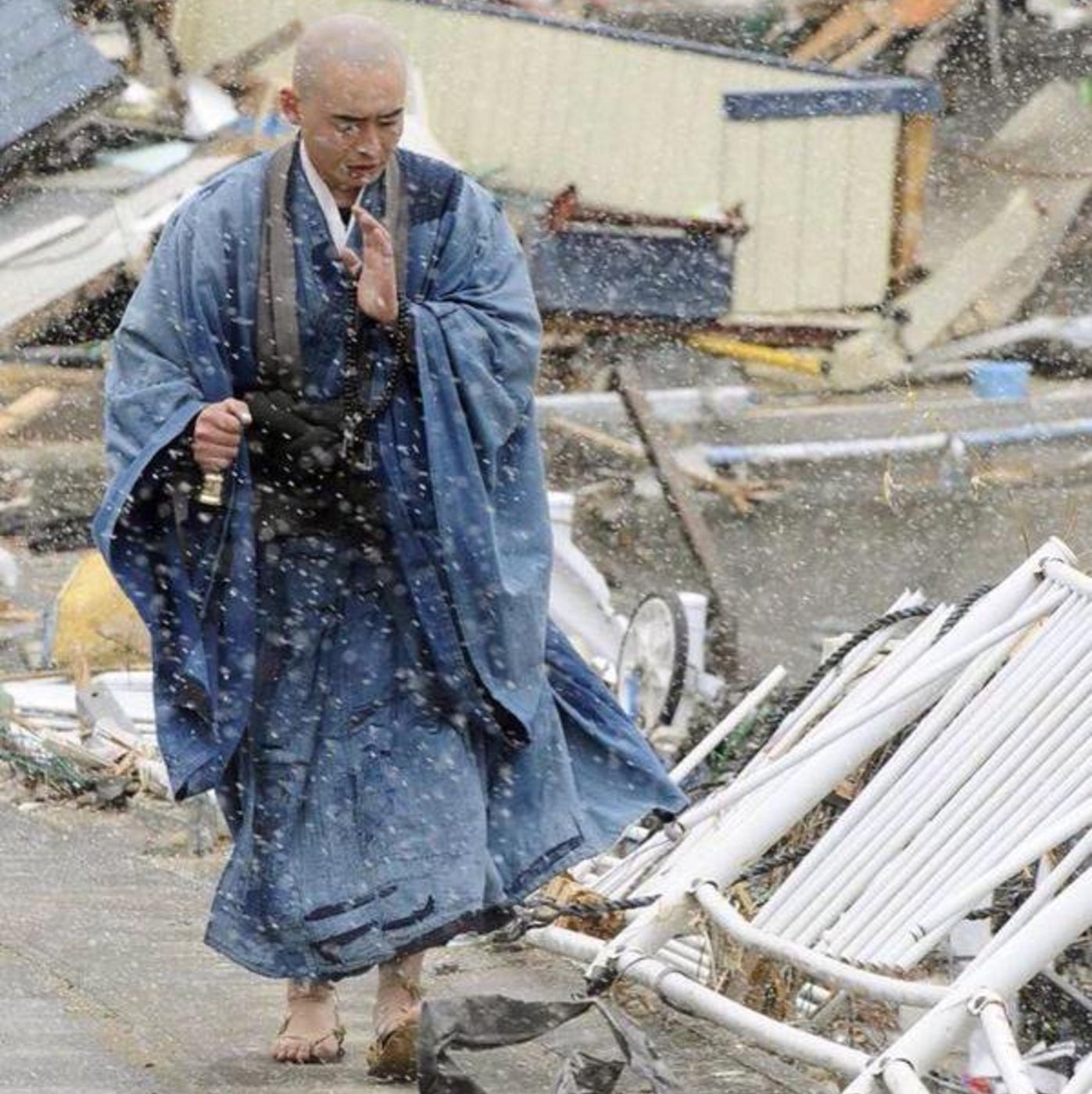
Photo: Buddhist monk Sokan Obara, 28, from Morioka, Iwate prefecture, prays for the victims in an area devastated by the earthquake and tsunami, in Ofunato, Iwate prefecture, April 7. Unknown photographer.

According to some estimates, our planet is heading towards a hothouse Earth scenario, where runaway climate change threatens the future of human civilisation (Steffen et al., 2018). This process will particularly affect the global South, countries that continue to bear the brunt of colonialism’s harmful legacy, yet have contributed the least to global warming, rising sea levels, and environmental degradation.

The Challenge of Our Time: Climate Crisis and Technology

The rise of artificial intelligence (AI) and its reliance on algorithms may also lead to large tech companies becoming the global decision-makers, shaping the economy and politics of the world. This shift could pose an existential challenge to the global South, as demand for human manual labour diminishes, further exacerbating social inequities.

But should we panic and give up hope? Is a hedonistic ”live for today” attitude the only remaining solution?

Philosopher David Loy (2019) has been exploring for decades the answers Eastern philosophies may offer to help us navigate these challenges. One such concept is the bodhisattva ideal, which originates from Sanskrit and refers to an awakened being who recognises the interconnectedness of all life. The bodhisattva understands that their well-being is intricately linked to the well-being of the world as a whole.

An embodiment of this ideal is Kanzeon (also known as Avalokiteśvara in Sanskrit and Guanyin in Chinese), a figure often depicted with a thousand arms, symbolising the countless ways in which this figure reaches out to help those in need. Another popular figure embodying the bodhisattva’s compassion is Hotei (also known as Budai in Chinese), a joyful, portly monk carrying a large bag, from which he pulls out healing remedies for the world’s suffering—whether it be a bandage for a fallen child or a new kidney for the ill.

Embracing Sorrow: The First Step Towards Action

The destruction of biodiversity and the decline of democracy are deeply sorrowful realities. Accepting this sorrow is the first step toward constructive action. As the great Joanna Macy (2021) reminded us, we are saddened by the loss of ecological diversity because we care. Our hearts break, and yet it is precisely our hearts that allow us to take action.

Acceptance of sorrow may lead us to take meaningful steps toward creating a better, fairer future. Paradoxically, to help the world, we must first let go and turn inward. The path of the peacemaker has two sides. One must care for their own well-being and strive to awaken to the oneness of life, but one should also aknowledge their own responsibility in the oneness of life and act accordingly.

The most basic spiritual practice that can help us on this path is mindfulness, which can begin with simply sitting in silence and staying aware of the open nature of our own mind. Through this practice, we can observe not just the sensations of our body, but also the nature of our mind. While suffering and dissatisfaction may not disappear, we can examine our relationship with them. Over time, our relationship with our innate dissatisfaction may change.

This process can also unveil the awareness that the nature of our mind is unknown to us. All the thoughts and emotions that arise in our mind come from someplace we cannot know – from the unknown. This insight may lead us to consider that the same interplay of consciousness occurs across all life forms. All beings have thoughts, ideas, and feelings, yet we cannot know exactly what another experiences.

American Zen teacher Bernie Glassman (1998) reminded that we need to let go of our preconceived notions and ideas and trust the Not-Knowing. The next step in the peacemaker’s path is listening or Bearing Witness. We must pause for a moment and pay attention to what is happening around us, to what others are trying to communicate. Stopping to listen to others’ perspectives may challenge our previous assumptions, attitudes, and beliefs. The third step is action – Loving Action that arises from this process of not-knowing and deep listening.

The Peacemaker’s Responsibility

A peacemaker responds to each situation in a way that is appropriate. When one realises they are interconnected with everything, one feels that they also have personal responsibility. If we are tired, we must rest. If we are hungry, we must eat. We care for our children, ensuring they are picked up from daycare, fed, and put to bed on time. We help those who fall.

Every day, we can ask ourselves: what can we do for others – since others are ourselves.

A peacemaker may also come to see that the systems in place often work for the benefit of few and to cause harm the oneness of life. They may feel compelled to influence these unjust systems, helping others realise, through their own example, that the current system damages life and its interconnectedness. The peacemaker does not demand change forcefully nor does they try to impose their will on everyone else. The peacemaker listens to all perspectives and seeks to show, through their own actions, the interconnectedness and oneness of life.

The Struggle for Change

But how do we act in a world full of injustice and suffering? We often try to force others to change their minds and behave differently. But will that lead to the outcome we desire? The peacemaker’s ideal involves helping others through not-knowing, listening, and taking loving action. Through this process, they hope to find the best solutions for the wholeness of life. The peacemaker is not just hoping for change, but becomes the change themselves.

This kind of action is exceedingly difficult. The easiest solution may be to demand change, but would that help anyone realise the harm their actions cause? Mahatma Gandhi’s concept of civil disobedience and nonviolent resistance aimed to make the opposition recognise the wrongness of their violent actions. Nonviolent resistance has brought about significant change in the world when enough people collectively stand behind a cause.

However, we do not need to start by changing everything. We do not need to be Gandhi today. First, we must learn to know ourselves. Despite knowing much about the workings of the human brain and mind, we often fail to understand our own mind. We think of ourselves as the rulers of our own mind and consciousness, but we are barely gatekeepers. Even as gatekeepers, we often wander aimlessly through our minds like Snufkin in the Moomin stories.

The first appropriate step on the peacemaker’s path may simply be to sit down and be quiet for a moment.

Conclusion

The journey of a peacemaker is not easy, nor it is straight forward. It requires us to embrace sorrow, realise our interconnectedness, and take action in small and large ways. But ultimately, it is through open awareness of the nature of our mind, and compassion that we can navigate the complexities of the diversity of the world and contribute to a more peaceful and just future for all life.

References

Glassman, Bernie (1998). Bearing Witness: A Zen Master’s Lessons in Making Peace. Bell Tower.
Loy, D. R. (2019). Ecodharma: Buddhist Teachings for the Ecological Crisis. Wisdom Publications.
Macy, J. (2021). Active Hope: How to Face the Mess We’re in without Going Crazy. New World Library.
Steffen, W., Rockström, J., Richardson, K., Lenton, T. M., Folke, C., Liverman, D., … & Schellnhuber, H. J. (2018). Trajectories of the Earth System in the Anthropocene. Proceedings of the National Academy of Sciences, 115(33), 8252-8259. https://doi.org/10.1073/pnas.1810141115