The Disrupted Way of Shamanic Life
Imagine living in the desert with twenty-five to fifty of your closest relatives. The social pressures of such intimate, constant coexistence would, for most of us, be overwhelming. For the San people of the Kalahari Desert, the primary method of releasing this tension was not therapy, nor alcohol, nor even conversation—it was the trance dance. This ritual, a communal, all-night event, served as both a spiritual practice and a social glue, binding the group together and allowing individuals to process collective stress. Yet, as Western culture encroached upon the Kalahari in the late 20th century, these traditions began to unravel, leaving behind a fractured social landscape and a people caught between two worlds. In this post, we explore the role of trance rituals among the San, the impact of alcohol and colonial disruption, and the slow erosion of a way of life that once offered a unique solution to the universal human need for connection and release.
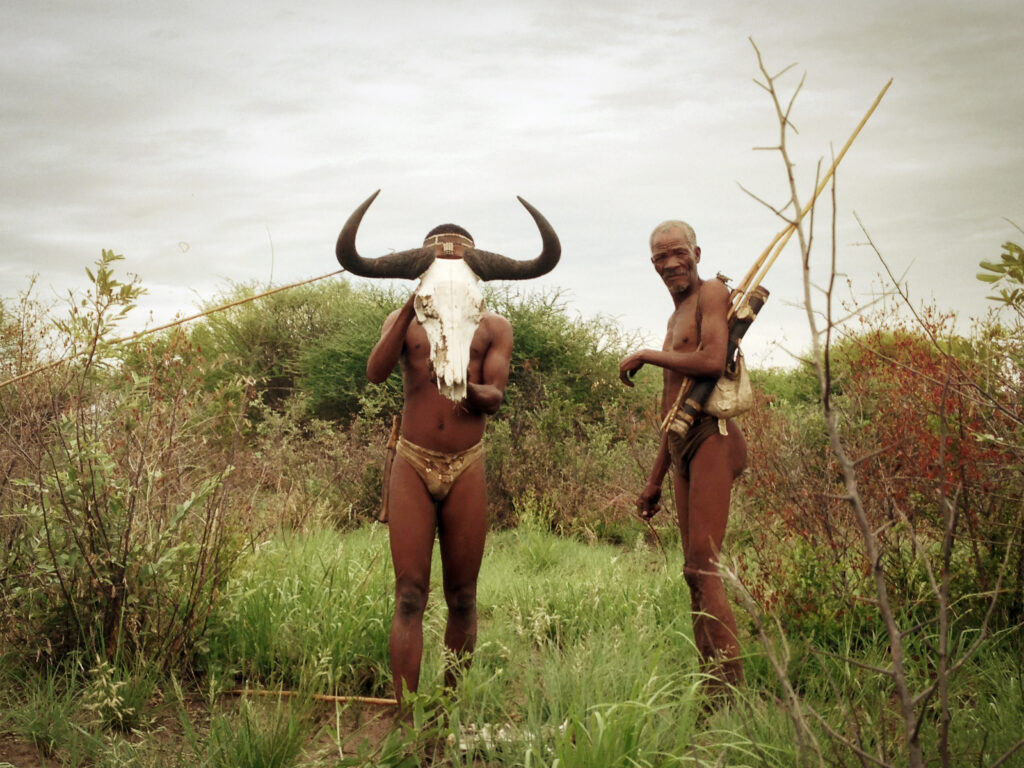
The San, also known as the Bushmen, are one of the oldest continuous cultures on Earth, with a history stretching back tens of thousands of years in southern Africa. Traditionally, they lived as hunter-gatherers, relying on the harsh but bountiful ecosystem of the Kalahari. Their social structure was remarkably egalitarian, with no formal hierarchy and a strong emphasis on consensus and cooperation. In such a tightly knit group, conflicts were inevitable, but the San had a powerful tool for resolving tension: the trance dance.
A Social Safety Valve
Described in detail by anthropologists such as Lorna Marshall and Richard Borshay Lee, the trance dance was a communal event, often lasting all night. The entire group—men, women, and children—would gather around a fire. The women would sit in a tight circle, clapping and singing complex, polyphonic songs. The men (and sometimes women) would dance in a circle, their movements becoming increasingly intense as the night wore on. The rhythm, the heat, and the shared experience would induce a trance state in some participants, particularly the shamans, who would then heal social ills, expel negative energies, and restore harmony to the group.
Unlike Western notions of leadership, San shamans were not a separate, elite class. Among the Juǀʼhoansi, a subgroup of the San, as many as half the men and a third of the women might become shamans at some point in their lives. The role was not one of power, but of service. As Lorna Marshall observed in her seminal work, The Harmless People, the dance was less about individual enlightenment and more about collective catharsis. Children ran freely, mimicking the adults, and no one minded—the San saw their participation as natural, even essential.
The dance was not just spiritual; it was practical. The San believed that the fire itself was a source of n/om, a supernatural energy that could be harnessed for healing. The rhythmic stamping of feet, the clapping, the singing—all of it worked together to create a shared altered state, one that dissolved individual grievances and reinforced the group’s cohesion.
The Arrival of Alcohol
When Western culture began to penetrate the Kalahari in the 1970s, it brought with it a new way of coping with social stress: alcohol. The San, who had no traditional experience with strong drink, quickly fell victim to its effects. What had once been a rare, ceremonial indulgence became a daily crutch. The consequences were devastating.
Drunkenness led to violence, often with tragic results. Hunters, armed with poisoned arrows meant for game, turned on each other in drunken rages. The poison, derived from plants or beetles, caused a slow, agonising death—victims might linger for days, a fate that was as psychologically traumatic for the attacker as it was for the victim. The social fabric, once mended by the trance dance, began to fray.
The irony was stark. Alcohol, in Western societies, is often used in moderation to facilitate social bonding—to lower inhibitions, to make conversation flow more easily. Yet among the San, it achieved the opposite. Where the trance dance had once allowed tensions to be released in a controlled, communal setting, alcohol created chaos, pitting individuals against one another in ways that were foreign to their traditional values.
The Decline
By the time I last visited the San in 2018, the trance dance was a shadow of its former self. The last shaman in the camp I stayed with, an elderly man named G/aqo, was frail and no longer able to lead the rituals with the vigour of his youth. A younger friend of ours, Kxao, expressed a desire to become a shaman one day, but his aspirations felt more like nostalgia than a realistic path. The dances that did occur were often performed for tourists or film crews, stripped of their original spiritual meaning.
Anthropologists who studied the San in the 1950s and 1960s, such as Lorna Marshall and her family, including her son, John Marshall, described a vibrant ritual life. Dances lasted all night, and the next morning, the community would carry on as if nothing had happened—no hangovers, no regrets, just a renewed sense of unity. Shamans were plentiful, and their role was not seen as extraordinary, but as a natural part of community life.
Yet, as the San were increasingly drawn into the cash economy and exposed to Western hierarchies, their egalitarian values began to erode. The very idea of a leader was alien to them. When European settlers first encountered the San, they were baffled by the absence of a chief or spokesperson—someone with whom they could negotiate. The San, in turn, were baffled by the Western obsession with hierarchy. They saw no need for it; decisions were made by consensus, and anyone could speak for the group if the situation arose.
But as their land was encroached upon, as they were forced into sedentary lifestyles, and as alcoholism took hold, the old ways began to fade. The trance dance, once a living tradition, became a performance—a relic of a past that the younger generations no longer fully understood.
A Night of Healing
The trance dance was not merely a spiritual exercise; it was a carefully structured ritual with deep symbolic meaning. It began at dusk, with the lighting of a large fire. The fire was not just a source of light and warmth—it was believed to be the source of n/om, the spiritual potency or energy that the shamans would later channel. Traditionally, the fire was started using friction sticks, though by the late 20th century, matches had become common.
The women would sit in a tight circle around the fire, their shoulders touching, creating a physical and symbolic barrier between the sacred space of the dance and the outside world. They sang in loud voices, their hands clapping in complex, syncopated rhythms. The men danced in a circle around the fire, their feet stamping the sand into a deep, circular trench. Sometimes, they wore rattles made from dried cocoons, tied to their ankles, adding another layer of rhythm to the hypnotic sound.
As the night wore on, the dancers would enter a trance state. Some would collapse, only to be revived by the others. The shamans, in particular, were believed to travel to the spirit world, where they would battle the forces causing illness or discord in the community. The dance was not just about healing the sick; it was about healing the social body—expelling jealousy, anger, and conflict, and restoring the group’s equilibrium.
Children were welcome to participate, running around the fire, mimicking the adults, and sometimes falling asleep in their parents’ laps as the night wore on. There was no concept of ”disrespect” in their behaviour; the San saw the children’s play as a natural part of the ritual, a sign of life’s continuity.
By dawn, the dance would reach its climax, then abruptly stop. The participants, exhausted, would collapse where they stood, sleeping until the next day. When they awoke, they would share their experiences—what they had seen in their trances, what messages they had received from the spirits. The ritual was complete, and the community was, once again, whole.
Gender, Equality, and the San Way of Life
One of the most striking aspects of San society was its egalitarianism, particularly between genders. While the trance dance appeared to have clear gender roles—women singing, men dancing—the San’s broader social structure was remarkably balanced. Women were not subordinate to men; in fact, their role as gatherers was just as vital as the men’s role as hunters. The plants and tubers they collected provided the majority of the group’s calories, while the men’s hunting, though prestigious, was far less reliable.
This balance was reflected in the trance dance. While men were more likely to become shamans, women were not excluded from the role. The dance itself was a collaborative effort, with both genders contributing equally to its success. The San’s lack of rigid hierarchy extended to their spiritual life as well—shamans were not ”above” the rest of the community, but rather, they were its servants, tasked with maintaining the group’s well-being.
This egalitarianism was not just a cultural quirk; it was a survival strategy. In the harsh environment of the Kalahari, no one could afford to be dispensable. Every member of the group, regardless of age or gender, had a role to play, and the trance dance was a way of ensuring that everyone—even the youngest children—felt included and valued.
The story of the San and their trance dances is, in many ways, a cautionary tale. Here was a society that had developed a sophisticated, effective method for managing social stress—one that relied not on individual escape, but on collective participation. The trance dance was a technology, not of tools or machines, but of human connection. It allowed the San to live in close quarters without the constant threat of conflict tearing them apart.
Yet, when confronted with the allure of alcohol and the pressures of modernisation, this technology began to fail. The San were not unique in this regard; across the world, indigenous cultures have struggled to maintain their traditions in the face of colonialism and globalisation. What makes the San’s story particularly poignant is the speed with which their rituals unravelled. Within a single generation, the trance dance went from being the cornerstone of their social life to a tourist attraction, performed more out of obligation than belief.
Conclusion
Today, the San are still there, still living in the Kalahari, but their way of life is irrevocably changed. The trance dances still occur, but they are rare, and their meaning is often lost on the younger generations. The shamans are fewer, and their knowledge is fading. What remains is a echo of a once-vibrant tradition—a reminder of how fragile social technologies can be, and how easily they can be lost. Perhaps the greatest lesson we can take from the San is not just the value of their rituals, but the importance of finding our own. In a world where loneliness and social fragmentation are on the rise, the San’s trance dance offers a powerful example of how collective ritual can bind a community together. The question is whether we, in the West, can find our own equivalents—or whether we, too, will turn to false solutions, like alcohol, that offer only temporary relief at a terrible cost.
References
Katz, R. (1982). Boiling Energy: Community Healing Among the Kalahari Kung. Harvard University Press.
Marshall, L. (1999). Nyae Nyae !Kung Beliefs and Rites. Peabody Museum Press.
Marshall Thomas, E. (2006). The Old Way: A Story of the First People. Farrar, Straus and Giroux.
Lee, R. B. (2003). The Dobe Juǀʼhoansi (3rd ed.). Thomson Learning/Wadsworth.