Universal Basic Income and Navigating the Future of Work in the Age of AI
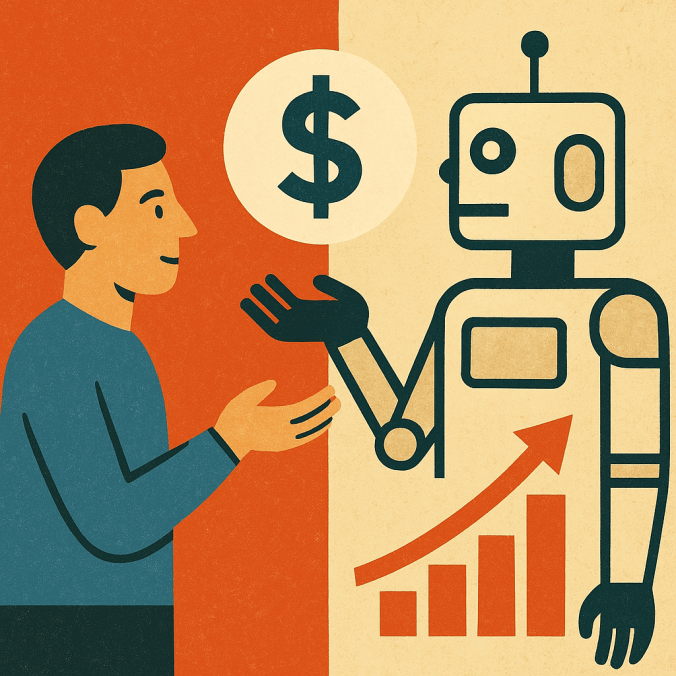
The concept of Universal Basic Income (UBI) has garnered significant attention as a potential solution for future economic challenges. For many, it seems like an essential tool to provide financial security in an increasingly automated world. But, as Kai-Fu Lee suggests, UBI could be a missed opportunity. Lee proposes an alternative—a Social Investment Stipend, a form of state-backed salary for individuals investing time and energy into work that fosters a kinder, more compassionate, and creative society in the age of artificial intelligence (AI). According to Lee, those eligible for this stipend would include workers in three key areas: caregiving, community service, and education. Rather than replacing traditional welfare systems, this stipend would provide a decent income for those choosing to engage in socially productive activities that benefit society as a whole.
I, too, dedicate a portion of my time to volunteering. I’ve taught meditation to climate activists, served as a café host for the Salvation Army, served as a chairman of the residents committee of our community, volunteered on retreats at the Auschwitz-Birkenau Memorial and Museum, arranged similar events at former prison camps from Finland’s 1918 Civil War, given free lectures at university courses that could not afford guest speakers, created illustrations for charity auctions, shopped for sick friends, played music in bands that couldn’t afford to pay me, helped a friend’s cat reach the end of its journey, taken photos, hosted memorial events, performed as a clown, made posters, shared thoughts online for free, written blogs, made websites, and updated Wikipedia. None of these activities have provided me with any financial security, but the intrinsic value I find in them is immeasurable.
The Struggle for Recognition of Non-Traditional Work
By profession, I am a zen teacher, postdoctoral researcher and visual artist. However, apart from one three-year grant, I’ve never had a permanent contract lasting more than a year, despite dedicating all my available time to my work. Throughout my adult life, I’ve spent extended periods officially unemployed, trying my best to make ends meet. Even when considering the accuracy of unemployment statistics, it doesn’t make sense to classify highly educated individuals as ”unemployed” simply because their work cannot be defined as traditional employment. Universal Basic Income could be one potential solution to the future, where traditional jobs—such as drivers, lawyers, insurance agents, translators, pharmacists, loan officers, or doctors—might soon be replaced by robots.
David Graeber, an anthropologist, has spoken extensively in his works (2012; 2018; Graeber & Wengrow, 2022) about the importance of care work within human communities. He emphasises, for instance, that workers in the ticket offices of the London Underground aren’t just selling tickets—they are looking for lost children and talking to drunks. A ticket machine can’t perform these functions, and society loses a significant part of its humanity when all jobs are replaced by machines.
During the COVID-19 pandemic, workers in the events industry fought to defend their right to work. Here in Finland, this sector employs approximately 200,000 people (7.65% of the workforce), and the overall cultural sector accounts for 3.5% of Finland’s GDP. In comparison, the agriculture and food industry employs 340,000 people (13% of the workforce). Interestingly, the workforce in agriculture and food production (250,000 people) is almost the same size as the event industry, with an additional 86,000 people employed in related fields like sales and transportation. While some of these latter roles could potentially be automated, there will still be a need for human workers in the cultural and events industries, even as robots take over other tasks.
The Future of Productivity in an AI-Driven World
Erik Brynjolfsson and Andrew McAfee (2014) remind us that the AI industry will inevitably change the way we measure productivity. Gross Domestic Product (GDP) doesn’t account for services that are seemingly free, yet abundant in our technologically driven world. Even if people don’t pay directly for services like social media, they are still giving up something valuable—namely, their time. According to Brynjolfsson and McAfee, Americans nearly doubled the amount of leisure time spent online from 2000 to 2011. The internet generated about $2,600 in value per user per year, considering the value of users’ time and comparing online leisure time to other uses of time. This doesn’t show up in GDP statistics, but if it did, productivity growth would be roughly 0.3% higher each year. In other words, the reported productivity growth of 1.2% in 2012 would have been closer to 1.5%.
Time is a relative concept. In leisure, we value time more, but at work, we aim to save time. Brynjolfsson and McAfee cite Hal Varian, Google’s chief economist, who looked at time savings achieved through Google searches. When searching for information that could take about 22 minutes without Google, using the search engine only took seven minutes. This time-saving aspect is one of the key drivers of increased productivity. People dedicate considerable time to enriching platforms like Wikipedia and thousands of other pivotal free open source projects, but this contribution is unpaid, and no one is obligated to pay for using these services, even though it serves the public good. [As a side note, I use free open source operation systems like Linux and free open source software!]
The Value of Free Time in the Digital Economy
Brynjolfsson and McAfee (2014) also report that in 2020, Facebook users spent an average of 2 hours and 24 minutes a day on the platform. With approximately 3.07 billion users worldwide in 2025, this represents an enormous amount of human time spent competing for each other’s attention and generating free content—mostly in the form of text, images, and videos. The sheer amount of time spent on social media is staggering. On average, study shows how in 2025, people worldwide spend 6 hours and 45 minutes daily on screens.
American AI researcher Dan Weld puts the amount of time spent online into a more understandable context. For example, in 2003, users spent around 9 billion hours playing Solitaire on their computers. Meanwhile, the construction of the Panama Canal required 20 million work hours—equivalent to one day of playing Solitaire on a computer. Time spent on platforms like social media or Wikipedia is not counted in GDP statistics, but these unpaid activities contribute significantly to overall societal wellbeing. The time spent on social media is also reflected in real life. Social media is also one of the major sources of news. Users are subjected to targeted marketing and psychological influencing.
According to research by the multinational audit firm PricewaterhouseCoopers (Rao & Verweij, 2017), the AI industry might increase the global GDP by $15.7 trillion by 2030. Of this, nearly half—around $7 trillion—might go to China, with the United States coming second with a $3.7 trillion growth. However, this wealth will not be distributed equally, as large corporations that invest in data collection and algorithm development will capture the vast majority of this value. Much of the wealth generated will end up in the pockets of CEOs at major tech firms.
Building a Universal Basic Income system is difficult, and expensive, but it’s not as costly as often assumed. Significant savings can be made by cutting down on unnecessary bureaucracy, and some of the UBI payments made to those with higher incomes would be returned through taxation. Studies show that UBI has a positive effect on low-income groups by removing the stigma associated with poverty and unemployment. The wealth generated by the AI industry could potentially be used to fund such a program, though we must also consider the existential threats posed by climate change and ecological crises, which are ongoing threats to humanity.
Perhaps free money could encourage self-employment, lower the barriers to entrepreneurship, and stimulate grassroots innovation and civic engagement. This could have a profound impact on societies during uncertain times.
Conclusion
As we navigate the future of work and the growing influence of AI, Universal Basic Income remains a viable solution for supporting those engaged in non-traditional work, such as caregiving and community service. By investing in social and creative enterprises, we can build a more resilient, compassionate society. While AI will continue to reshape industries and increase wealth, we must also ensure that the benefits are shared more equitably, avoiding the concentration of wealth and power in the hands of a few.
References
Brynjolfsson, E., & McAfee, A. (2014). The second machine age: Work, progress, and prosperity in a time of brilliant technologies. W.W. Norton & Company.
Graeber, D. (2012). Debt: The first 5,000 years. Melville House.
Graeber, D., & Wengrow, D. (2022). The dawn of everything: A new history of humanity. Farrar, Straus and Giroux.
Lee, K. F. (2018). AI superpowers: China, Silicon Valley, and the new world order. Houghton Mifflin Harcourt.
PricewaterhouseCoopers (PwC). (2017). The economic impact of artificial intelligence on the global economy. PwC.
Rao, A., & Verweij, P. (2017). AI and the economy: The effects of artificial intelligence on global productivity. PwC.
 Helsinki Zen - Peacemakers Finland